
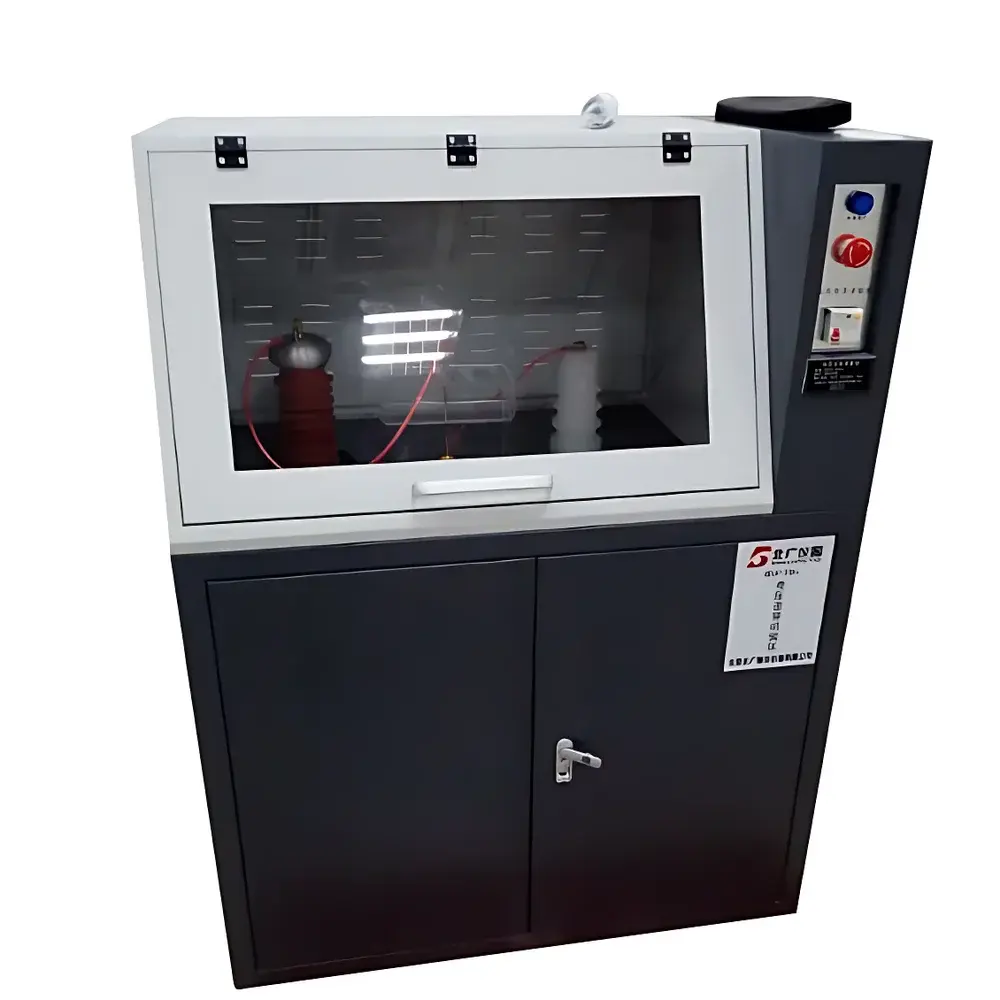
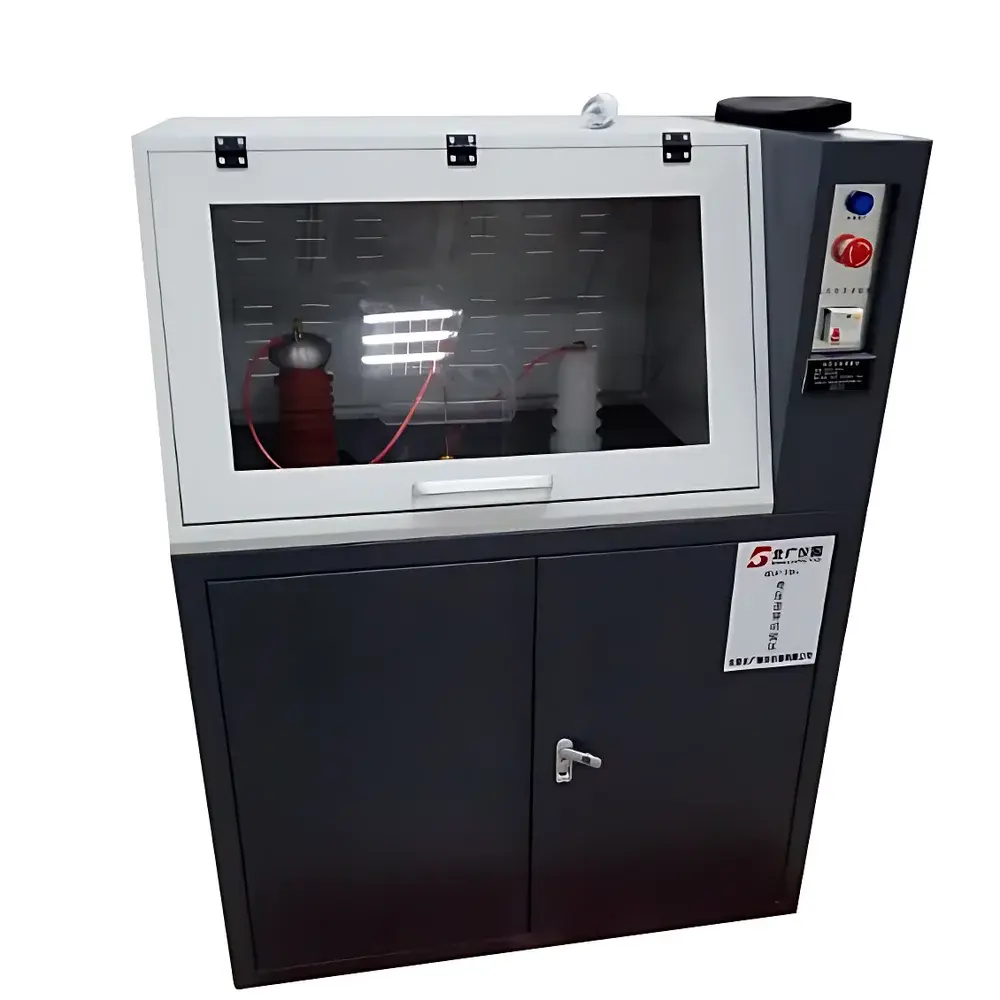
Beijing North Guang Precision Instruments BDJC-50KV AC/DC Dielectric Breakdown Tester for Electrical Conduit Tubing
| Brand | Beijing North Guang Precision Instruments |
|---|---|
| Origin | Beijing, China |
| Manufacturer Type | Direct Manufacturer |
| Model | BDJC-50KV |
| Maximum Test Voltage | 50 kV AC / DC |
| Input Voltage | 220 V AC |
| Power Rating | 5 kVA |
| Voltage Ramp Rate | 0.1–3 kV/s (adjustable, stepless) |
| Voltage Measurement Accuracy | ≤ ±1% |
| Test Duration Range | 0–6 hours (software-settable) |
| Dimensions (L×W×H) | 700 × 800 × 1300 mm |
| Weight | ~150 kg |
| Compliance Standards | GB 1408.1–2006, GB/T 1695–2005, GB/T 3333–1999, HG/T 3330, GB/T 12656–1990, ASTM D149, ASTM D3755 |
Overview
The Beijing North Guang Precision Instruments BDJC-50KV AC/DC Dielectric Breakdown Tester is a precision-engineered high-voltage testing system designed for determining the dielectric strength and voltage endurance of solid insulating materials under standardized power-frequency (48–62 Hz) or DC conditions. Based on the principles of controlled electric field stress application, the instrument applies a continuously adjustable, ramped voltage across a conditioned specimen until electrical breakdown occurs—defined as the onset of sustained conduction through the material—enabling quantitative measurement of breakdown voltage (kV) and subsequent calculation of dielectric strength (kV/mm). The system supports both uniform-rate voltage ramping and stepwise incremental protocols, fully aligned with international test methodologies for insulation qualification in R&D, quality control, and regulatory compliance workflows.
Key Features
- True continuous voltage regulation via contactless, servo-controlled DC motor-driven transformer actuation—eliminating arcing, hysteresis, and waveform distortion associated with traditional autotransformer or SCR-based systems.
- Programmable ramp rates from 0.1 kV/s to 3 kV/s, satisfying both ultra-slow (e.g., long-term aging simulation) and rapid-stress (e.g., impulse screening) requirements specified in GB 1408.1–2006 and ASTM D149.
- Nine-layer integrated safety architecture: overvoltage cutoff, real-time current-limiting tripping (<0.1 s response), interlocked safety door monitoring, zero-voltage reset logic, post-test electromagnetic discharge, independent grounding, software-level operational authorization, short-circuit tolerance, and automatic post-failure voltage collapse.
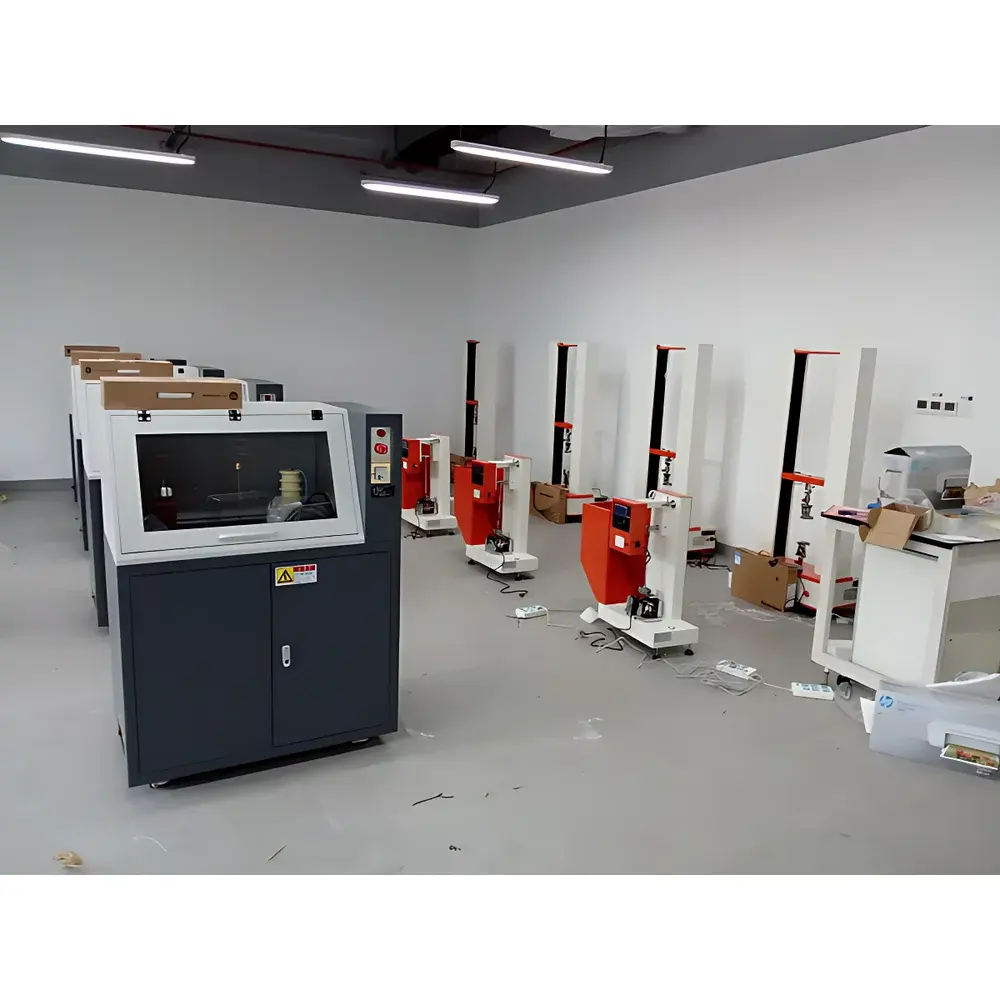
- Vertical cabinet design with castor-mounted base—optimized for laboratory footprint efficiency and repositioning without structural anchoring or auxiliary platforms.
- Optically isolated data acquisition subsystem ensures immunity to electromagnetic interference during high-voltage transients, critical for stable leakage current monitoring (resolution <1 µA) and precise breakdown event capture.
Sample Compatibility & Compliance
The BDJC-50KV accommodates flat, sheet-like, or tubular specimens—including electrical conduit tubing, polymer films, laminated composites, ceramic substrates, vulcanized rubber sheets, impregnated fiber mats, mica-based insulators, epoxy boards, silicone elastomers, and coated papers—tested either in ambient air or immersed in dielectric oil per ASTM D877 and IEC 60243-1. It is validated for use with standardized electrode configurations (e.g., brass disk electrodes per GB/T 1695–2005) and conforms to mandatory test parameters outlined in GB 1408.1–2006 (Part 1: AC tests), GB/T 1408.2–2016 (Part 2: DC tests), ASTM D149 (Standard Test Method for Dielectric Breakdown Voltage of Solid Electrical Insulating Materials), and ASTM D3755 (Test Method for Electrical Strength of Polymeric Films). Its architecture supports full traceability and audit readiness under GLP/GMP frameworks, including configurable electronic signatures, time-stamped test logs, and 21 CFR Part 11–compliant data integrity controls.
Software & Data Management
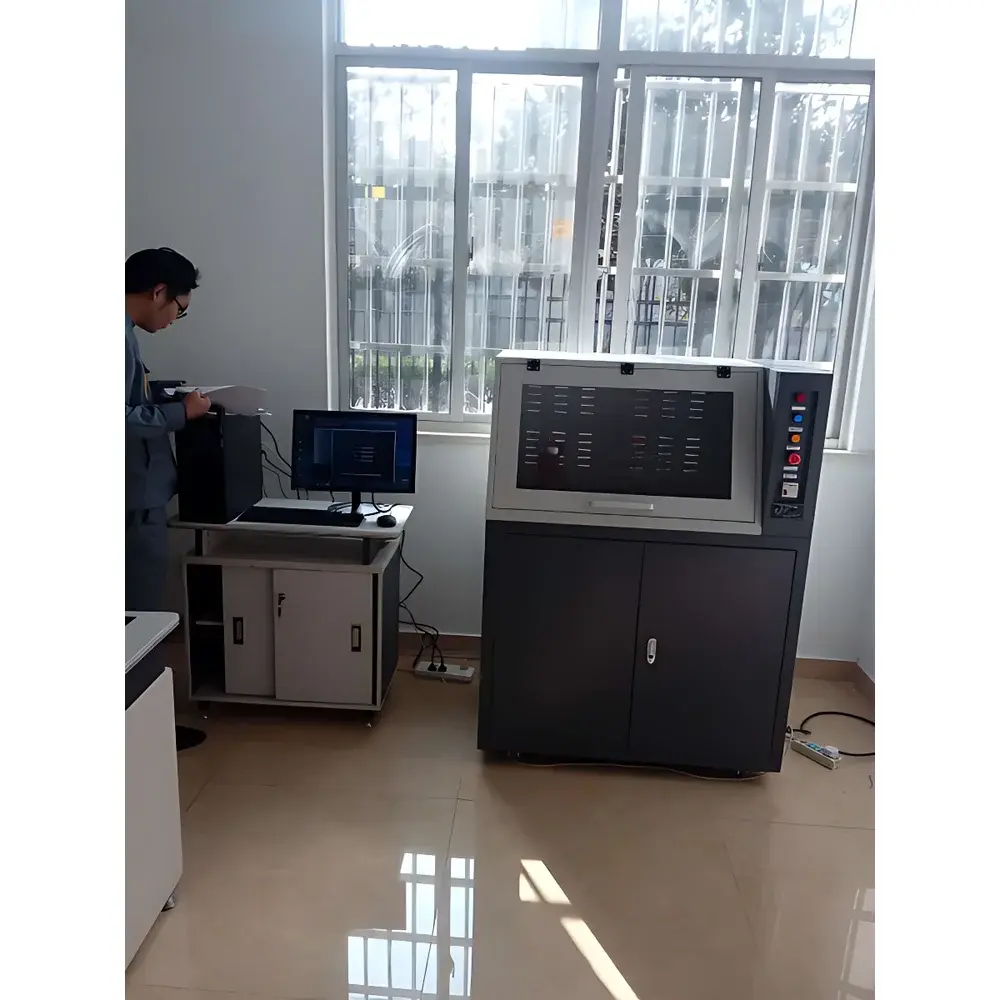
The proprietary Windows-based control suite provides intuitive graphical setup, real-time voltage–time and leakage current–time curve visualization, multi-color overlay comparison of sequential trials, and dynamic pass/fail annotation during active testing. All raw acquisition data—including instantaneous voltage, measured current, ramp rate, elapsed time, and breakdown threshold—are timestamped and stored in binary+CSV dual format. Users may define custom report templates (PDF/DOCX), export datasets to Excel or MATLAB for statistical analysis (Weibull distribution fitting, confidence interval estimation), and enforce role-based access control via password-protected operator profiles. Software-generated test records include metadata such as environmental temperature/humidity (when interfaced with optional external sensors), electrode geometry, sample thickness, and calibration certificate IDs—ensuring full alignment with ISO/IEC 17025 documentation requirements.
Applications
This tester serves core functional roles across electrical insulation validation pipelines: qualification of extruded PVC/PE conduit sleeves per UL 651 and IEC 61386; evaluation of composite bushing materials for medium-voltage switchgear; verification of dielectric integrity in aerospace-grade polyimide films; accelerated life-cycle assessment of encapsulation resins for EV battery modules; QC screening of transformer board and cable paper per IEC 60851; and development-stage characterization of novel ceramic-polymer hybrids for high-frequency power electronics. Its dual AC/DC capability enables comparative analysis of polarization-dependent failure modes, while programmable dwell times support endurance mapping for grid-scale insulation systems operating under sustained overvoltage conditions.
FAQ
What voltage ranges does the BDJC-50KV support?
It delivers continuously adjustable AC or DC output from 0 to 50 kV, with calibrated linearity across the full range and measurement uncertainty ≤ ±1% of reading.
Can the system perform both breakdown and withstand (dielectric endurance) testing?
Yes—users may configure timed voltage hold periods (0–6 hours) at any preset level up to 50 kV, with automatic termination upon current excursion beyond user-defined thresholds.
Is the instrument suitable for testing cylindrical samples like electrical conduits?
Absolutely—the standard electrode fixture set includes concentric ring electrodes and custom-machined mandrels to ensure uniform field distribution across tubular geometries per GB/T 3333–1999.
How is data integrity ensured during high-noise HV testing?
All analog signals undergo galvanic isolation via fiber-optic or optocoupler interfaces prior to digitization, suppressing common-mode noise and preserving microampere-level leakage current fidelity.
Does the system meet regulatory requirements for pharmaceutical or medical device manufacturing environments?
While not classified as a medical device itself, its software architecture supports 21 CFR Part 11 compliance (audit trails, electronic signatures, data immutability) and is routinely deployed in Class 8 cleanroom-adjacent QC labs for implantable electronics packaging validation.



