
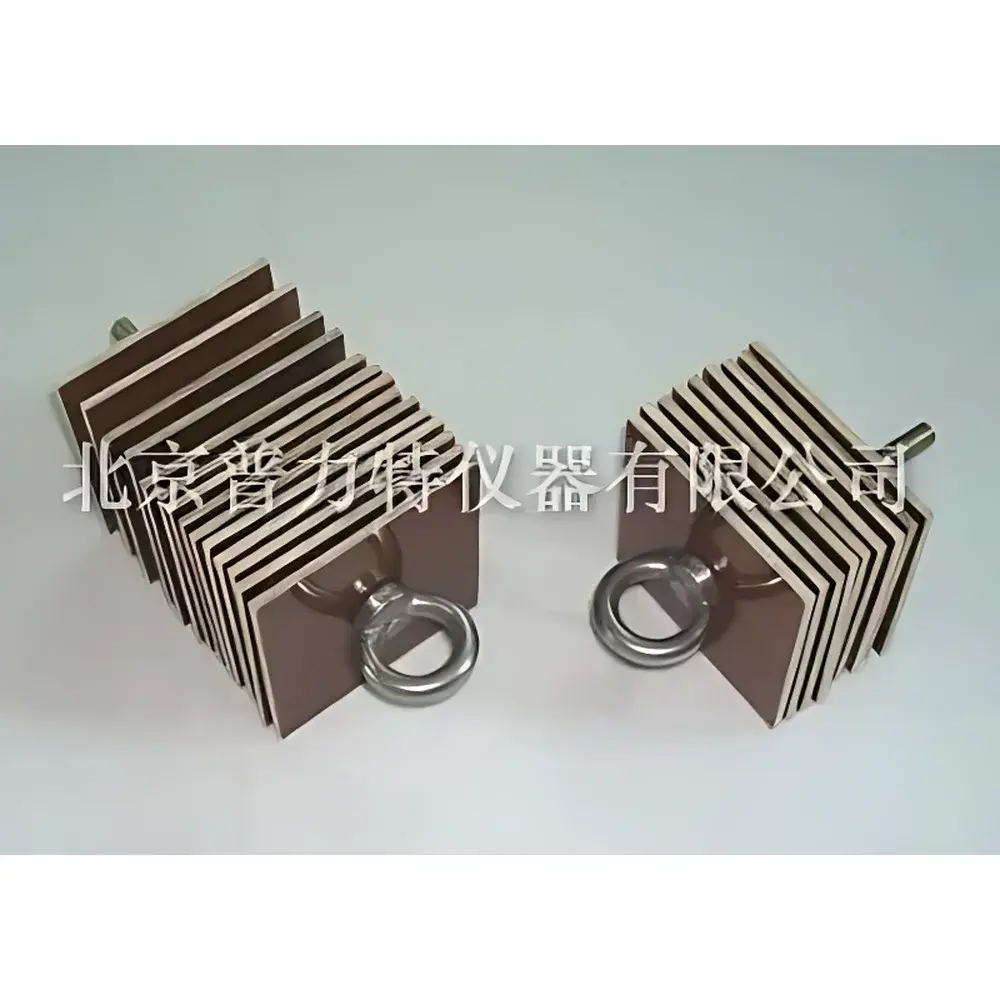

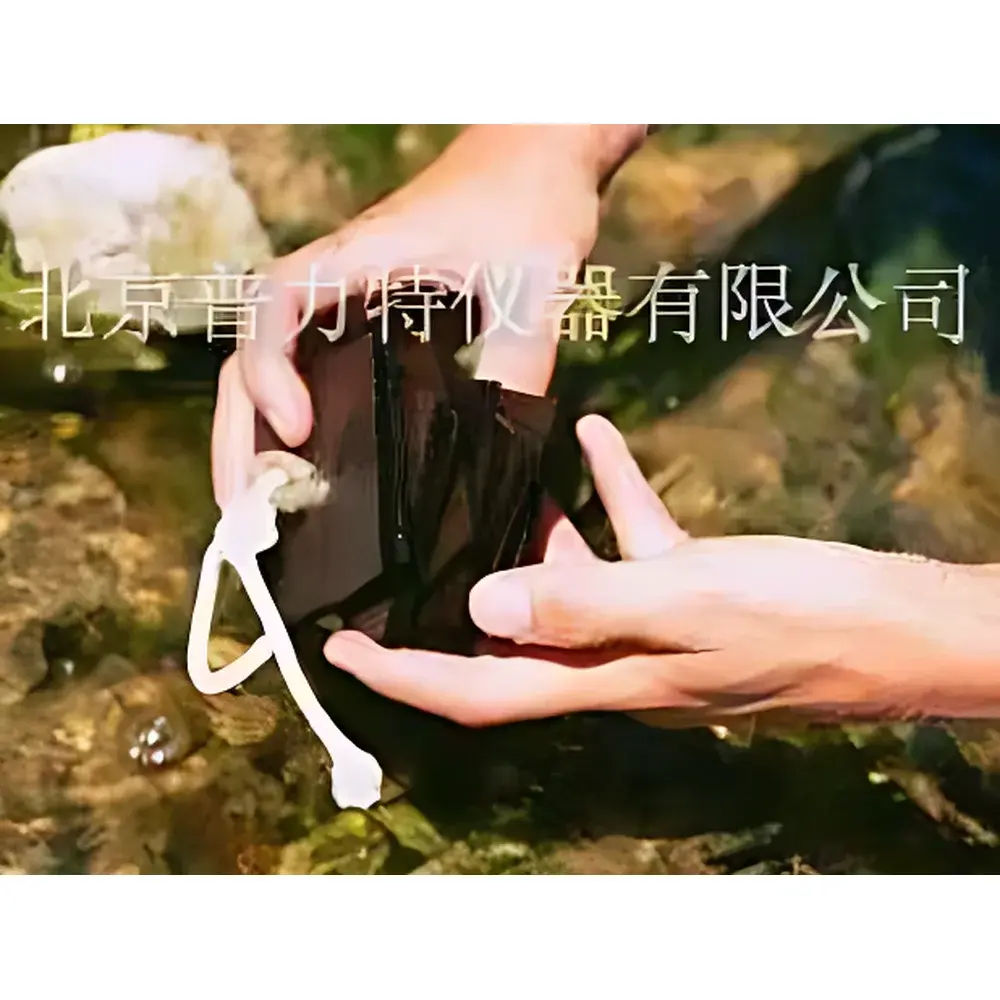
Benthic Organism Settlement Plate (HD9/HD14)
| Origin | Beijing, China |
|---|---|
| Manufacturer Type | Distributor |
| Origin Category | Domestic |
| Model | HD9 / HD14 |
| Quotation | Upon Request |
| Material | Masonite Fiberboard |
| Thickness | 3 mm |
| Surface Area | HD9 – 0.1 m² per plate |
| Suspension Rod | AISI 304 Stainless Steel |
| Plate Configuration | HD9 – 8 single plates |
| Compliance | EPA Method 1664 & USGS Protocols for Benthic Invertebrate Monitoring |
Overview
The Benthic Organism Settlement Plate (HD9/HD14) is a standardized, passive bio-monitoring substrate designed for quantitative assessment of benthic macroinvertebrate colonization in freshwater and marine environments. Engineered in accordance with U.S. Environmental Protection Agency (EPA) Method 1664 and U.S. Geological Survey (USGS) field protocols, this device functions on the principle of artificial substrate deployment—providing a consistent, inert surface that mimics natural hard-bottom microhabitats to facilitate predictable settlement, growth, and retention of benthic taxa including chironomids, oligochaetes, amphipods, gastropods, and insect larvae. Unlike sediment coring or grab sampling, settlement plates enable temporal comparison of community assembly dynamics over defined exposure periods (typically 2–8 weeks), supporting trend analysis of ecological integrity, trophic status, and anthropogenic stressors such as eutrophication, heavy metal accumulation, or organic pollutant loading.
Key Features
- Engineered substrate geometry: HD9 configuration comprises eight individual 0.1 m² plates mounted on a single stainless-steel suspension frame, optimized for uniform flow exposure and minimal inter-plate interference in lentic systems.
- Modular multi-layer design (HD14): Integrates eight single plates plus one double, two triple, and two quadruple assemblies—totaling 25 discrete settlement surfaces—to capture vertical stratification effects and differential colonization across surface-area gradients.
- Dimensionally stable Masonite fiberboard substrate: 3 mm thickness ensures rigidity under hydrodynamic shear while maintaining surface porosity conducive to microbial film formation—a prerequisite for invertebrate larval attachment and early development.
- AISI 304 stainless steel suspension rod: Corrosion-resistant, non-reactive, and compliant with ASTM A240/A240M specifications; enables secure anchoring in soft sediments or attachment to fixed moorings without leaching contaminants.
- Standardized mounting interface: Compatible with USGS-designed deployment frames and EPA-recommended retrieval rigs, ensuring interoperability with existing field data collection workflows.
Sample Compatibility & Compliance
The HD9/HD14 plates are validated for use in lakes, reservoirs, ponds, estuaries, and nearshore marine zones with salinities up to 35 ppt. They support taxonomic identification and biomass estimation per ASTM D5088-22 (Standard Practice for Sampling Benthic Macroinvertebrates) and align with ISO 23913:2022 (Water quality — Guidance on sampling benthic invertebrates). The fiberboard material exhibits no measurable leachate of phenols, formaldehyde, or extractable metals under EPA SW-846 Method 1311 (TCLP), confirming suitability for regulatory monitoring programs requiring GLP-compliant materials. All configurations meet USGS National Water Quality Assessment (NAWQA) benthic protocol requirements for substrate surface area equivalence and deployment duration consistency.
Software & Data Management
While the HD9/HD14 is a passive physical sampling tool, it integrates seamlessly into digital ecological data pipelines. Field deployment metadata—including GPS coordinates, depth, exposure duration, temperature loggers, and sediment type—are recorded using EPA-approved mobile apps (e.g., EPA’s EnviroAtlas Field Data Collector) or USGS NWISWeb-compatible forms. Post-retrieval specimen processing follows standard taxonomy workflows compatible with BioMon software (v4.2+), the USGS Benthic Index Calculator, and EPA’s STORET database schema. Audit trails for plate batch numbers, calibration verification (via pre-deployment weight and surface inspection), and chain-of-custody documentation comply with 21 CFR Part 11 requirements when used in federally funded water quality assessments.
Applications
- Long-term ecological monitoring programs tracking benthic community shifts in response to nutrient loading, climate-driven thermal regimes, or invasive species establishment.
- Pre- and post-remediation assessment of contaminated sediments, particularly where bioavailability of legacy pollutants (e.g., PCBs, PAHs) influences benthic colonization success.
- Calibration and validation of predictive models linking benthic assemblage structure to dissolved oxygen profiles, redox potential, and organic carbon fluxes.
- Comparative studies of habitat complexity effects across engineered substrates—e.g., pairing HD14 multi-tier arrays with control sand/silt plots to quantify refuge value for juvenile benthos.
- Educational field ecology modules aligned with NSF-supported curriculum standards for undergraduate aquatic biology and environmental science laboratories.
FAQ
What is the recommended exposure duration for HD9/HD14 plates in temperate freshwater systems?
Typical deployment ranges from 21 to 42 days, depending on seasonal water temperature and target taxa life cycles; shorter durations (14 days) are advised for rapid-turnover indicator species in summer months.
Can HD9/HD14 plates be sterilized between deployments?
Yes—autoclaving at 121°C for 20 minutes or immersion in 70% ethanol for 10 minutes is acceptable; however, repeated thermal cycling may reduce fiberboard tensile strength after >5 cycles.
How should plates be oriented during deployment?
Plates must be suspended vertically (edge-on to prevailing current) to minimize sediment smothering and maximize larval settlement efficiency—horizontal orientation is not recommended per USGS Technical Memorandum 2019-01.
Is there a certified reference material available for inter-laboratory validation?
No CRM exists specifically for settlement plates; however, NIST SRM 2710a (Montana Soil) is routinely used alongside plate-based assays to cross-validate sediment toxicity endpoints in joint EPA-USGS intercalibration studies.
Are replacement plates supplied with traceable batch certification?
Yes—each shipment includes a Certificate of Conformance listing batch number, dimensional verification report, and third-party test summary for formaldehyde and heavy metal content per ISO/IEC 17025-accredited laboratory protocols.







