
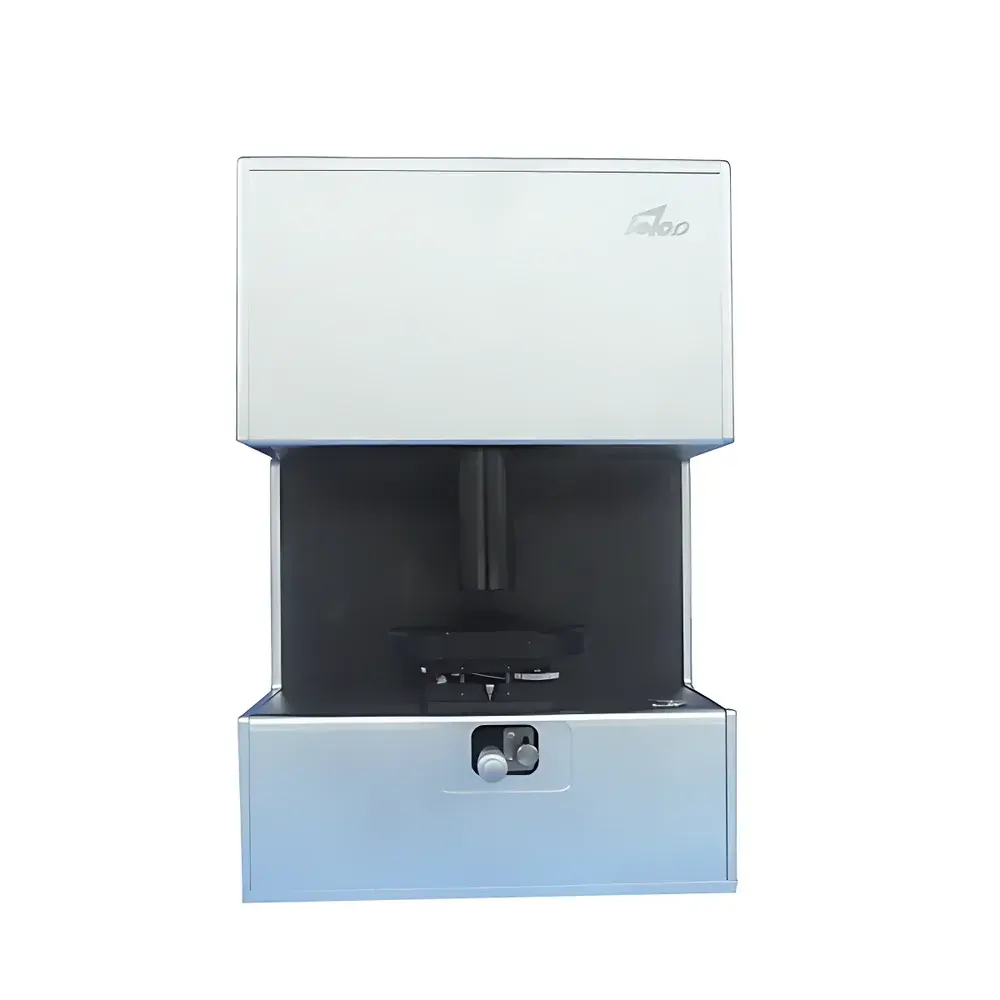
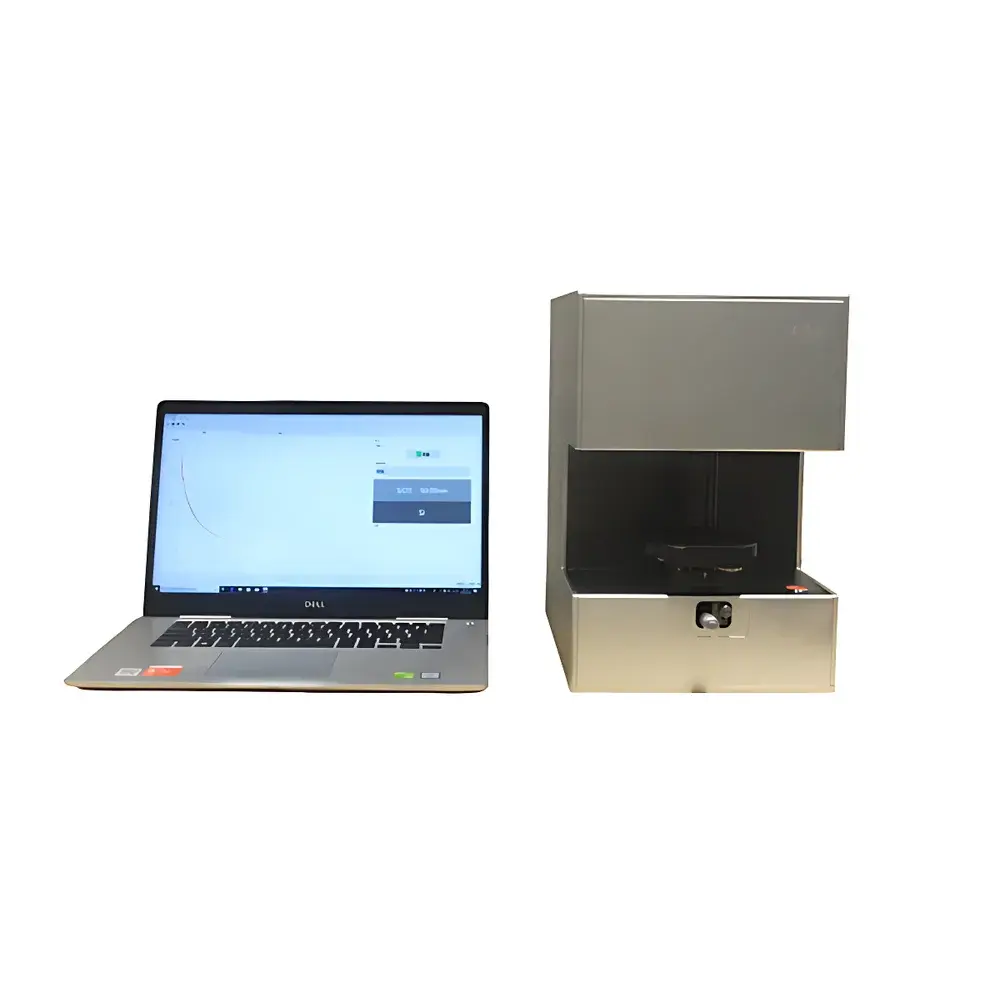
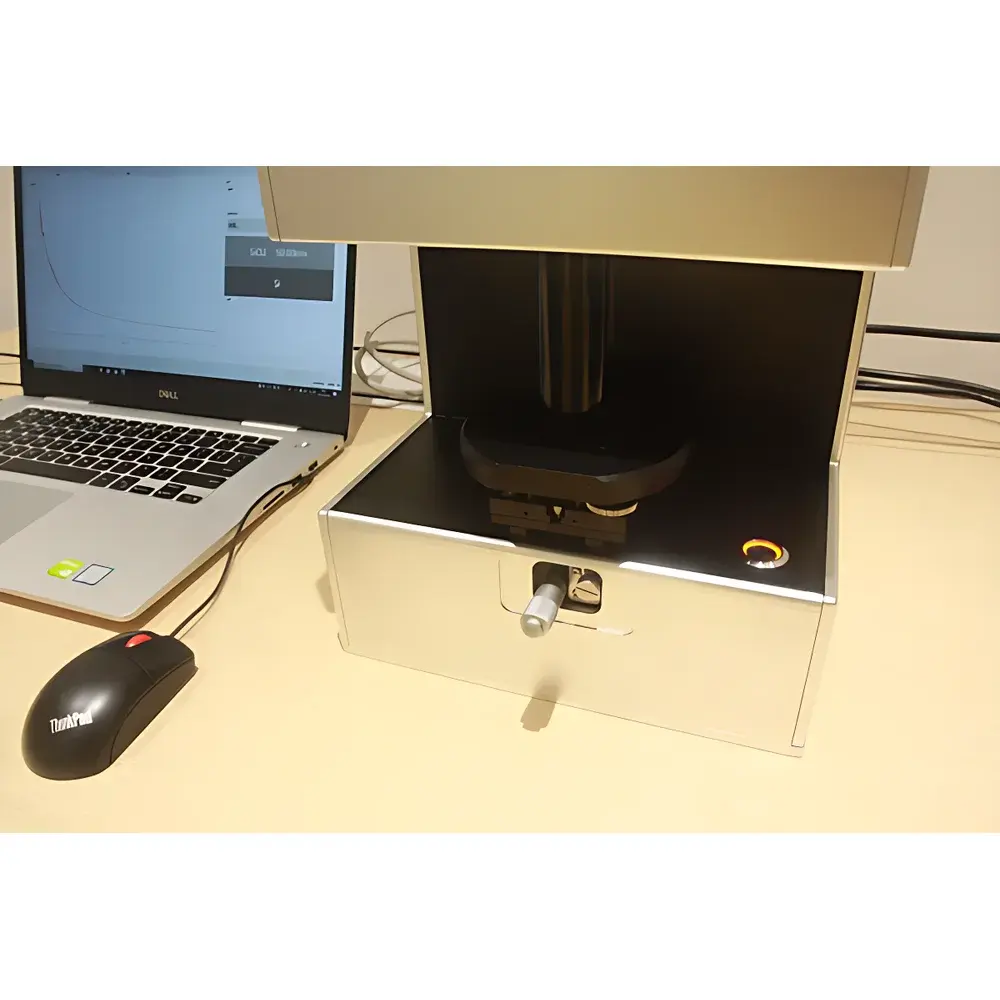
Betop Scientific Delta-DUV Reflective Thin-Film Thickness Metrology System
| Brand | Betop Scientific |
|---|---|
| Origin | Guangdong, China |
| Manufacturer Type | Direct Manufacturer |
| Product Origin | Domestic (China) |
| Model | Delta-DUV |
| Price Range | USD 14,000 – 28,000 |
| Wavelength Range | 190–1100 nm |
| Thickness Measurement Range | 1 nm – 30 µm |
| Accuracy | ±1 nm |
| Precision | ±0.2 nm |
| Incidence Angle | 90° |
| Sample Type | Transparent or Semi-Transparent Films |
| Measurement Modes | Reflectance & Transmittance |
| Spot Size | 2 mm (standard), optional micro-spot accessory available |
| In-Line Capable | Yes |
| XY Scanning Option | Available |
Overview
The Betop Scientific Delta-DUV Reflective Thin-Film Thickness Metrology System is a high-precision, non-contact optical metrology instrument engineered for quantitative characterization of thin-film structures using spectrally resolved interferometry. Operating on the physical principle of thin-film interference—where incident broadband deep-ultraviolet to near-infrared light (190–1100 nm) reflects from multiple dielectric interfaces—the system captures wavelength-dependent reflectance spectra and applies rigorously validated inverse optical modeling algorithms to extract film thickness, refractive index (n), and extinction coefficient (k). Designed for laboratory R&D, process development, and inline quality control environments, the Delta-DUV delivers sub-nanometer resolution in thickness determination for single- and multi-layer stacks without sample preparation, vacuum requirements, or physical contact. Its fixed 90° normal-incidence geometry ensures minimal angular sensitivity and simplifies integration into cleanroom-compatible tooling or automated production lines.
Key Features
- Deep-UV-enhanced optical path with quartz-fluoride optics and deuterium-halogen broadband source enabling reliable measurement down to 1 nm on SiO₂, SiNₓ, photoresists, and polymer films
- Real-time spectral acquisition (up to 10 Hz frame rate) with thermoelectrically stabilized CCD detector for high signal-to-noise ratio across the full 190–1100 nm range
- Factory-calibrated, physics-based inversion engine incorporating Fresnel equations and dispersion models—no empirical fitting required
- Simultaneous extraction of thickness, n, and k for films ≥100 nm; supports Cauchy, Sellmeier, and Tauc-Lorentz dispersion models
- Modular probe head with interchangeable collimators and optional micro-spot (≤50 µm) attachment for localized analysis of patterned wafers or small-area coatings
- Fully integrated inline capability: Ethernet/IP communication, PLC-triggered acquisition, and analog I/O for synchronization with conveyor systems or robotic handlers
- Robust mechanical architecture with vibration-damped baseplate and passive thermal stabilization—designed for 24/7 operation in manufacturing environments
Sample Compatibility & Compliance
The Delta-DUV accommodates transparent and semi-transparent substrates including silicon, fused silica, sapphire, glass, PET, PI, and quartz. It is routinely deployed in semiconductor front-end and back-end processes (e.g., gate oxide, ARC, BARC, passivation layers), flat-panel display fabrication (LCD cell gap, ITO, polyimide alignment layers), LED epitaxy monitoring (AlGaN, GaN, SiO₂), and medical device coating validation (parylene-C on balloon catheters, drug-eluting stent polymer matrices). The system complies with ISO/IEC 17025 calibration traceability requirements when used with NIST-traceable reference standards. Data integrity meets GLP/GMP documentation standards, with audit trail logging, user access controls, and electronic signature support aligned with FDA 21 CFR Part 11 expectations for regulated industries.
Software & Data Management
DeltaControl™ software provides a unified interface for instrument control, real-time spectral visualization, multi-layer model definition, batch processing, and statistical reporting. All raw spectra and fit parameters are stored in HDF5 format with embedded metadata (timestamp, operator ID, calibration ID, environmental conditions). Export options include CSV, XML, and industry-standard DIAS (Data Interchange for Analytical Systems) schema. Automated report generation supports customizable templates compliant with internal SOPs or external client deliverables. Remote diagnostics, firmware updates, and spectral library management are supported via secure HTTPS-based cloud portal—accessible only through authenticated enterprise accounts.
Applications
- Semiconductor: Thickness uniformity mapping of SiO₂ (0.8–3 nm), SiNₓ (2–50 nm), and low-k dielectrics on 200 mm/300 mm wafers
- Display Manufacturing: Cell gap verification in TFT-LCD panels; ITO layer thickness and sheet resistance correlation on touch sensor glass
- Optical Coatings: AR/HR multilayer stack thickness and refractive index profiling on lenses and mirrors
- Biomedical Devices: Quantitative parylene-C conformal coating thickness on nitinol stents and polyurethane catheter shafts
- Automotive: DLC (diamond-like carbon) hard coating thickness and homogeneity assessment on headlamp lenses and mirror substrates
- R&D Labs: In-situ monitoring of ALD/CVD growth kinetics via time-resolved reflectance spectroscopy
FAQ
What is the minimum measurable thickness for amorphous SiO₂ on silicon?
For thermal SiO₂ on Si substrates, the practical lower limit is 1 nm with ±1 nm accuracy under controlled ambient conditions and optimized signal averaging.
Can the Delta-DUV measure absorbing films such as metals or doped oxides?
Yes—when operated in reflectance mode with appropriate dispersion modeling, it quantifies thickness and complex optical constants (n + ik) for films like TiN, ITO, and Ta₂O₅ above ~10 nm.
Is the system compatible with vacuum or inert gas environments?
The standard probe head is rated for ambient air operation; optional purged or vacuum-compatible versions (with UV-grade sapphire windows) are available upon request.
How is calibration maintained over time?
The system employs dual-reference calibration: factory-installed Si/SiO₂ standards for thickness traceability and NIST SRM 2036 for spectral radiometric calibration—both verified during annual service intervals.
Does DeltaControl™ support automated pass/fail decision logic for inline deployment?
Yes—customizable threshold rules, spatial tolerance zones, and SPC charting (X-bar/R, Cpk) are embedded in the software’s recipe-driven inspection workflow module.



