
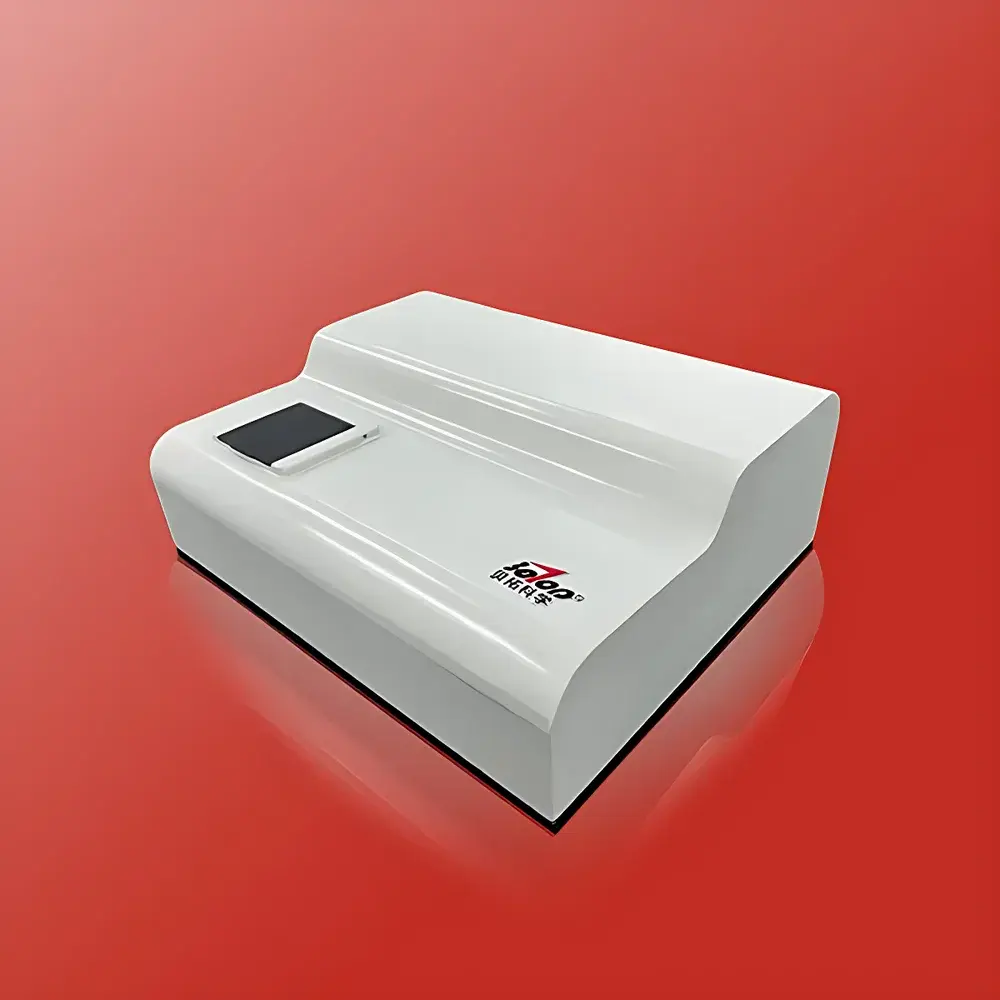
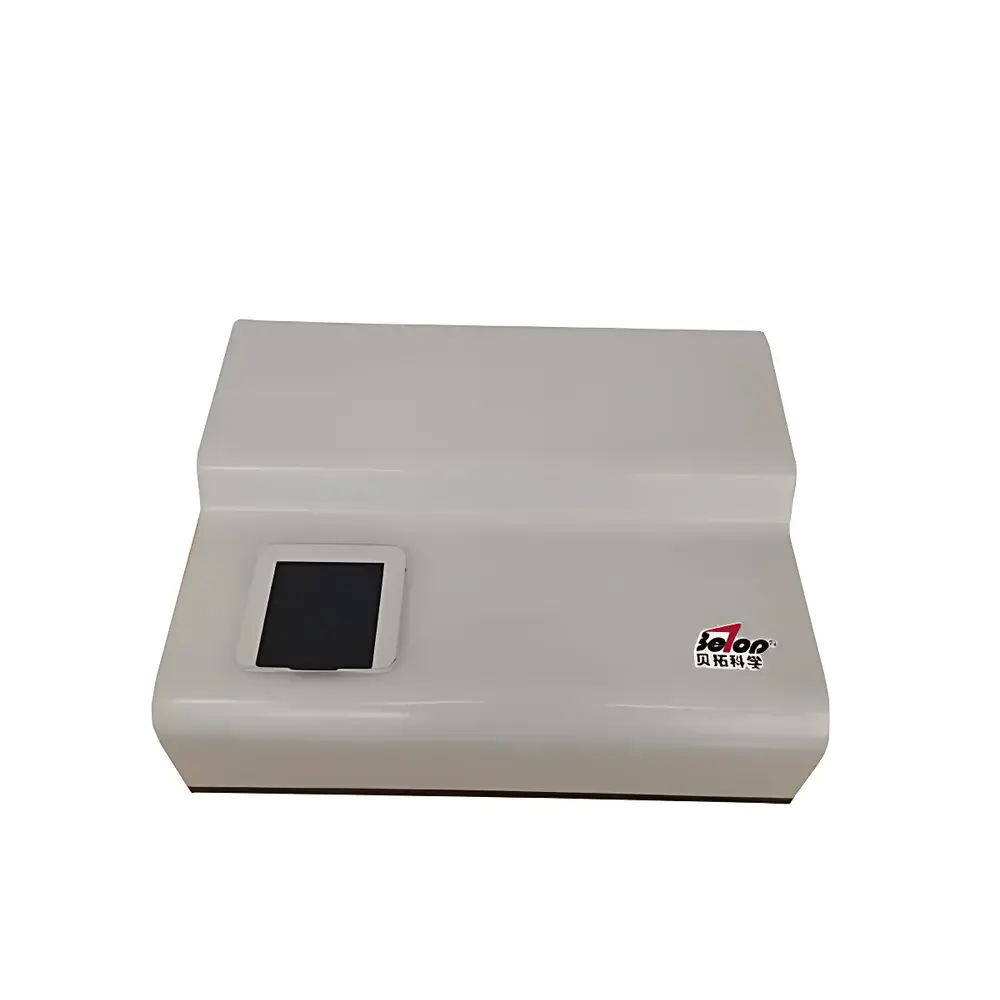
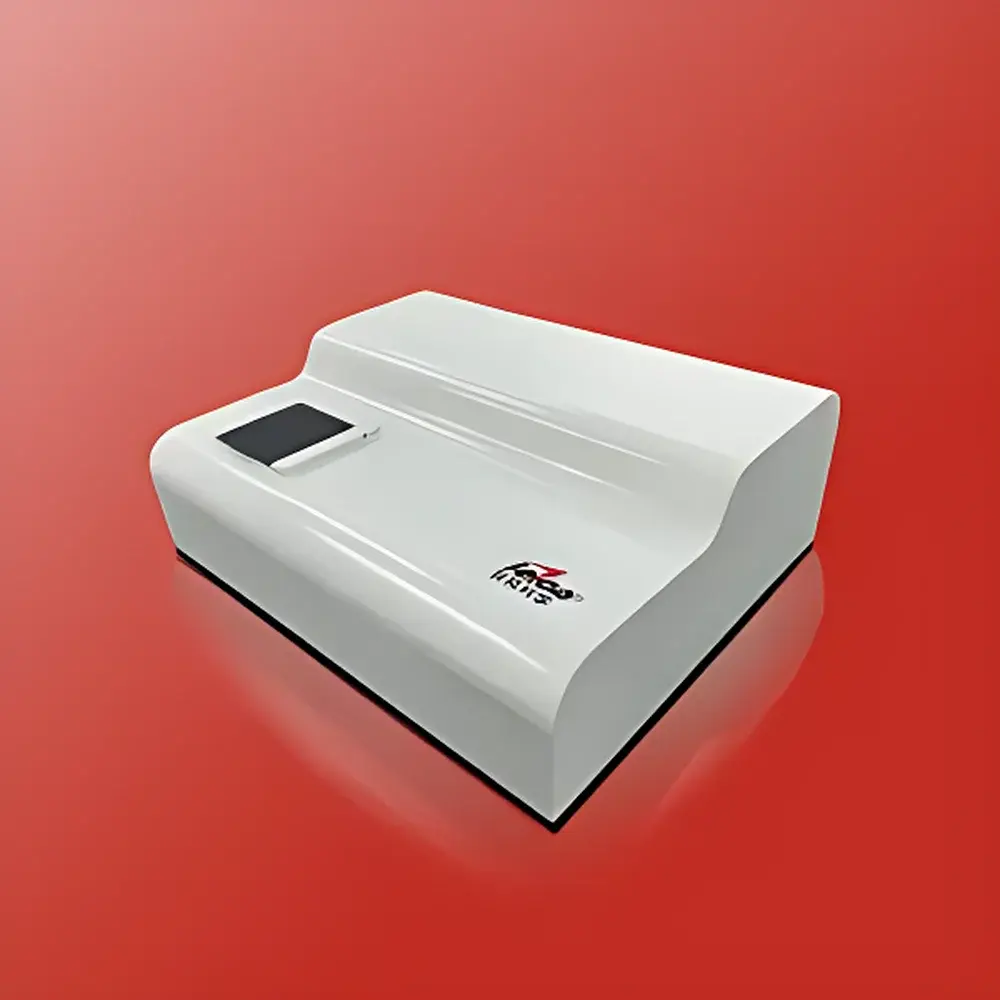
Betop Scientific DLS 90 Nanoparticle Size Analyzer
| Brand | Betop Scientific |
|---|---|
| Origin | Guangdong, China |
| Manufacturer Type | Direct Manufacturer |
| Product Origin | Domestic (China) |
| Model | DLS 90 |
| Price Range | USD 27,500–29,200 (FOB) |
| Particle Size Measurement Range | 0.7 nm – 10 μm |
| Size Measurement Reproducibility | Better than ±2% |
| Temperature Control Range | 15–50 °C |
| Temperature Stability | ±0.5 °C |
| Laser Source | 20 mW solid-state diode laser @ 650 nm |
| Measurement Principle | Dynamic Light Scattering (DLS) |
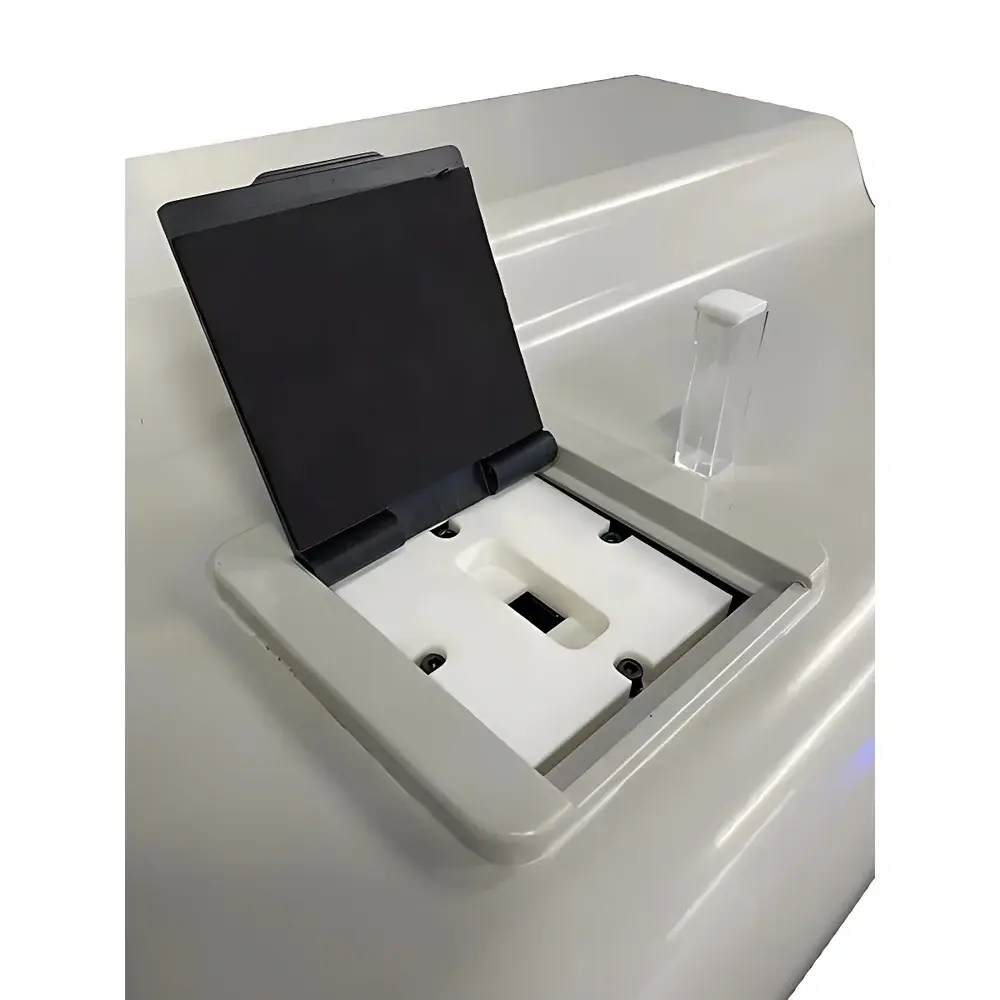
| Sample Volume Requirement | ≥0.7 mL (standard quartz cuvette, 4 mL capacity) |
| Scattering Angle | 90° |
| Detector | Photon-counting photomultiplier tube (PMT) with low dark count rate and fiber-optic coupling |
| Correlator | FPGA-based digital photon correlator, 1000 hardware channels, minimum sampling time: 100 ns |
| Data Interface | USB 2.0 or higher |
| Power Supply | AC 220 V, 50/60 Hz |
| Operating Environment | 5–35 °C ambient temperature, 0–90% RH (non-condensing) |
| Dimensions | 440 × 360 × 210 mm |
| Weight | ~20 kg |
| Molecular Weight Estimation Range | Derived from hydrodynamic diameter via calibration standards (applicable to proteins, polymers, colloids in aqueous/non-aqueous media) |
| Zeta Potential Capability | Not integrated (standalone DLS configuration) |
Overview
The Betop Scientific DLS 90 Nanoparticle Size Analyzer is a benchtop instrument engineered for precision hydrodynamic size characterization of colloidal dispersions and macromolecular solutions using Dynamic Light Scattering (DLS). DLS relies on the analysis of temporal fluctuations in scattered laser intensity arising from Brownian motion of suspended particles. Smaller particles diffuse more rapidly, resulting in faster intensity autocorrelation decay—quantified by a digital photon correlator. The measured diffusion coefficient is converted to hydrodynamic diameter via the Stokes–Einstein equation, enabling accurate, non-invasive sizing without sample dilution or labeling. As standardized under ISO 22412:2017, DLS is the internationally accepted primary method for sub-micron particle sizing in quality control, formulation development, and nanomaterial research laboratories.
Key Features
- High-sensitivity photon-counting detection: Low-dark-current photomultiplier tube (PMT) with fiber-optic coupling ensures optimal signal-to-noise ratio for sub-nanometer measurements.
- FPGA-based 1000-channel digital correlator: Delivers real-time autocorrelation with 100 ns minimum lag time—critical for resolving particles as small as 0.7 nm.
- Precise thermostatic control: PWM-driven Peltier system maintains sample temperature within ±0.5 °C across the 15–50 °C operating range, minimizing thermal drift during extended measurement sequences.
- Fixed-angle 90° optical geometry: Optimized for high scattering efficiency while minimizing multiple scattering artifacts in moderately concentrated dispersions.
- Robust mechanical architecture: Compact footprint (440 × 360 × 210 mm), vibration-damped optical baseplate, and sealed laser cavity ensure long-term alignment stability and operational reliability in shared lab environments.
- Compliance-ready data handling: Software supports audit-trail logging, user access levels, and export formats compatible with LIMS integration (CSV, TXT, PDF reports).
Sample Compatibility & Compliance
The DLS 90 accommodates aqueous and organic suspensions—including surfactant-stabilized nanoparticles, protein formulations, polymer micelles, liposomes, and inorganic colloids—in standard 4 mL quartz cuvettes. Sample volume requirement is ≥0.7 mL; concentration must be optimized per material to avoid multiple scattering (typically OD < 0.3 at 650 nm). While not certified to GLP or GMP out-of-the-box, the system’s design aligns with foundational requirements of FDA 21 CFR Part 11 (via optional electronic signature modules) and supports ISO/IEC 17025 traceability when used with NIST-traceable size standards (e.g., polystyrene latex nanoparticles). All firmware and calibration protocols are documented per manufacturer’s Quality Management System (QMS), compliant with ISO 9001:2015.
Software & Data Management
Control and analysis are performed via Betop’s proprietary DLS Analysis Suite v3.x, a Windows-based application supporting automated measurement sequences, batch processing, and multi-parameter fitting (cumulant, CONTIN, NNLS). Real-time correlation curve visualization, baseline correction tools, and polydispersity index (PdI) calculation follow ISO 22412 guidelines. Export options include ASCII-compatible data files for third-party statistical analysis (e.g., MATLAB, Python SciPy), as well as formatted PDF reports with instrument metadata, operator ID, timestamp, and environmental logs. Raw correlator data (.cor) is retained for reprocessing, ensuring full data integrity and regulatory defensibility.
Applications
- Quality assurance of nanomaterials: Monitoring batch-to-batch consistency of metal oxides (TiO₂, SiO₂, ZrO₂), quantum dots, and carbon nanotubes in R&D and production settings.
- Pharmaceutical development: Characterizing liposomal drug carriers, protein aggregates, and polymeric nanoparticles during formulation optimization and stability studies.
- Catalysis & energy materials: Sizing catalyst precursors (e.g., Pt, Pd colloids), battery electrode slurries (LiFePO₄, NMC), and conductive additives (graphene oxide, carbon black dispersions).
- Industrial powders & pigments: Assessing dispersion stability of calcium carbonate, talc, kaolin, and zirconium silicate in coatings, ceramics, and composites.
- Academic research: Supporting fundamental studies in soft matter physics, colloid science, and biophysics where hydrodynamic radius serves as a critical structural proxy.
FAQ
What is the smallest particle size detectable by the DLS 90?
The instrument achieves reliable detection down to 0.7 nm hydrodynamic diameter under optimal conditions (low-polydispersity standards, clean optics, appropriate concentration). Sub-2 nm resolution requires strict attention to dust filtration, solvent purity, and cuvette cleanliness.
Does the DLS 90 support zeta potential measurement?
No—this is a dedicated DLS-only configuration. Zeta potential capability requires electrophoretic light scattering (ELS) hardware, which is not integrated into the DLS 90 platform.
Can the system measure polydisperse samples accurately?
Yes—the software implements CONTIN and non-negative least squares (NNLS) algorithms to resolve multimodal distributions. However, resolution limits apply: peaks must differ by ≥3× in diameter to be reliably distinguished.
Is temperature calibration traceable to national standards?
The internal thermistor is factory-calibrated against NIST-traceable references; users may perform verification using certified liquid-in-glass thermometers or PT100 probes in the sample compartment.
What maintenance is required for long-term performance?
Annual optical alignment verification and PMT gain recalibration are recommended. Laser diode lifetime exceeds 10,000 hours; quartz cuvettes should be inspected for scratches before each use.



