
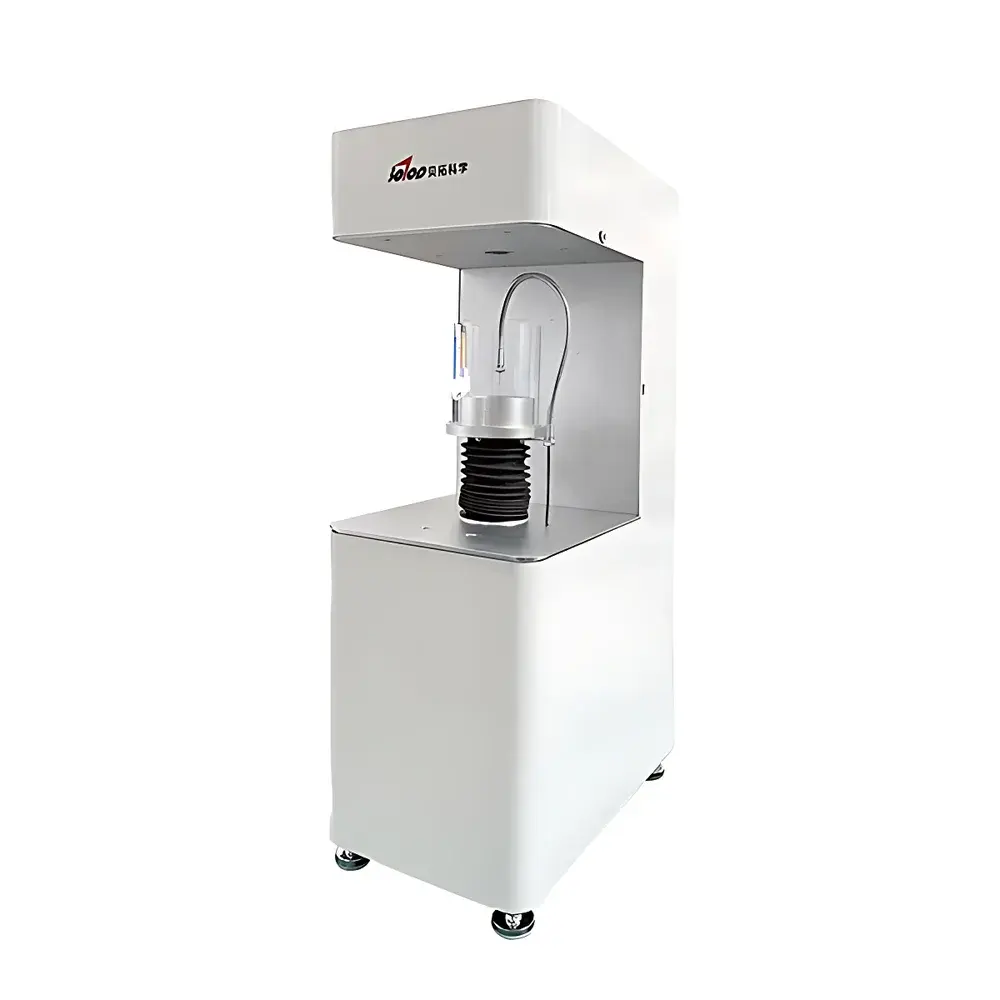
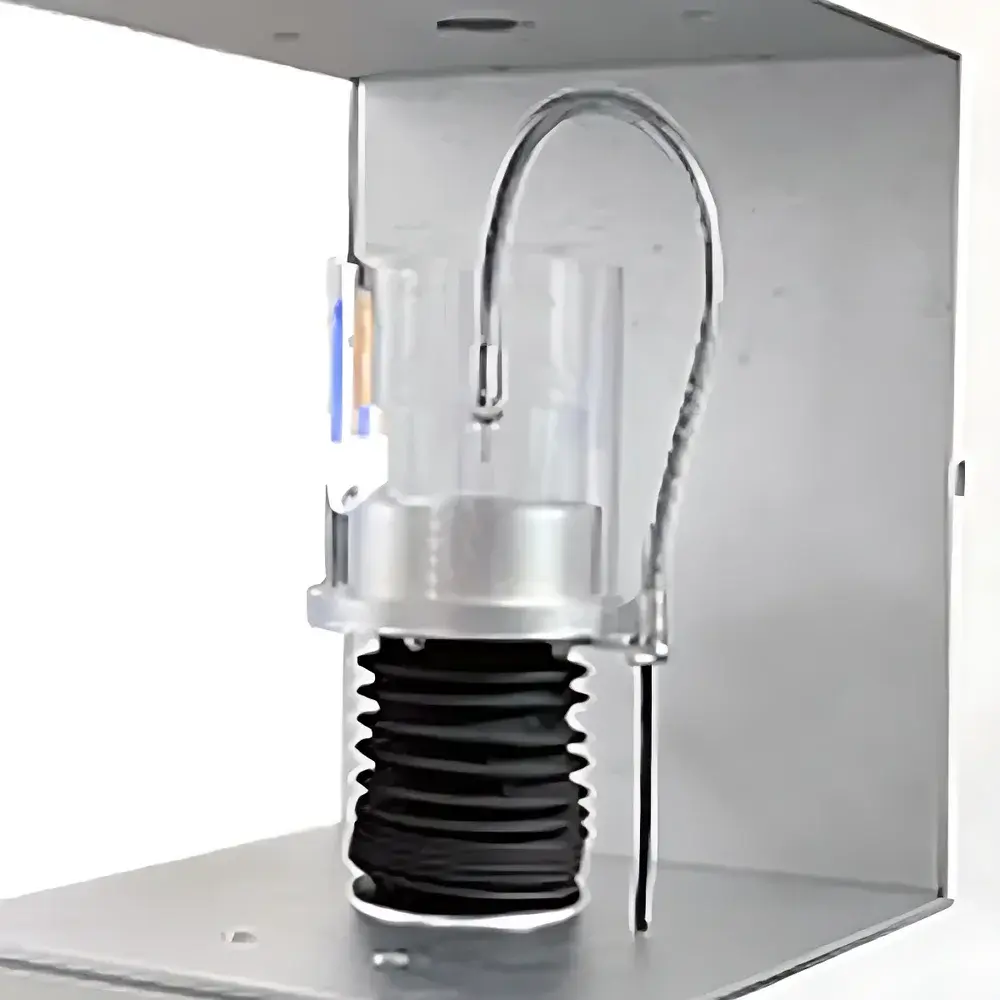
Betop Scientific KF20 Automated Surface Tensiometer
| Brand | Betop Scientific |
|---|---|
| Origin | Guangdong, China |
| Manufacturer Type | Direct Manufacturer |
| Model | KF20 |
| Price Range | USD 14,000–15,500 (FOB) |
| Measurement Range | 1–1000 mN/m |
| Resolution | 0.01 mN/m |
| Accuracy | ±0.1 mN/m |
| Temperature Display Range | −40 to +460 °C |
| Temperature Display Resolution | 0.01 °C |
| Measurement Methods | Du Noüy Ring Method, Wilhelmy Plate Method |
Overview
The Betop Scientific KF20 Automated Surface Tensiometer is a precision-engineered instrument designed for the quantitative determination of surface tension (γLV) and liquid–liquid or liquid–solid interfacial tension (γLL, γSL) based on classical force-balance principles. It operates primarily via two standardized physical methods: the Du Noüy ring method (ASTM D971, ISO 6295) and the Wilhelmy plate method (ISO 1409, ASTM D1331), both compliant with internationally recognized gravimetric tensiometry protocols. The system employs a high-stability microbalance coupled with motorized vertical sample stage actuation, enabling fully automated immersion/retraction cycles with programmable speed control and real-time force acquisition. Its modular architecture supports optional temperature-controlled environments (via external Peltier or circulating bath interfaces), making it suitable for thermodynamic surface characterization across wide thermal domains—from cryogenic formulations to high-temperature industrial process fluids.
Key Features
- High-resolution force detection with ≤0.01 mN/m resolution and ±0.1 mN/m absolute accuracy, traceable to NIST-certified reference standards.
- Motor-driven precision Z-stage with ≥100 mm travel range and programmable displacement speed (≥1.2 mm/min), accommodating diverse sample geometries and container sizes.
- Integrated white LED coaxial illumination system optimized for meniscus visualization and edge-detection reliability during Wilhelmy plate measurements.
- Dual-method capability: automatic switching between Du Noüy ring and Wilhelmy plate configurations without hardware reconfiguration.
- Robust mechanical design featuring overload protection circuitry and electromagnetic damping to extend sensor longevity under repeated dynamic loading.
- Modular thermal integration: compatible with external temperature-controlled jackets or immersion baths supporting operation from −10 °C to +300 °C (with optional extended-range accessories up to +460 °C).
Sample Compatibility & Compliance
The KF20 accommodates aqueous, organic, and molten systems—including surfactant solutions, polymer melts, ionic liquids, crude oils, pharmaceutical suspensions, and functional coatings. It meets key regulatory and quality framework requirements for routine QC and R&D applications: full alignment with ASTM D1331 (interfacial tension of oil-water systems), ASTM D971 (surface tension of petroleum products), ISO 1409 (plastics—determination of surface tension), and ISO 6295 (petroleum products). Data integrity features—including user-level access control, electronic signature support, and audit-trail-enabled operation logs—facilitate compliance with GLP and GMP environments under FDA 21 CFR Part 11 guidelines when deployed with validated TENTION software configurations.
Software & Data Management
The KF20 is operated via TENTION—a Windows-based, multilingual software platform engineered for reproducible experimental workflows. It provides real-time force–distance curve visualization, automated baseline correction, dynamic surface tension profiling (via time-resolved measurement mode), and CMC (critical micelle concentration) analysis using first-derivative inflection point detection. All raw data are stored in structured CSV/Excel-compatible formats with embedded metadata (operator ID, timestamp, method parameters, environmental conditions). Software modules support statistical batch reporting, comparative trend analysis across sample sets, and export-ready graphical outputs compliant with internal SOPs and external peer-reviewed publication standards.
Applications
- Quantitative evaluation of surfactant efficiency via CMC determination and adsorption kinetics modeling.
- Wettability assessment of pharmaceutical tablets, APIs, and excipients to predict dissolution behavior and formulation stability.
- Interfacial aging studies of lubricants and transformer oils to monitor oxidation-induced polarity shifts.
- Surface cleanliness verification in food-grade tank cleaning validation protocols (e.g., residue detection thresholds).
- Coating adhesion prediction through contact angle–surface energy correlation using pendant drop or sessile drop add-ons (optional).
- Formulation optimization in cosmetics and inkjet inks by correlating dynamic surface tension with jetting performance and substrate wetting uniformity.
- Characterization of nanomaterial dispersions—assessing colloidal stability via interfacial energy trends and sedimentation resistance modeling.
FAQ
What measurement standards does the KF20 comply with?
It conforms to ASTM D971, ASTM D1331, ISO 1409, and ISO 6295 for surface and interfacial tension determinations.
Can the KF20 perform temperature-controlled measurements?
Yes—standard configuration supports ambient operation; optional temperature control modules enable regulated testing from −10 °C to +300 °C, with extended-range accessories certified to +460 °C.
Is CMC analysis included in the base software package?
Yes—TENTION software includes dedicated CMC calculation algorithms based on surface tension vs. log(concentration) regression and derivative-based inflection detection.
Does the system support GLP/GMP data integrity requirements?
When configured with password-protected user roles, electronic signatures, and audit-trail logging, the KF20–TENTION combination satisfies core elements of FDA 21 CFR Part 11 and EU Annex 11 for regulated laboratories.
What sample volumes are recommended for reliable Wilhelmy plate measurements?
Minimum recommended volume is 20 mL for standard cylindrical vessels (≥35 mm diameter); larger volumes (>50 mL) improve thermal homogeneity during extended temperature-controlled runs.



