
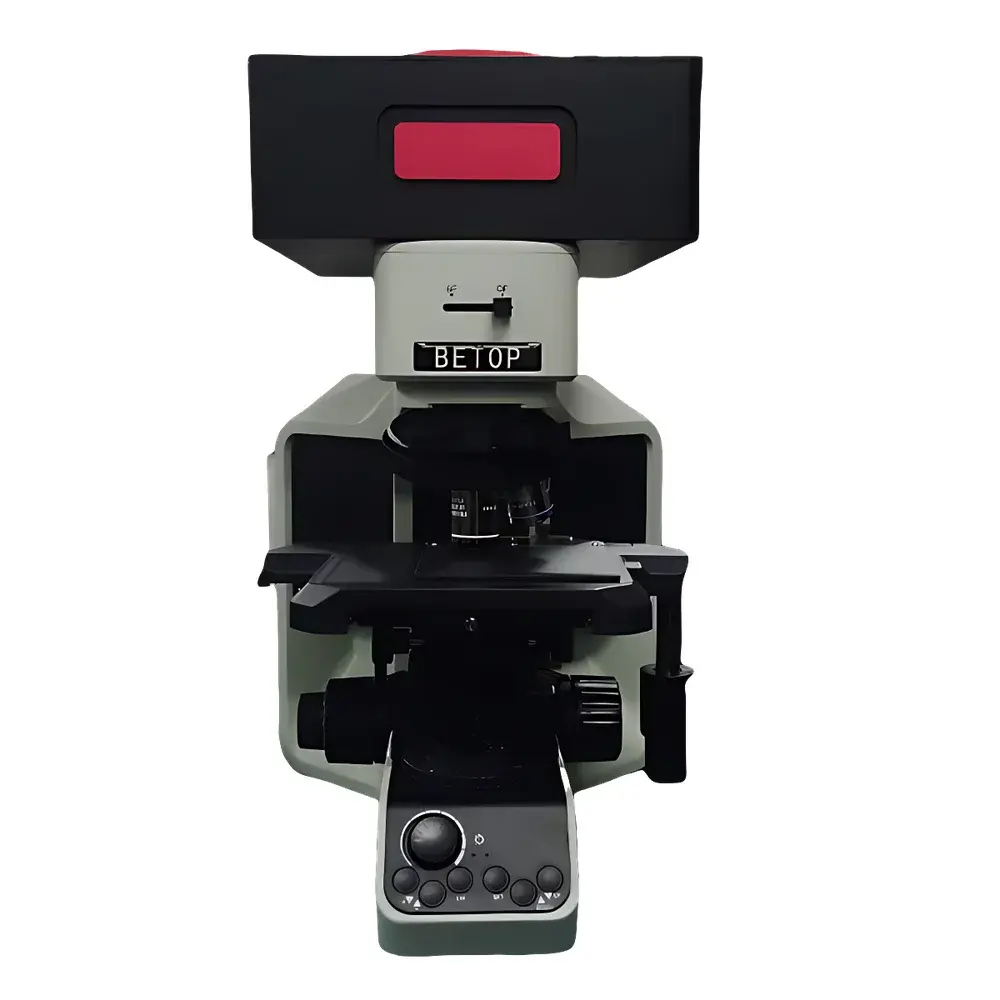
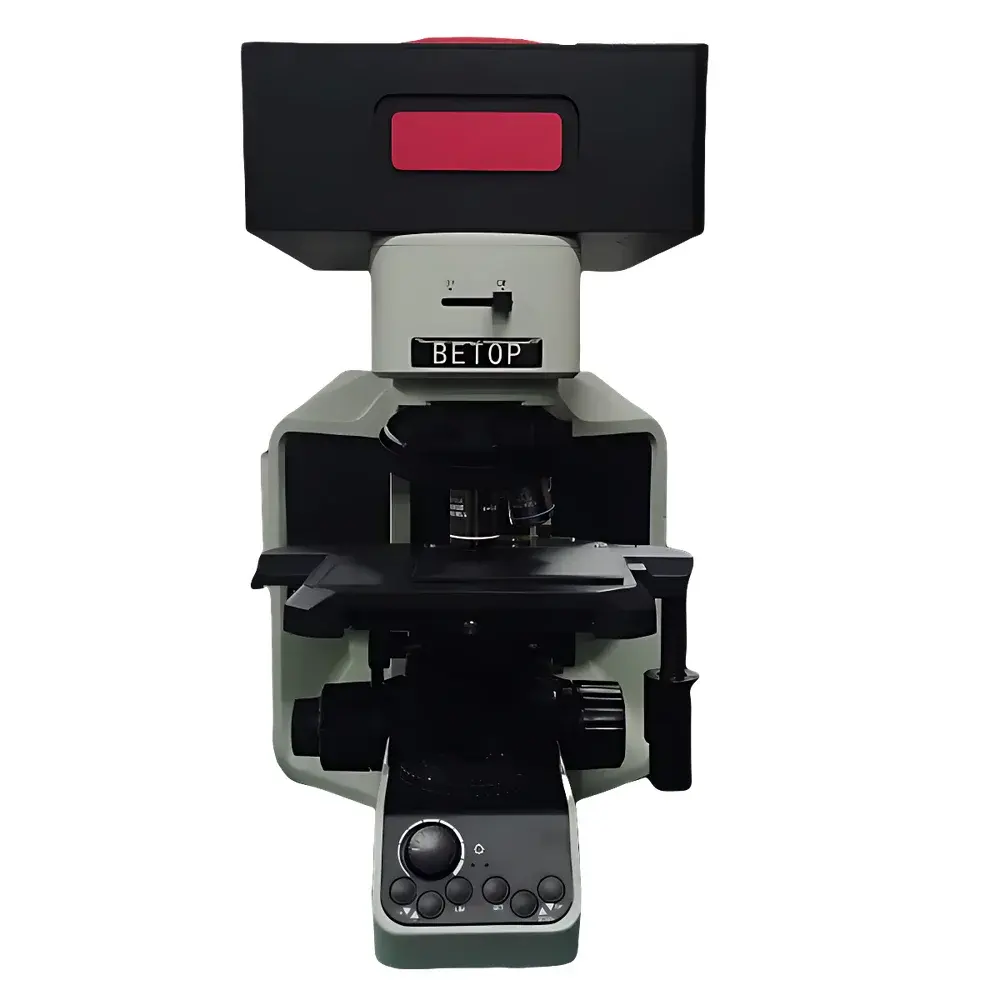
Betop Scientific OpenRam FIB6500 Confocal Micro-Raman Spectrometer
| Brand | Betop Scientific |
|---|---|
| Origin | Guangdong, China |
| Manufacturer Type | Manufacturer |
| Instrument Type | Confocal Micro-Raman Spectrometer |
| Model | OpenRam FIB6500 |
| Spectral Range | 50–9000 cm⁻¹ |
| Spectral Resolution | ≤2 cm⁻¹ |
| Spatial Resolution | 500 nm @ 532 nm excitation with 100× objective |
| Minimum Wavenumber | 50 cm⁻¹ |
| Spectral Reproducibility | Better than ±1% |
Overview
The Betop Scientific OpenRam FIB6500 Confocal Micro-Raman Spectrometer is a high-performance, benchtop-integrated analytical instrument engineered for spatially resolved vibrational spectroscopy at the microscale. It operates on the principle of inelastic light scattering (Raman effect), where monochromatic laser excitation (typically 532 nm) interacts with molecular bonds, generating characteristic spectral fingerprints in the 50–9000 cm⁻¹ wavenumber range. Unlike fiber-coupled systems that suffer from coupling losses and modal noise, the OpenRam FIB6500 employs a free-space optical architecture—directly integrating a high-throughput microscope with a compact, high-sensitivity spectrometer. This design ensures superior photon collection efficiency, mechanical stability, and long-term signal reproducibility—critical for quantitative microanalysis, spectral mapping, and time-resolved measurements in regulated and research environments.
Key Features
- Confocal Optical Architecture: Incorporates a precision pinhole-based confocal module aligned with a 100× objective, delivering lateral spatial resolution down to 500 nm and axial sectioning capability for depth-resolved analysis of layered or heterogeneous samples.
- High-Fidelity Spectral Performance: Achieves ≤2 cm⁻¹ spectral resolution across the full 50–9000 cm⁻¹ range, with spectral reproducibility better than ±1%—enabling reliable peak position tracking for stress/strain mapping, phase identification, and crystallinity assessment.
- Free-Space Optics Design: Eliminates fiber coupling losses; maintains alignment integrity under thermal drift and mechanical vibration—essential for extended acquisition sessions and GLP-compliant workflows.
- Real-Time Acquisition & Processing: Supports single-shot and continuous acquisition modes; onboard spectral processing includes baseline correction (asymmetric least squares), Gaussian/Lorentzian peak fitting, Savitzky-Golay smoothing, and intensity normalization—enabling immediate qualitative and semi-quantitative interpretation.
- Modular Microscope Integration: Compatible with XYZ motorized stages (CVRam Dimension variant); enables automated focus search, multi-point raster scanning, and correlative optical/Raman imaging without manual intervention.
- Calibration Flexibility: Supports both single-point and multi-point Raman shift calibration using standard reference materials (e.g., silicon, cyclohexane), ensuring traceable accuracy across wide spectral ranges and variable laser wavelengths.
Sample Compatibility & Compliance
The OpenRam FIB6500 accommodates solid, powder, thin-film, and liquid samples mounted on standard microscope slides or specialized substrates (e.g., Si wafers, ITO glass). Its open-access sample chamber supports ambient, inert-gas, or temperature-controlled environments (with optional stage integration). The system complies with general laboratory safety standards for Class 3B laser devices (IEC 60825-1) and meets electromagnetic compatibility requirements per EN 61326-1. While not pre-certified for GMP or FDA 21 CFR Part 11 out-of-the-box, its software architecture supports audit-trail logging, user access control, and electronic signature readiness—facilitating validation under ISO/IEC 17025, USP , or internal QA/QC protocols.
Software & Data Management
The proprietary RamanSuite™ software provides a unified interface for instrument control, spectral acquisition, multivariate analysis (PCA, cluster mapping), and report generation. All raw spectra are saved in vendor-neutral .spc and .csv formats; metadata—including laser power, integration time, objective ID, and calibration history—is embedded in each file. Version-controlled software updates follow a documented release process, and raw data files retain immutable timestamps and operator IDs—supporting ALCOA+ (Attributable, Legible, Contemporaneous, Original, Accurate, Complete, Consistent, Enduring, Available) data integrity principles. Batch export, spectral library matching (NIST, KnowItAll® compatible), and API-driven automation (via Python SDK) extend its utility in automated lab environments.
Applications
- Materials Science: Phase distribution in battery cathodes, defect analysis in 2D materials (graphene, MoS₂), polymer blend morphology, and stress mapping in semiconductor heterostructures.
- Pharmaceutical Development: Polymorph screening, API-excipient interaction studies, counterfeit drug detection, and dissolution behavior monitoring via in situ Raman.
- Geosciences & Mineralogy: Inclusion analysis in gemstones, mineral phase quantification in rock thin sections, and fluid inclusion characterization.
- Life Sciences: Label-free cellular imaging (lipid/protein/nucleic acid distribution), tissue histopathology support, and bacterial strain differentiation.
- Forensics & Quality Control: Trace evidence analysis (paint chips, fibers, explosives residues), coating thickness verification, and batch-to-batch consistency assessment in fine chemicals.
FAQ
Is the OpenRam FIB6500 compliant with FDA 21 CFR Part 11?
The system supports Part 11 readiness through configurable user roles, electronic signatures, and audit-trail functionality—but formal validation must be performed by the end user as part of their laboratory’s qualification protocol.
Can it be used for in situ or operando experiments?
Yes—its open optical path and modular stage interface allow integration with environmental cells (heating/cooling, gas flow, electrochemical cells) for real-time reaction monitoring.
What laser wavelengths are supported beyond 532 nm?
The base configuration uses a 532 nm DPSS laser; optional modules include 638 nm and 785 nm lasers—each requiring recalibration and objective optimization for optimal spatial/spectral performance.
Does the software support spectral library searching and identification?
Yes—RamanSuite™ includes built-in libraries and supports import of third-party libraries in common formats (JCAMP-DX, .spc); identification is based on correlation coefficient matching and peak position tolerance thresholds.
How is spectral calibration maintained over time?
The system logs calibration events automatically; users may schedule periodic recalibration using certified reference standards, and the software retains historical calibration records for trend analysis and regulatory review.





