
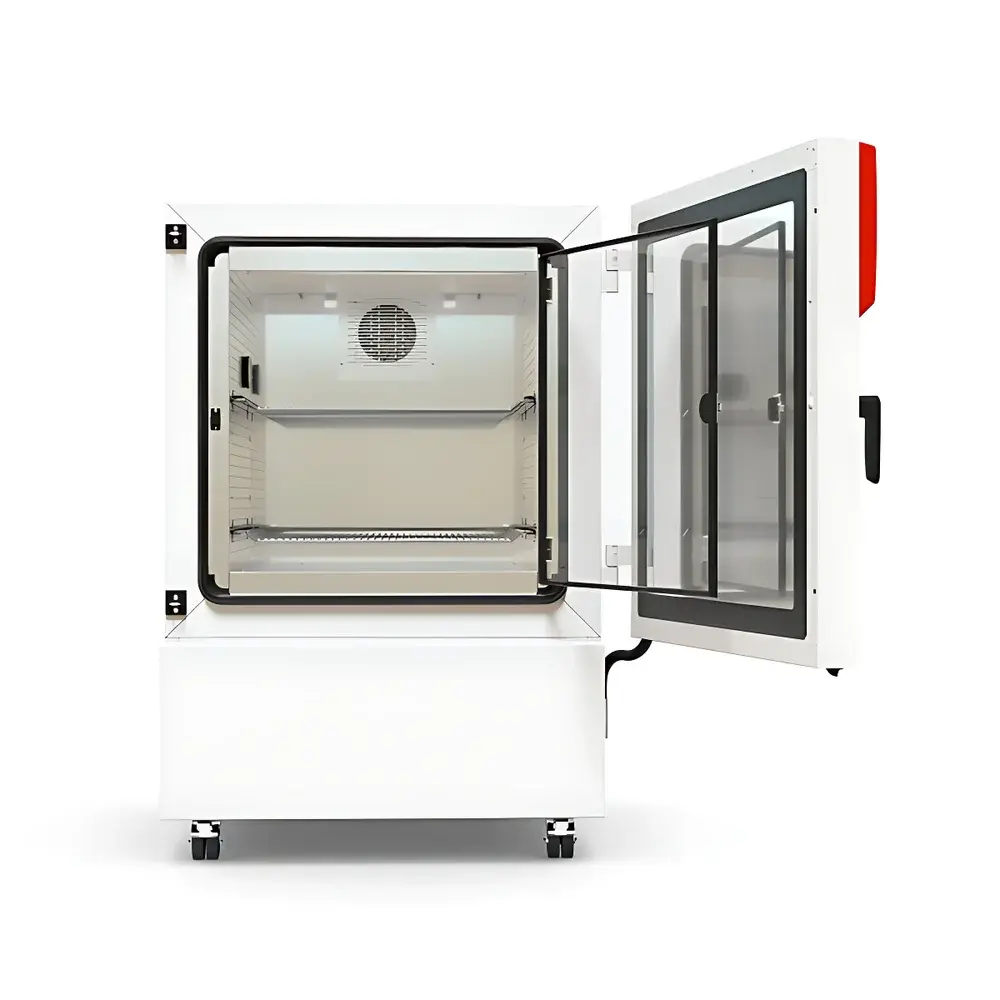
BINDER KBF260 Temperature and Humidity Controlled Chamber
| Brand | BINDER |
|---|---|
| Origin | Germany |
| Manufacturer | BINDER GmbH |
| Type | Upright Environmental Test Chamber |
| Cooling Method | Water-Cooled |
| Temperature Range | 0 °C to +70 °C |
| Humidity Range | 10 % RH to 80 % RH |
| Temperature Uniformity | ±0.1 K |
| Humidity Uniformity | ±1.5 % RH |
| Interior Dimensions (W×D×H) | 656 mm × 695 mm × 575 mm |
| Energy Efficiency Improvement | 40 % vs. previous generation |
| Refrigerant | R-600a |
| Inner Chamber Material | Stainless Steel (AISI 304) |
| Control System | Touchscreen Controller with APT-COM™ Basic Software Integration |
| Compliance | ICH Q1, Q5C, DIN 12880 Class 3.3, ISO 17025-relevant environmental monitoring capability |
Overview
The BINDER KBF260 is a precision-engineered upright temperature and humidity controlled chamber designed for long-term stability testing in compliance with International Council for Harmonisation (ICH) guidelines—specifically Q1 (Stability Testing of New Drug Substances and Products) and Q5C (Quality of Biotechnological/Biological Products). It operates on a dual-climate control principle: thermoelectric and vapor-compression refrigeration combined with capacitive humidity sensing and steam-based humidification. Its APT.line™ preheating technology ensures rapid thermal equilibration and exceptional spatial uniformity across the entire working volume—even under full load—enabling reproducible, GLP-aligned test conditions required for pharmaceutical registration dossiers. The chamber’s stainless steel inner chamber (AISI 304), HIT-insulated double-wall housing, and R-600a refrigerant reflect BINDER’s commitment to material integrity, energy efficiency, and environmental responsibility.
Key Features
- APT.line™ preheating technology delivers homogeneous temperature distribution (±0.1 K) and eliminates cold spots during ramp-up or hold phases.
- Capacitive humidity sensor coupled with fast-response steam humidification system enables precise RH control (10–80 % RH, ±1.5 % RH uniformity) without condensation risk.
- Water-cooled, inverter-driven refrigeration unit reduces power consumption by up to 40 % compared to prior-generation models while maintaining stable low-temperature performance down to 0 °C.
- Double-walled HIT (High Insulation Technology) outer casing minimizes thermal bridging and improves ambient decoupling—critical for laboratory environments with fluctuating HVAC loads.
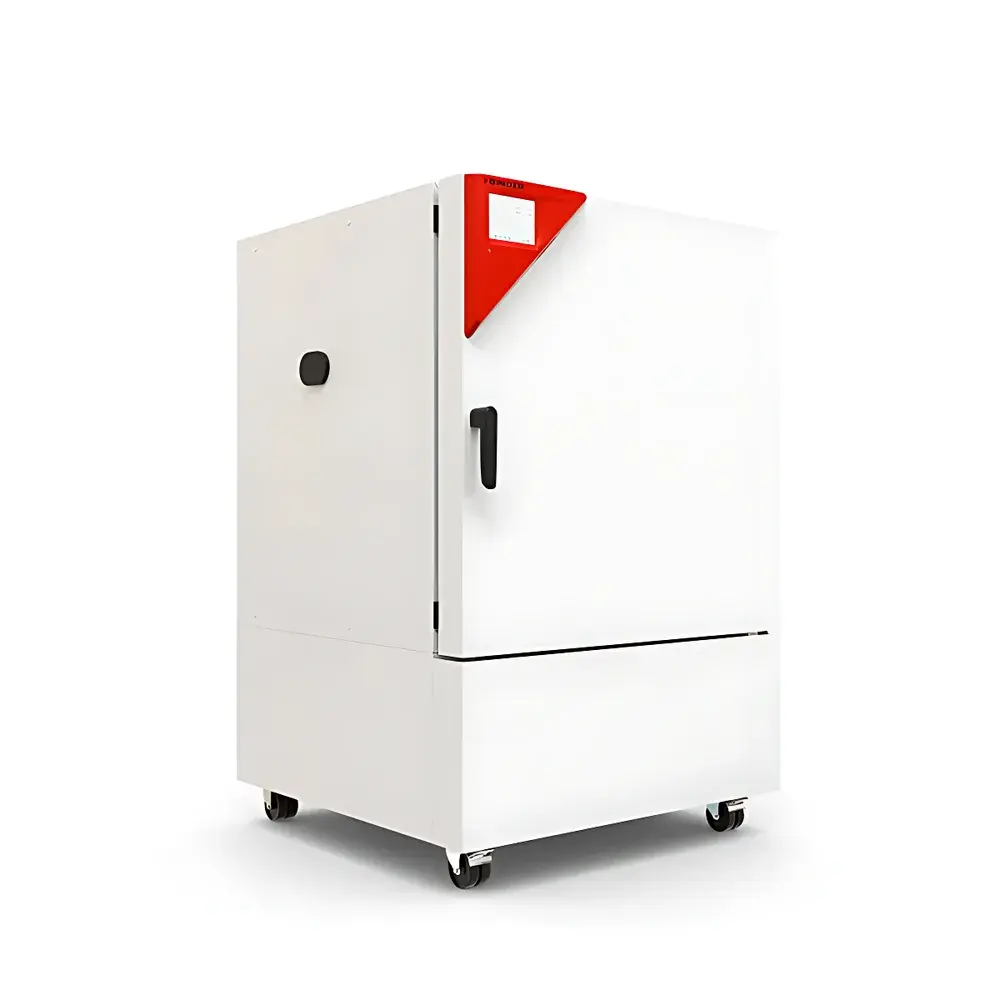
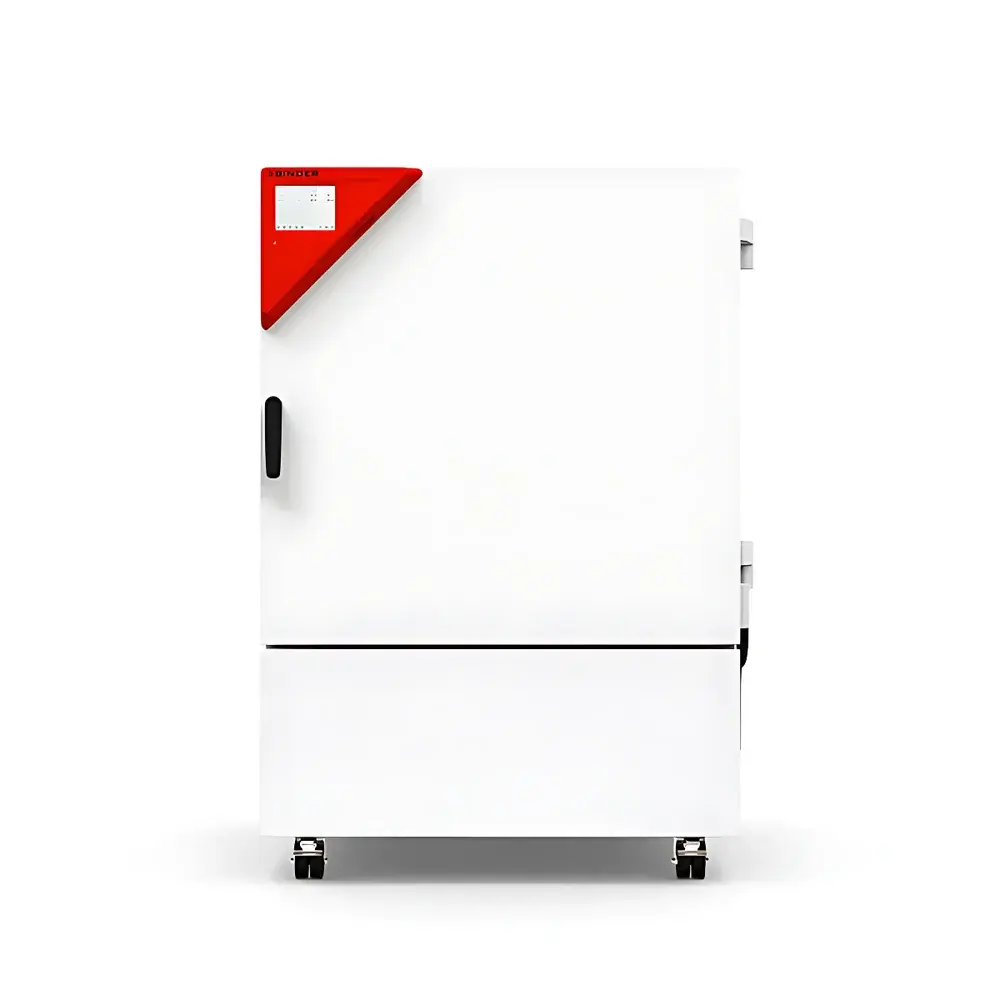
- Touchscreen controller with ergonomic tilt adjustment (standard on KBF260), real-time multi-segment programming, optical/audible alarms, and status-indicating red triangle icon for immediate operational awareness.
- Integrated data logger stores time-stamped temperature and humidity values in open-format CSV files; accessible via USB or Ethernet interface for audit-ready traceability.
- Independent Class 3.3 temperature safety device (DIN 12880) provides redundant over-temperature protection with optical and acoustic alarm activation.
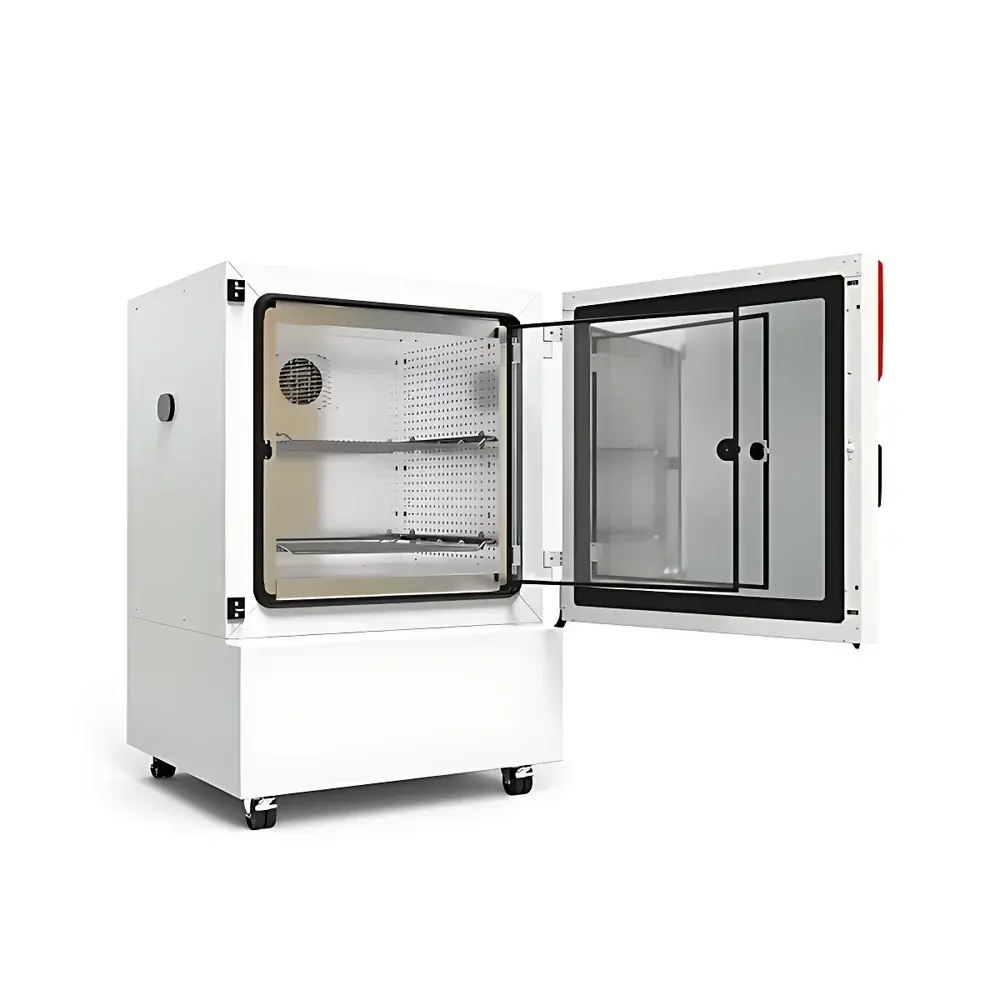
- Two telescopic stainless steel shelves, large-diameter access port with silicone plug, door heating to prevent condensation, and adjustable fan speed for optimized air circulation.
Sample Compatibility & Compliance
The KBF260 accommodates standard ICH-compliant sample configurations—including stacked trays, nested vials, blister packs, and stability chambers within chambers—without compromising climatic homogeneity. Its interior dimensions (656 × 695 × 575 mm) support typical pharmaceutical packaging formats while allowing sufficient air exchange for moisture diffusion studies. The chamber meets essential regulatory prerequisites for GxP environments: it supports 21 CFR Part 11-compliant electronic records when paired with optional APT-COM™ Professional software (not included in base configuration); its hardware architecture permits IQ/OQ/PQ validation per ASTM E2500 and ISO/IEC 17025 Annex A.3 requirements. All materials in contact with the test environment—including gaskets, shelves, and inner lining—are non-outgassing, corrosion-resistant, and compatible with cleaning agents used in cleanroom-grade facilities.
Software & Data Management
The embedded touchscreen controller logs all process parameters at user-defined intervals and exports raw measurement data as plain-text CSV files—ensuring compatibility with LIMS, ELN, and statistical analysis platforms (e.g., JMP, Minitab, Python pandas). Optional APT-COM™ Basic software enables remote monitoring, basic report generation, and export of trend graphs. For full 21 CFR Part 11 compliance—including electronic signatures, audit trails, and role-based access control—APT-COM™ Professional is available as an add-on license. Data interfaces include Ethernet (TCP/IP) for network integration and USB-A for local retrieval. Internal self-diagnostic routines verify sensor calibration status, refrigerant pressure, fan RPM, and heater function before each cycle—generating diagnostic logs accessible via USB.
Applications
- ICH Q1A(R3) long-term (25 °C / 60 % RH) and accelerated (40 °C / 75 % RH) stability studies for APIs and finished dosage forms.
- Forced degradation (stress) testing per ICH Q5C under elevated temperature/humidity conditions to assess product robustness.
- Reference standard storage under tightly controlled climate conditions meeting USP and Ph. Eur. 2.1.32 requirements.
- Material compatibility testing of primary packaging components (e.g., blister foils, HDPE bottles) under cyclic humidity exposure.
- Biological reagent and diagnostic kit shelf-life evaluation where hygroscopic degradation must be quantified.
- Supporting ISO 14644-1 classified environments through validated environmental monitoring protocols.
FAQ
Does the KBF260 comply with ICH Q1 stability testing requirements?
Yes—the KBF260 is engineered to meet the temperature and humidity tolerances, uniformity specifications, and documentation capabilities outlined in ICH Q1A(R3) and Q5C, including validation-ready design features.
Is the chamber suitable for use in a GMP-regulated facility?
It supports GMP operations when deployed with documented IQ/OQ protocols and integrated into a validated data management workflow using APT-COM™ Professional and 21 CFR Part 11–compliant infrastructure.
What refrigerant does the KBF260 use, and why is it significant?
It uses R-600a (isobutane), a natural hydrocarbon refrigerant with zero ozone depletion potential (ODP = 0) and very low global warming potential (GWP ≈ 3), aligning with EU F-Gas Regulation and sustainability goals.
Can the KBF260 be connected to a building management system (BMS)?
Yes—via its standard Ethernet interface using Modbus TCP or BACnet/IP protocols (configuration requires APT-COM™ Professional or third-party middleware).
Are optional light modules (e.g., ICH Q1B photostability) compatible with the KBF260?
Yes—optional UV/visible LED light modules compliant with ICH Q1B are available for KBF260 and can be factory-installed or retrofitted with dedicated mounting brackets and spectral calibration certificates.



