
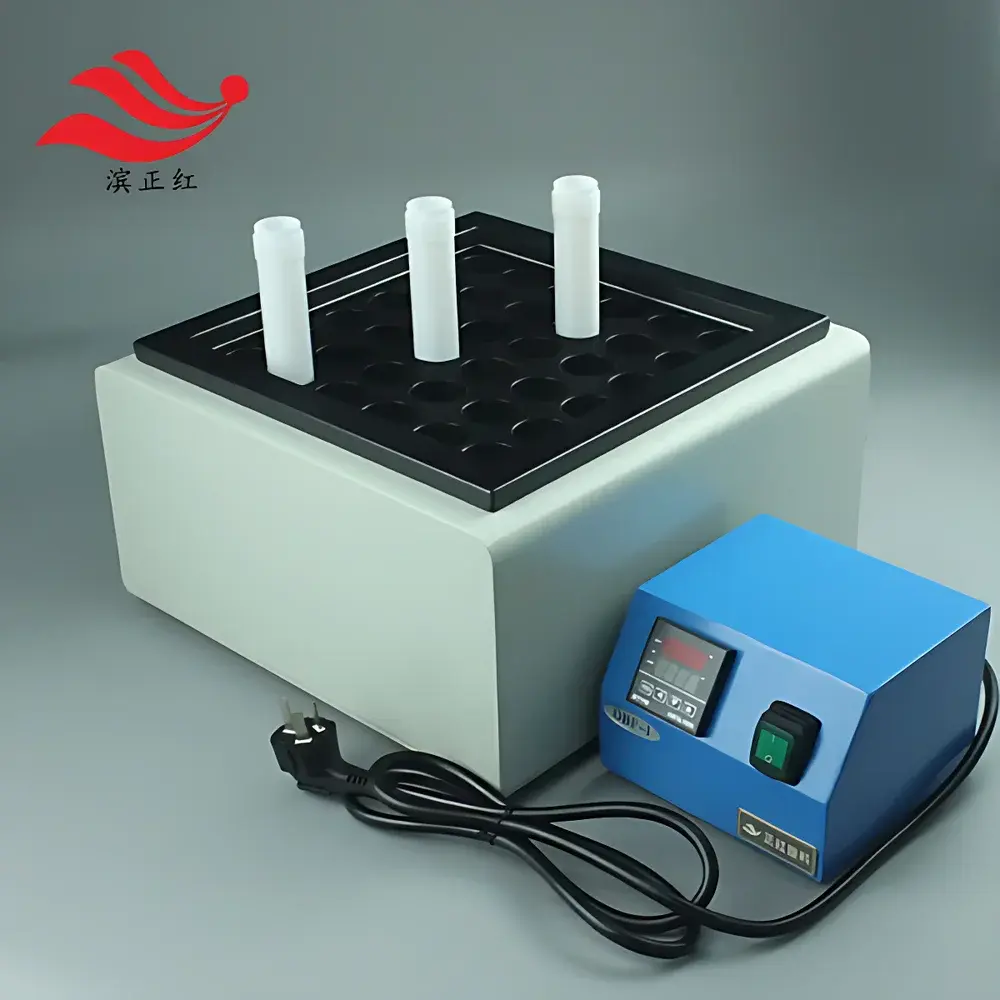
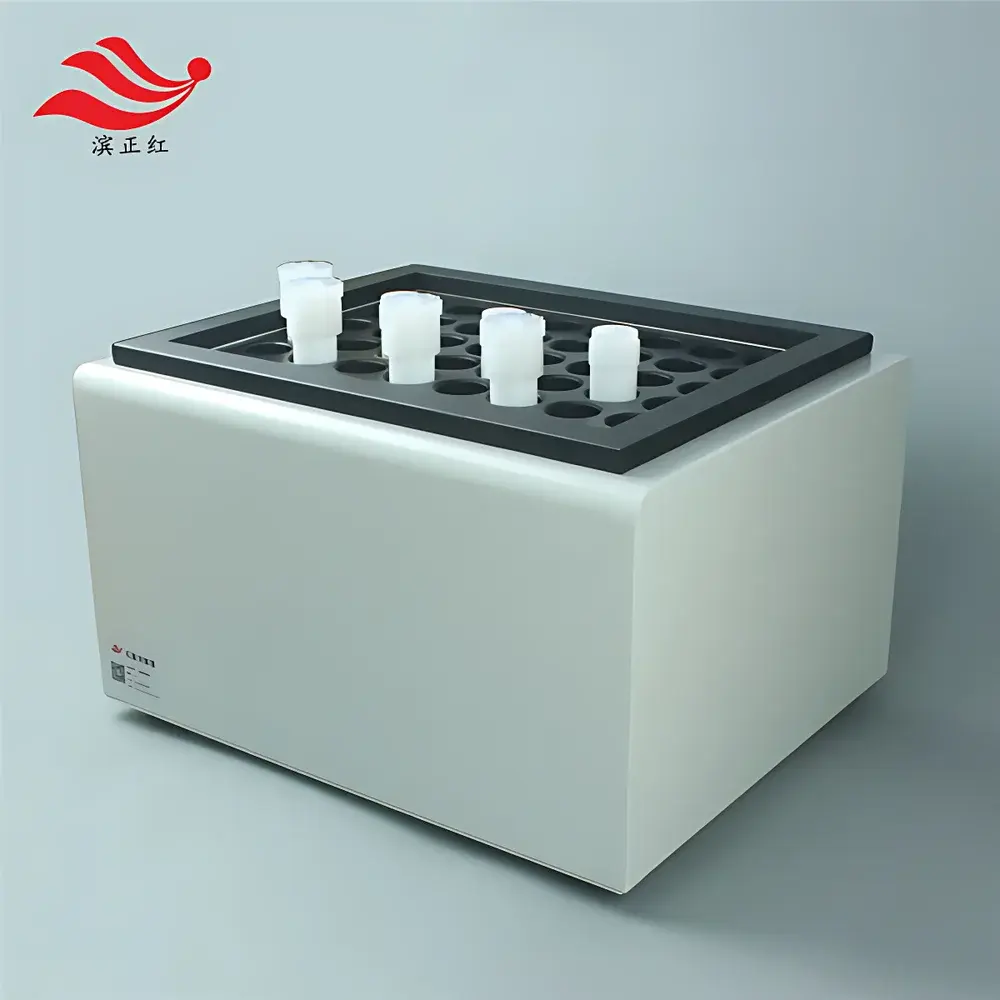
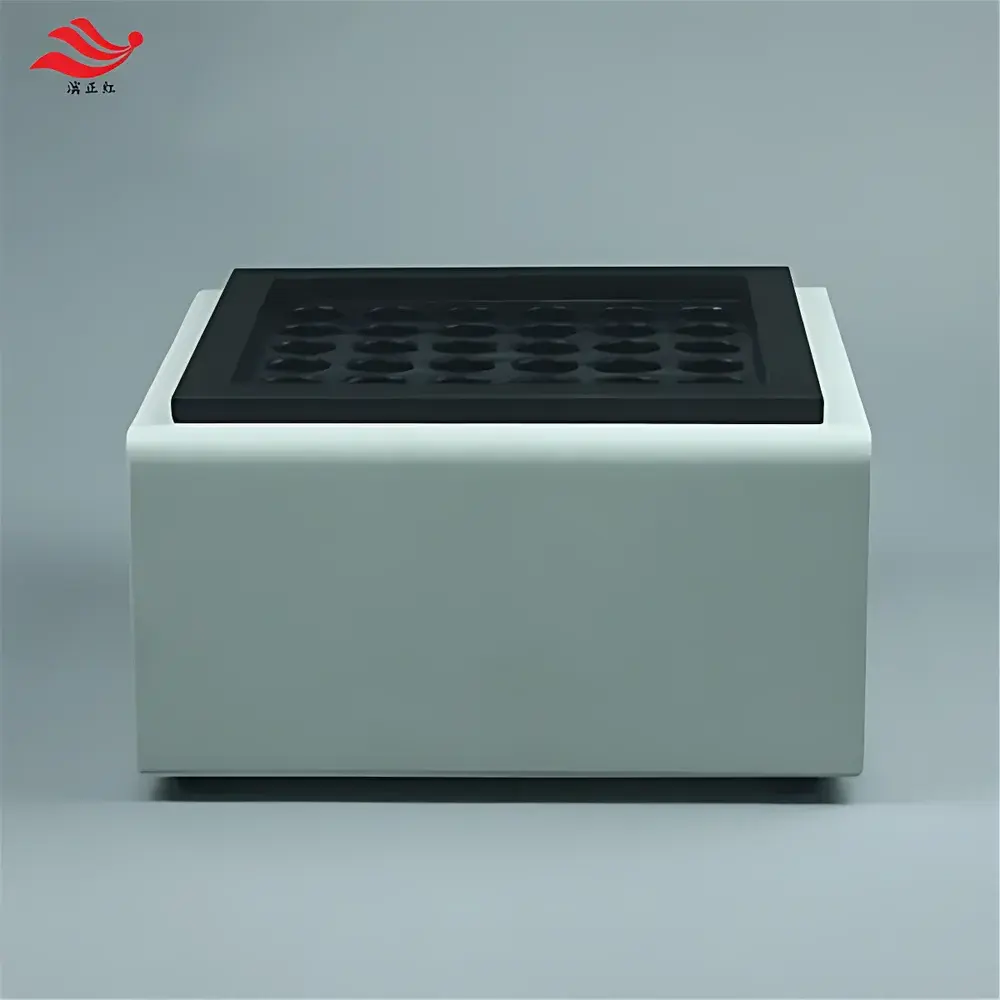
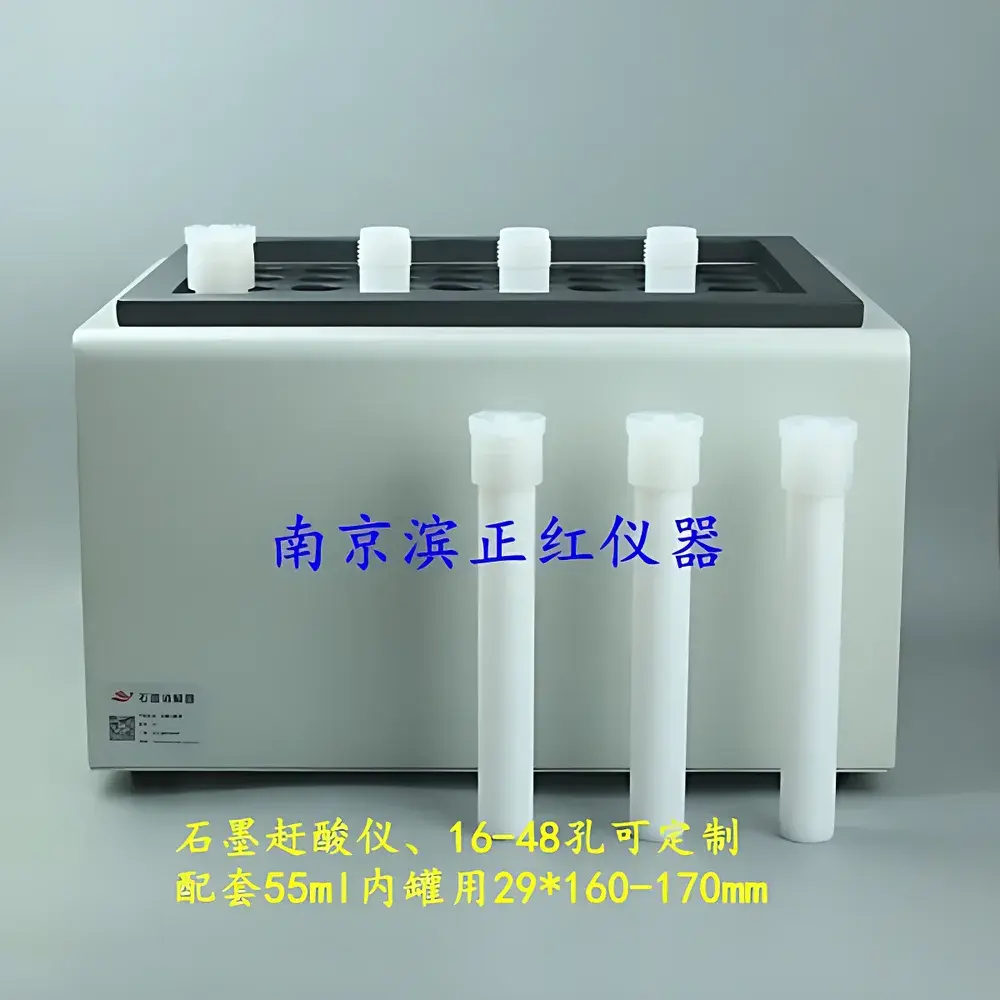
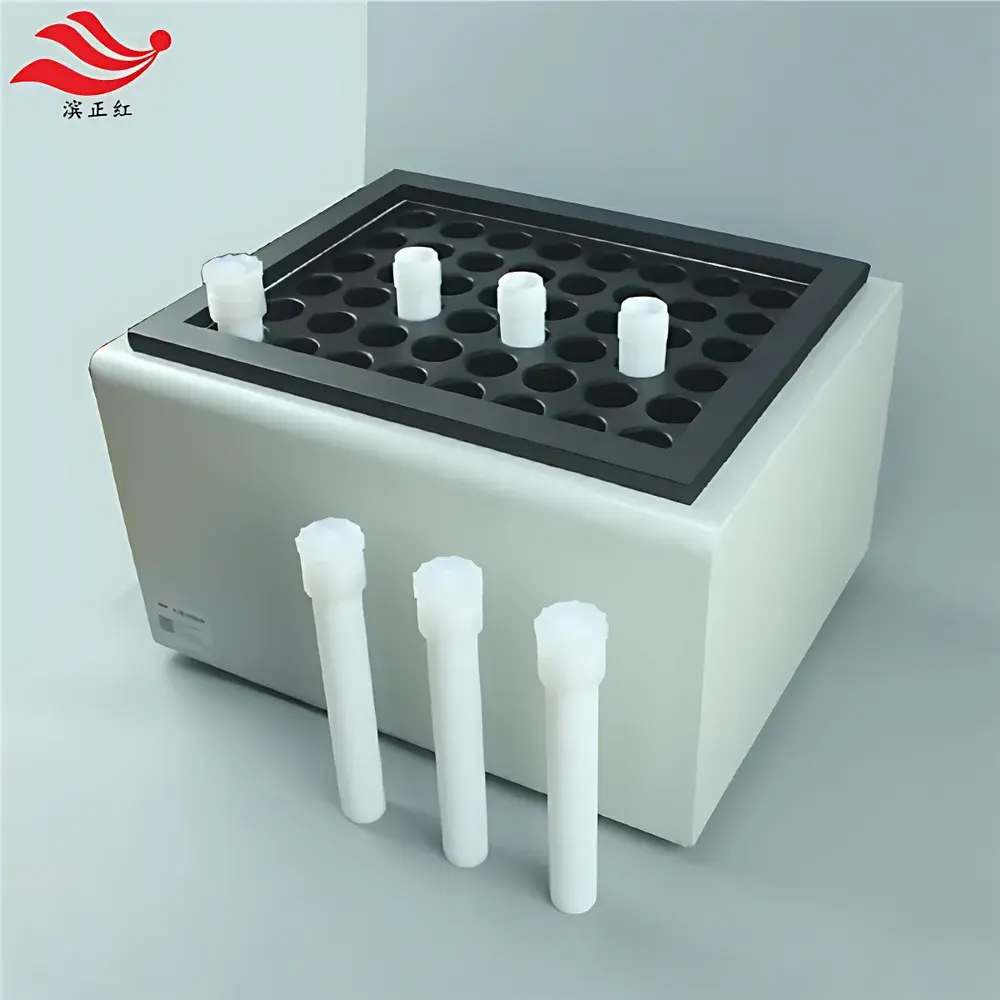
Binzhenghong NJ-42 Graphite Block Digestion System with 55 mL Microwave Digestion Vessels
| Brand | Binzhenghong |
|---|---|
| Origin | Jiangsu, China |
| Manufacturer Type | Direct Producer |
| Region Classification | Domestic (China) |
| Model | NJ-42 |
| Heating Power | 5–30 min to reach 200 °C |
| Max Temperature | 260 °C |
| Temperature Uniformity | ±1 °C |
| Plate Dimensions | 40 × 32.5 × 22 cm |
| Heating Zone Dimensions | 40 × 32.5 × 22 cm |
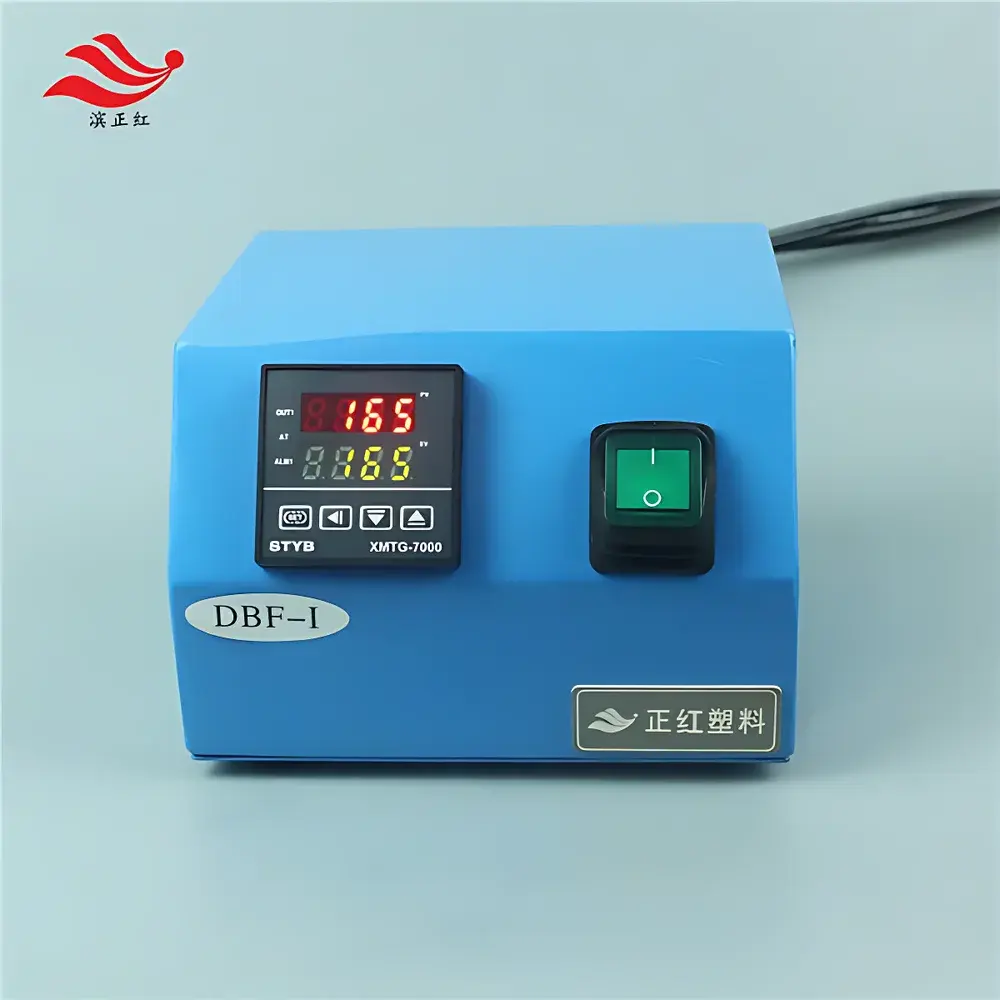
| Display | PID Digital Indicator |
Overview
The Binzhenghong NJ-42 Graphite Block Digestion System is a precision-engineered sample preparation instrument designed for high-throughput, reproducible acid digestion of solid and semi-solid samples prior to elemental analysis by ICP-OES, ICP-MS, AAS, or HG-AFS. Unlike conventional hot plates or ceramic heating blocks, this system employs a monolithic high-purity graphite block as the primary thermal mass—engineered for exceptional thermal conductivity, chemical inertness, and long-term dimensional stability under aggressive acidic conditions. The 42-position configuration accommodates standard 55 mL microwave digestion vessels (e.g., Teflon® PFA or quartz-lined), enabling parallel processing without cross-contamination. Heat transfer occurs via full-contact conduction from the graphite matrix, eliminating convective losses and ensuring uniform thermal coupling across all sample positions. This architecture supports method-compliant digestion protocols aligned with EPA Method 3050B, ISO 11466, and ASTM D5762, particularly for environmental soils, geological matrices, biological tissues, and foodstuffs.
Key Features
- Monolithic graphite heating block with electropolished surface and proprietary fluoropolymer (PTFE/PFA) anti-corrosion coating—resistant to concentrated HNO₃, HF, HCl, H₂O₂, and aqua regia up to 260 °C
- PID-controlled digital temperature regulation with real-time feedback loop; setpoint accuracy ±1 °C over full range (room temperature to 260 °C)
- Uniform heating zone spanning entire 40 × 32.5 cm active surface; measured temperature deviation ≤ ±1 °C across all 42 wells (verified per ISO/IEC 17025 calibration practices)
- Programmable ramp-and-hold functionality: users define multi-step temperature profiles with independent dwell times and heating rates (e.g., 5 °C/min ramp to 120 °C → hold 20 min → ramp to 180 °C → hold 30 min)
- Integrated safety enclosure design minimizes acid vapor dispersion, reducing operator exposure and protecting adjacent instrumentation from corrosive fume ingress
- Energy-efficient thermal architecture: graphite’s high heat capacity enables stable temperature maintenance with reduced power cycling, lowering average energy consumption by ~35% vs. open-heating alternatives
Sample Compatibility & Compliance
The NJ-42 system is validated for use with 55 mL pressure-rated microwave digestion vessels manufactured from PFA, quartz, or reinforced TFM™. It supports digestion protocols requiring closed-vessel pre-digestion, low-pressure open-vessel evaporation, or post-microwave hot-block stabilization. All wet chemistry workflows comply with GLP documentation requirements when paired with audit-trail-enabled software (see Software & Data Management). Instrument construction meets IEC 61010-1:2010 safety standards for laboratory electrical equipment. Surface materials conform to USP extractables testing for polymeric components and pass ASTM D543 immersion resistance tests in 6 M HNO₃ at 100 °C for 72 h.
Software & Data Management
While the base NJ-42 operates via standalone PID controller, optional RS-485/USB interface enables integration with LabSolutions™, Empower™, or custom LIMS platforms. When connected, the system logs timestamped temperature profiles, setpoint deviations, and alarm events—including overtemperature cutoffs and sensor fault detection—with metadata traceability per FDA 21 CFR Part 11 Annex 11 requirements. Audit trails are digitally signed and exportable in CSV or PDF/A-2 format for regulatory submissions.
Applications
- Determination of heavy metals (Pb, Cd, As, Hg, Cr) in soil and sediment per EPA SW-846 Method 3050B and 3052
- Trace element quantification in plant tissue, animal feed, and dietary supplements per AOAC 999.10 and ISO 17294-2
- Preparation of catalyst residues, polymer additives, and electronic waste leachates for ICP-MS analysis
- Stabilization and volume reduction of microwave-digested samples prior to dilution and instrumental analysis
- Method development for sequential extraction schemes (e.g., BCR protocol) requiring precise thermal control during individual fraction steps
FAQ
Is the graphite block replaceable, and what is its expected service life under routine use?
Yes—the graphite block is a field-replaceable component. With proper handling and avoidance of thermal shock, typical service life exceeds 5 years (>10,000 operational cycles) when used within specified temperature limits and cleaned with deionized water only.
Can the NJ-42 accommodate non-standard vessel sizes or custom well configurations?
Yes—Binzhenghong offers OEM customization including 24-, 36-, 48-, and 63-hole variants, as well as bespoke well diameters (12–30 mm) and depth adjustments for specialized vessel geometries.
Does the system include validation documentation for ISO/IEC 17025-accredited laboratories?
Each unit ships with a factory-issued Certificate of Conformance and optional UKAS-accredited temperature uniformity verification report (per ISO/IEC 17025:2017 clause 6.4.10), available upon request.
What maintenance procedures are recommended to preserve coating integrity and thermal performance?
Daily wipe-down with lint-free cloth dampened with DI water; quarterly inspection of coating adhesion using ASTM D3359 cross-hatch test; avoidance of metal scrapers, abrasive pads, or alkaline cleaners.



