
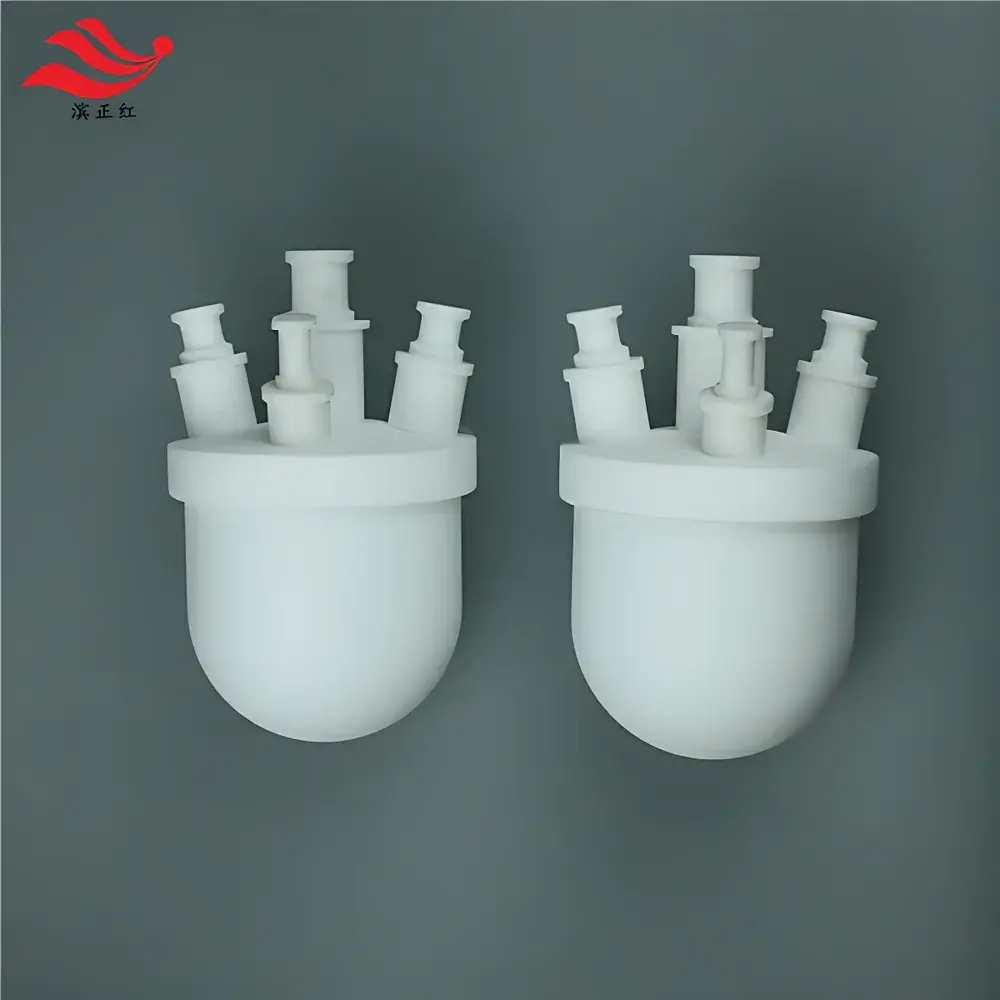
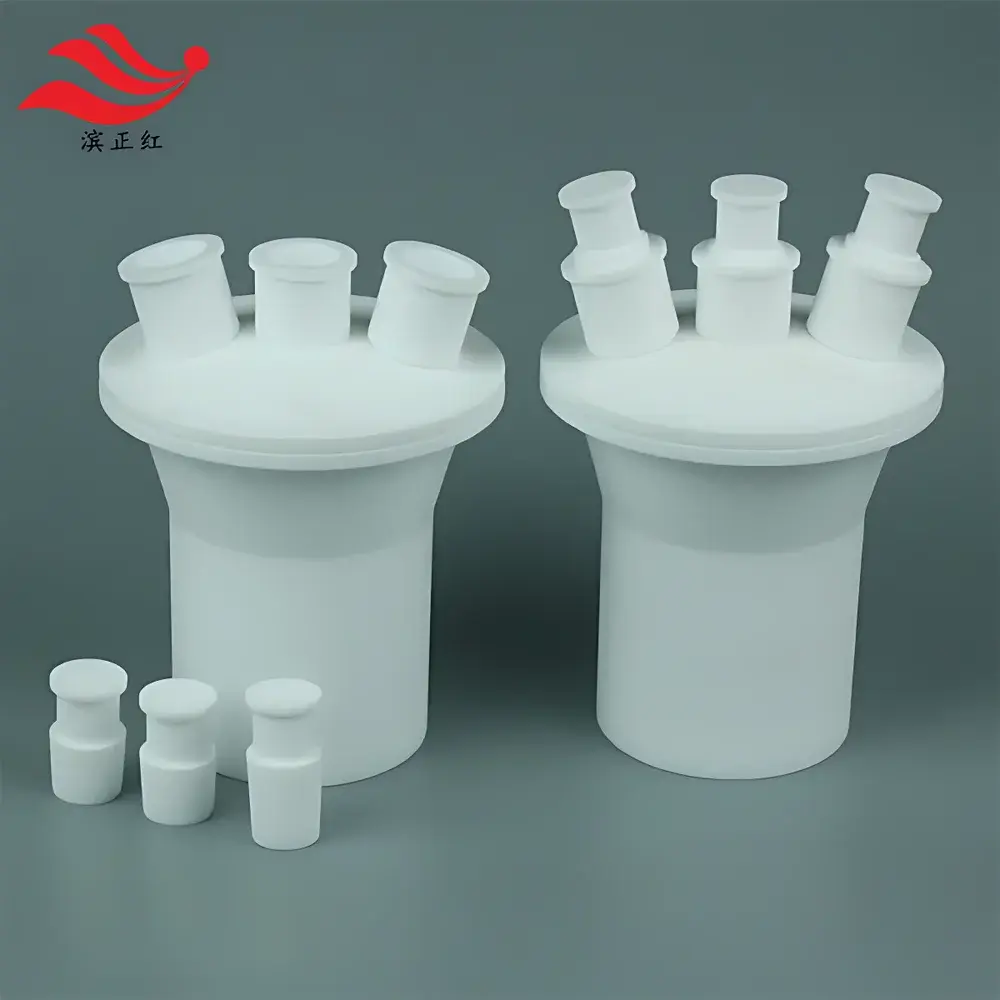
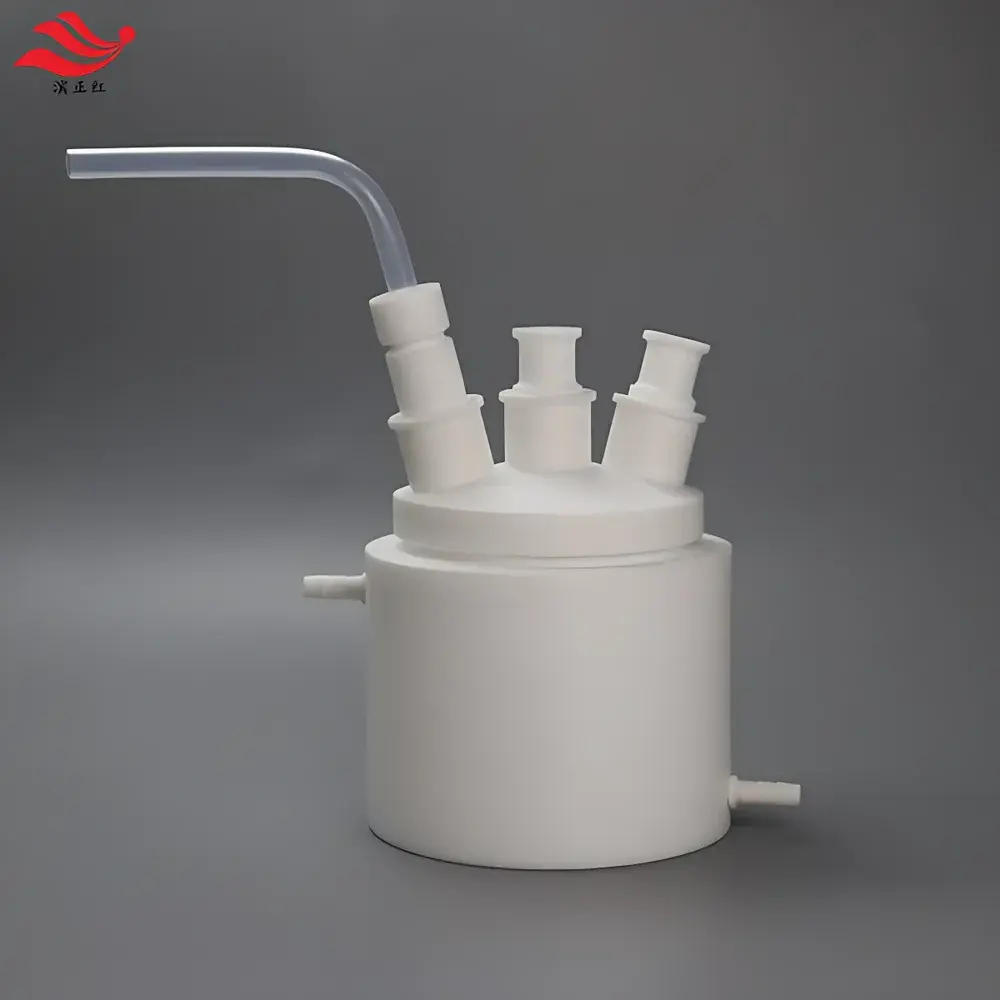
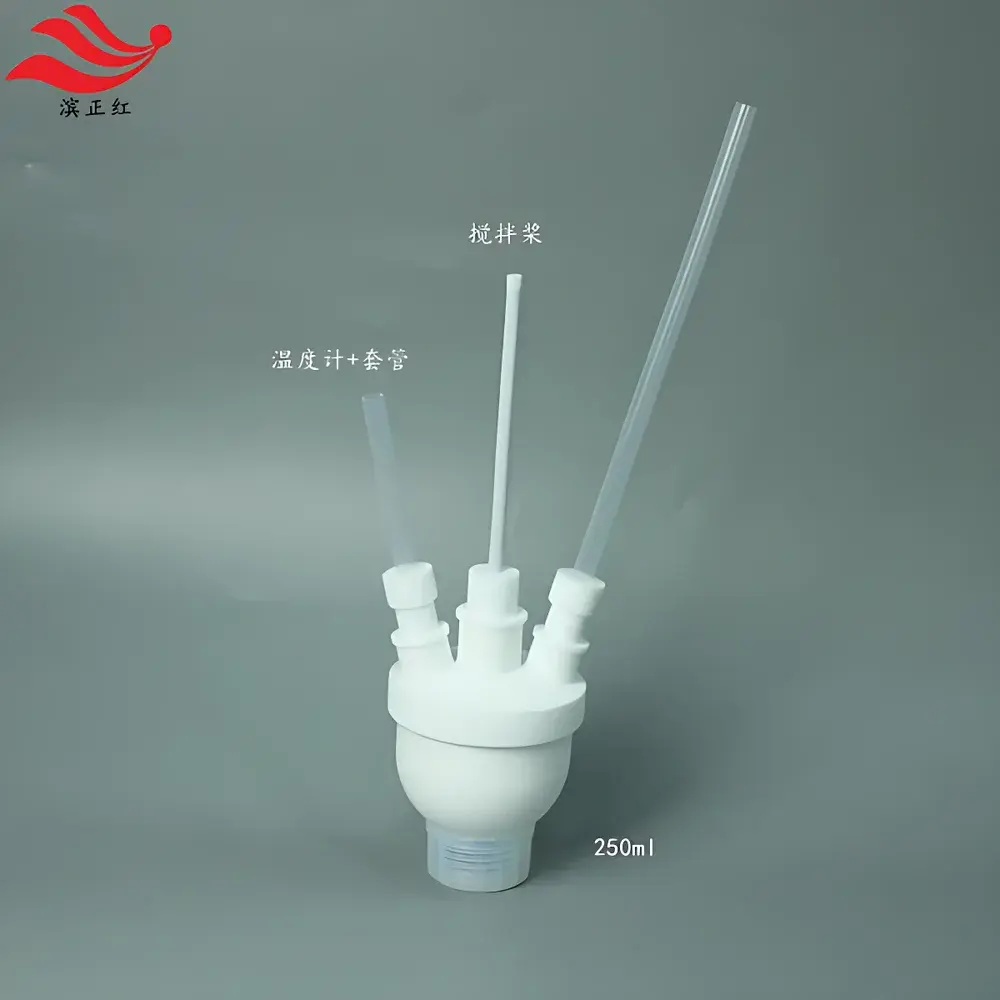
Binzhenghong PTFE Single-Neck, Three-Neck, and Four-Neck Round-Bottom Flasks with Standard Taper Ground-Glass Joints (17/24, 19/24, 24/29, etc.)
| Brand | Binzhenghong |
|---|---|
| Origin | Jiangsu, China |
| Manufacturer Type | Direct Manufacturer |
| Product Origin | Domestic (China) |
| Joint Sizes | 17/24, 19/24, 24/29, and other standard taper joints |
| Pricing | Available upon request |
Overview
Binzhenghong PTFE round-bottom flasks are precision-machined laboratory vessels engineered for extreme chemical inertness, thermal stability, and mechanical integrity in demanding synthetic, distillation, and reaction applications. Constructed entirely from virgin polytetrafluoroethylene (PTFE), these flasks exhibit near-universal resistance to strong acids (including aqua regia and fuming sulfuric acid), alkalis, oxidizers, and organic solvents — even under elevated temperature and pressure conditions. Unlike glass or quartz alternatives, PTFE flasks eliminate risks of leaching, corrosion-induced contamination, or catastrophic fracture during exothermic reactions or cryogenic handling. Their seamless, non-porous structure ensures zero adsorption of analytes and prevents cross-contamination between sequential experiments — a critical requirement in trace-level synthesis, pharmaceutical process development, and high-purity material preparation.
Key Features
- Fully fluorinated construction: 100% virgin PTFE body, necks, and joint surfaces — no fillers, binders, or reinforcing agents that could compromise purity or thermal performance.
- Standardized conical ground-glass joints: Precision-machined 17/24, 19/24, 24/29, and custom taper joints conforming to ISO 385 and DIN 12877 specifications for interchangeability with major global labware systems.
- Modular multi-neck configuration: Available as single-neck, three-neck, and four-neck variants — enabling simultaneous integration of condensers, thermometers, addition funnels, gas inlets, and magnetic stir bars without adapter compromises.
- Extended thermal range: Operational from –200 °C to +250 °C continuously; short-term excursions up to 260 °C permitted without dimensional change or loss of mechanical strength.
- Threaded detachable design: All neck caps and base covers utilize fine-pitch PTFE-to-PTFE threaded interfaces — ensuring leak-tight sealing under vacuum (≤10–3 mbar) and positive pressure (up to 0.3 MPa), while permitting full disassembly for ultrasonic cleaning or visual inspection of internal surfaces.
- Optimized fluid dynamics: Smooth, mirror-finish interior surface (Ra < 0.2 µm) minimizes residue retention and facilitates quantitative transfer of viscous or crystallizing media.
Sample Compatibility & Compliance
These flasks are routinely deployed in applications requiring compliance with USP , ASTM D4894 (PTFE specification), and ISO 10993-5 (biocompatibility screening). Their inertness supports GLP- and GMP-aligned workflows where extractables and leachables must be rigorously controlled — particularly in API synthesis, catalyst recovery studies, and electrochemical cell assembly. The absence of metallic components or silicone lubricants eliminates interference in ICP-MS, XRD, and NMR sample preparation. Each batch is supplied with a Certificate of Conformance detailing raw material traceability, joint tolerance verification (±0.02 mm per ISO 3585), and thermal cycling validation data.
Software & Data Management
While inherently hardware-based, Binzhenghong PTFE flasks integrate seamlessly into digitally monitored laboratory environments. Their standardized joint dimensions ensure compatibility with automated reactor platforms (e.g., ChemSpeed, EasyMax, or H.E.L. systems) equipped with digital temperature control, pressure logging, and real-time mass flow monitoring. When used with validated magnetic stirrers featuring torque feedback and speed calibration certificates (traceable to NIST standards), the entire setup supports 21 CFR Part 11-compliant electronic records — including audit trails for heating profiles, stirring duration, and vacuum ramp rates.
Applications
- High-purity solvent purification via fractional distillation under reduced pressure.
- Catalytic hydrogenation and hydrosilylation under anhydrous, oxygen-free atmospheres.
- Low-temperature lithiation and organometallic reagent synthesis at –78 °C or below.
- Corrosive reagent handling (e.g., HF-based etching, bromination with Br₂/AlBr₃).
- Long-duration reflux reactions involving aggressive halogenated solvents (e.g., chlorobenzene, o-dichlorobenzene).
- Preparation of moisture-sensitive precursors for battery electrolyte formulation.
- Reaction calorimetry using compatible PTFE-coated temperature probes and pressure transducers.
FAQ
Can these flasks be used under vacuum or positive pressure?
Yes — rated for continuous operation at ≤10–3 mbar vacuum and up to 0.3 MPa gauge pressure when assembled with properly torqued PTFE-threaded closures.
Are joint sizes interchangeable with common glassware brands?
Yes — all standard taper joints (17/24, 19/24, 24/29) meet ISO 385 tolerances and mate reliably with Schott, Kimble, and Wheaton glass components.
What is the maximum recommended heating rate?
For uniform thermal stress distribution, ramp no faster than 5 °C/min when transitioning across ±100 °C intervals; use aluminum or ceramic heating mantles — never direct flame.
Do you offer custom neck configurations or volume scaling?
Yes — bespoke designs including asymmetric neck spacing, integrated PTFE stopcocks, or volumes from 25 mL to 2 L are available under NDA-supported engineering review.
How should the flasks be cleaned after use with highly viscous or polymerizing residues?
Soak in warm perfluorinated solvent (e.g., FC-72) followed by ultrasonic cleaning in IPA; avoid abrasive pads or sodium hydroxide solutions above 80 °C to preserve surface integrity.



