
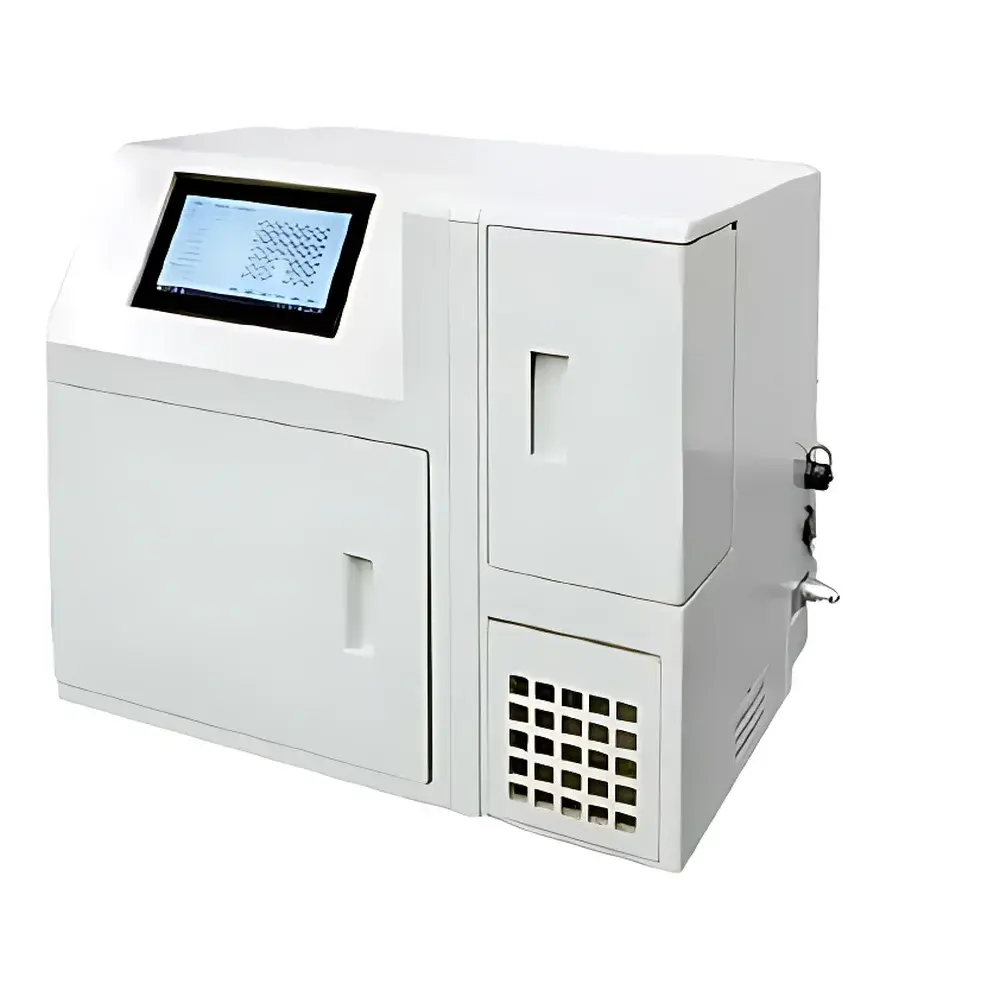
BioAeroGuard™ BAMS-3000 Continuous Bioaerosol Monitoring System
| Origin | Shanghai, China |
|---|---|
| Manufacturer Type | Authorized Distributor |
| Regional Origin | Domestic (PRC) |
| Model | BAMS-3000 |
| Price Range | USD $13,500 – $40,500 (FOB Shanghai) |
| Instrument Category | Real-Time Bioaerosol Detection System |
| Sampling Flow Rate | >200 L/min |
| Detection Sensitivity | ~5 genomic copies per reaction (adjustable) |
| Sample Processing Volume | 0–25 mL |
| Throughput | 92 samples |
| Analysis Time | <30 min per sample |
| Dimensions | 545 × 440 × 475 mm (L×W×H) |
| Power Supply | 220 V AC, 50 Hz |
| Compliance | GB/T 38517–2020, GB/T 39990–2021, GB/T 16293–2010, GB/T 16294–2010, GB/T 18204.3–2013 |
Overview
The BioAeroGuard™ BAMS-3000 is a CE-marked, ISO 13485-aligned continuous bioaerosol monitoring system engineered for real-time, unattended detection of airborne biological threat agents in high-occupancy indoor environments. It operates on a dual-stage principle: first, wet-wall cyclonic impaction sampling—fully compliant with GB/T 38517–2020 and GB/T 39990–2021—efficiently concentrates viable and non-viable bioaerosol particles (0.5–10 µm aerodynamic diameter) from ambient air into a liquid matrix; second, on-board isothermal nucleic acid amplification via lyophilized Loop-Mediated Isothermal Amplification (LAMP) enables rapid, sequence-specific detection without thermal cycling. Unlike offline culture- or PCR-based methods requiring transport and lab processing, the BAMS-3000 delivers actionable pathogen identification data within 30 minutes of air intake—critical for early-warning surveillance in pandemic response, biosafety containment, and public health infrastructure.
Key Features
- Integrated Sampling & Detection: Wet-wall cyclone sampler eliminates need for separate collection devices; aerosol-laden air is directly processed in-line without manual transfer or centrifugation.
- Fully Automated Workflow: Uninterrupted 24/7 operation with auto-calibration, reagent priming, waste management, and post-run decontamination cycles—no operator intervention required for up to 30 days.
- LyoSphere™ Reagent Technology: Pre-formulated, vacuum-dried LAMP master mix spheres maintain enzymatic activity at ≤25 °C for ≥30 days, eliminating cold-chain dependency and enabling field-deployable stability.
- Biosafety-by-Design Architecture: Negative-pressure amplification chamber, integrated HEPA H14 filtration (99.995% @ 0.3 µm), and UV-C (254 nm) irradiation between runs ensure containment of amplified nucleic acids and prevent cross-contamination.
- Modular Cartridge System: Swappable fluidic cartridges contain all consumables (sampling liquid, lysis buffer, LAMP reagents, waste reservoir); hot-swappable in <90 seconds with tool-free actuation.
- Digital Integration Ready: Embedded Ethernet and optional 4G LTE support MQTT/HTTPS data streaming to cloud-based dashboards compliant with ISO/IEC 27001 and FDA 21 CFR Part 11 audit-trail requirements.
Sample Compatibility & Compliance
The BAMS-3000 detects nucleic acid targets from clinically validated respiratory and environmental pathogens—including SARS-CoV-2, influenza A/B, Legionella pneumophila, Staphylococcus aureus, Bacillus anthracis, Yersinia pestis, and Aspergillus spp.—via multiplexed LAMP assays targeting conserved genomic regions. Its sampling efficiency meets ISO 21501-4 for aerosol particle size distribution validation and adheres to Chinese national standards for pharmaceutical cleanroom monitoring (GB/T 16293–2010, GB/T 16294–2010) and public health microbiology (GB/T 18204.3–2013). All assay protocols are developed under GLP conditions and verified per CLSI EP17-A2 for limit-of-detection performance. The system’s closed-loop design satisfies WHO BSL-2 equivalency for environmental sampling and aligns with EU Directive 2000/54/EC for biological agent risk assessment.
Software & Data Management
Control and analysis are managed through BioAeroView™ v3.2 software—a secure, role-based web interface supporting remote configuration, real-time heatmap visualization of pathogen load trends, and automated alerting (SMS/email) upon threshold exceedance. Raw fluorescence kinetics, Ct-equivalent values, and QC metrics (e.g., internal control recovery, no-template control baseline) are stored with immutable timestamps and digital signatures. Audit logs record all user actions, method changes, and maintenance events—fully traceable for regulatory inspections under GMP Annex 11 and China NMPA Guideline on Computerized Systems. Data export supports CSV, PDF report generation, and HL7/FHIR-compliant integration with hospital EMR or municipal public health surveillance networks.
Applications
- Healthcare Infrastructure: Continuous monitoring of emergency departments, isolation wards, and HVAC intakes in hospitals and CDC laboratories to detect nosocomial transmission events before clinical presentation.
- Transportation Hubs: Deployment at airport security checkpoints, subway platforms, and high-speed rail concourses to enable dynamic risk scoring and targeted disinfection scheduling.
- Public Assembly Venues: Real-time surveillance in convention centers, sports stadiums, and shopping malls during mass gatherings—supporting evidence-based occupancy policy adjustments.
- Emergency Response: Rapid deployment in field hospitals, quarantine facilities, or outbreak zones where conventional lab capacity is saturated; provides same-day decision support for PPE allocation and zone demarcation.
- Research & Development: Longitudinal studies of bioaerosol dynamics in controlled environments (e.g., cleanrooms, animal facilities) with granular temporal resolution (15-min sampling intervals).
FAQ
Does the BAMS-3000 require external laboratory confirmation for positive results?
No. Each detection event is confirmed by dual-target LAMP amplification with orthogonal primer sets and integrated internal amplification controls. Positive calls meet ≥95% analytical specificity and sensitivity thresholds validated per ISO/IEC 17025.
Can the system detect non-culturable or VBNC (viable-but-non-culturable) microorganisms?
Yes. As a nucleic acid–based platform, it detects genomic material irrespective of culturability—enabling identification of stressed, dormant, or membrane-compromised cells that evade traditional culture methods.
Is the instrument suitable for outdoor deployment?
It is rated IP54 for dust and splash resistance and operates within 5–35 °C / 30–80% RH. For extended outdoor use, optional climate-controlled enclosures with particulate pre-filtration are available.
How is data integrity ensured during network outages?
On-device storage retains ≥30 days of raw data and metadata locally; synchronization resumes automatically upon network restoration with cryptographic hash verification.
What regulatory documentation is provided for international installation?
CE Declaration of Conformity (2014/30/EU EMC, 2014/35/EU LVD), RoHS 2011/65/EU compliance certificate, ISO 13485:2016 Quality Management System certification, and full technical file per MDR Annex II.
Related Products







