
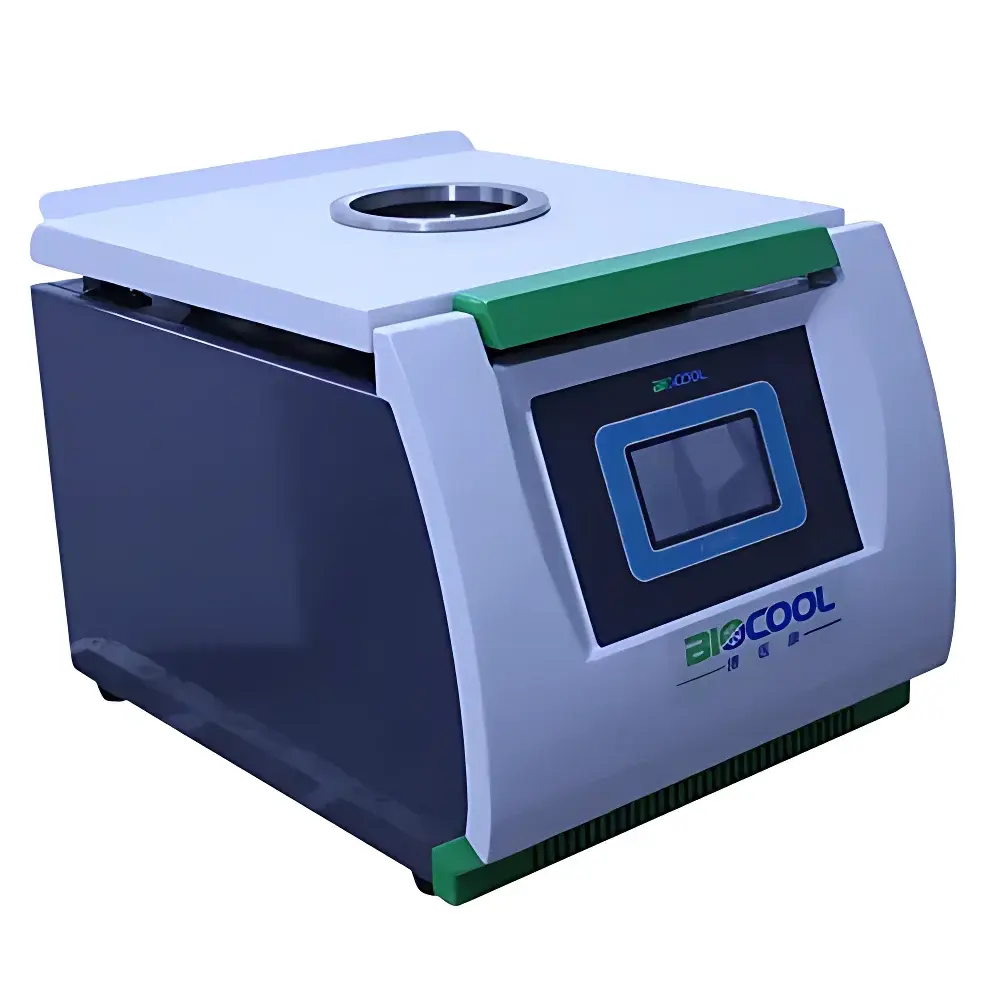
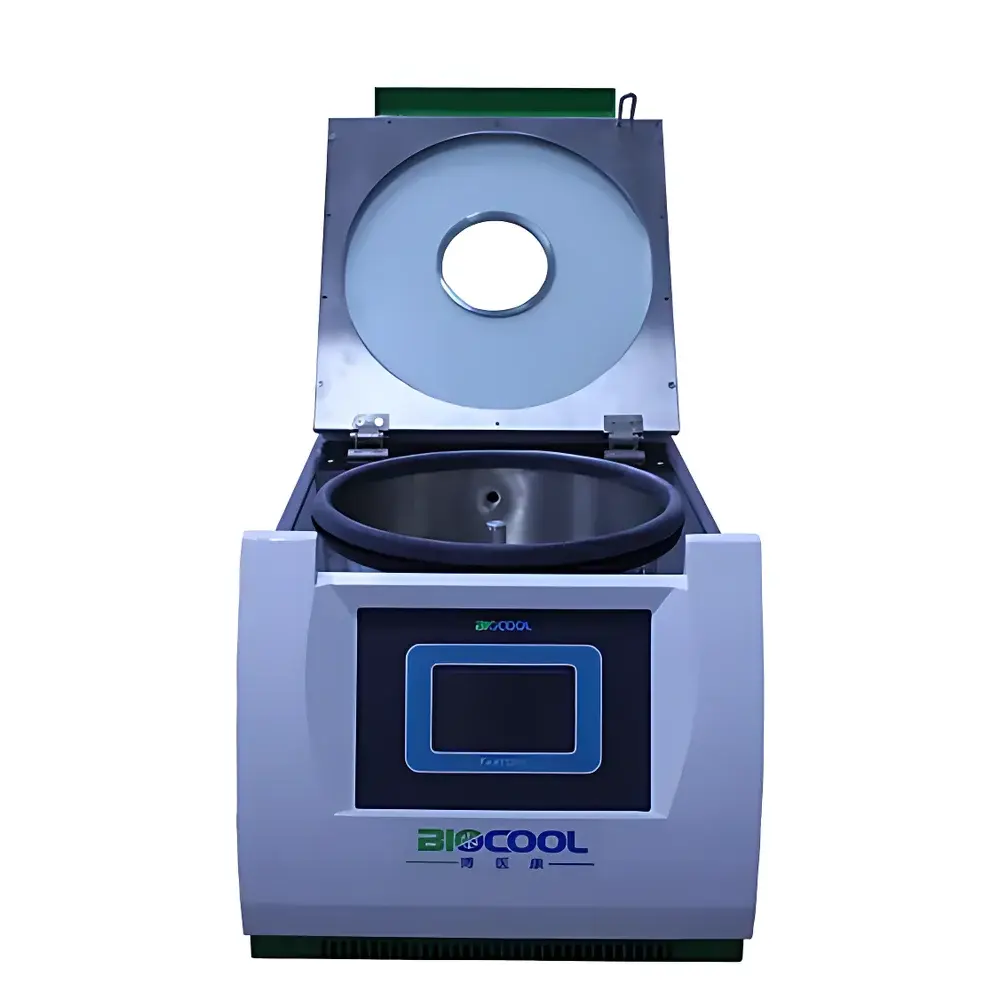
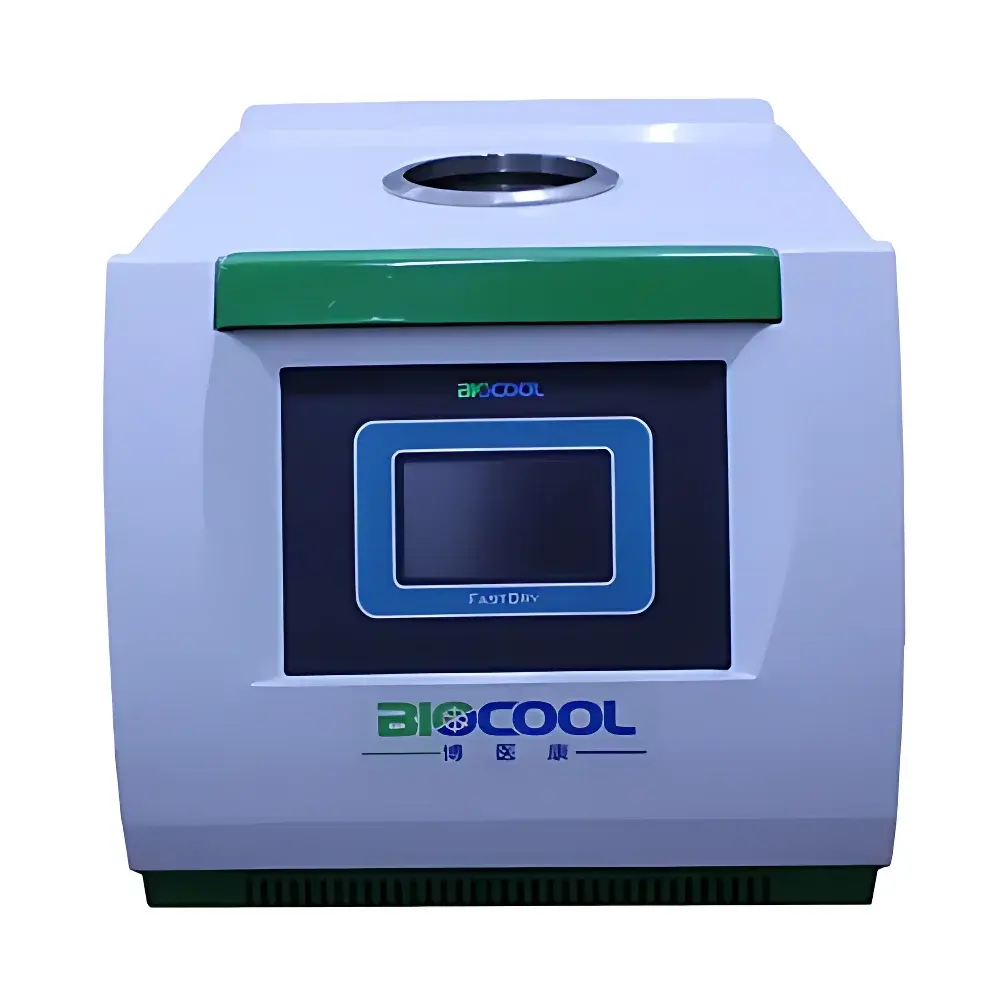
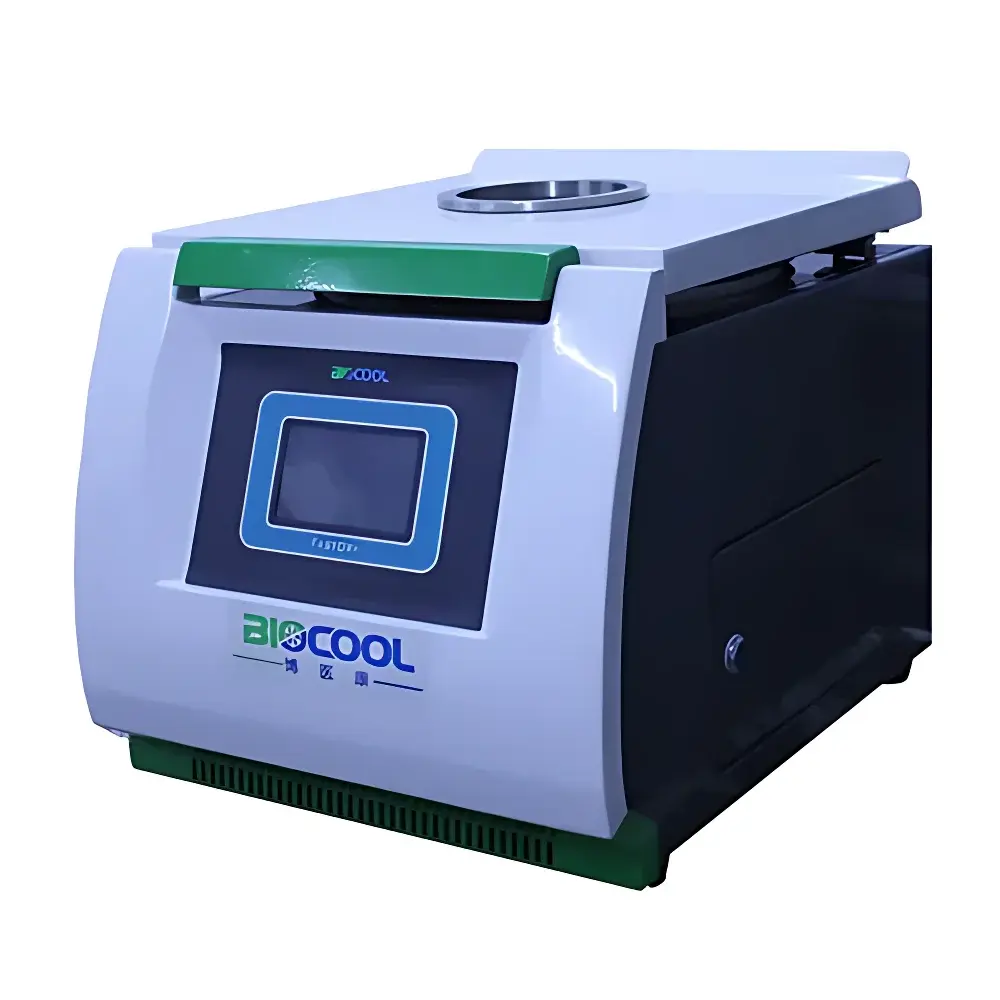
BIOCOOL FastDry-2 Vacuum Centrifugal Concentrator
| Brand | BIOCOOL |
|---|---|
| Origin | Tianjin, China |
| Model | FastDry-2 |
| Instrument Type | Vacuum Centrifugal Concentrator |
| Temperature Range | 4°C to 80°C |
| Temperature Control | Gradient PID Control |
| Sample Capacity | 132 × 1.5 mL tubes |
| Vacuum System | Compatible with diaphragm or direct-coupled rotary vane pumps |
| Display | Touchscreen interface |
| Control Architecture | PLC-based automation |
| Safety Features | Auto-vacuum release, magnetic drive seal, ice crystal prevention logic (vacuum initiation only after target speed achieved) |
| Chamber & Rotor Coating | PTFE (Teflon®)-coated for chemical resistance and sterilizability |
| Rotors | Up to 50 rotor types auto-recognized |
| Optional Modules | Ultra-low temperature condenser (< −110°C), cryogenic thermostat (−4°C to +4°C), endpoint detection, vacuum oil mist filter, and process optimization support |
Overview
The BIOCOOL FastDry-2 Vacuum Centrifugal Concentrator is an engineered solution for high-fidelity sample concentration and solvent removal in molecular biology, proteomics, metabolomics, and pharmaceutical development laboratories. It operates on the principle of simultaneous centrifugal force, controlled vacuum, and precisely regulated thermal energy—enabling efficient evaporation while minimizing thermal degradation, foaming, or sample loss. Unlike conventional evaporators, the FastDry-2 integrates a magnetically coupled vacuum drive system to ensure hermetic sealing and eliminate mechanical feedthroughs, thereby enhancing long-term reliability and reducing maintenance intervals. Its gradient PID temperature control enables dynamic heat input matching solvent volatility profiles across multi-stage protocols—critical for preserving labile biomolecules such as RNA, antibodies, and enzymatic complexes. Designed for compliance-driven environments, the chamber and rotor surfaces are coated with medical-grade PTFE, supporting autoclaving at 121°C and meeting material compatibility requirements under ISO 13485 and FDA 21 CFR Part 11–aligned validation frameworks.
Key Features
- Gradient PID temperature control (4°C–80°C) with ±0.3°C stability, enabling stage-specific thermal management for sensitive biomolecules.
- Magnetically driven rotor system ensures vacuum integrity without shaft seals—eliminating lubricant contamination and enabling operation under deep vacuum (<10 Pa).
- 12-segment programmable touchscreen interface: each segment independently defines rotational speed (400–1800 rpm, infinitely variable), vacuum setpoint, temperature, and dwell time.
- PTFE-coated centrifuge chamber and rotors resist corrosion from acidic, basic, and organic solvents—including acetonitrile, methanol, chloroform, and TFA.
- Integrated cold trap compatibility: supports optional ultra-low temperature condensers (<−110°C) for high-efficiency capture of volatile organics and aggressive solvents.
- Auto-vacuum release and pressure-equalization system prevents sample splashing or tube rupture during termination.
- Real-time remote monitoring via encrypted mobile application—supports status alerts, protocol progress tracking, and historical log export (CSV/Excel).
- Rotors auto-identified via embedded RFID tags; library supports >48 configurations—including PCR strip holders, microcentrifuge adapters, and virus-concentration rotors.
Sample Compatibility & Compliance
The FastDry-2 accommodates standard 1.5 mL microcentrifuge tubes (132 positions), with full compatibility across nucleic acid purification workflows (e.g., post-SPRI cleanup), peptide synthesis desalting, small-molecule drug candidate concentration, and viral vector formulation. Its −4°C to +4°C low-temperature preservation mode satisfies cold-chain requirements for enzyme kinetics studies and unstable protein formulations. All wetted materials comply with USP Class VI biocompatibility testing. The PTFE coating meets ISO 10993-5 cytotoxicity standards and supports validated cleaning procedures per GMP Annex 15. Vacuum system architecture allows integration with oil-free diaphragm pumps (for GLP-compliant trace-metal analysis) or high-capacity rotary vane pumps (for rapid large-volume processing). Device firmware logs all critical parameters—including vacuum ramp rate, temperature deviation history, and rotor ID—with timestamped audit trails suitable for 21 CFR Part 11 compliance when deployed with electronic signature modules.
Software & Data Management
The embedded HMI runs on a deterministic real-time PLC platform, ensuring cycle reproducibility independent of network latency or OS-level interruptions. Protocol files (.fdp) store complete parameter sets—including speed ramp profiles, vacuum decay curves, and thermal overshoot compensation settings—for seamless transfer between instruments. Data export includes raw sensor timestamps (temperature, pressure, RPM), calculated evaporation rates (µL/min), and endpoint confidence metrics derived from pressure stabilization algorithms. Optional endpoint detection uses dual-sensor fusion (vacuum stability + thermal inertia) to autonomously terminate runs—reducing operator dependency and improving inter-lab reproducibility. All logs are digitally signed and exportable in CSV, PDF, or XML formats compatible with LIMS platforms such as LabVantage and STARLIMS.
Applications
- Nucleic acid concentration post-enzymatic reaction or column elution—maintaining integrity of long-read sequencing libraries.
- Removal of residual organic solvents (e.g., DMSO, DMF) from synthetic peptides without racemization or aggregation.
- Preparative concentration of low-titer lentiviral or AAV vectors under sterile conditions using validated PTFE-sealed rotors.
- High-throughput metabolite extraction workflows requiring parallel processing of 132 samples with identical thermal/vacuum profiles.
- Stability-indicating studies where controlled dehydration kinetics must be decoupled from oxidative stress—enabled by inert gas backfill capability (optional).
FAQ
What vacuum level can the FastDry-2 achieve?
The system achieves ≤10 Pa under optimal pump configuration (direct-coupled rotary vane pump with cold trap); actual operating vacuum depends on solvent vapor pressure and condenser temperature.
Is the instrument suitable for RNA work?
Yes—the 4°C operational floor, combined with optional cryogenic thermostat module (−4°C to +4°C), minimizes RNase activity and secondary structure denaturation during concentration.
Can I validate this device under GMP/GLP guidelines?
Yes—full IQ/OQ documentation packages are available, including calibration certificates for temperature sensors (NIST-traceable), vacuum transducers, and tachometers; firmware supports 21 CFR Part 11 audit trails with role-based access control.
Does the system support solvent recovery?
Not natively—but when paired with an ultra-low temperature condenser (95% capture efficiency is achievable for common LC-MS solvents, enabling partial reuse in non-critical applications.
How is rotor safety ensured during vacuum transitions?
The PLC enforces a hard interlock: vacuum initiation is delayed until rotor reaches ≥95% of target speed, preventing imbalance-induced vibration or tube ejection under differential pressure.



