
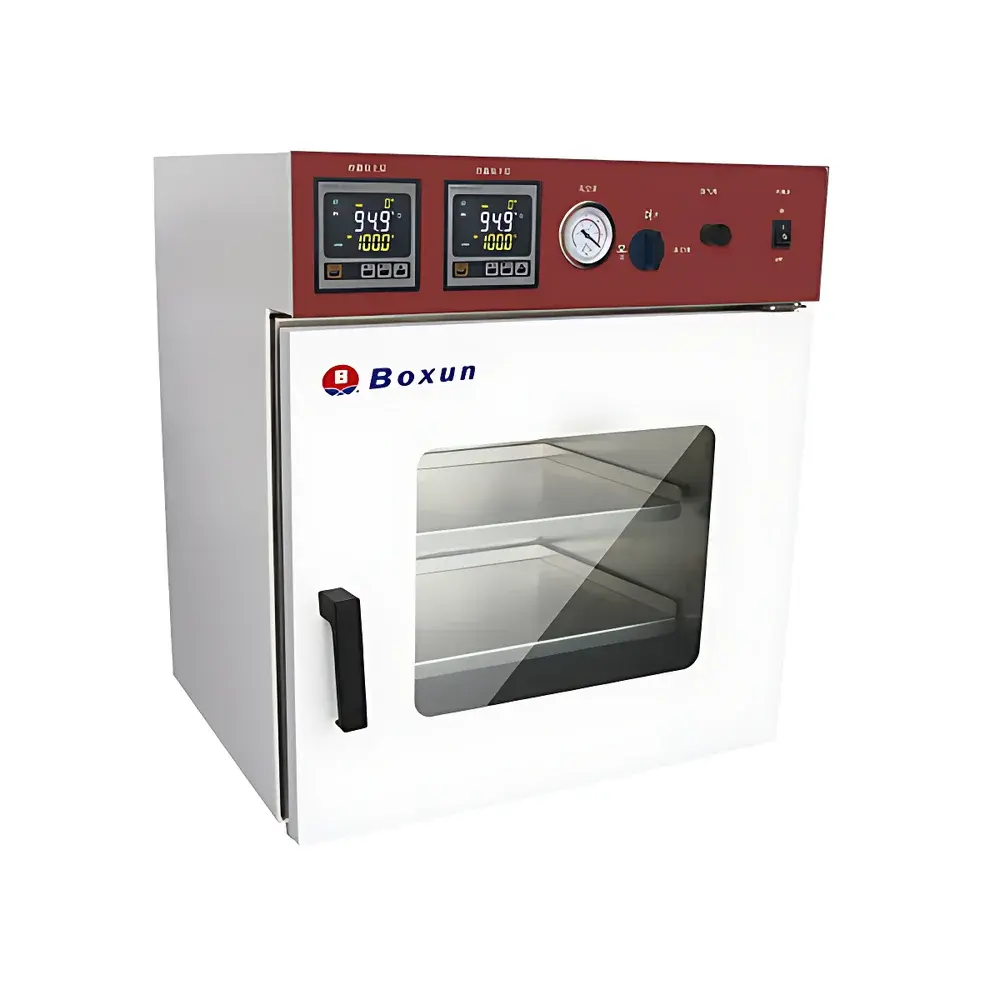
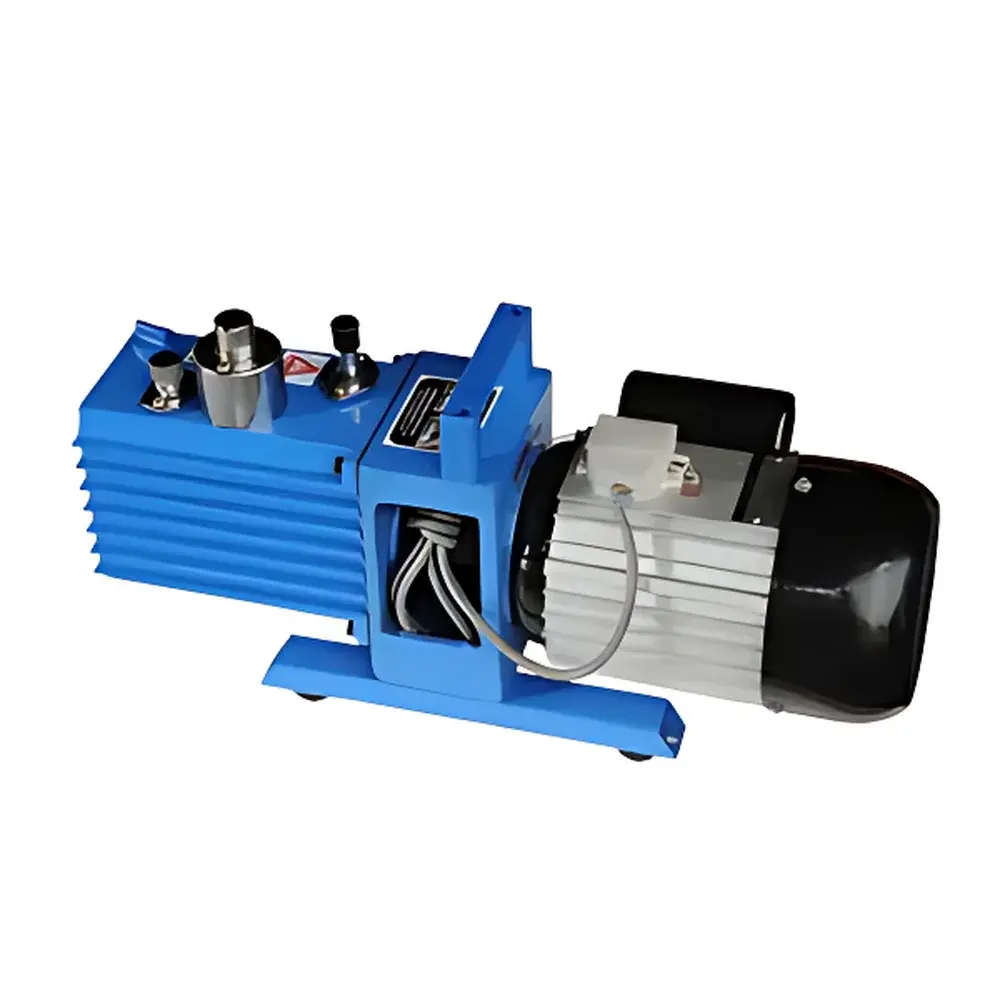
Boxun BZF-100 Vacuum Drying Oven
| Brand | Boxun |
|---|---|
| Origin | Shanghai, China |
| Manufacturer Type | Direct Manufacturer |
| Product Category | Domestic |
| Model | BZF-100 |
| Instrument Type | Vacuum Oven |
| Temperature Range | RT+2°C to 250°C |
| Temperature Uniformity | ±0.5°C |
| External Dimensions | 620 × 640 × 780 mm |
| Internal Chamber Dimensions | 450 × 500 × 450 mm |
| Chamber Material | Stainless Steel (SUS304) |
| Heating Method | Shelf-Mounted Resistive Heating with Forced Air Circulation |
| Vacuum Level | ≤133 Pa |
| Rated Power | 1400 W |
| Voltage | 220 V ±10%, 50/60 Hz |
| Timer Range | 0–9999 min |
| Capacity | 100 L |
| Standard Shelves | 2 pcs |
| Included Vacuum Pump | BX-1 (Pumping Speed: 1 L/s |
| Ultimate Pressure | ≤6×10⁻² Pa partial / ≤133 Pa total |
| Motor Power | 0.25 kW |
| Noise | ≤65 dBA) |
Overview
The Boxun BZF-100 Vacuum Drying Oven is an engineered solution for controlled, low-temperature dehydration of thermally sensitive, oxidation-prone, or structurally complex samples. Operating on the principle of reduced-pressure evaporation, the system lowers the boiling point of volatile components—enabling solvent removal and moisture elimination at substantially lower temperatures than atmospheric drying. This physical principle ensures minimal thermal degradation of proteins, enzymes, pharmaceutical actives, polymers, and botanical extracts. Designed for routine use in GLP-compliant laboratories, quality control environments, and academic research settings, the BZF-100 integrates vacuum integrity, precise thermal regulation, and structural robustness to support reproducible drying protocols under defined process parameters.
Key Features
- Stainless steel (SUS304) interior chamber with seamless, semi-circular corner geometry—optimized for cleanability and resistance to corrosion from acidic or alkaline residues.
- Microprocessor-based PID temperature controller with backlit LCD interface—providing real-time display of setpoint, actual chamber temperature, elapsed time, and remaining timer duration.
- Dual-layer tempered safety glass door with integrated silicone gasket—ensuring visual monitoring without compromising vacuum seal integrity or operator safety.
- Modular shelf heating architecture: independent resistive heating elements embedded beneath each adjustable stainless steel shelf—enabling zone-specific thermal input and minimizing convective disturbance to particulate or powder samples.
- Intelligent power recovery function: automatically resumes pre-interruption settings—including temperature setpoint, timer value, and vacuum status—following grid outages or system resets.
- Adjustable door compression mechanism with uniform clamping force distribution—maintaining consistent sealing pressure across the full perimeter gasket surface for stable vacuum retention up to 133 Pa.
Sample Compatibility & Compliance
The BZF-100 accommodates a broad spectrum of sample formats including lyophilized powders, granular catalysts, ceramic precursors, biological tissue sections, and multi-component composite materials. Its inert stainless steel chamber and absence of airflow turbulence prevent cross-contamination and mechanical displacement—critical for handling fine particulates, fragile membranes, or microfluidic substrates. The system meets essential design criteria aligned with ISO 554 (standard atmospheres for conditioning and testing), ASTM D2243 (vacuum drying procedures for plastics), and USP (sterile processing considerations). While not certified for Class I Division 1 hazardous locations, its sealed construction and lack of internal ignition sources support safe operation with non-flammable solvents under vacuum. Documentation packages include factory calibration reports traceable to NIST standards and optional IQ/OQ protocol templates for GMP-regulated environments.
Software & Data Management
The BZF-100 operates as a standalone instrument with no proprietary software dependency. All operational parameters—including temperature setpoint, dwell time, ramp rate (if enabled via optional firmware), and vacuum hold duration—are configured directly via the front-panel interface. Event logging is limited to timestamped alarm records (e.g., overtemperature, door-open, vacuum loss) stored in non-volatile memory. For laboratories requiring electronic recordkeeping compliant with FDA 21 CFR Part 11, integration with external data acquisition systems is supported via RS-485 Modbus RTU communication (optional module). Audit trails, user access controls, and electronic signatures must be implemented at the facility-level SCADA or LIMS layer—not within the oven’s embedded controller.
Applications
- Pharmaceutical development: residual solvent removal from active pharmaceutical ingredients (APIs) and excipients prior to tablet compression or capsule filling.
- Materials science: dehydration of metal-organic frameworks (MOFs), zeolites, and aerogel precursors without pore collapse.
- Environmental analysis: gravimetric determination of total suspended solids (TSS) and total dissolved solids (TDS) per EPA Method 160.1 and ISO 5667-12.
- Food science: moisture content analysis of heat-labile nutraceuticals, probiotics, and enzymatically active food additives.
- Electronics manufacturing: degassing of conformal coatings and encapsulants prior to UV curing or thermal cycling.
- Agricultural research: preservation of pollen, spores, and microbial cultures without desiccation-induced viability loss.
FAQ
What vacuum level can the BZF-100 achieve with the included BX-1 pump?
The integrated BX-1 rotary vane pump achieves a base pressure of ≤133 Pa (1 Torr) in the chamber, sufficient for most low-temperature drying applications involving water, ethanol, acetone, or ethyl acetate.
Is the BZF-100 suitable for drying samples under inert gas purging?
No—the system is designed exclusively for vacuum operation and lacks gas inlet/outlet ports or pressure regulation capability for nitrogen or argon blanketing.
Can the temperature be ramped programmatically?
Standard firmware supports only fixed-temperature holds; multi-step temperature ramps require external programmable controllers interfaced via analog output signals.
What maintenance is required for the BX-1 vacuum pump?
Oil replacement every 500 operating hours or annually (whichever occurs first); periodic inspection of the exhaust filter and intake mesh to prevent particulate ingress.
Does the BZF-100 comply with CE or UL safety directives?
The unit conforms to IEC 61010-1:2010 for laboratory electrical equipment safety but does not carry CE or UL marks—users must verify regional regulatory acceptance through local certification bodies.



