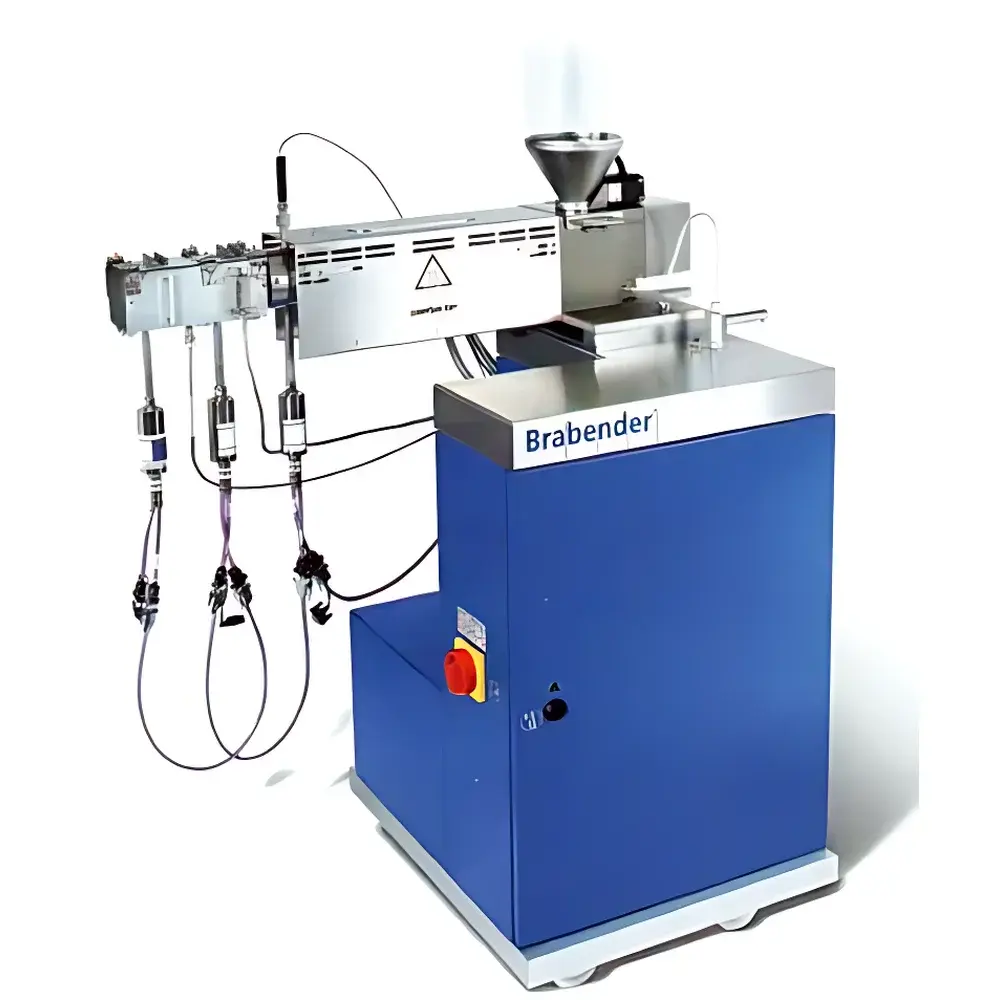
Brabender Extrusiograph 19/25 D Laboratory-Scale Single-Screw Capillary Extrusion Rheometer
| Origin | Germany |
|---|---|
| Manufacturer Type | Authorized Distributor |
| Origin Category | Imported |
| Model | 19/25 D |
| Pricing | Upon Request |
Overview
The Brabender Extrusiograph 19/25 D is a precision-engineered, laboratory-scale single-screw capillary extrusion rheometer designed to replicate industrial extrusion conditions under controlled, reproducible settings. Operating on the principle of volumetric displacement and pressure-driven melt flow through a defined die geometry, it enables quantitative assessment of polymer melt rheology, processability, and formulation stability. As an interchangeable measurement head compatible with the Brabender Plasti-Corder LE/LC or Plastograph EC plus modular drive systems, the Extrusiograph 19/25 D integrates seamlessly into standardized polymer testing workflows. Its 19 mm barrel diameter and 25D (475 mm) effective screw length provide sufficient residence time and shear history to emulate typical production-scale extrusion profiles—making it particularly suited for R&D laboratories, quality control departments, and academic polymer processing research groups requiring traceable, GLP-aligned data generation.
Key Features
- Modular integration with Brabender Plasti-Corder LE/LC or Plastograph EC plus drive units via standardized mechanical and electrical interfaces
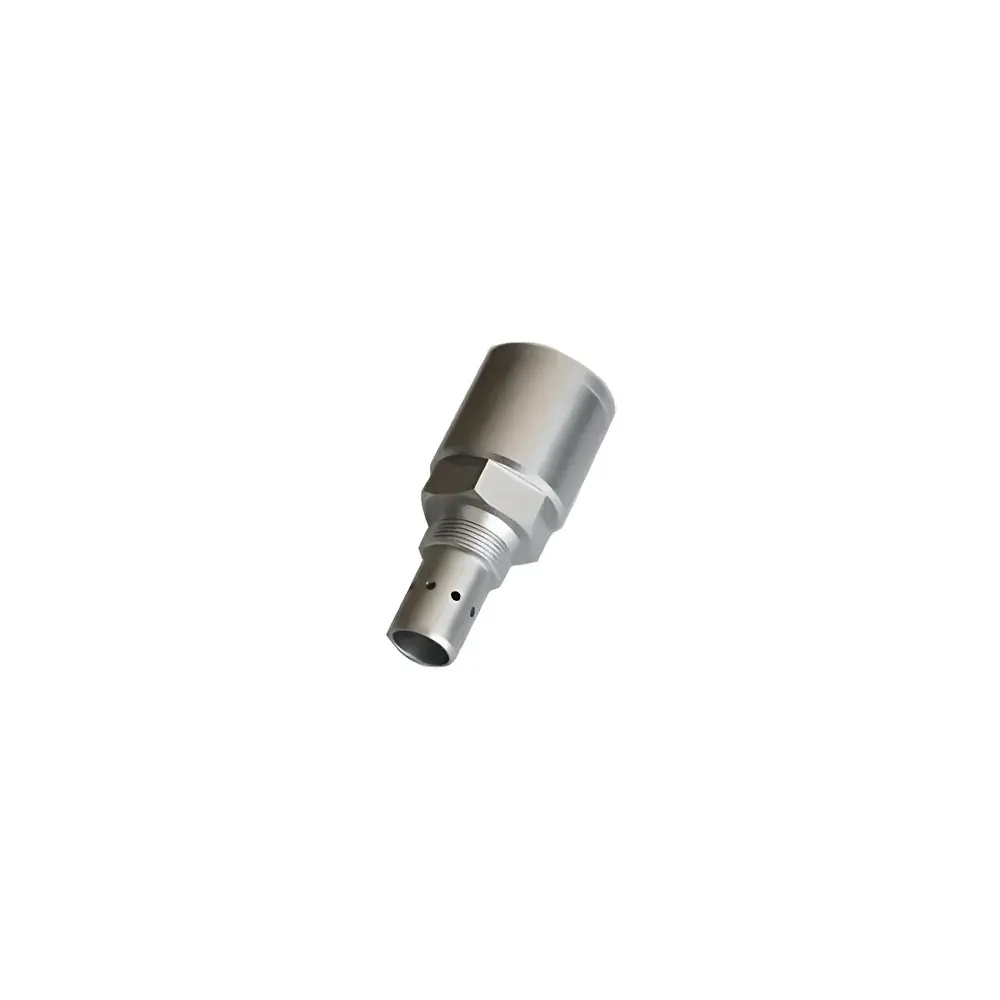
- 19 mm heated barrel with six axially spaced ½–20 UNF threaded ports for precise insertion of thermocouples, pressure transducers, and melt temperature sensors
- Adjustable feed system: standard vibratory hopper, optional feed screw, and interchangeable feed zone geometry (tapered or cylindrical)
- Electronically coupled torque transmission ensures overload protection for both drive motor and extrusion head—preventing mechanical damage during transient overloads or material jamming
- Real-time acquisition and synchronized visualization of torque, melt temperature, melt pressure, and mass throughput rate in tabular and graphical formats
- Capable of ASTM D3835, ISO 11443, and ISO 2536 compliant capillary rheometry when configured with appropriate dies and calibration protocols
Sample Compatibility & Compliance
The Extrusiograph 19/25 D accommodates thermoplastic polymers including polyolefins (PP, PE), engineering resins (PA6, PC, PBT), thermoplastic elastomers (TPEs), and filled compounds (e.g., TiO₂-, CaCO₃-, or glass-fiber-reinforced formulations). It supports evaluation of critical extrusion-related phenomena such as melt homogeneity, gel content, pigment dispersion quality, optical clarity, streak formation, and phase separation at die exit or along the screw channel. All measurements adhere to internationally recognized standards for extrusion characterization—including ASTM D2538 (extrudate appearance), ISO 18738 (melt fracture analysis), and USP guidelines for polymer-based pharmaceutical excipient extrusion. Data integrity is maintained through timestamped, audit-trail-enabled logging compliant with FDA 21 CFR Part 11 requirements when used with validated Brabender LabSoft software.
Software & Data Management
Data acquisition and analysis are performed using Brabender LabSoft v5.x or higher—a Windows-based platform supporting multi-channel real-time plotting, statistical post-processing (e.g., shear viscosity vs. shear rate, Bagley and Rabinowitsch corrections), and export to CSV, Excel, or PDF formats. The software enables automated test sequencing, parameter recall from method templates, and comparative overlay of historical datasets. Integrated calibration routines support traceable sensor verification per ISO/IEC 17025 recommendations. Raw sensor signals (torque, temperature, pressure) are recorded at ≥10 Hz sampling frequency with 16-bit ADC resolution, ensuring high fidelity for transient event capture during startup, degradation onset, or surging behavior.
Applications
- Routine QC of incoming polymer batches for consistency in melt flow index (MFI)-correlated behavior
- Formulation development of color masterbatches, conductive composites, and reactive extrusion precursors
- Evaluation of thermal stability and shear sensitivity during melt processing
- Determination of optimal screw design parameters (compression ratio, L/D, mixing element placement) via comparative head-to-head trials
- Correlation studies between lab-scale extrusion output and full-scale twin-screw extruder performance
- Supporting regulatory submissions requiring process understanding per ICH Q5E and Q8(R2) principles
FAQ
Is the Extrusiograph 19/25 D compatible with non-Brabender drive systems?
No—it requires mechanical and signal interface compatibility with Brabender Plasti-Corder or Plastograph EC plus platforms; third-party drives lack the proprietary torque coupling and synchronization protocol.
Can pressure and temperature sensors be calibrated in situ?
Yes—six standardized ½–20 UNF ports allow interchangeable insertion of NIST-traceable Pt100 RTDs and piezoresistive pressure transducers, with calibration documented in LabSoft audit trails.
What is the minimum sample quantity required per test?
Typical test duration ranges from 3–10 minutes depending on throughput rate; minimum usable sample mass is approximately 150 g for stable steady-state operation.
Does the system support automated cleaning cycles?
While no integrated solvent flush mechanism exists, the modular barrel and die assembly permits rapid disassembly and manual cleaning per SOPs aligned with ISO 17025 cleanliness validation requirements.