
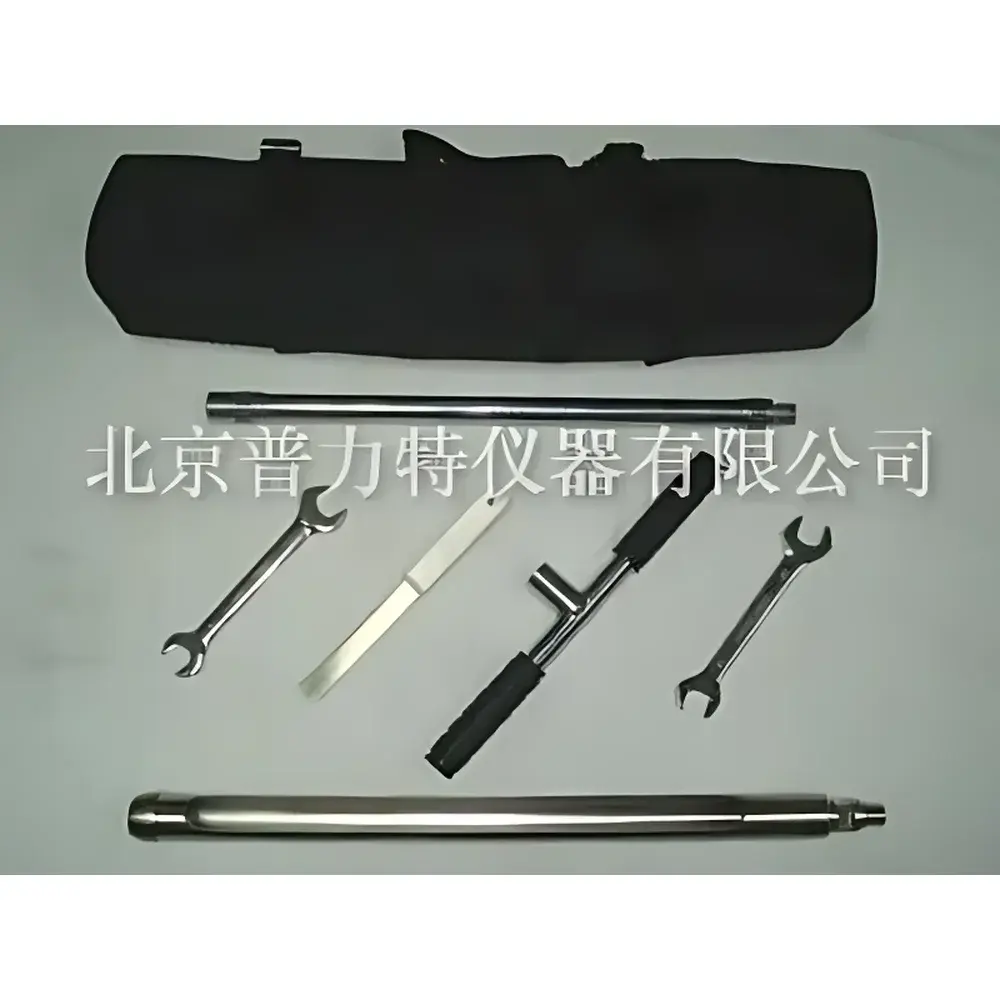
BSP50 Intertidal and Marsh Sediment Coring Drill
| Origin | Beijing, China |
|---|---|
| Manufacturer Type | Authorized Distributor |
| Country of Origin | China |
| Model | BSP50 |
| Pricing | Available Upon Request |
Overview
The BSP50 Intertidal and Marsh Sediment Coring Drill is a manually operated, field-deployable coring device engineered for precise, minimally disturbed sampling of soft, water-saturated sediments in dynamic coastal and wetland environments. Designed in accordance with standard sediment sampling protocols used in environmental site assessments and regulatory monitoring programs, the BSP50 employs a direct-push, rotary-coring principle to extract intact cylindrical cores from intertidal flats, salt marshes, mangrove fringes, and freshwater wetlands. Its 50 cm maximum penetration depth aligns with common stratigraphic investigation requirements for surface sediment characterization—particularly for analyses including grain size distribution, organic carbon content, heavy metal profiling, and benthic microplastic quantification. The instrument operates without power supply or hydraulic assistance, ensuring reliability in remote, low-infrastructure field settings where battery life or equipment weight are critical constraints.
Key Features
- Stainless steel coring bit (30 mm outer diameter, 50 cm active sampling length) with sharp leading edge and internal smooth bore to preserve core integrity and minimize smearing during extraction.
- Modular 50 cm threaded extension rod fabricated from corrosion-resistant alloy steel, enabling rapid assembly/disassembly and compatibility with optional auxiliary rods for incremental depth extension.
- Ergonomic T-shaped metal handle with knurled grip surface, optimized for torque transmission and operator fatigue reduction during repetitive manual rotation and downward pressure application.
- Dedicated stainless steel sediment scraper tool for controlled removal of adherent surface slurry and trimming of core ends prior to sectioning or subsampling.
- Complete field kit includes two precision hex wrenches (for rod coupling torque control), a durable carry case with custom-cut foam inserts for component organization and impact protection during transport.
Sample Compatibility & Compliance
The BSP50 is validated for use with unconsolidated, high-moisture-content sediments exhibiting shear strengths below 25 kPa—typical of muddy sand, silty clay, and organic-rich peat deposits found across temperate and subtropical intertidal zones. It complies with sampling methodology references cited in ASTM D1586 (Standard Test Method for Penetration Resistance and Classification of Soils), ISO 22475-1 (Geotechnical investigation and testing — Sampling methods and the quality of samples — Part 1: General principles), and EPA Method 1664B (for sediment-associated hydrophobic contaminants). Core geometry (30 mm Ø × up to 500 mm L) supports standard subsampling protocols for ICP-MS, XRF, GC-MS, and microbial DNA extraction workflows. All wetted components meet NSF/ANSI Standard 61 material safety requirements for environmental sample contact.
Software & Data Management
As a non-electronic, mechanical sampling tool, the BSP50 does not incorporate embedded sensors, firmware, or digital interfaces. Field data collection—including location (GPS coordinates), date/time, sediment description (color, odor, consistency per USCS classification), core recovery ratio, and visual stratigraphy notes—is documented using standardized paper log sheets or interoperable mobile applications such as ESRI Field Maps or OpenDataKit (ODK). Digital records may be synchronized with laboratory information management systems (LIMS) supporting ISO/IEC 17025-compliant chain-of-custody tracking. Optional barcode-labeled core liners (sold separately) facilitate automated sample ID linkage during lab accessioning.
Applications
- Baseline ecological surveys for coastal restoration projects under NOAA’s National Estuarine Research Reserve System (NERRS) guidelines.
- Monitoring of legacy contaminant accumulation (e.g., PCBs, PAHs, Pb, Cd) in estuarine sediments per EPA Region 10 sediment quality standards.
- Carbon stock assessment in blue carbon ecosystems (e.g., seagrass meadows, salt marshes) aligned with IPCC 2013 Wetlands Supplement reporting frameworks.
- Microplastic vertical distribution profiling across sediment horizons for peer-reviewed environmental forensics studies.
- Validation of geophysical survey anomalies (e.g., GPR or resistivity profiles) through ground-truth coring at selected transect points.
FAQ
What sediment types is the BSP50 drill rated for?
It is designed for cohesive and semi-cohesive fine-grained sediments—primarily mud, silt-clay mixtures, and organic-rich peats—with moisture content >60% and undrained shear strength <25 kPa.
Can the BSP50 be used in submerged conditions?
Yes; the fully sealed stainless steel bit and corrosion-resistant rod assembly allow operation in shallow tidal immersion (up to 0.3 m water depth) without performance degradation.
Is the core liner included with the standard kit?
No; disposable polyethylene or polycarbonate core liners are available as optional accessories to prevent cross-contamination and simplify extrusion during lab processing.
Does the BSP50 meet GLP or ISO 17025 documentation requirements?
While the tool itself is not certified, its use within documented SOPs—including operator training logs, equipment calibration checks (torque verification of couplings), and core labeling protocols—fully supports GLP and ISO/IEC 17025 audit readiness.
How is depth accuracy verified during field operation?
Depth markers are laser-etched at 5 cm intervals on the extension rod; users cross-reference these with a calibrated measuring tape applied directly to the exposed rod segment after core retrieval.
Related Products







