
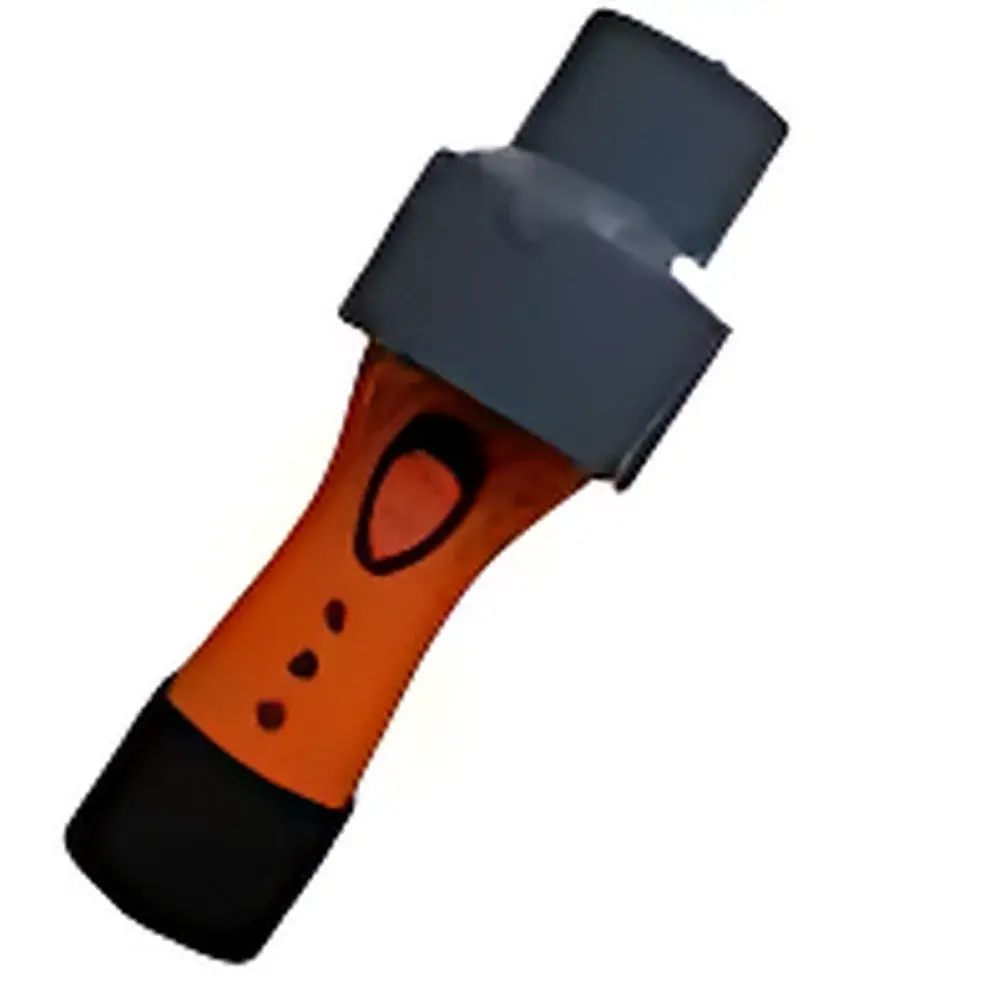
Candling Device Model 04
| Origin | Japan |
|---|---|
| Manufacturer Type | Distributor |
| Origin Category | Imported |
| Model | 04 |
| Price | ¥500 |
Overview
The Candling Device Model 04 is a portable, battery-powered instrument engineered for non-invasive visual inspection of avian eggs during incubation. It operates on the principle of transillumination—using high-intensity LED illumination to penetrate the eggshell and reveal internal structural features, including air cell development, vascular network formation, embryo viability, and embryonic positioning. Designed for field use, hatchery quality control, and small-scale poultry operations, this device delivers consistent luminance without requiring external power sources or thermal management systems. Its optical architecture minimizes glare and shadow artifacts while preserving natural contrast perception—critical for accurate developmental staging under variable ambient lighting conditions.
Key Features
- High-luminance white LED light source with stable output across battery life cycle (operates on standard AA dry cells)
- Compact, ergonomic handheld form factor with integrated light-shielding cup for optimal occlusion during candling
- No heat generation at the emission surface—eliminates risk of thermal stress to developing embryos
- Optimized beam collimation to maximize light transmission through calcified eggshell without overexposure
- Robust polycarbonate housing rated for repeated handling in humid or dusty hatchery environments
- Zero electromagnetic interference—compatible with adjacent electronic incubation monitoring systems
Sample Compatibility & Compliance
The Model 04 is validated for use with chicken, duck, goose, quail, and turkey eggs within standard commercial size ranges (45–85 g). It supports both early-stage (Day 3–5) and mid-to-late stage (Day 7–18) candling protocols per USDA Poultry Hatchery Manual guidelines. While not classified as a medical device, its optical performance aligns with ISO 8559-1:2017 anthropometric definitions for hand-held visual inspection tools. The device complies with IEC 62471 photobiological safety standards for LED-based illuminators and meets RoHS Directive 2011/65/EU requirements for hazardous substance restriction. No calibration certificate is provided; however, factory-set LED drive current ensures repeatable intensity output across units.
Software & Data Management
This is a standalone analog optical instrument with no embedded microcontroller, firmware, or digital interface. Consequently, it does not generate, store, or transmit data. All observations are recorded manually by the operator using standardized hatchery log sheets or digital farm management platforms (e.g., FarmWizard, HatchTrack). For regulatory traceability in commercial hatcheries subject to USDA-FSIS or EU Regulation (EC) No 853/2004, users are advised to document candling outcomes—including date, egg batch ID, observed developmental status, and operator initials—in accordance with Good Manufacturing Practice (GMP) record-keeping protocols. No software validation or 21 CFR Part 11 compliance is applicable.
Applications
- Early embryo viability assessment prior to transfer into setter trays
- Detection of infertile eggs and early embryonic mortality (EEM) to optimize incubator load efficiency
- Monitoring air cell expansion rate as an indicator of humidity control efficacy
- Identification of cracked or porous shells pre-hatch to segregate for targeted sanitation
- Educational use in veterinary science and agricultural extension programs demonstrating embryology fundamentals
- Field-based biosecurity screening during flock health audits or disease outbreak investigations
FAQ
What type of batteries does the Model 04 require?
It operates on two standard AA alkaline or lithium primary cells—no rechargeable battery support is included.
Is the device suitable for use with ostrich or emu eggs?
Due to significantly thicker shell morphology and higher opacity, transillumination efficacy is substantially reduced; alternative imaging methods (e.g., low-dose X-ray) are recommended for ratite species.
Does the Model 04 include a calibration reference or intensity meter?
No. Output intensity is factory-set and not user-adjustable; routine visual verification against a known viable egg is recommended before each operational shift.
Can the LED module be replaced in the field?
The LED assembly is potted and non-serviceable; end-of-life units must be replaced as a complete unit per manufacturer policy.
Is there a CE or UKCA marking on the device?
As a passive optical tool without electrical circuitry beyond basic LED driver components, formal CE marking is not mandated under EU Machinery Directive 2006/42/EC; however, RoHS compliance documentation is available upon request.






