
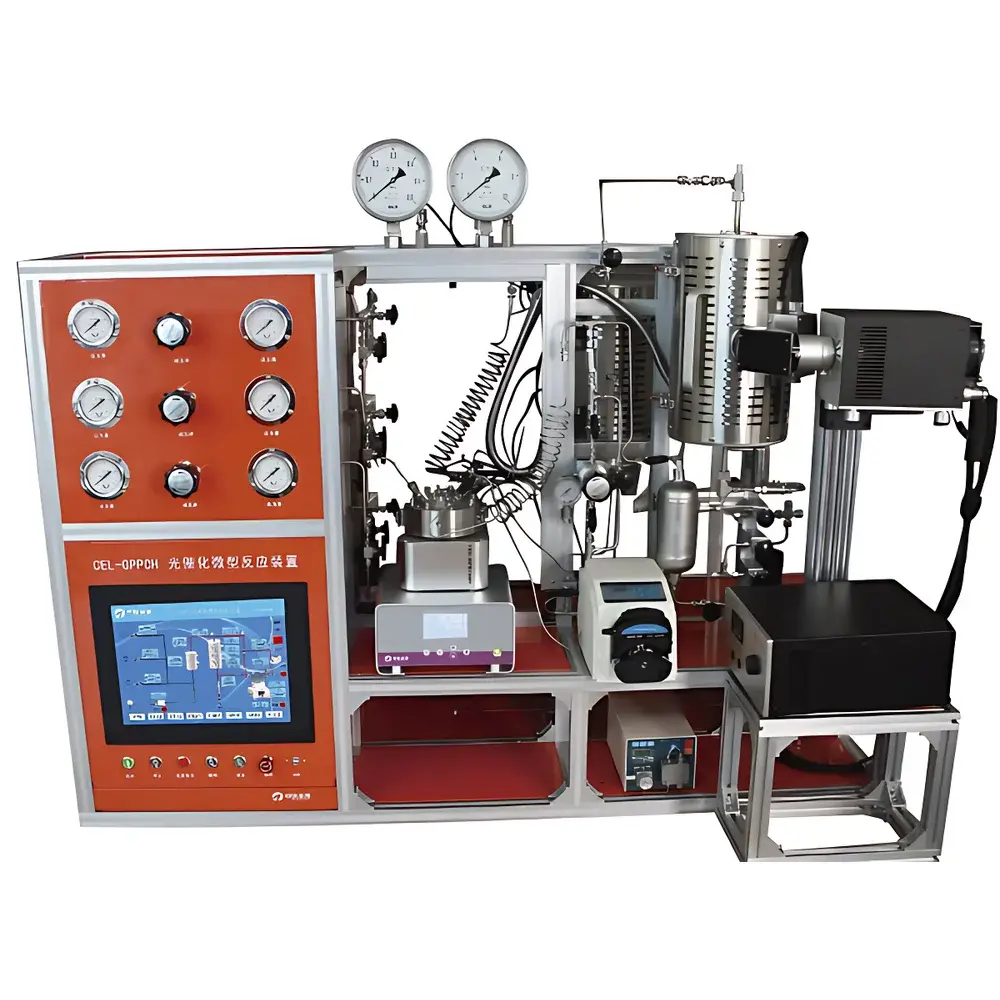
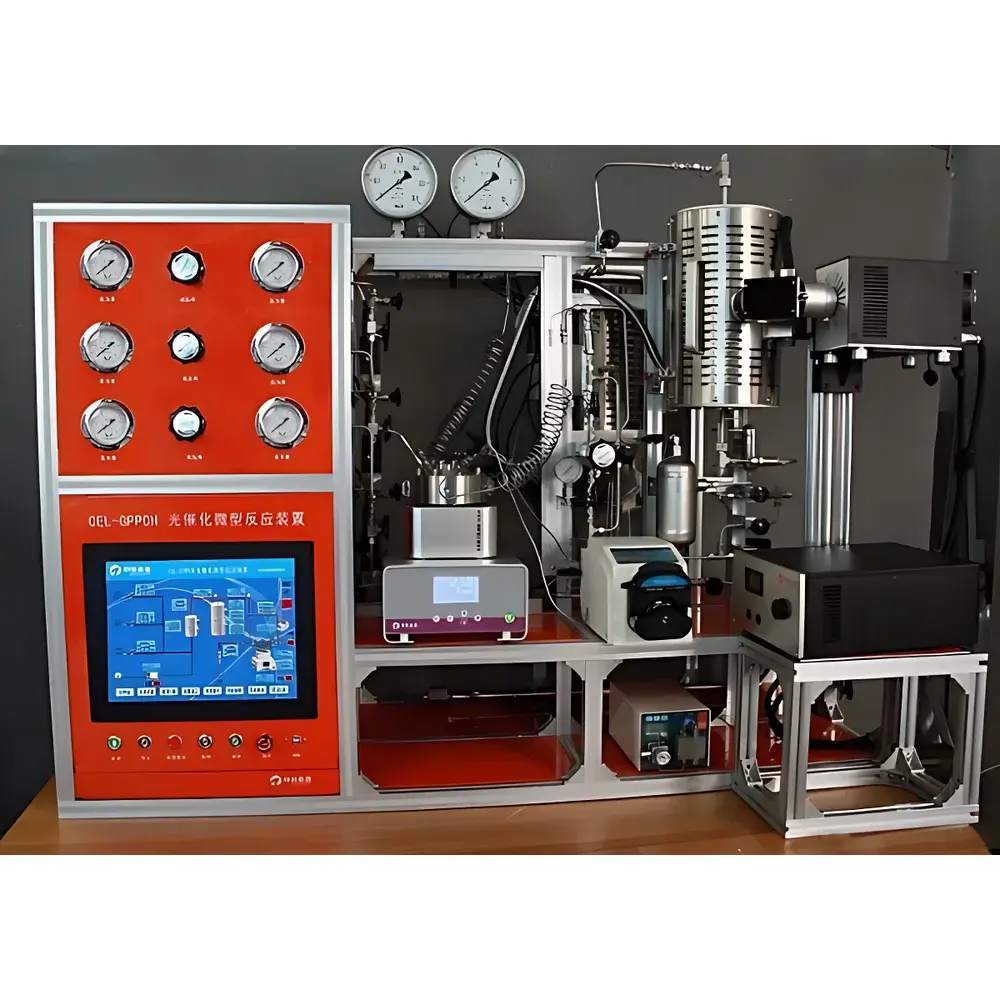
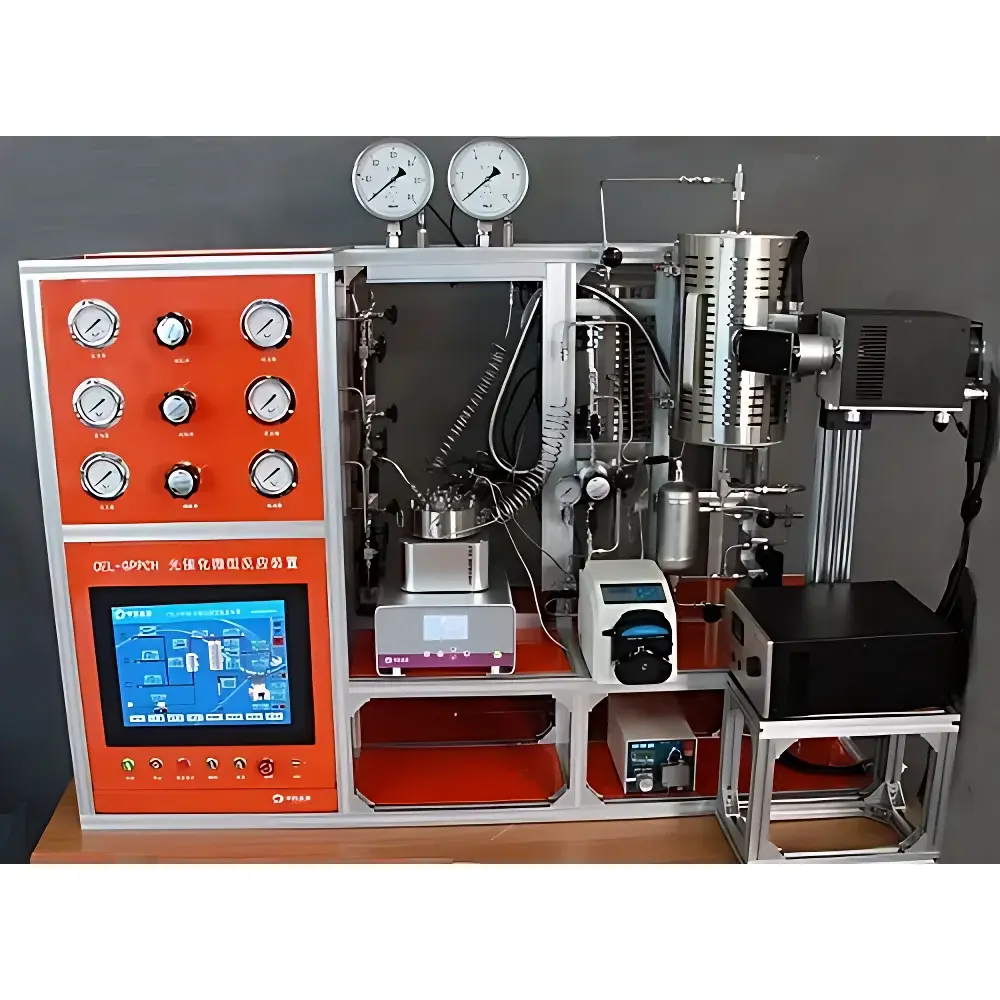
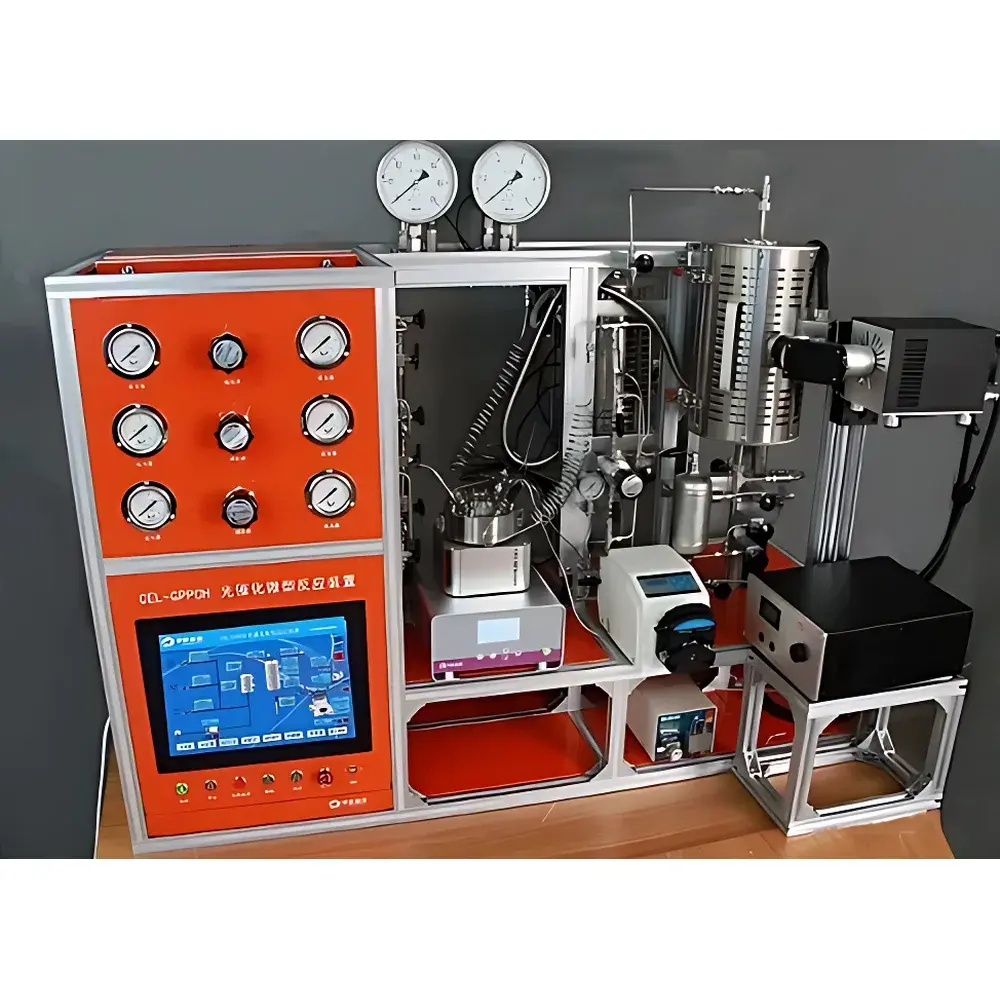
CEL-GPPCH Photocatalytic Micro-Reactor System
| Brand | CEAULIGHT (Zhongjiaojinyuan) |
|---|---|
| Origin | Beijing, China |
| Manufacturer Type | OEM Manufacturer |
| Product Origin | Domestic (China) |
| Model | CEL-GPPCH |
| Price Range | USD 14,000 – 21,500 |
| Light Source Type | Xenon Arc Lamp |
| Irradiation Mode | External Illumination |
Overview
The CEL-GPPCH Photocatalytic Micro-Reactor System is an engineered platform for quantitative evaluation of photocatalytic and photo-thermal catalytic materials under controlled gas–solid, liquid–solid, and gas–liquid–solid reaction conditions. It operates on the principle of externally illuminated heterogeneous catalysis, where high-intensity xenon arc irradiation—spectrally matched to solar AM1.5G (300–2500 nm) via optional filters—is delivered orthogonally or axially to catalyst beds housed in thermally regulated reactors. The system integrates precise thermal management (up to 800 °C), pressure control (up to 6 MPa), multi-stream gas/liquid dosing, and real-time process monitoring—enabling mechanistic studies including reaction kinetics, apparent quantum yield (AQY) determination, transient product analysis, and catalyst deactivation profiling. Designed for laboratory-scale screening and kinetic validation—not pilot-scale production—the CEL-GPPCH meets foundational requirements for ISO 10678:2010 (photocatalytic activity measurement) and ASTM E2938-22 (standard guide for evaluating photocatalytic air purification materials).
Key Features
- Dual-reactor architecture: Interchangeable quartz tubular reactor (max. 800 °C, ambient pressure) and 316L stainless steel tubular/autoclave reactors (max. 6 MPa / 200 °C), enabling both UV–vis transparent photolysis and high-pressure thermal catalysis in one platform.
- Xenon lamp-based external illumination: Air-cooled 300 W–1000 W xenon arc source with adjustable collimation optics; optional UV-cut/IR-cut filters for spectral selectivity; irradiance uniformity ±5% over 20 mm diameter catalyst zone.
- Modular gas delivery: Standard 3-channel mass flow controller (MFC) manifold (0–100 mL/min, ±1% FS accuracy), expandable to 5 channels; each MFC includes parallel bypass for zero-flow calibration and independent shut-off valves.
- Integrated liquid feed option: Peristaltic or syringe pump interface (1–10 mL/min range, ±1% FS) for aqueous or organic solvent injection into vaporizer or directly into reactor headspace.
- Programmable thermal control: Dual-zone PID-regulated heating—separate furnace for reactor zone and preheater coil (≤600 °C)—with ramp rates from 0.1 to 20 °C/min and temperature stability ±1 °C at setpoint.
- Safety-critical interlocks: Dual-stage temperature alarm (audible/visual warning at Stage 1; automatic heater cutoff at Stage 2); pressure over-limit protocol (alarm at 90% max rating; feed shutoff at 95%).
Sample Compatibility & Compliance
The CEL-GPPCH supports powder, pelletized, monolithic, and thin-film catalysts—including TiO₂, g-C₃N₄, perovskites, MOFs, and plasmonic nanoparticles—across gas-phase (CO₂ reduction, NOₓ oxidation, VOC degradation), liquid-phase (water splitting, selective organic transformations), and hybrid photo-thermal regimes. Quartz reactors accommodate UV-transparent operation down to 190 nm; sapphire-windowed autoclaves permit simultaneous high-pressure (≤5 MPa) and top-illumination experiments. All wetted parts comply with ASTM A240/A240M for 316L stainless steel; quartz components meet ISO 3585 specifications. The system architecture aligns with GLP documentation standards: audit-trail-enabled data logging, user-access controls, electronic signature support (via optional software upgrade), and full traceability of setpoints, alarms, and manual interventions—facilitating FDA 21 CFR Part 11 readiness when deployed in regulated R&D environments.
Software & Data Management
Control is executed via a Windows-based HMI running proprietary LabView-derived firmware on a sealed industrial touchscreen PC. The interface provides: (i) dynamic P&ID-style process flow diagram with live instrumentation tags; (ii) parametric tables for MFC calibration, temperature ramp profiles, and pressure thresholds; (iii) synchronized time-series acquisition of T₁ (inlet), T₂ (catalyst bed), T₃ (furnace), P, and all flow rates at ≥1 Hz resolution; (iv) configurable alarm history with timestamped event logs; and (v) export to CSV, MATLAB (.mat), or HDF5 formats. Raw data files include metadata headers (operator ID, experiment ID, calibration timestamps, sensor serial numbers). Optional integration with third-party GC/TCD/FID or FTIR analyzers enables closed-loop feedback control based on real-time product quantification.
Applications
- Quantitative photocatalytic H₂/O₂ evolution kinetics from aqueous solutions under simulated sunlight.
- CO₂ photoreduction to CH₄, CO, or C₂H₄ with isotopic labeling (¹³CO₂) capability.
- Gas-phase degradation kinetics of formaldehyde, toluene, NO, and SO₂ on immobilized catalysts at ppb–ppm concentrations.
- Photo-thermal coupling studies: decoupling photon-driven surface excitation from bulk thermal effects using wavelength-resolved irradiance and differential thermogravimetric correlation.
- High-throughput catalyst screening across composition gradients (e.g., doped TiO₂ libraries) under identical irradiance/temperature/pressure conditions.
- In situ/operando spectroscopic compatibility: quartz reactor geometry permits integration with fiber-optic UV-Vis DRIFTS or Raman probes.
FAQ
Can the system operate under inert atmosphere or vacuum?
Yes—gas lines are rated for vacuum service (<1 Pa ultimate) and compatible with N₂, Ar, He, and H₂ purge protocols. Vacuum integrity verified per ISO 10678 Annex B.
Is spectral irradiance calibration included?
A NIST-traceable silicon photodiode radiometer (200–1100 nm) is available as optional accessory; factory calibration certificate provided with lamp replacement kits.
What safety certifications does the electrical cabinet hold?
Complies with IEC 61010-1:2010 for laboratory equipment; CE-marked with EMC Directive 2014/30/EU and Low Voltage Directive 2014/35/EU conformity documentation supplied.
Can the quartz reactor be replaced with a fluorinated ethylene propylene (FEP) tube for UV-C experiments?
Yes—custom FEP or CaF₂ tubular inserts (OD 12 mm, length 150 mm) are supported upon request; optical transmission >90% at 190 nm confirmed per manufacturer datasheet.
Does the control software support automated sequential testing across multiple catalyst samples?
Yes—scripting module allows batch execution of predefined temperature/irradiance/flow sequences with auto-triggered data archiving and pass/fail logic based on preset conversion or selectivity thresholds.





