
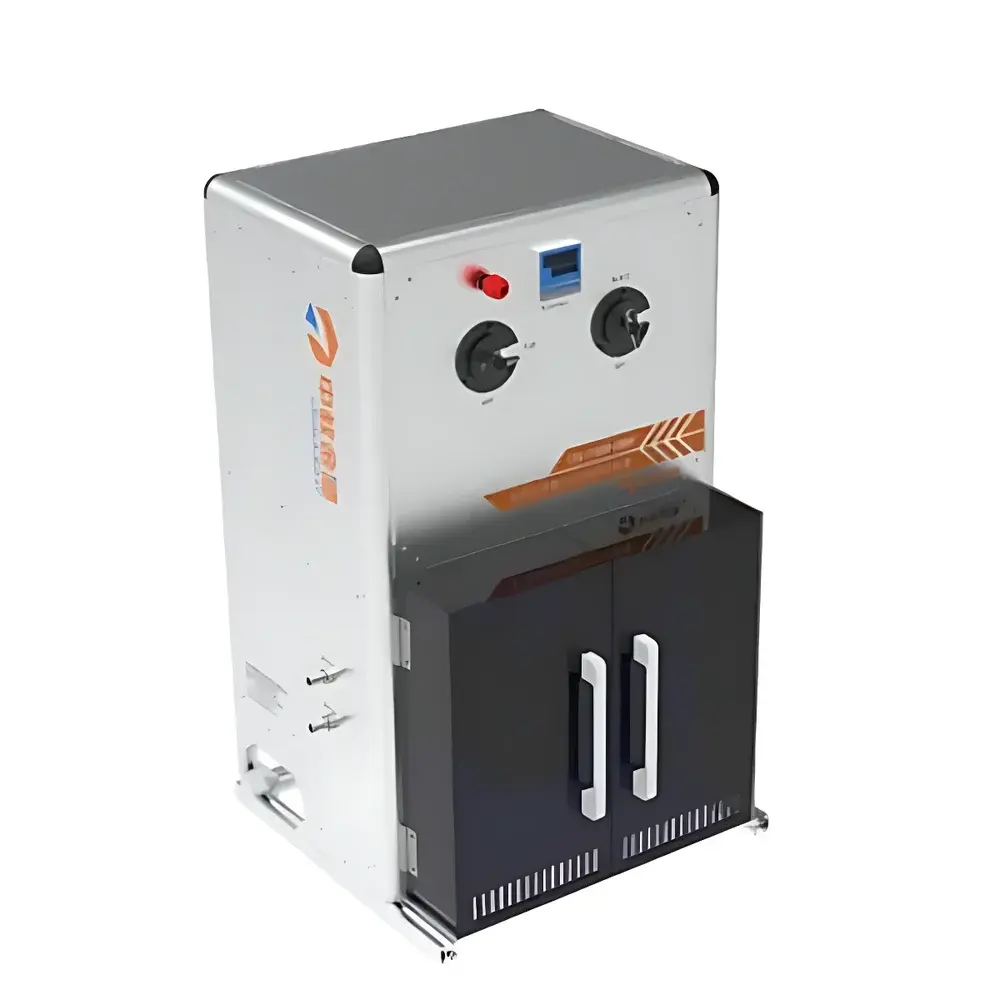
CEL-PAEM-D8BP Automated Photocatalytic Activity Evaluation System
| Brand | CEL |
|---|---|
| Origin | Beijing, China |
| Manufacturer Type | Direct Manufacturer |
| Region of Origin | Domestic (China) |
| Model | CEL-PAEM-D8BP |
| Component Category | Optical Components |
| Key Features | Integrated light-shielded enclosure, micro-scale reaction system, high-speed gas recirculation with magnetic-coupled fan, pneumatic fast-response sampling valves, GC-compatible automated gas analysis, vacuum pump reverse control with anti-siphon solenoid valve, all-glass fluidic path, rear-mounted light source platform, modular maintenance design |
Overview
The CEL-PAEM-D8BP Automated Photocatalytic Activity Evaluation System is a compact, fully integrated benchtop platform engineered for quantitative, reproducible assessment of photocatalytic performance under controlled illumination and inert or reactive gas atmospheres. Designed around the principles of gas-phase kinetic monitoring, the system enables real-time quantification of gaseous products—such as H₂, O₂, CO, CH₄, and CO₂—generated during photocatalytic, photoelectrocatalytic, photothermal, and electrocatalytic reactions. Its core architecture features a sealed, light-tight enclosure that eliminates ambient light interference while maintaining thermal and pressure stability during extended operation. The system operates on a closed-loop gas recirculation principle: reaction gases are continuously circulated through the catalyst bed via a magnetically coupled glass fan, ensuring homogeneous mixing and minimizing mass transfer limitations. Product evolution is monitored via periodic, in-line gas sampling into an external gas chromatograph (GC), with timing resolution down to 0.1 min and programmable sampling frequency—enabling high-temporal-resolution kinetic profiling without manual intervention.
Key Features
- Micro-scale reaction chamber: Optimized for catalyst loadings as low as 1–10 mg, reducing material consumption while preserving statistical relevance in activity screening.
- High-fidelity gas handling: All-wetted surfaces constructed from borosilicate glass; zero metal contact ensures chemical inertness and eliminates catalytic memory effects or surface adsorption artifacts.
- Automated sampling module: Pneumatically actuated, low-dead-volume valves enable rapid (<500 ms) sampling directly from the main recirculation loop, with integrated N₂ or Ar purge to prevent cross-contamination between runs.
- Rear-access illumination architecture: Light source (e.g., Xe lamp, LED array, or solar simulator) mounts on a stable rear platform, decoupling optical alignment from reactor manipulation—facilitating rapid exchange of reactor types (e.g., top-irradiation, side-irradiation, or quartz immersion well configurations).
- Intelligent vacuum management: Vacuum pump operation is software-synchronized with sampling events; anti-siphon electromagnetic valves prevent backflow during pump shutdown, safeguarding catalyst integrity and system calibration stability.
- Modular serviceability: Removable front, top, and side panels provide unobstructed access to all glass manifolds, valves, and sensors—supporting routine cleaning, leak checking, and component replacement without disassembly of the primary gas loop.
Sample Compatibility & Compliance
The CEL-PAEM-D8BP supports heterogeneous photocatalysts in powder, thin-film, monolith, or electrode formats—including TiO₂, g-C₃N₄, MOFs, perovskites, and plasmonic nanostructures. It accommodates standard GC inlet interfaces (e.g., 1/8″ Swagelok, GC septum ports) and is compatible with third-party instruments from Agilent, Shimadzu, Thermo Fisher, and CEL’s own GC systems. While not certified to ISO/IEC 17025 or ASTM E2934 by default, the system’s design aligns with GLP-compliant workflows: all sampling timestamps, valve actuation logs, and vacuum status signals are timestamped and exportable in CSV format for audit trail reconstruction. Optional integration with 21 CFR Part 11–compliant LIMS environments is supported via TCP/IP API for electronic signature and user role-based access control.
Software & Data Management
The embedded control software provides a unified interface for method definition, real-time monitoring, and post-run analysis. Users define multi-step protocols—including light-on/off sequences, gas composition switches (e.g., CO₂/N₂, H₂O vapor injection), sampling intervals, and vacuum cycles—with sub-minute temporal granularity. Raw GC chromatograms are auto-imported via vendor-neutral ASCII or CDF file parsing; peak integration uses retention time locking and internal standard normalization. Data outputs include time-resolved evolution curves (µmol·h⁻¹), quantum yield calculations (when coupled with calibrated radiometry), and turnover frequency (TOF) estimates based on active site quantification. All operational parameters, hardware states, and error logs are stored in SQLite databases with automatic daily backup and configurable cloud sync.
Applications
- CO₂ photoreduction to solar fuels (CH₄, CO, C₂H₄) under simulated sunlight or monochromatic irradiation.
- Overall water splitting and selective H₂/O₂ evolution kinetics in aqueous or vapor-phase reactors.
- Photocatalytic degradation of volatile organic compounds (VOCs) with simultaneous CO₂ mineralization tracking.
- Photoelectrochemical (PEC) half-reaction quantification using three-electrode configurations with potentiostat coupling.
- Thermal contribution deconvolution via dark-control experiments with synchronized heating profiles.
- High-throughput catalyst library screening under standardized illumination and gas-dosing conditions.
FAQ
What GC detectors are supported for quantitative gas analysis?
Thermal conductivity detectors (TCD) and flame ionization detectors (FID) are natively supported; methanizers may be added for CO/CO₂ detection via FID. Electron capture detectors (ECD) and pulsed discharge helium ionization detectors (PDHID) are compatible with appropriate signal conditioning modules.
Can the system operate under vacuum or elevated pressure?
The base configuration maintains near-ambient pressure (±5 kPa); optional pressure transducers and proportional control valves enable operation from 10 kPa to 300 kPa absolute, with safety interlocks for overpressure protection.
Is radiometric calibration included?
No built-in radiometer is integrated; however, the rear-mounted light source platform includes standardized mounting points and optical port alignment marks to facilitate external spectroradiometer integration per ASTM E2934 or ISO 17025 traceable protocols.
How is catalyst deactivation monitored over long-term runs?
By comparing normalized product evolution rates across sequential 1–4 h intervals, and correlating with in situ pressure drift, baseline GC noise, and post-run SEM/EDS analysis of recovered samples—methodologies documented in the system’s application notes.
Does the software support remote operation and monitoring?
Yes—via secure HTTPS web interface or VNC-enabled remote desktop; all critical alarms (e.g., vacuum failure, valve timeout, temperature excursion) trigger email/SMS notifications through configurable SMTP gateways.




