
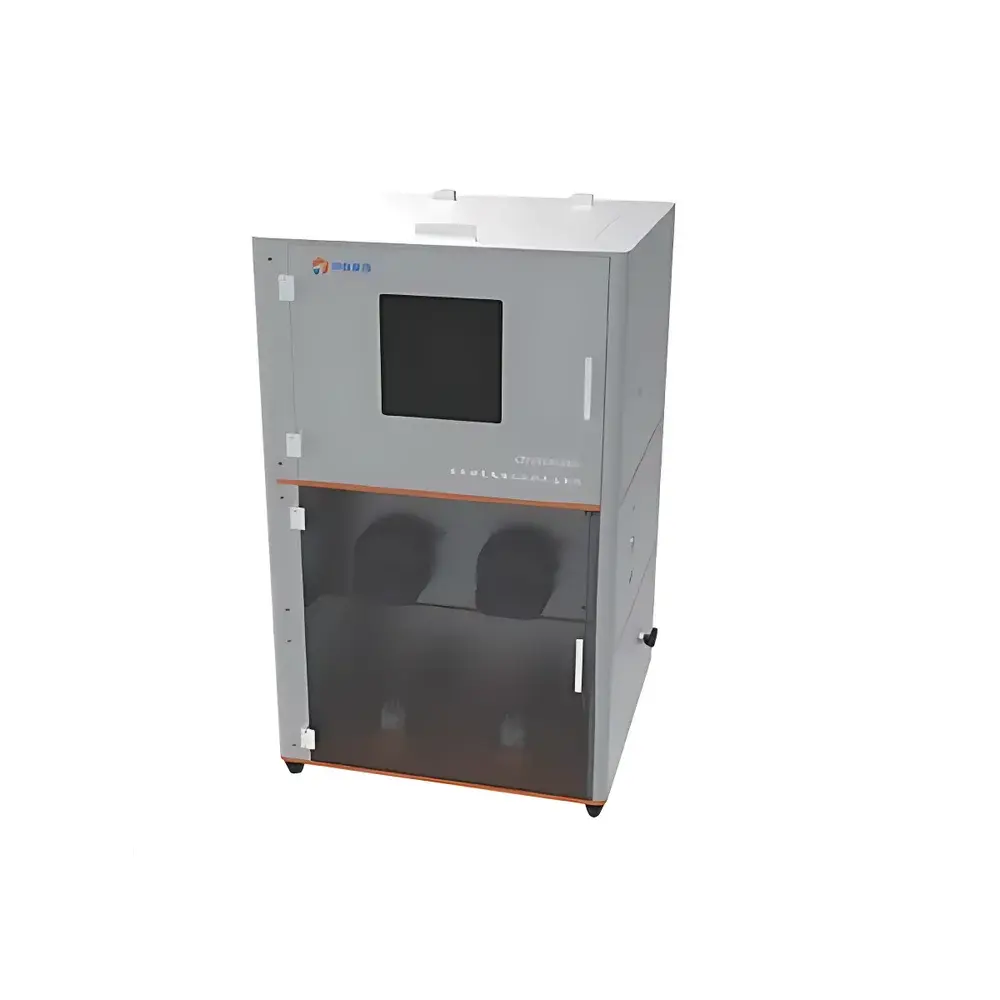
CEL-PECRS1000 Automated Photoelectrocatalytic Flow Reactor System
| Brand | CEL (China Education Goldsource) |
|---|---|
| Origin | Beijing, China |
| Manufacturer Type | Original Equipment Manufacturer (OEM) |
| Product Origin | Domestic (PRC) |
| Model | CEL-PECRS1000 |
| Light Source Type | Broadband Pulsed/Continuous Xenon-Mercury Hybrid Arc Lamp |
| Illumination Mode | Internal Irradiation Configuration |
| Control Architecture | Fully Automated PLC + PC-Based Synchronization |
Overview
The CEL-PECRS1000 Automated Photoelectrocatalytic Flow Reactor System is an integrated laboratory-scale platform engineered for quantitative investigation of photoelectrocatalytic (PEC) processes under dynamically controlled flow conditions. It operates on the fundamental principle of simultaneous photon absorption and charge carrier generation at semiconductor–electrolyte interfaces—enabling real-time evaluation of reaction kinetics, Faradaic efficiency, and quantum yield in gas-evolving or liquid-phase redox transformations. Unlike batch-mode reactors, the CEL-PECRS1000 employs a continuous-flow architecture with precisely regulated mass transport, allowing steady-state operation essential for reproducible electrochemical impedance spectroscopy (EIS), chronoamperometry, and in situ UV-Vis absorption monitoring. The system is designed to support fundamental research in solar fuel synthesis (e.g., CO₂ reduction, water splitting), environmental photocatalysis (e.g., NOₓ oxidation, organic pollutant degradation), and materials screening for next-generation photoanodes and photocathodes.
Key Features
- Fully automated PLC-driven control of gas flow rates (0–500 mL/min, N₂, Ar, O₂, CO₂, H₂, synthetic air), liquid delivery (0.01–10 mL/min, peristaltic + syringe pump redundancy), and irradiance intensity (via adjustable lamp power and optical filters)
- Integrated internal illumination design with collimated broadband light source (300–800 nm spectral output), ensuring uniform photon flux distribution across the working electrode surface without optical path distortion from external coupling
- Modular electrochemical cell configuration accommodating three-electrode setups (working, counter, reference), with temperature-controlled (±0.5 °C) thermostatic jacketing and pressure-rated sealing (up to 5 bar)
- Real-time multi-parameter acquisition: potentiostat/galvanostat data (±10 V, ±1 A), dissolved gas concentration (via integrated GC-TCD or mass spectrometry interface), pH, conductivity, and in-line UV-Vis transmittance (200–900 nm, 1 nm resolution)
- Fail-safe interlocks including overpressure relief, lamp thermal cutoff, electrolyte level monitoring, and emergency purge protocols compliant with IEC 61000-6-2 electromagnetic compatibility standards
Sample Compatibility & Compliance
The CEL-PECRS1000 accommodates a broad range of electrode substrates—including FTO, ITO, Ni foam, carbon cloth, and custom-deposited metal oxide thin films—as well as viscous electrolytes (e.g., ionic liquids, polymer gels) and multiphase slurries (with optional ultrasonic dispersion module). All wetted components are constructed from chemically resistant materials (Hastelloy C-276, PTFE, quartz, and borosilicate glass) certified to ASTM D1250 and ISO 8502-9 specifications. The system supports GLP-compliant operation through audit-trail-enabled software logging, user-access controls, and electronic signature capability aligned with FDA 21 CFR Part 11 requirements for regulated laboratories.
Software & Data Management
Control and analysis are executed via CEL-PECStudio v4.x—a Windows-based application built on LabVIEW RT architecture. The software provides synchronized time-stamped acquisition across all subsystems, automated method sequencing (e.g., light-on/off cycles, potential sweeps, gas composition ramps), and export-ready data formatting (CSV, HDF5, .mpt). Integrated calibration modules support NIST-traceable photonic flux validation using calibrated Si and GaAs photodiodes. Raw datasets include metadata tags for instrument configuration, ambient conditions, and operator ID—facilitating FAIR (Findable, Accessible, Interoperable, Reusable) data practices. Remote access and monitoring are enabled via secure TLS 1.3–encrypted HTTP API endpoints.
Applications
- Quantitative assessment of photoconversion efficiency (ABPE, IPCE, APCE) in metal oxide and perovskite-based photoelectrodes
- In situ detection of transient intermediates (e.g., *CO, *OOH) during CO₂ electroreduction using online differential electrochemical mass spectrometry (DEMS) coupling
- Long-term stability testing (>100 h) of photocatalytic membranes under constant illumination and flow shear stress
- High-throughput screening of co-catalyst loading effects on H₂ evolution rate under controlled photon flux density (100–300 mW/cm² AM 1.5G equivalent)
- Correlation of electrochemical noise spectra with localized corrosion onset in photoanodic protection systems
FAQ
What light sources are compatible with the CEL-PECRS1000?
The system is optimized for internal irradiation using a high-intensity xenon-mercury hybrid arc lamp (300–800 nm), but it accepts interchangeable lamp housings for LED arrays (365 nm, 405 nm, 450 nm, 520 nm) and deuterium-halogen combination sources upon request.
Can the reactor be operated under anaerobic conditions?
Yes—the gas manifold includes dual-purge capability with inert gas pre-conditioning, vacuum-backfill cycles, and real-time O₂ residual monitoring (<1 ppm) via integrated electrochemical sensor.
Is the system compatible with third-party potentiostats?
The CEL-PECRS1000 features standard analog I/O (±10 V) and digital trigger interfaces (TTL) for seamless integration with Gamry, BioLogic, or Metrohm Autolab instruments.
Does the system support temperature ramping during photoelectrochemical experiments?
Yes—via programmable Peltier-based thermal control unit (−10 °C to +80 °C, ramp rate up to 5 °C/min) with closed-loop feedback and thermal gradient compensation algorithms.
How is photonic flux calibrated and maintained across experiments?
Each lamp installation undergoes NIST-traceable spectral irradiance mapping; users receive a certificate of calibration with spatial uniformity report (±3% over 1 cm² active area) and annual recalibration service options.



