
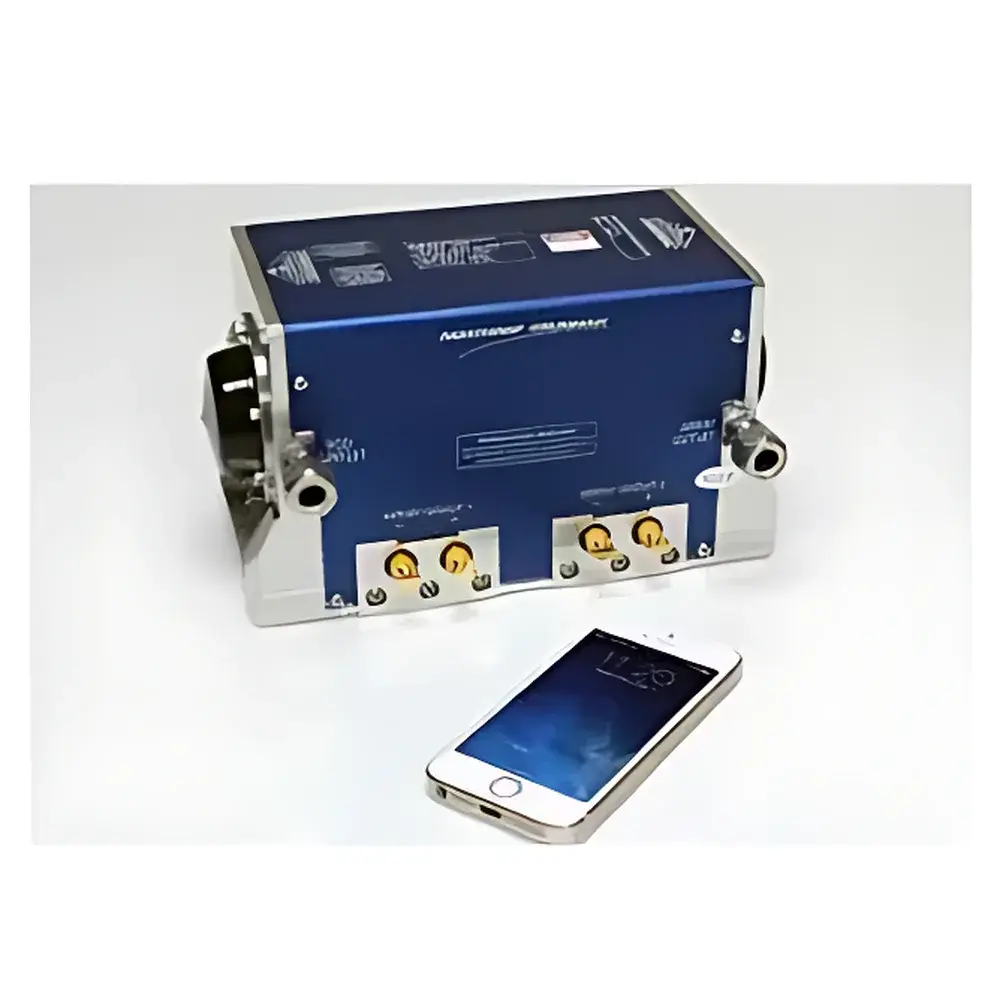
CEO DPSS Pump Gain Module Series (CW RBAT, QCW RBAT, CW REA, QCW REA)
| Brand | CEO |
|---|---|
| Origin | USA |
| Manufacturer Type | Authorized Distributor |
| Origin Category | Imported |
| Models | CW RBAT, QCW RBAT, CW REA, QCW REA |
| Key Components | Diode-Pumped Solid-State (DPSS) Laser Gain Modules |
| Gain Media Options | Nd:YAG, Nd:YLF |
| Operating Modes | Continuous Wave (CW), Quasi-Continuous Wave (QCW) |
| CW Output Power Range | 10–650 W |
| QCW Single-Pulse Energy Range | 150 mJ – >7.5 J |
| Rod Diameters | 2–25 mm |
| Rod Materials | Nd:YAG (standard), Nd:YLF (select models) |
| Thermal Management | Water-Cooled |
| Compliance | Designed for ISO 9001-aligned manufacturing and GLP-compliant laser system integration |
Overview
The CEO DPSS Pump Gain Module Series comprises a family of high-reliability, diode-pumped solid-state (DPSS) optical gain modules engineered for precision laser system integration. These modules operate on the fundamental principle of optically pumping rare-earth-doped crystalline gain media—primarily Nd:YAG and Nd:YLF—using high-brightness laser diode arrays. The pump light is absorbed by the dopant ions, elevating them to upper laser levels; subsequent stimulated emission generates coherent output at characteristic wavelengths (e.g., 1064 nm for Nd:YAG). Unlike OEM laser heads, these modules are designed as modular subsystems—separable into oscillator-grade or amplifier-grade configurations—enabling flexible architecture in master oscillator power amplifier (MOPA), regenerative amplifier, or multi-stage resonator systems. Each module integrates proprietary diode packaging, optimized thermal lensing control, and spatially uniform pump distribution—critical parameters governing beam quality (M²), small-signal gain (g₀), and long-term power stability. All units undergo full parametric characterization—including small-signal gain mapping, stored-energy profiling, pump uniformity analysis, and thermal focal length measurement—across defined coolant temperature and drive current ranges prior to shipment.
Key Features
- Modular architecture supporting both oscillator and amplifier configurations for scalable DPSS system design
- Multiple operational variants: CW RBAT (Silent Light), QCW RBAT (PowerPULSE), CW REA, and QCW REA—each optimized for distinct duty-cycle and energy-per-pulse requirements
- Gain media selection: Nd:YAG (standard, 1064 nm, 946 nm, 1319 nm transitions) and Nd:YLF (1047 nm, 1053 nm) with customizable rod diameter (2–25 mm) and length
- Advanced diode packaging technology ensuring >10,000-hour mean time to failure (MTTF) under rated operating conditions
- Thermally stabilized cavity design with active water-cooling interface compatible with standard industrial chillers (ΔT < ±0.1 °C stability)
- Factory-calibrated performance validation: small-signal gain ≥10 dB/cm, pump uniformity deviation < ±3% across rod cross-section, thermal focal length drift < ±5% over 8-hour continuous operation
Sample Compatibility & Compliance
These gain modules are compatible with industry-standard optical mounts, water-cooling manifolds, and Q-switched or mode-locked seed sources. Rod geometries conform to ANSI Z80.1 mechanical tolerances, and flange interfaces follow SEMI E19 and ISO 10110-7 specifications. While not standalone medical or IEC 60825-1 Class 4 certified devices, modules comply with subsystem-level safety requirements when integrated into fully certified laser systems. Design documentation supports traceable alignment to ASTM F2793 (Standard Practice for Calibration of Laser Beam Analyzers) and ISO/TR 11146-3 (Laser and laser-related equipment — Test methods for laser beam widths, divergence angles and beam propagation ratios). All units are manufactured under a quality management system aligned with ISO 9001:2015 and support audit-ready documentation packages for GMP/GLP environments.
Software & Data Management
CEO provides a vendor-agnostic characterization dataset with each module: calibrated pump absorption spectra, small-signal gain vs. pump fluence curves, thermal lensing coefficients (dn/dT, dR/dT), and stored-energy decay profiles. No proprietary firmware or closed-loop control software is embedded—ensuring seamless integration with third-party controllers (e.g., National Instruments PXI, Thorlabs Kinesis, or custom LabVIEW-based DAQ systems). Raw test data is delivered in HDF5 format with metadata compliant with FAIR (Findable, Accessible, Interoperable, Reusable) principles, including SI-traceable uncertainty budgets per parameter. For regulated environments, full electronic batch records—including environmental chamber logs, current ramp profiles, and spectral irradiance maps—are available upon request and support 21 CFR Part 11-compliant audit trails when hosted on validated network storage.
Applications
- Industrial laser marking, micro-welding, and thin-film ablation systems requiring stable CW output up to 650 W
- High-energy pulsed applications including LIBS (Laser-Induced Breakdown Spectroscopy), laser shock peening, and plasma generation, leveraging QCW modules delivering >7.5 J/pulse
- Scientific ultrafast amplification chains (e.g., Ti:sapphire CPA systems) where low-noise, high-gain pre-amplifiers are critical
- Frequency-conversion platforms (SHG, THG, OPO pumping) demanding high spatial beam homogeneity and minimal thermal distortion
- Defense and aerospace LIDAR transmitters requiring ruggedized, field-deployable gain stages with proven reliability under thermal cycling
FAQ
What is the difference between RBAT and REA module series?
RBAT modules (CW and QCW) emphasize design flexibility for R&D and low-to-mid volume prototyping, offering fine-grained customization of rod geometry and gain medium. REA modules prioritize industrial scalability, featuring standardized cooling interfaces, higher average power handling (up to 650 W CW), and extended pulse energy capacity (>7.5 J QCW), optimized for OEM integration.
Can I mix Nd:YAG and Nd:YLF rods within the same amplifier chain?
Yes—both gain media are supported across RBAT and REA platforms. However, thermal expansion and thermo-optic coefficients differ significantly; system-level modeling (e.g., via CODE V or ASAP) is recommended to maintain wavefront fidelity across hybrid stages.
Do these modules include built-in photodiode monitoring or temperature sensors?
No—CEO modules are passive gain elements. Integration of monitoring requires external photodiodes (e.g., Thorlabs DETxx series) and PT100/1000 sensors mounted per customer-defined mechanical interface specifications.
Is factory recalibration available after field installation?
Yes—CEO offers return-to-factory characterization services including gain mapping, pump uniformity verification, and thermal lens re-measurement under user-specified coolant conditions, with NIST-traceable calibration certificates.
What is the typical lead time for custom rod configurations?
Standard configurations ship within 6–8 weeks. Custom Nd:YLF rods or non-standard diameters (e.g., 25.4 mm QCW REA) require 14–18 weeks due to crystal growth and polishing cycle constraints.






