Sartorius BSA-124S-CW Analytical Balance
| Brand | Sartorius |
|---|---|
| Origin | Germany |
| Instrument Type | Analytical Balance |
| Maximum Capacity | 120 g |
| Readability | 0.1 mg |
| Repeatability | ≤ ±1 mg |
| Calibration | Internal |
| Pan Size | 90 mm diameter |
| Display | Backlit Low-Temperature LCD |
| Sensor Technology | Monolithic Electromagnetic Force Compensation Sensor |
| Interface | RS-232C standard, USB optional |
| Compliance | ISO/IEC 17025, GLP/GMP-ready, FDA 21 CFR Part 11 compatible (with optional software) |
Overview
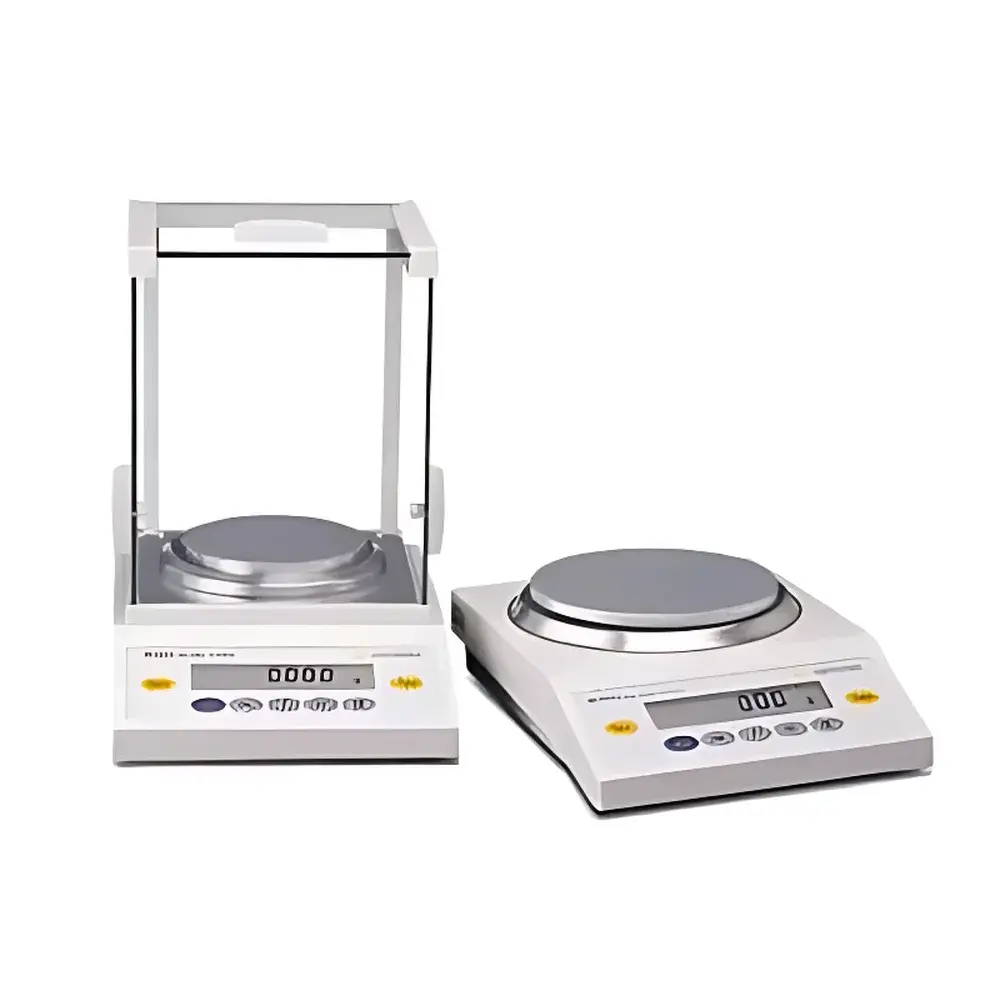
The Sartorius BSA-124S-CW Analytical Balance is a high-precision, internally calibrated laboratory balance engineered for reproducible mass measurement in regulated and research-intensive environments. Operating on electromagnetic force compensation (EMFC) principle, it delivers traceable, temperature-stable weighing performance through Sartorius’ proprietary monolithic sensor architecture—designed to minimize thermal drift and mechanical hysteresis over extended operational cycles. With 0.1 mg readability and 120 g maximum capacity, the BSA-124S-CW meets the metrological requirements of Class I analytical applications per OIML R 76 and USP , including quantitative gravimetric analysis, standard solution preparation, active pharmaceutical ingredient (API) dispensing, and reference material verification. Its compact footprint (210 × 320 × 310 mm), integrated draft shield, and low-power backlit LCD ensure ergonomic usability in confined benchtop spaces without compromising stability or data integrity.
Key Features
- Monolithic EMFC sensor with integrated temperature compensation—engineered for long-term calibration stability and reduced sensitivity to ambient thermal fluctuations.
- Internal automatic calibration system with motor-driven built-in weights, eliminating manual intervention and supporting scheduled recalibration per ISO 9001 and GLP workflows.
- Full-glass, frameless draft shield with optimized light transmission—provides unobstructed visual access and uniform illumination for precise sample positioning and residue inspection.
- Intuitive membrane keypad with logically grouped function keys and context-sensitive soft keys—reducing operator training time and minimizing input errors.
- High-speed microprocessor (ARM Cortex-based) enabling sub-second stabilization time (<2 s typical) and real-time dynamic filtering for vibration-prone environments.
- Density determination mode with direct g/cm³ readout—supports solid density measurement using Archimedean principle with user-defined reference liquid density.
Sample Compatibility & Compliance
The BSA-124S-CW accommodates standard crucibles, volumetric flasks, weighing boats, and small vials (up to 90 mm diameter) on its stainless-steel weighing pan. Its sealed electronics and smooth, non-porous surfaces comply with ISO 14644-1 Class 5 cleanroom compatibility guidelines and support routine cleaning with ethanol, isopropanol, or diluted quaternary ammonium solutions. All firmware and calibration routines adhere to ISO/IEC 17025:2017 clause 6.5.2 (equipment verification) and are fully audit-trail enabled when connected to Sartorius LabX software. The balance satisfies essential regulatory prerequisites for GxP environments—including electronic signature support, user-level access control, and tamper-evident calibration logs—as verified under FDA 21 CFR Part 11 Annex 11 alignment protocols.
Software & Data Management
RS-232C interface is standard; USB-to-serial adapter support enables seamless integration with Windows/Linux-based LIMS, ELN, or ERP systems. When paired with Sartorius LabX™ software (optional), the BSA-124S-CW provides full 21 CFR Part 11 compliance: role-based authentication, electronic signatures, secure audit trails, and automated report generation (PDF/CSV). Direct connection to YDP03-0CE thermal printer yields GLP-compliant printouts containing date/time stamp, operator ID, balance ID, net weight, tare value, uncertainty estimate (if configured), and calibration status—fully traceable to NIST-traceable standards.
Applications
- Pharmaceutical QC/QA: Assay validation, content uniformity testing, and residual solvent quantification per USP .
- Academic & industrial research: Catalyst mass dosing, nanomaterial synthesis stoichiometry, and polymer molecular weight determination via gravimetric fractionation.
- Environmental labs: Filter weighing for PM2.5/PM10 particulate matter analysis (EPA Method IO-4.2 compliant).
- Clinical diagnostics: Preparation of calibrators and controls for immunoassay platforms requiring µg-level accuracy.
- Materials science: Density profiling of ceramic green bodies, metal powders, and composite preforms prior to sintering.
FAQ
What calibration standards does the BSA-124S-CW support?
It performs internal calibration using factory-certified motor-driven weights traceable to national metrology institutes (e.g., PTB, NIST). External calibration with Class E2 or better weights is supported via manual mode.
Is the balance suitable for use in fume hoods?
Yes—its robust mechanical damping, sealed electronics housing, and low airflow sensitivity allow stable operation in low-velocity fume hood environments (≤0.5 m/s air velocity at pan level).
Can the display brightness be adjusted?
No—backlight intensity is fixed for optimal contrast across ambient lighting conditions (10–1000 lux), but the LCD operates reliably down to –10 °C for cold-room applications.
Does it support multi-language UI?
Yes—firmware supports English, German, French, Spanish, Italian, Chinese, Japanese, and Korean, configurable via setup menu without PC connection.
How is data integrity ensured during power interruption?
All weighing events, calibration logs, and configuration changes are written to non-volatile memory with battery-backed real-time clock; no data loss occurs during brief (<5 s) AC dropout.