Chemlab Pro Carbonate U-Pb Isotope Geochronology Service
| Brand | Chemlab Pro |
|---|---|
| Origin | Shanghai, China |
| Manufacturer Type | Authorized Distributor |
| Product Origin | Domestic (China) |
| Model | Carbonate U-Pb Isotope Geochronology |
| Quotation | Upon Request |
| Service Experience | 3–5 Years |
Overview
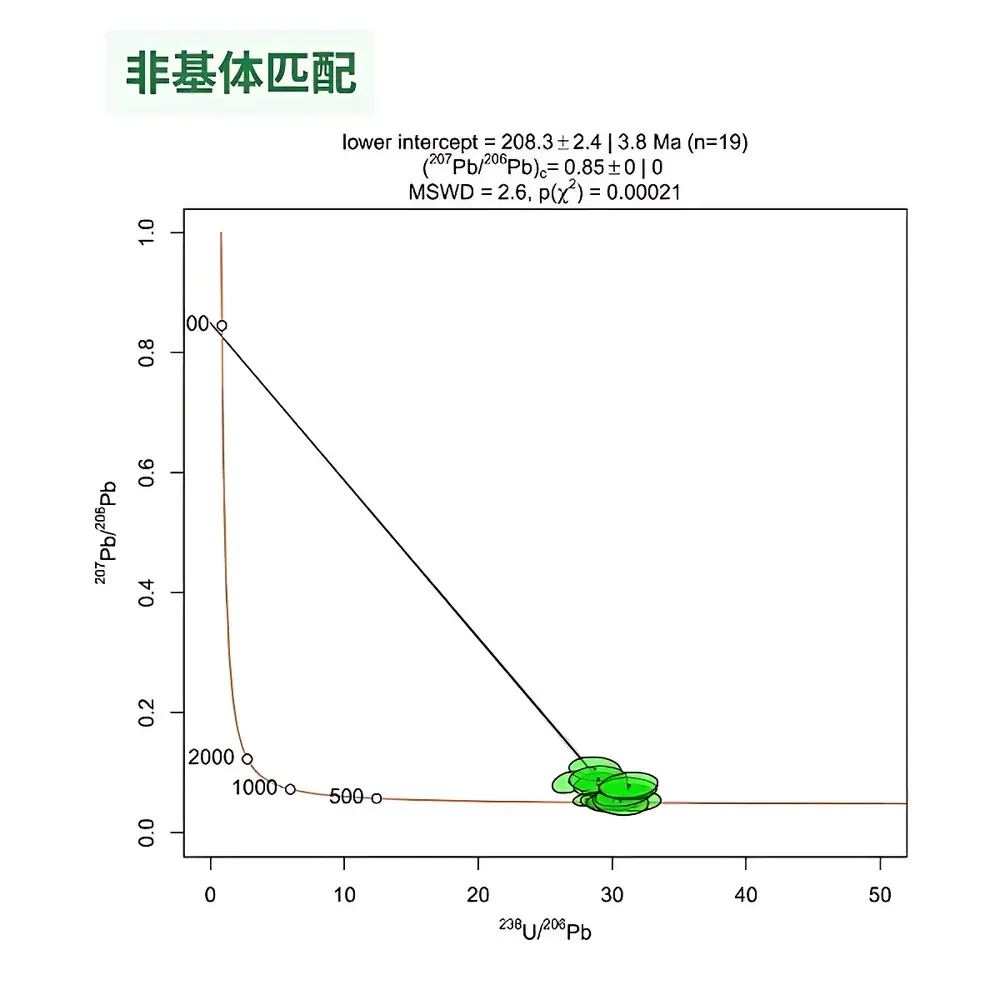
Chemlab Pro’s Carbonate U-Pb Isotope Geochronology Service provides high-precision, in-situ age determination for carbonate minerals—including calcite, dolomite, and other low-U, low-Pb diagenetic or hydrothermal carbonates—using state-of-the-art femtosecond laser ablation coupled to multi-collector inductively coupled plasma mass spectrometry (fs-LA-MC-ICP-MS). This method enables direct, matrix-matched isotopic analysis without chemical dissolution or column separation, preserving spatial context and minimizing procedural blanks. Unlike conventional thermal ionization mass spectrometry (TIMS), which requires bulk dissolution and is limited by sample heterogeneity and Pb contamination risk, fs-LA-MC-ICP-MS delivers sub-micrometer spatial resolution, robust common Pb correction via 204Pb or 207Pb–206Pb isochron regression, and high reproducibility for samples with U concentrations as low as ~10–100 ppb.
Key Features
- In-situ analysis using 90–100 µm circular or rectangular fs-laser spots—adjustable based on U/Pb concentration gradients and textural heterogeneity
- Direct calibration against NIST SRM 614 glass standard, co-ablated with carbonate reference material Tarim for instrumental mass bias correction
- Internal standardization and down-hole fractionation correction applied using 238U/235U and 206Pb/207Pb ratios
- Rigorous common Pb correction via two-stage model (Stacey & Kramers, 1975) or 207Pb–206Pb isochron fitting where applicable
- Long-term reproducibility monitored using WC-1 (208.5 ± 0.6 Ma), AH150, and Damy carbonate standards; routine QC ensures analytical uncertainty ≤3% (2σ) for WC-1
- Full analytical traceability: raw signal integration, background subtraction, interference corrections (204Hg, 208Pb–208Th), and age calculation workflows documented per ISO/IEC 17025 guidelines
Sample Compatibility & Compliance
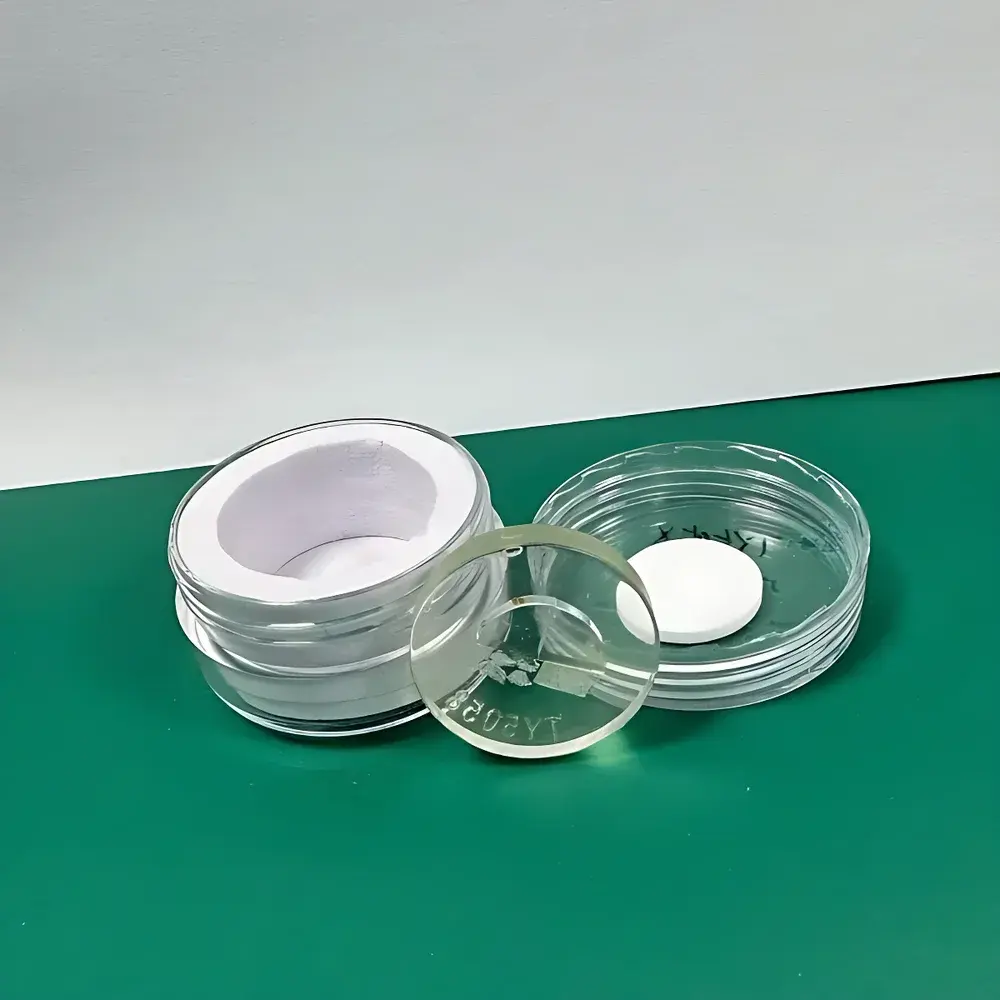
The service accepts polished carbonate thin sections or thick sections (up to 2.5 cm thickness, max 9 cm × 9 cm lateral dimension). Samples must exhibit a flat, scratch-free surface suitable for stable laser coupling and imaging. No minimum grain size requirement; however, individual carbonate generations (e.g., cement layers, replacement textures, fracture-filling veins) are targeted selectively under reflected-light and cathodoluminescence (CL) microscopy prior to ablation. All analyses comply with best practices outlined in the IUGS Subcommission on Geochronology guidelines and are compatible with peer-review requirements for Earth and Planetary Science journals. Data packages include full metadata (laser parameters, spot coordinates, acquisition time stamps) supporting FAIR (Findable, Accessible, Interoperable, Reusable) data principles.
Software & Data Management
Data reduction is performed using proprietary Chemlab Pro scripts integrated within Iolite v4.5, incorporating custom carbonate-specific protocols for U–Pb fractionation modeling and common Pb correction. Final age calculations use IsoplotR (Vermeesch, 2018) for weighted mean, concordia, and isochron interpretations. All raw .raw files, processed .csv outputs, and QC reports are delivered in encrypted ZIP archives with SHA-256 checksums. For regulated environments (e.g., academic labs operating under GLP frameworks), audit trails, electronic signatures, and version-controlled processing logs are available upon request—fully aligned with FDA 21 CFR Part 11 requirements for electronic records.
Applications
- Timing of diagenetic fluid flow events in sedimentary basins (e.g., calcite cements in reservoir rocks)
- Chronology of hydrothermal vein formation and fault reactivation
- Age constraints on speleothem growth intervals and paleoclimate proxies
- Calibration of biostratigraphic and magnetostratigraphic timescales in carbonate-rich successions
- Verification of thermal history models in low-grade metamorphic terrains containing recrystallized carbonates
FAQ
What is the typical turnaround time for a carbonate U–Pb dataset?
Standard delivery is 5–10 business days from sample receipt, contingent upon instrument scheduling and required QC validation.
Can you analyze samples with very low U content (<10 ppb)?
Yes—our fs-LA-MC-ICP-MS configuration achieves detection limits of ~0.5 ppb for 206Pb and ~1 ppb for 238U under optimized conditions; however, precision degrades below ~5 ppb U, and success rate decreases accordingly.
Do you provide interpretation support for complex multi-phase carbonate systems?
Yes—optional expert consultation includes petrographic correlation, age population deconvolution (e.g., using DensityPlotter or KDE plots), and geological synthesis tailored to your research objectives.
Is NIST SRM 614 the only external standard used?
NIST SRM 614 is used for instrumental mass bias correction; Tarim serves as the primary carbonate matrix-matched reference material, while WC-1, AH150, and Damy function as long-term monitoring standards.
Are raw data and reduction scripts included in the final report?
Yes—full acquisition files (.raw), intermediate reduction tables (.csv), Iolite project files, and IsoplotR input/output files are delivered alongside the interpreted age report and QC summary.