
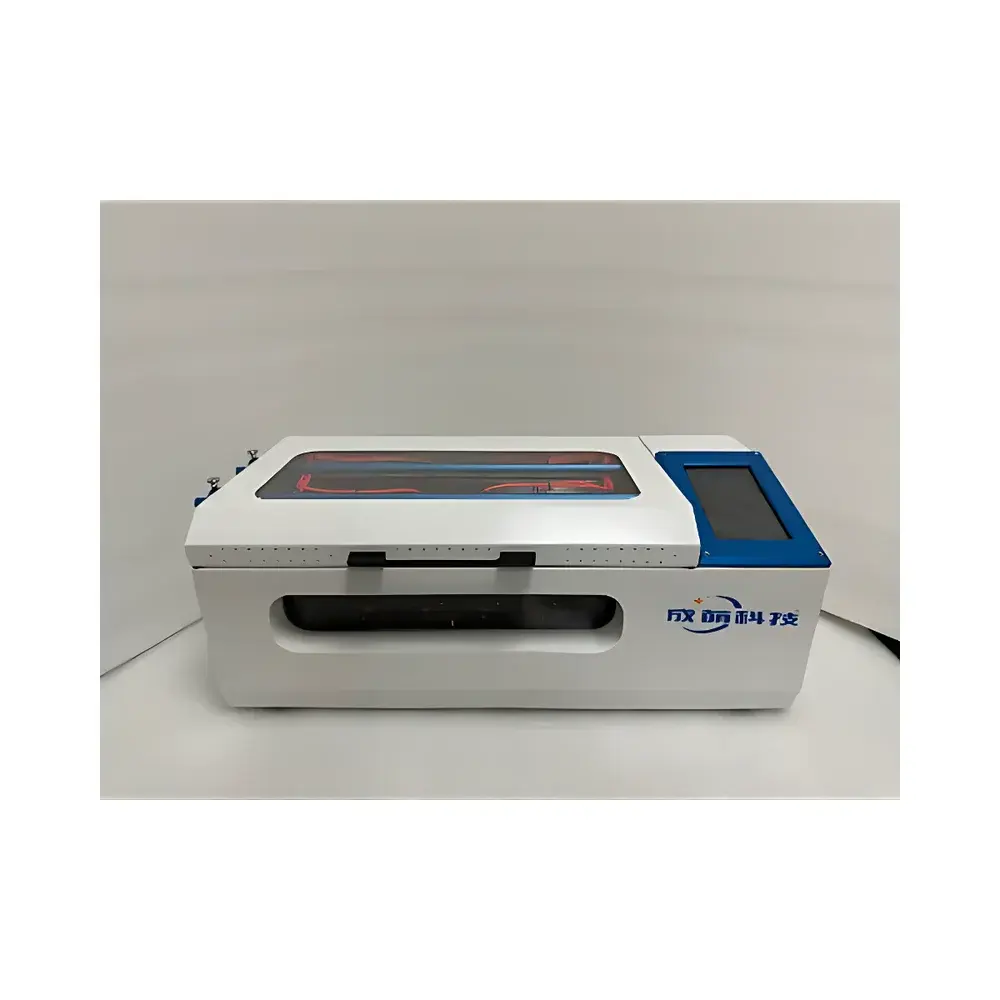
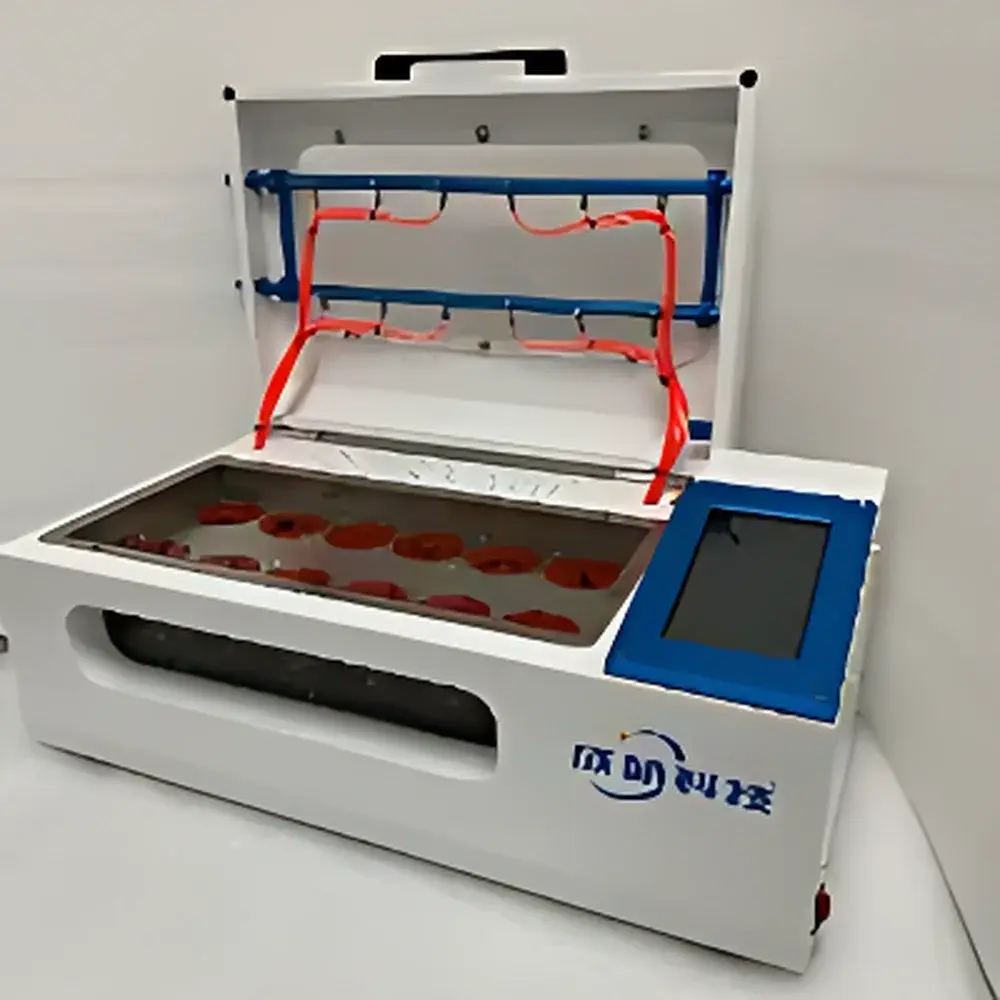
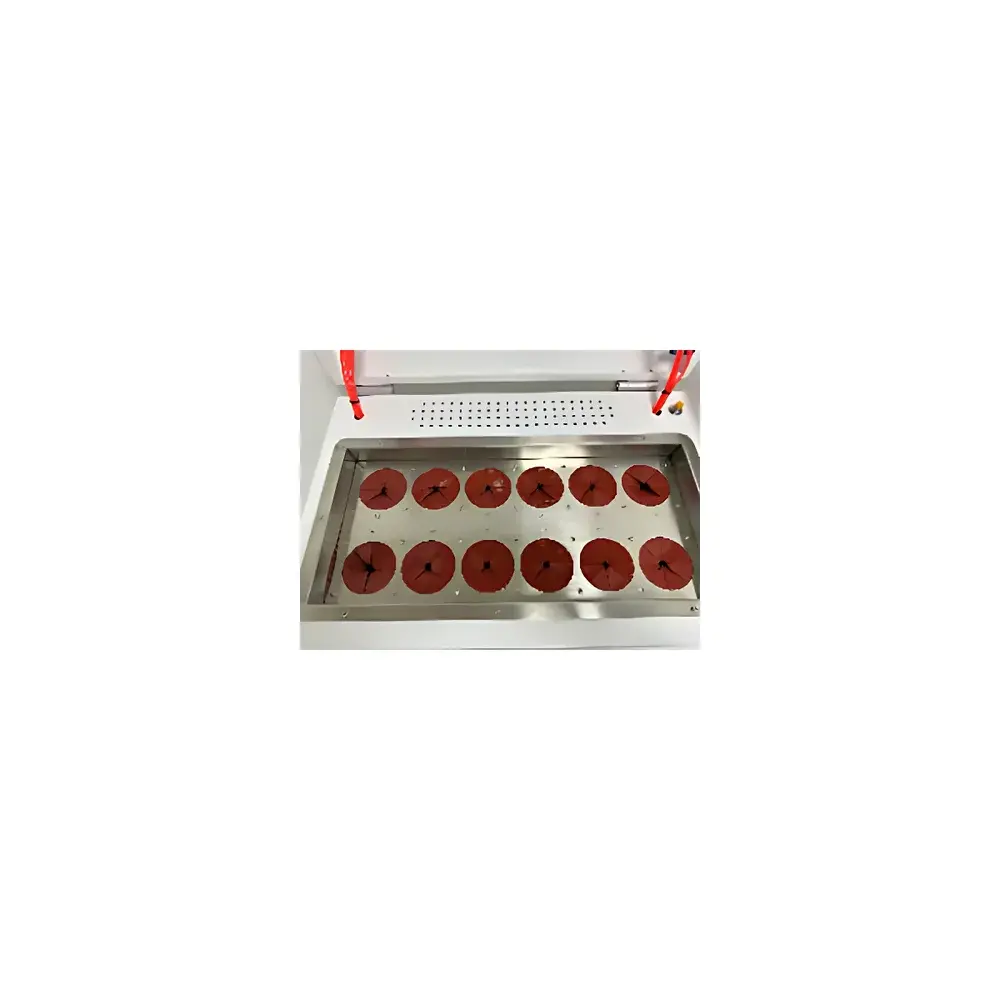
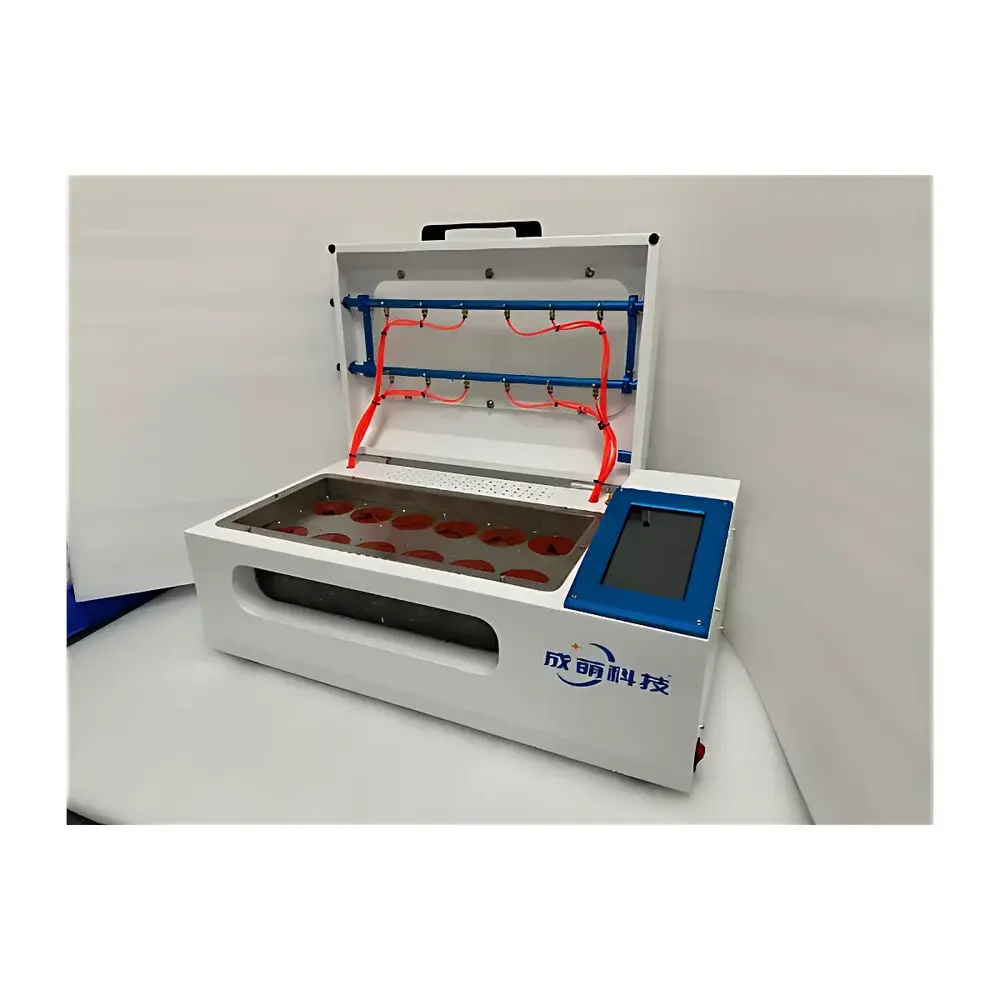
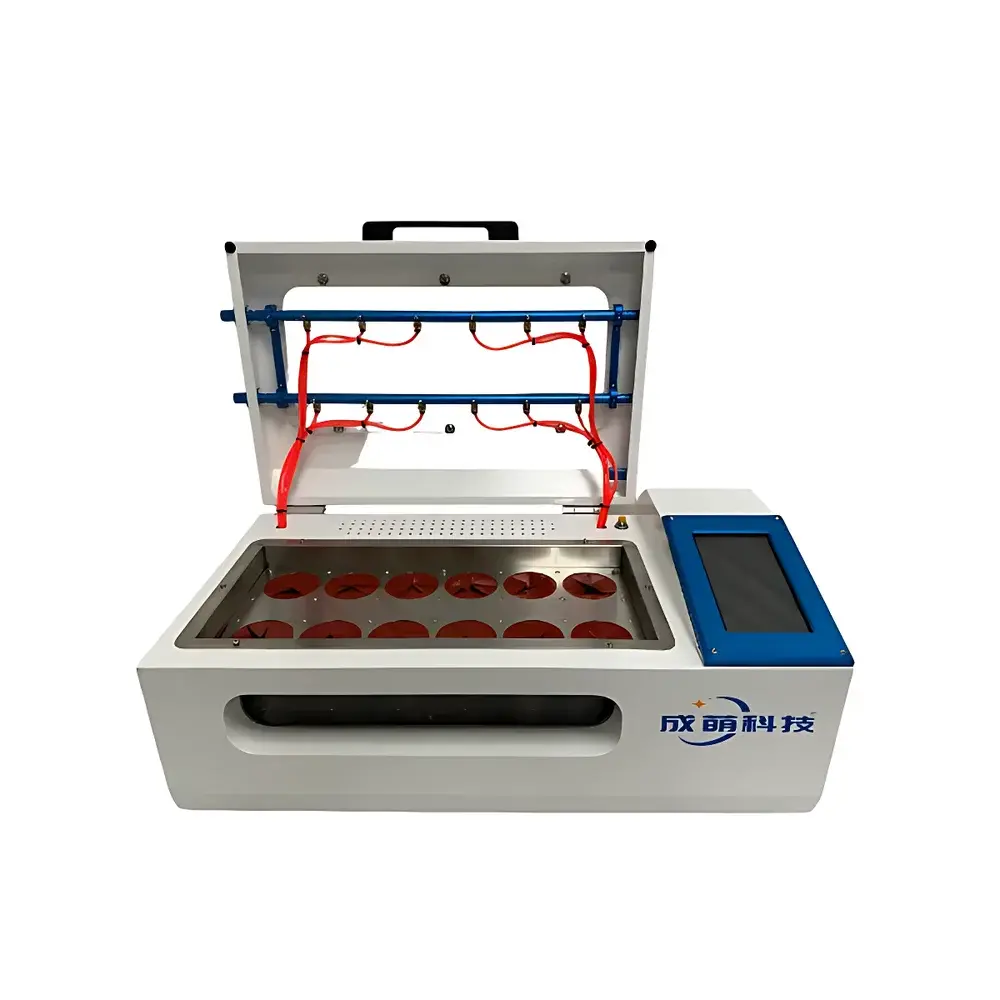
Chengmeng CM2000 12-Position Automated Nitrogen Evaporator
| Brand | Chengmeng |
|---|---|
| Origin | Beijing, China |
| Model | CM2000 |
| Heating Method | Water Bath |
| Temperature Range | Ambient to 95 °C |
| Temperature Stability | ±0.5 °C |
| Sample Capacity | 12 positions |
| Tube Diameter Compatibility | 5–100 mm |
| Nitrogen Flow Rate per Channel | 500 mL/min |
| Heating Power | 1000 W |
| Endpoint Detection | Optical sensor per channel |
| Endpoint Volume Options | 1.0 mL, 0.5 mL, or near-dry (~0.1 mL) |
| Pressure Control Range | 0–0.1 MPa (adjustable in 0.01 MPa increments) |
| External N₂ Supply Requirement | 0.2–0.8 MPa |
| Max Allowable Inlet Pressure | 1.0 MPa |
| Dimensions | 600 × 700 × 490 mm |
| Weight | 43 kg |
Overview
The Chengmeng CM2000 12-Position Automated Nitrogen Evaporator is an engineered solution for precise, unattended solvent removal in analytical sample preparation workflows. It operates on the principle of controlled nitrogen gas sweeping across the surface of liquid samples immersed in a thermostatically regulated water bath—accelerating evaporation while minimizing thermal degradation and analyte loss. Designed for laboratories performing routine extraction, cleanup, and concentration steps prior to GC, HPLC, LC-MS, or ICP-MS analysis, the CM2000 supports trace-level quantitation by enabling reproducible volume reduction to user-defined endpoints. Its integrated exhaust management system—including a built-in centrifugal blower and directed venting path—eliminates reliance on fume hoods, permitting safe deployment on standard lab benches without compromising operator safety or ambient air quality.
Key Features
- Independent optical endpoint detection: Each of the 12 channels is equipped with a dedicated photometric sensor that monitors meniscus position in real time; automatic termination of nitrogen flow occurs when the preset volume (1.0 mL, 0.5 mL, or near-dry) is reached—ensuring inter-sample consistency and eliminating manual oversight.
- Stable, pressure-regulated nitrogen delivery: An onboard proportional pressure controller maintains constant gas flow across all active channels—even during dynamic configuration changes (e.g., adding/removing tubes mid-run), preventing flow surges or dropouts that cause splashing or uneven evaporation.
- Vortex-pattern gas dispersion nozzles: Engineered nozzle geometry generates a gentle, spiraling laminar flow over the sample surface—enhancing mass transfer efficiency while suppressing aerosol formation and cross-contamination risk.
- Zero-contamination fluidic pathway: All wetted components—including gas manifolds, tubing, and sensor housings—are fabricated from chemically inert, low-extractable materials validated for compatibility with organic solvents (e.g., methanol, acetonitrile, ethyl acetate) and aqueous matrices.
- Full environmental containment: Sealed chassis design combined with forced-air exhaust actively removes water vapor and volatile organic compounds (VOCs) through a rear-mounted duct port, reducing condensation buildup and protecting both instrument electronics and operator respiratory exposure.
- Flexible operational modes: Supports both manual parameter override and intelligent auto-stop logic; users may define custom hold times, ramp profiles, and sensitivity thresholds (10-level optical gain adjustment accommodates colored or turbid samples).
Sample Compatibility & Compliance
The CM2000 accommodates standard 50 mL and 150 mL round-bottom or conical vials (custom 200 mL configurations available upon request), with tube diameter support spanning 5–100 mm. Its open-platform architecture permits concurrent processing of heterogeneous sample types—including biological extracts, environmental water concentrates, food homogenates, and pharmaceutical formulations—without cross-channel interference. From a regulatory standpoint, the system supports GLP- and GMP-aligned workflows: full audit trails (via optional software logging), configurable alarm events (lid-open, low water level, N₂ pressure fault, endpoint completion), and hardware-level redundancy in critical subsystems (dual temperature sensors, fail-safe heater cutoff). While not pre-certified to ISO/IEC 17025 or FDA 21 CFR Part 11, its deterministic control architecture and deterministic endpoint logic align with validation requirements for method transfer and equipment qualification under USP & ASTM standards for residual solvent analysis (e.g., USP <467>, ASTM D7213).
Software & Data Management
The CM2000 operates via an embedded touchscreen interface with intuitive icon-driven navigation—no external PC required for basic operation. For advanced data capture and integration into LIMS environments, optional USB or RS-232 connectivity enables export of timestamped run logs including start/stop times, final volumes, bath temperature history, and alarm event codes. All parameters are stored in non-volatile memory with write-cycle protection. When paired with Chengmeng’s optional LabLink Suite (v3.2+), users gain access to remote monitoring, multi-instrument scheduling, electronic signature support, and PDF report generation compliant with ALCOA+ principles (Attributable, Legible, Contemporaneous, Original, Accurate, Complete, Consistent, Enduring, Available).
Applications
- Pre-concentration of environmental water samples for PAH, PCB, and pesticide residue analysis (EPA Methods 508, 525.3, 8082)
- Final solvent removal after solid-phase extraction (SPE) or QuEChERS cleanup in food safety testing
- Concentration of plasma, urine, or tissue extracts prior to LC-MS/MS quantitation of small-molecule biomarkers
- Routine batch processing of calibration standards and QC reference materials
- High-throughput preparation of samples for isotopic dilution assays and elemental speciation studies
FAQ
Can the CM2000 be used with solvents other than methanol?
Yes—the system is compatible with common laboratory solvents including acetonitrile, acetone, dichloromethane, ethyl acetate, hexane, and aqueous buffers, provided appropriate ventilation and pressure settings are applied.
Is external nitrogen supply mandatory?
Yes—CM2000 requires a clean, oil-free nitrogen source delivering 0.2–0.8 MPa inlet pressure; internal regulation ensures stable downstream flow regardless of upstream fluctuations.
Does the instrument include a water bath fill-level sensor?
Yes—a dual-stage float switch triggers audible/visual alerts at low and critically low water levels, automatically disabling heating elements to prevent dry-burn damage.
What maintenance is required for long-term reliability?
Routine cleaning of the water bath chamber and optical sensor windows is recommended after every 50 runs; annual verification of pressure regulator calibration and temperature uniformity across the bath zone is advised per ISO/IEC 17025 Annex A.3 guidelines.
Can multiple CM2000 units be synchronized for parallel operation?
Not natively—but via external PLC interfacing or LabLink Suite network mode, coordinated start/stop commands and shared schedule templates can be deployed across up to eight instruments in a single lab subnet.



