
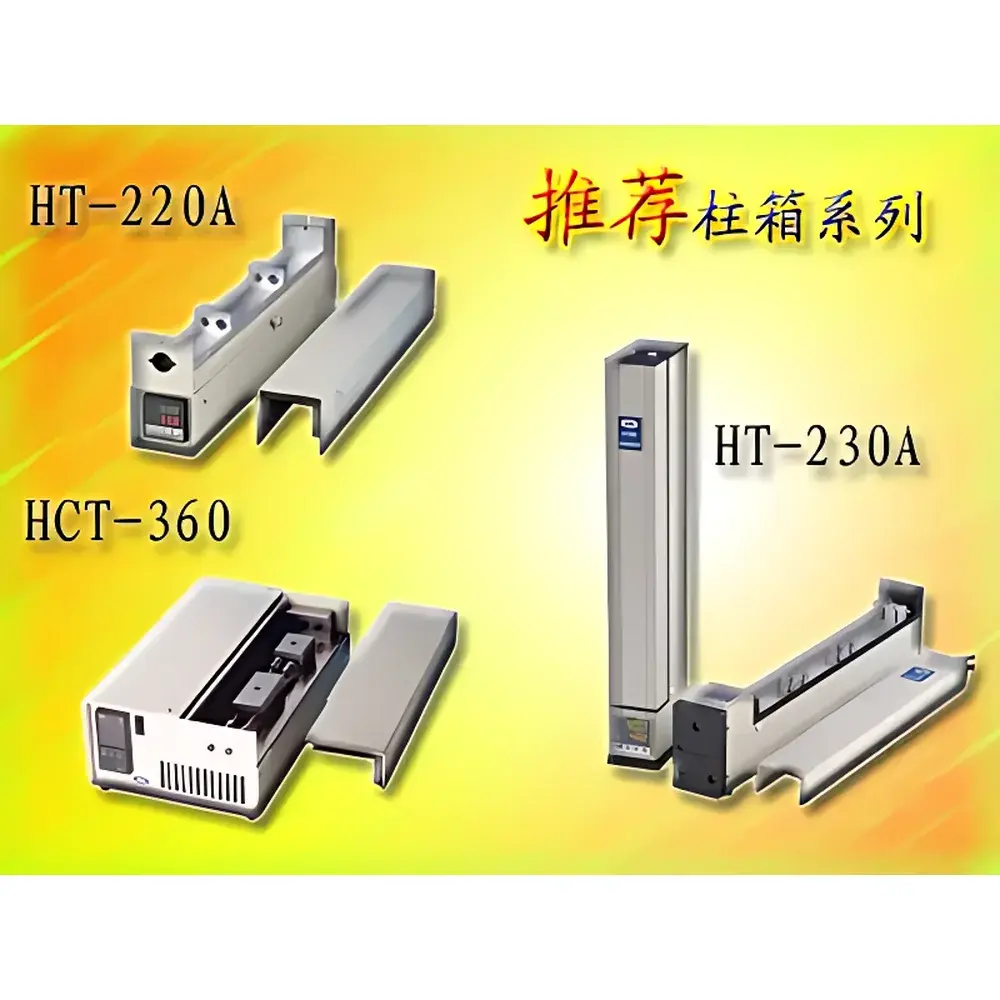
Chu Ding Technology HCT-360 Integrated Horizontal Heating & Cooling Column Oven for HPLC
| Brand | Chu Ding Technology |
|---|---|
| Origin | Shanghai, China |
| Model | HCT-360 |
| Structure | Integrated horizontal |
| Column capacity | 4 × 300 mm |
| Heating power | 300 W |
| Cooling capability | Active thermoelectric (Peltier) cooling |
| External dimensions (W×D×H) | 260 × 450 × 150 mm |
| Net weight | 10.5 kg |
| Temperature range | 5 °C to 80 °C |
| Temperature stability | ±0.1 °C |
| Control method | PID digital temperature controller with imported sensor |
| Safety features | Over-temperature alarm, circuit-breaker protection, insulated side-access lid with thermal barrier |
Overview
The Chu Ding Technology HCT-360 is an integrated horizontal column oven engineered specifically for high-performance liquid chromatography (HPLC) and UHPLC systems requiring precise, bidirectional temperature control. Unlike conventional water or oil baths—whose thermal inertia and lack of active cooling limit responsiveness and operational flexibility—the HCT-360 employs a dual-mode thermal architecture combining resistive TPC-film heating elements with solid-state Peltier cooling modules. This enables rapid, stable, and reproducible temperature regulation across a broad operational range of 5 °C to 80 °C, with typical stability maintained at ±0.1 °C under steady-state conditions. Its compact footprint (260 × 450 × 150 mm) matches standard HPLC chassis dimensions, allowing seamless integration atop detectors or between pump and detector modules without spatial compromise. The unit is not a fluid-based bath but a purpose-built, dry-block column oven—designed for direct thermal coupling to stainless-steel or fused-silica chromatographic columns, eliminating the hazards, maintenance overhead, and contamination risks associated with liquid media.
Key Features
- Integrated horizontal design optimized for in-line HPLC system integration, including dedicated mounting holes for injection valves and dual front/rear fluid port access points.
- Dual-mode thermal control: High-efficiency TPC thin-film heaters paired with thermoelectric (Peltier) cooling modules ensure fast ramp rates, tight setpoint adherence, and sub-ambient capability down to 5 °C.
- PID digital temperature controller with imported high-accuracy RTD sensor, supporting programmable ramp/soak profiles and real-time deviation monitoring.
- Thermally insulated side-access lid with mechanical latch and thermal barrier layer—enables safe, tool-free column loading/unloading while minimizing heat loss during operation.
- Robust safety architecture: Independent over-temperature cutoff, automatic circuit-breaker protection, and grounded metal housing compliant with IEC 61010-1 for laboratory electrical safety.
- Passive thermal mass design with aluminum heating block ensures uniform axial temperature distribution across all four 300-mm columns, critical for retention time reproducibility in regulated environments.
Sample Compatibility & Compliance
The HCT-360 accommodates up to four standard 300-mm analytical columns (e.g., 4.6 mm ID, 2.1 mm ID, or microbore formats), with mechanical clamping force adjustable to avoid tubing deformation or ferrule stress. It supports common HPLC hardware interfaces—including Swagelok®-compatible fittings and standard 1/16″ OD tubing—and is compatible with both stainless-steel and PEEK-lined columns. From a regulatory standpoint, the device meets essential requirements for GLP and GMP-aligned laboratories: its digital controller logs temperature setpoints and real-time readings (via optional RS-232/USB output), supports audit-trail-ready configuration locking, and conforms to electromagnetic compatibility standards per EN 61326-1. While not inherently 21 CFR Part 11–compliant, it integrates seamlessly with validated LIMS or CDS platforms that implement electronic signature and data integrity controls.
Software & Data Management
The HCT-360 operates via embedded firmware with local LED display and tactile keypad interface. For advanced integration, optional communication modules (RS-232 or USB-to-serial) enable remote parameter setting, real-time temperature streaming, and event logging via host software—such as LabVIEW™ drivers or custom Python scripts using PySerial. Temperature profiles can be exported in CSV format for traceability and QC review. Firmware supports user-defined calibration offsets and retains settings after power cycling. No proprietary cloud platform or vendor-specific software is required; all data exchange follows open ASCII protocol conventions, facilitating compatibility with third-party chromatography data systems (CDS) including Waters Empower, Thermo Chromeleon, and Agilent OpenLab.
Applications
This column oven is routinely deployed in pharmaceutical QC labs for isocratic and gradient method development where column temperature directly impacts resolution of critical pairs (e.g., enantiomers, diastereomers, or structurally similar impurities). It is equally suited for environmental analysis (EPA Method 8330B, 8082A), food safety testing (AOAC 2012.01), and polymer characterization by SEC/GPC—where consistent elution behavior relies on thermal homogeneity. In research settings, its sub-ambient cooling capability supports method scouting at low temperatures to enhance peak shape for thermally labile analytes (e.g., peptides, oligonucleotides, or labile metabolites). The side-loading geometry also facilitates rapid column screening protocols without disassembling the flow path.
FAQ
Does the HCT-360 require external coolant or refrigerant?
No—it uses solid-state Peltier modules for cooling; no compressors, refrigerants, or external chillers are needed.
Can it maintain temperature during extended overnight runs?
Yes—its thermal insulation, closed-loop PID control, and redundant safety circuits ensure uninterrupted stability over 72+ hour sequences.
Is the temperature sensor calibrated traceable to NIST standards?
The factory-installed RTD sensor is calibrated against a NIST-traceable reference; full calibration certificates are available upon request.
What column diameters does the clamping mechanism support?
Standard configurations accommodate 1.0 mm to 4.6 mm OD columns; custom inserts for capillary or preparative formats can be supplied.
How is firmware updated?
Firmware upgrades are performed locally via USB stick using vendor-provided .bin files and documented procedure—no internet connection required.



