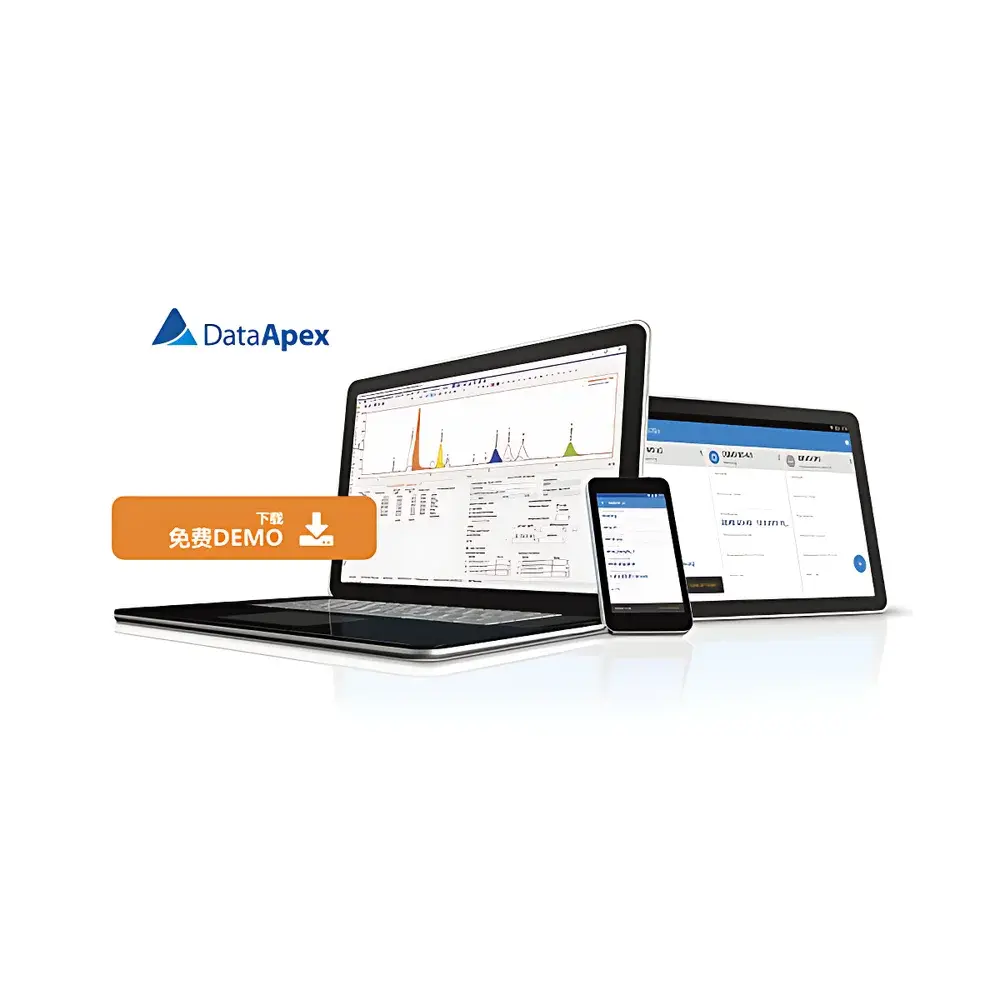
Clarity Chromatography Data System (CDS) Software
| Origin | Imported |
|---|---|
| Manufacturer Type | Authorized Distributor |
| Model | Clarity |
| Software Type | Chromatography Data System (CDS) |
| Regulatory Compliance | 21 CFR Part 11, GLP/GMP-ready |
| Deployment Options | Clarity (Full), Clarity Lite (Single-Instrument), Clarity Offline (Post-Run Analysis), Clarity SDK (OEM Integration), Clarity OEM (White-Label Customization) |
Overview
Clarity Chromatography Data System (CDS) is a modular, ISO/IEC 17025-aligned chromatographic software platform engineered for precision data acquisition, processing, and regulatory compliance in analytical laboratories. Built on a rigorously validated core architecture, Clarity supports analog and digital signal acquisition from gas chromatographs (GC), liquid chromatographs (HPLC/UHPLC), and hybrid systems—including PDA, GPC/SEC, and SSI detectors—via standardized A/D converters and native instrument control modules. Its measurement foundation relies on high-fidelity digitization of detector outputs (e.g., UV-Vis, FID, TCD, ECD), followed by algorithmic peak detection, baseline correction, and quantitative integration using configurable mathematical models. Designed for both method development and routine QC/QA environments, Clarity delivers deterministic reproducibility across acquisition, processing, and reporting workflows—critical for laboratories operating under FDA 21 CFR Part 11, EU Annex 11, or ISO 17025 accreditation requirements.
Key Features
- Modular Scalability: Three primary deployment tiers—Clarity (full multi-instrument, 21 CFR Part 11-compliant), Clarity Lite (single-instrument, non-regulated environments), and Clarity Offline (LAN-accessible post-acquisition analysis and method development)—share identical core algorithms and file structures, ensuring seamless transition and data continuity.
- Regulatory-Ready Architecture: Built-in GLP tools include role-based user accounts with password policies, immutable system audit trails (tracking all method changes, data edits, and report generations), electronic signatures, and full traceability from raw signal to final report—fully aligned with 21 CFR Part 11 Subpart B requirements.
- Instrument Agnosticism: Native support for analog inputs (±10 V, 16-bit resolution) and digital protocols (RS-232, USB, Ethernet) enables integration with third-party GC/LC systems, autosamplers, and auxiliary devices (e.g., column ovens, fraction collectors). Digital output channels allow external instrument triggering via TTL or relay signals.
- Advanced Peak Processing: Real-time and offline peak detection employs adaptive smoothing, derivative-based valley identification, and retention time alignment algorithms. Over 30 integration parameters—including slope sensitivity, peak width thresholds, and shoulder detection logic—enable precise boundary definition for complex chromatograms.
- Quantitative Flexibility: Supports internal standard, external standard, standard addition, and multi-point calibration curves (linear, quadratic, log-log). Weighting options (1/x, 1/x²) and residual analysis ensure statistical rigor in concentration determination per ICH Q2(R2) guidelines.
Sample Compatibility & Compliance
Clarity is validated for use with chromatographic data generated from small-molecule pharmaceuticals, environmental contaminants, food safety analytes, and polymer molecular weight distributions. It accepts ASCII, CSV, and native .CLR project files—and exports to LIMS-compatible formats including ASTM E1381, HL7, and custom XML schemas. All versions undergo periodic re-validation per laboratory-defined SOPs; the Clarity Validation Toolkit includes certified peak generators for analog detector verification and documented IQ/OQ/PQ test scripts supporting GxP audits. The software conforms to ISO/IEC 17025:2017 clause 7.7 (Results Reporting) and supports ALCOA+ data integrity principles (Attributable, Legible, Contemporaneous, Original, Accurate, Complete, Consistent, Enduring, Available).
Software & Data Management
- Workflow Automation: Sequence-based batch processing, event-triggered actions (e.g., auto-injection upon oven temperature stabilization), and scriptable macros reduce manual intervention and improve throughput consistency.
- Data Interoperability: Bidirectional import/export with LIMS, ELN, and ERP systems via ODBC, REST API (Clarity SDK), or flat-file exchange. Supports direct LIMS push/pull of sample metadata, results, and audit logs.
- Secure Collaboration: Clarity Offline enables remote access to shared projects over LAN/WAN without compromising raw data integrity. All processed results retain full traceability to original acquisition conditions and user-defined parameters.
- OEM Development Pathway: The Clarity SDK provides documented C++/MFC interfaces for developing proprietary instrument control modules. Clarity OEM services enable white-label deployment—including branded UI elements, custom calculation engines, and domain-specific modules for CE, EA, or electrochemical applications—without compromising core validation status.
Applications
Clarity serves as the central CDS in regulated pharmaceutical QC labs performing stability-indicating HPLC assays (USP , ICH Q5C); environmental testing facilities quantifying EPA Method 8270 analytes via GC-MS; food safety labs verifying pesticide residues per AOAC 2007.01; and polymer characterization labs executing GPC/SEC according to ASTM D5296. Its modular design accommodates both high-throughput release testing (Clarity + autosampler control) and low-volume method development (Clarity Offline + virtual instrument simulation). In academic research, Clarity Lite provides cost-effective access to production-grade chromatographic processing without regulatory overhead.
FAQ
Does Clarity support 21 CFR Part 11 compliance out-of-the-box?
Yes—Clarity’s full version includes preconfigured electronic signature workflows, audit trail generation, and system security controls required for Part 11 compliance. Validation documentation and IQ/OQ protocols are provided with the Validation Toolkit.
Can Clarity Lite be upgraded to full Clarity later?
Yes—Clarity Lite licenses can be seamlessly upgraded to Clarity via authorized distributor channels, preserving all existing methods, templates, and user configurations.
Is Clarity compatible with third-party LIMS systems?
Yes—through standardized export formats (ASCII, CSV, XML), ODBC connectivity, and optional REST API integration via the Clarity SDK.
What validation support is included?
The Clarity Validation Toolkit contains calibrated peak generators for analog detector verification, documented test scripts for IQ/OQ/PQ execution, and traceable calibration certificates compliant with ISO/IEC 17025.
Can users customize report templates and calculations?
Yes—users may define custom columns, apply scripted calculations (e.g., %RSD, recovery %), and design fully branded PDF/Excel reports using built-in template editors—without requiring programming expertise.
Related Products