
CLEAN MD110 Advanced Digital Magnetic Stirrer
| Brand | CLEAN |
|---|---|
| Origin | Taiwan |
| Model | MD110 |
| Stirring Volume | 1 L (max) |
| Speed Range | 60–2000 rpm |
| Control | Digital LCD Display |
| Drive System | Four-Pole Electromagnetic Coil |
| Plate Material | PET Surface |
| Housing Material | PA+GF |
| Dimensions (W×D×H) | 11 × 169 × 109 mm |
| Weight | 0.3 kg |
| Max Load Capacity | 1.5 kg |
| Operating Temperature | 0–50 °C |
| Storage Temperature | −10 to +70 °C |
| Relative Humidity | ≤85% RH |
| Protection Rating | IP65 (per EN 61010 & EN 61326) |
| Power Input | 100–240 VAC, 50–60 Hz |
| Output | 12 VDC |
| Power Consumption | 5 W |
| Compliance | CE-marked, EMI/EMC compliant for electrochemical measurement environments |
Overview
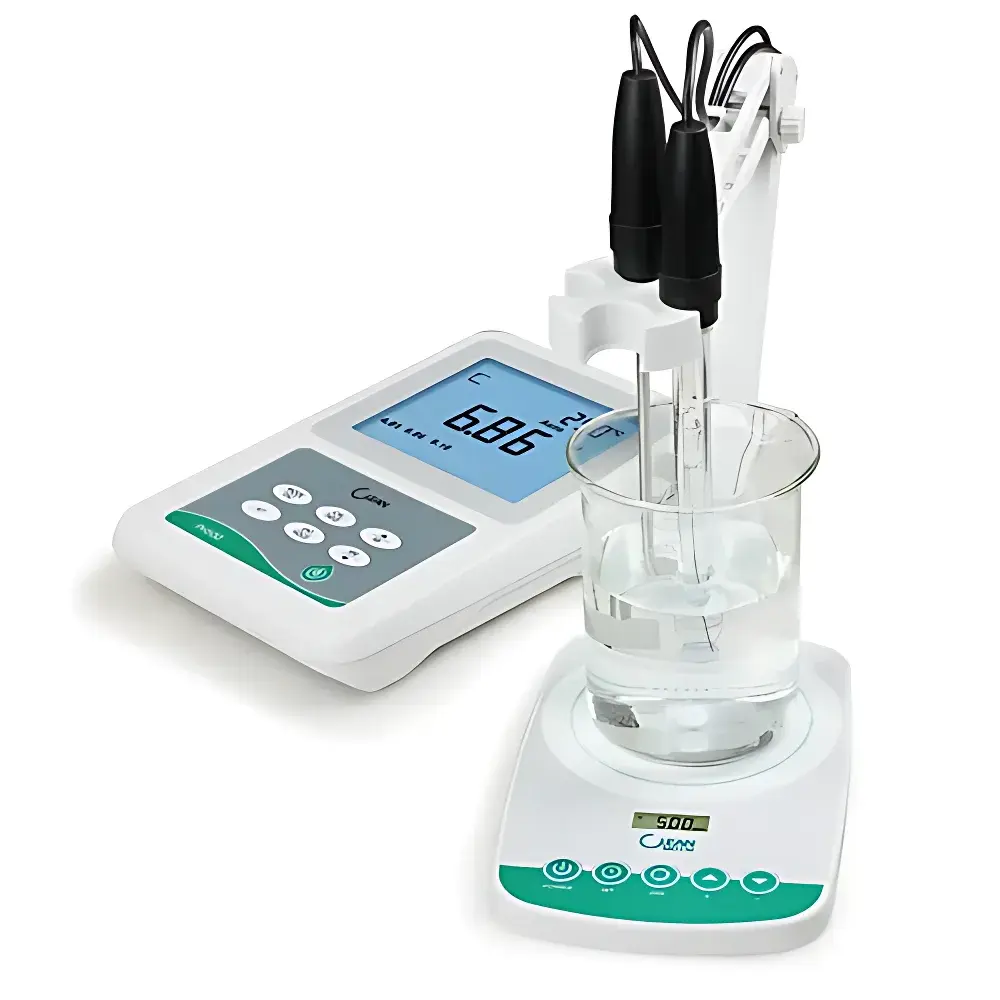
The CLEAN MD110 Advanced Digital Magnetic Stirrer is an ultra-slim, high-precision laboratory stirring instrument engineered for consistent, low-noise mixing in analytical, quality control, and research settings. Utilizing a four-pole electromagnetic drive coil architecture, the MD110 generates uniform rotating magnetic fields that efficiently couple with standard PTFE- or glass-coated stir bars—enabling stable rotational motion without mechanical wear or torque loss. Unlike gear-driven or motor-coupled stirrers, its contactless magnetic actuation eliminates friction-based degradation, ensuring long-term repeatability and zero-maintenance operation. Designed specifically for compatibility with sensitive electrochemical measurements, the unit meets stringent electromagnetic compatibility (EMC) requirements per EN 61326, minimizing interference with potentiostats, pH meters, and conductivity analyzers. Its compact 11 mm profile and lightweight polyamide-glass fiber (PA+GF) housing support space-constrained benchtop configurations—including fume hoods, glove boxes, and multi-instrument workstations—without compromising thermal stability or structural rigidity.
Key Features
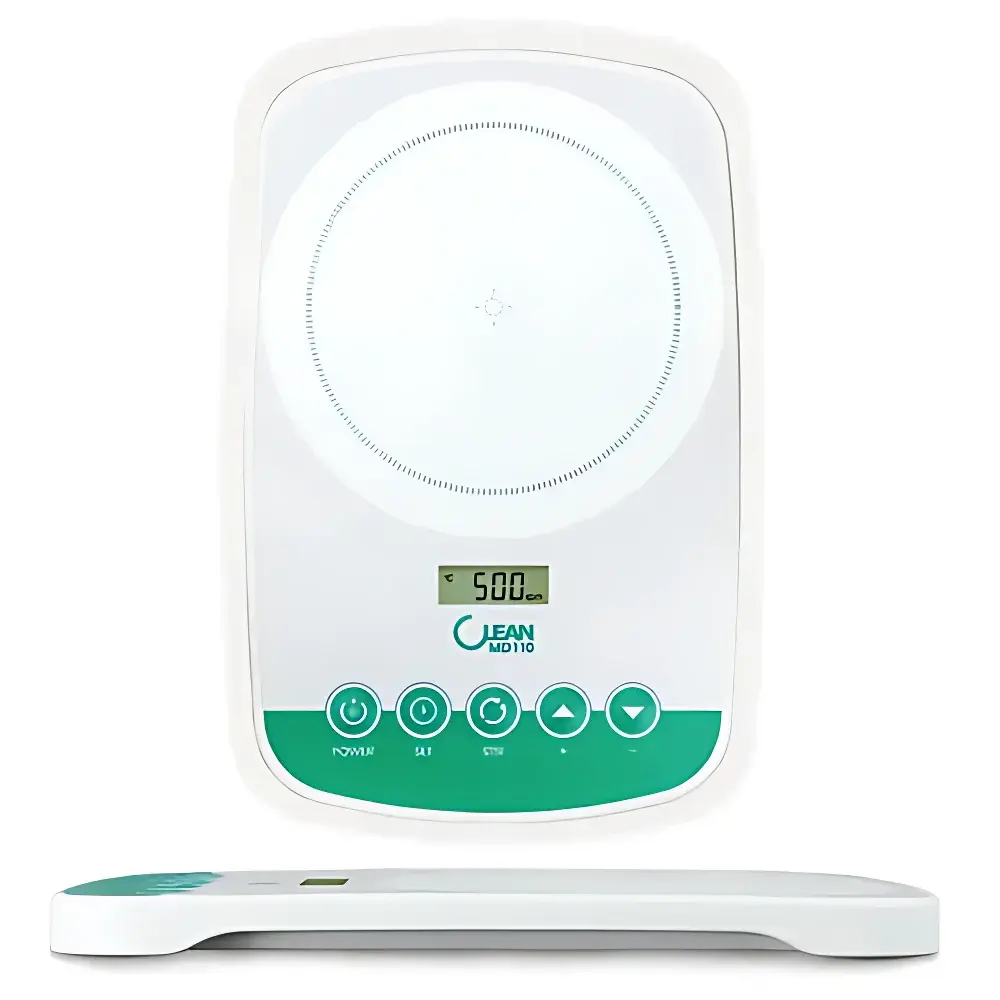
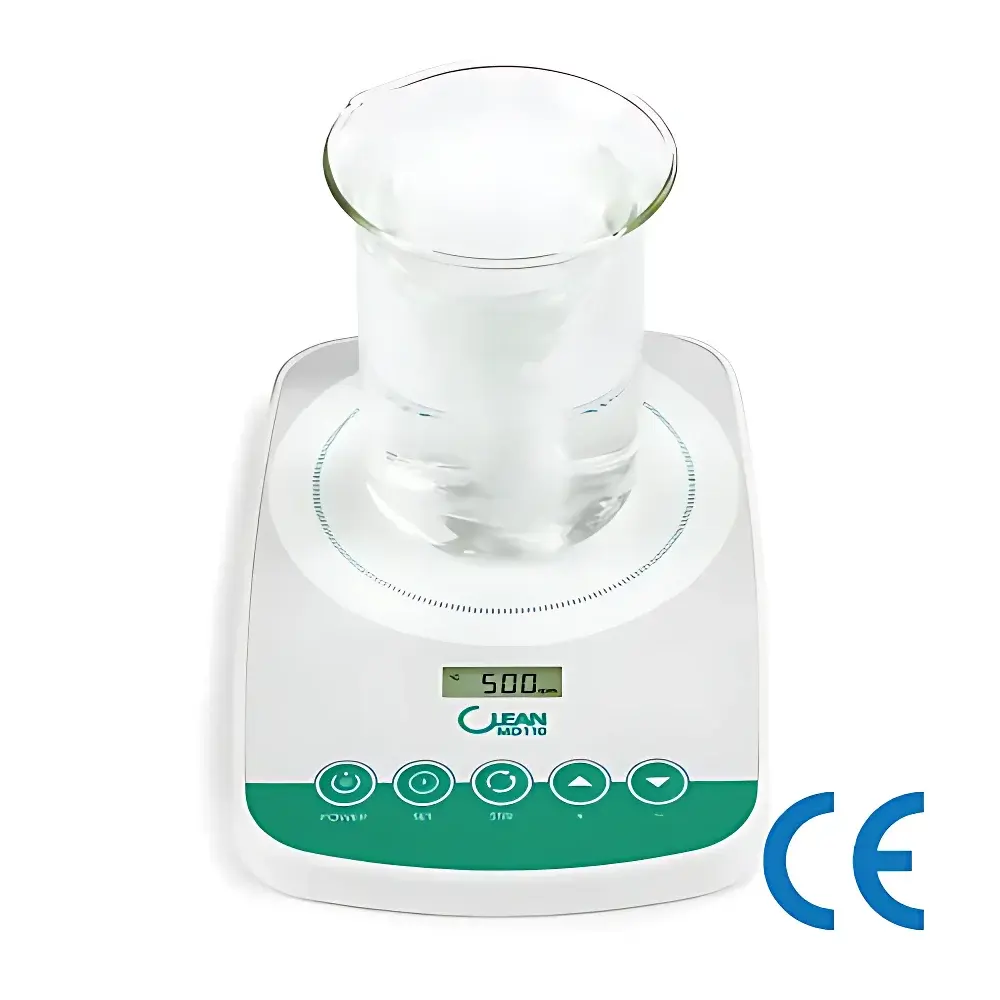
- Ultra-thin 11 mm profile with robust PA+GF housing and chemical-resistant PET work surface
- Digital LCD interface displaying real-time speed and setpoint; intuitive rotary knob control
- Wide speed range of 60–2000 rpm (verified with 22 mm stir bar in 500 mL water), supporting both low-shear homogenization and high-viscosity dispersion
- Bi-directional automatic rotation switching (clockwise ↔ counterclockwise) to prevent vortex locking and improve suspension uniformity
- Programmable auto-shutdown timer (0–999 min) for unattended operation and protocol compliance
- IP65-rated enclosure ensures protection against dust ingress and water splashes during routine lab cleaning or humid ambient conditions
- Universal AC input (100–240 VAC, 50–60 Hz) with regulated 12 VDC output for stable field generation and minimal thermal drift
Sample Compatibility & Compliance
The MD110 accommodates standard stir bars up to 22 mm in length and supports aqueous, organic, and mildly corrosive solutions within a maximum volume of 1 L (tested at ≤2000 rpm with CMSB-22 stir bar). Its non-metallic work surface and optimized coil geometry minimize eddy current heating, making it suitable for temperature-sensitive applications where active heating is not required. The device conforms to EN 61010-1 (safety requirements for electrical equipment for measurement, control, and laboratory use) and EN 61326-1 (EMC requirements for laboratory instrumentation). CE marking confirms compliance with EU directives on electromagnetic compatibility and low-voltage safety—critical for integration into GLP- or GMP-aligned laboratories conducting method validation per ISO/IEC 17025 or FDA 21 CFR Part 11 workflows.
Software & Data Management
As a standalone analog-controlled instrument, the MD110 does not incorporate embedded firmware, network connectivity, or data logging capabilities. All operational parameters—including speed setpoint, direction mode, and timer status—are displayed locally on the monochrome LCD screen and retained only during active power supply. This design prioritizes reliability, electromagnetic isolation, and regulatory simplicity: no software validation, audit trail, or cybersecurity protocols are required. For labs requiring traceable parameter recording, external digital loggers or camera-based documentation of the LCD display may be employed in accordance with internal SOPs.
Applications
- Precipitation reactions and reagent dissolution prior to spectrophotometric or titrimetric analysis
- Homogenization of buffer solutions, cell culture media, and calibration standards
- Supporting electrochemical cell conditioning and electrolyte equilibration without signal interference
- Preparatory mixing for HPLC mobile phase preparation and ICP-MS sample introduction systems
- Low-heat mixing in cold rooms or temperature-stable enclosures where thermal input from hotplates is prohibited
- Routine QC testing in pharmaceutical, environmental, and food safety laboratories operating under ISO 17025-accredited scopes
FAQ
What is the maximum recommended stirring volume for optimal performance at 2000 rpm?
The MD110 delivers stable operation up to 500 mL at 2000 rpm using a 22 mm stir bar; for volumes up to 1 L, speeds ≤1200 rpm are recommended to maintain vortex control and torque consistency.
Can the MD110 be used in conjunction with a temperature-controlled bath or cooling jacket?
Yes—the unit operates safely at ambient temperatures from 0–50 °C and generates negligible heat; its PET plate and non-metallic construction allow direct placement atop circulating water baths or Peltier-cooled platforms.
Is the device compatible with conductive or ferromagnetic stir bars?
No—only diamagnetic or paramagnetic stir bars (e.g., PTFE- or glass-coated magnets) should be used; ferromagnetic rods may cause erratic rotation or localized heating due to hysteresis losses.
Does the MD110 support external analog or digital control signals (e.g., 0–10 V, RS-232)?
No—it is a manually operated instrument with no external I/O ports or programmable interfaces.
How often does the unit require calibration or preventive maintenance?
None—the four-pole coil and solid-state electronics are inherently drift-free; periodic visual inspection of the PET surface and stir bar integrity suffices per laboratory maintenance schedules.



