CO2 Catalytic Reduction Service Package by CME-TECH
No specifications available.
Overview
The CO2 Catalytic Reduction Service Package is a comprehensive laboratory-scale research service designed to support academic and industrial development of solar-driven carbon dioxide valorization technologies. Grounded in heterogeneous photocatalysis, photoelectrocatalysis, and electrocatalysis principles, this service enables systematic investigation of CO2 conversion pathways into C3+ hydrocarbons and oxygenates—including alkanes, aromatics, and alcohols—using renewable photon energy (UV–vis) and sustainable reductants (H2O, H2). The methodology aligns with established mechanistic frameworks: semiconductor band-gap excitation generates electron–hole pairs; surface-adsorbed CO2 undergoes stepwise proton-coupled electron transfer (PCET) on catalytically active sites (e.g., Co/TiO2, Cu-based oxides, or molecular cobalt complexes); and C–C coupling is promoted under elevated pressure (up to 5 MPa) and thermal activation (180–200 °C), consistent with reported literature on long-chain product selectivity.
Key Features
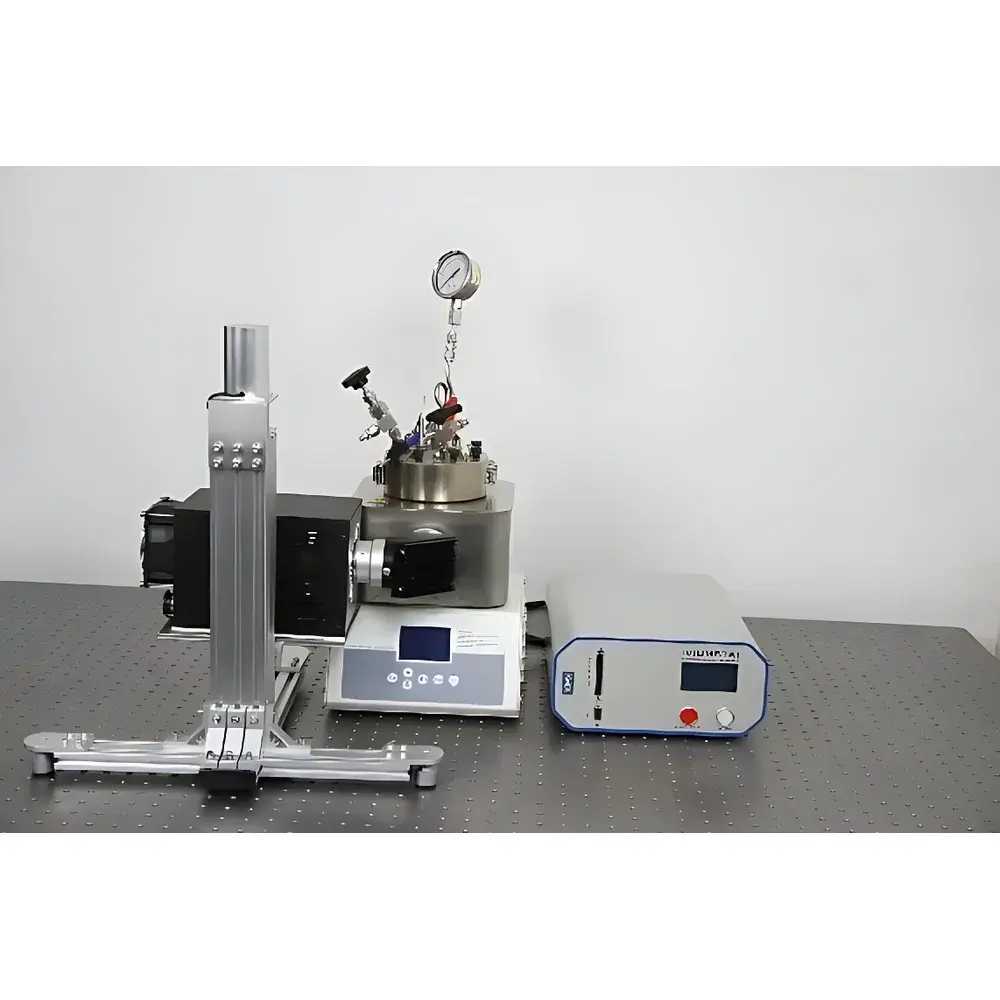
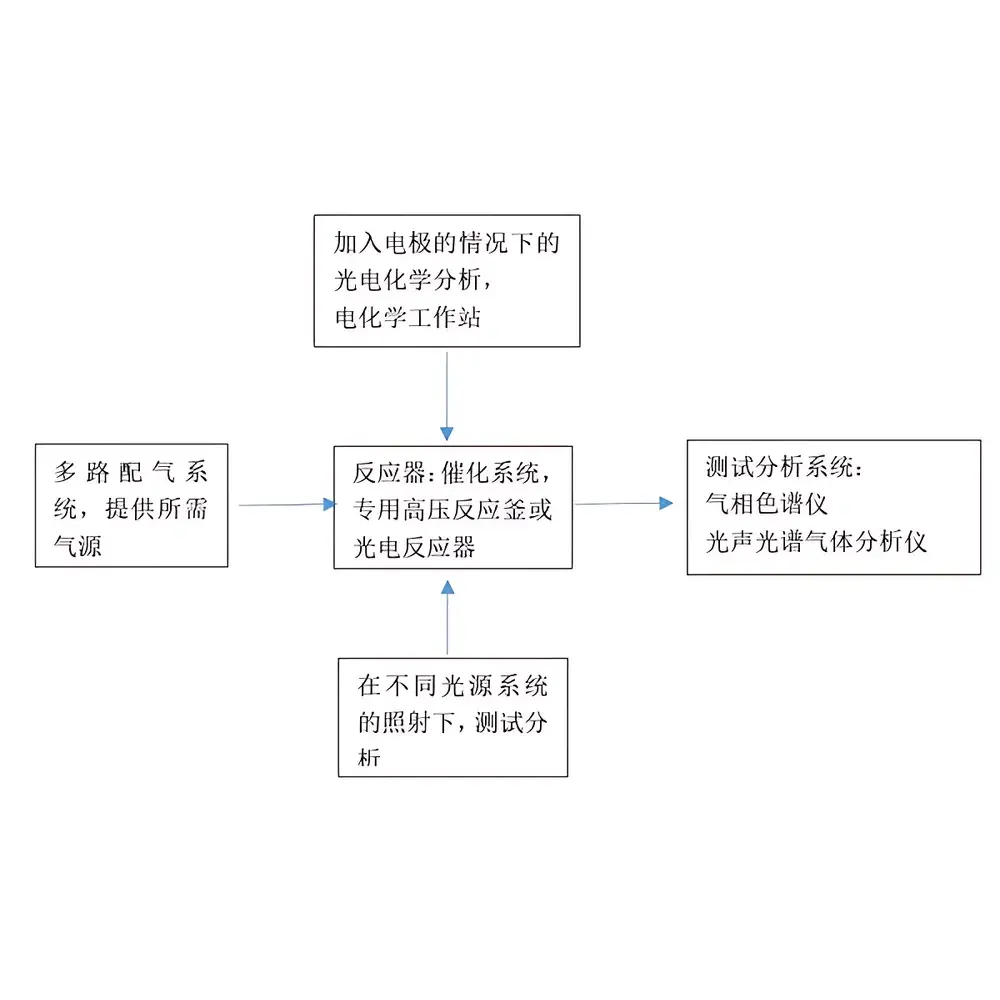
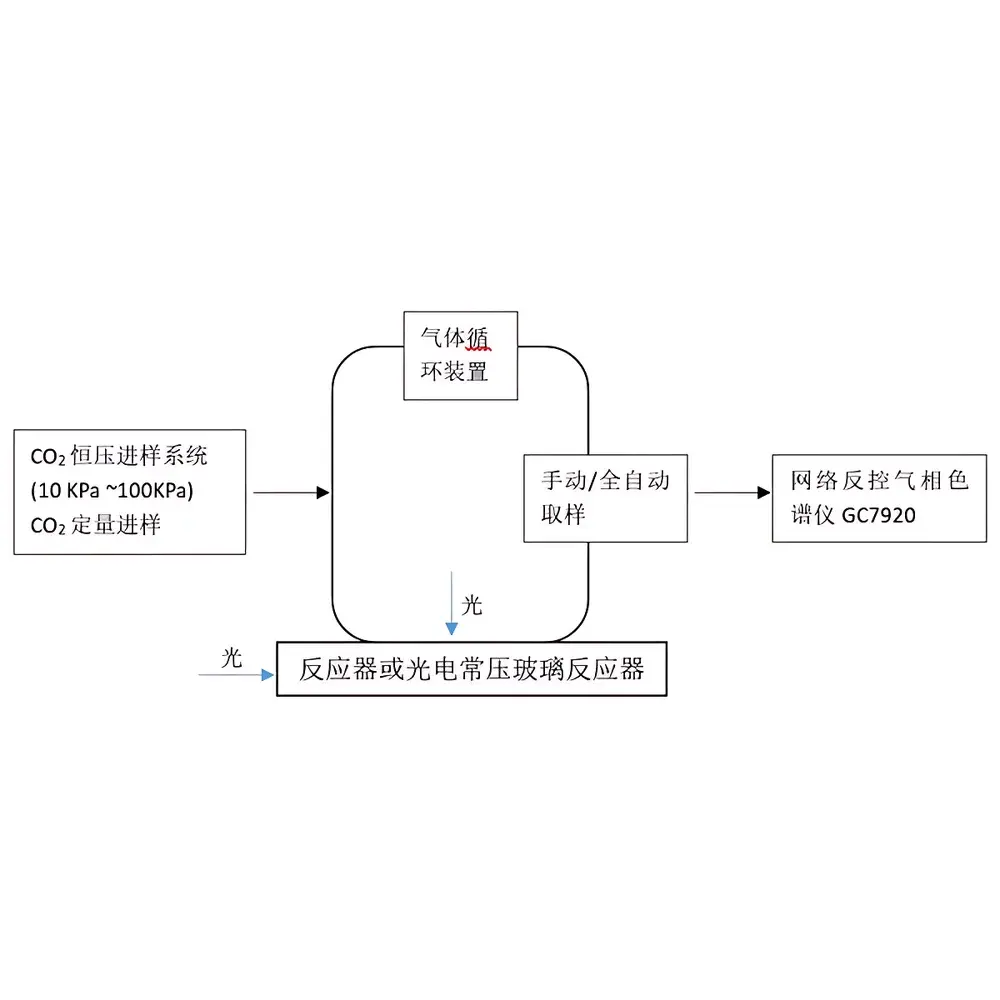
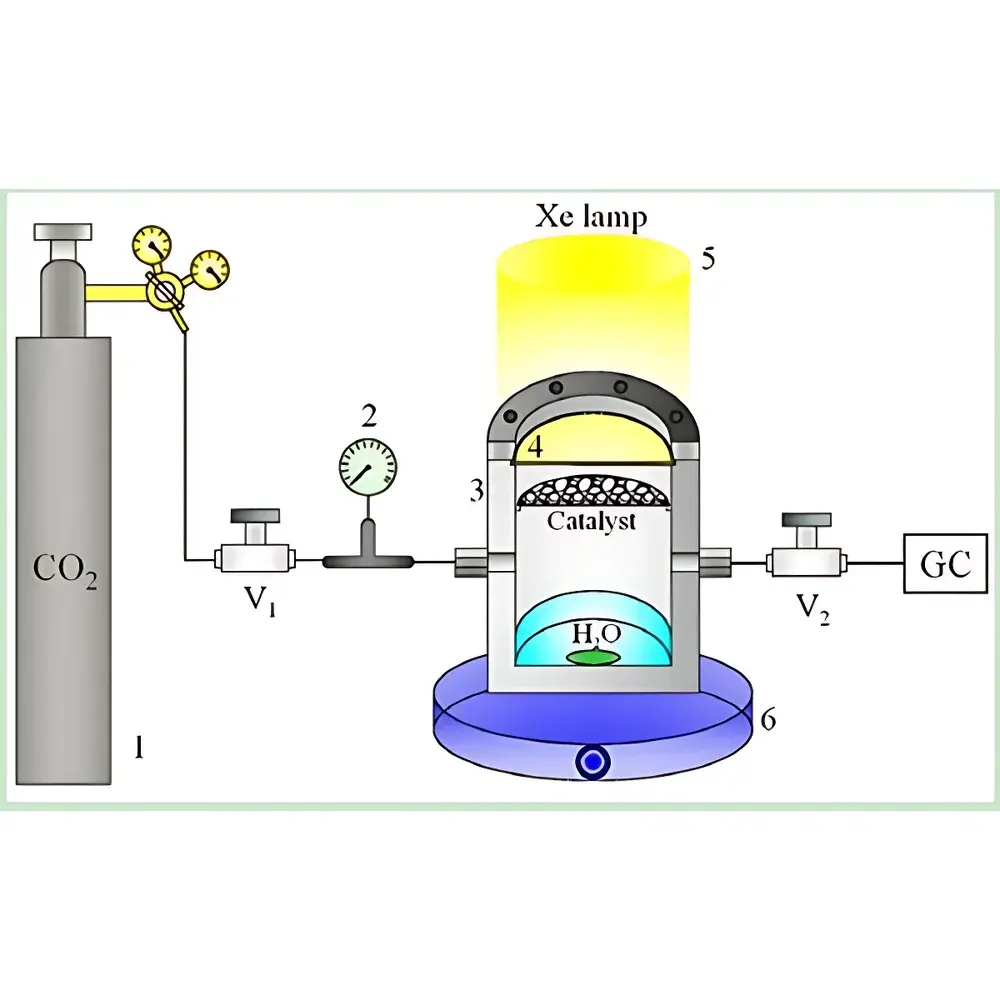
- Multi-modal CO2 reduction platform supporting three operational modes: (i) ambient-pressure photocatalytic testing with precise gas dosing (syringe or low-pressure cylinder), (ii) high-pressure continuous-flow gas-phase photocatalysis (up to 5 MPa) using stainless-steel modular reactors (CEL-HPR+ series), and (iii) integrated photoelectrocatalytic operation with side-irradiated high-pressure cells (HPRS-PEC250) featuring quartz or sapphire optical windows.
- Customizable multi-gas delivery system capable of dynamic mixing of CO2, H2, CO, N2, and Ar with programmable flow control and real-time composition monitoring via mass flow controllers (MFCs).
- Reaction environment control including temperature regulation (RT to 250 °C), pressure stabilization (0.1–5 MPa), and irradiance calibration (300–800 nm, AM1.5G or monochromatic LED sources).
- Compatible with standard analytical interfaces: online GC-TCD/FID, GC-MS, and FTIR for quantitative speciation of gaseous and condensed-phase products—including C5+ liquid hydrocarbons and oxygenated intermediates.
- Service delivery includes full experimental design consultation, catalyst pre-characterization (XRD, BET, XPS upon request), kinetic data acquisition, and technical reporting compliant with GLP documentation standards.
Sample Compatibility & Compliance
This service accommodates solid catalysts (powders, pellets, supported nanoparticles), thin-film electrodes, and slurry-phase systems. All reactor hardware conforms to ASME B31.3 process piping standards and PED 2014/68/EU for pressure equipment. Gas handling components meet ISO 8573-1 Class 2 purity requirements. Experimental protocols are structured to facilitate traceability and reproducibility in accordance with ASTM E2913-22 (Standard Guide for Evaluating Photocatalytic Activity) and ISO 22197-1:2016 (Photocatalytic Air Purification Materials). Data records include timestamped metadata, instrument calibration logs, and raw chromatographic integrations—supporting audit readiness for institutional review boards or regulatory submissions.
Software & Data Management
Acquisition and analysis leverage LabVIEW-based control software interfaced with MFCs, pressure transducers, and temperature sensors. All datasets are archived in HDF5 format with embedded metadata (MIAME-compliant). Post-processing includes peak deconvolution (Chromeleon CDS), carbon balance calculation, Faradaic efficiency derivation (for electrochemical variants), and turnover frequency (TOF) estimation. Reports are delivered as PDF with executive summary, methodology appendix, uncertainty quantification (k=2, expanded uncertainty per GUM), and raw data package—fully compatible with institutional data repositories and FAIR (Findable, Accessible, Interoperable, Reusable) principles.
Applications
- Fundamental studies of C–C bond formation mechanisms under photo-thermal conditions
- Screening of earth-abundant catalysts (e.g., transition metal oxides, MOFs, doped carbons) for selective C3+ formation
- Optimization of gas-phase residence time, partial pressure ratios (CO2:H2), and photon flux to maximize liquid fuel yield
- Validation of kinetic models (Langmuir–Hinshelwood, Mars–van Krevelen) against experimental rate data
- Technology readiness level (TRL) advancement from TRL 2–3 (concept validation) toward TRL 4 (component validation in lab environment)
FAQ
What catalyst types are supported in this service?
Solid-state photocatalysts (e.g., TiO2, g-C3N4, BiVO4), supported metal catalysts (Co/TiO2, Cu/ZnO/Al2O3), molecular complexes, and photoelectrodes (e.g., Fe2O3, WO3, Si nanowires) are routinely tested.
Can I supply my own catalyst or must it be provided by the service provider?
Clients may submit their own catalysts (with safety data sheet and particle size distribution report) or request synthesis and pretreatment support as an optional add-on.
Is isotopic labeling (e.g., 13C-CO2) supported for mechanistic tracing?
Yes—13C-labeled CO2 experiments are available with GC-MS detection and isotopic enrichment quantification.
How is product quantification performed for liquid-phase C5+ compounds?
Liquid products are extracted with dichloromethane, concentrated under nitrogen, and analyzed by calibrated GC-FID with internal standard (n-dodecane); identification is confirmed by retention index matching and GC-MS library search.
Are GLP-compliant reports available for regulatory submission?
Yes—full GLP documentation (including analyst signatures, instrument calibration certificates, raw chromatograms, and deviation logs) is provided upon request for an additional fee.
Related Products