
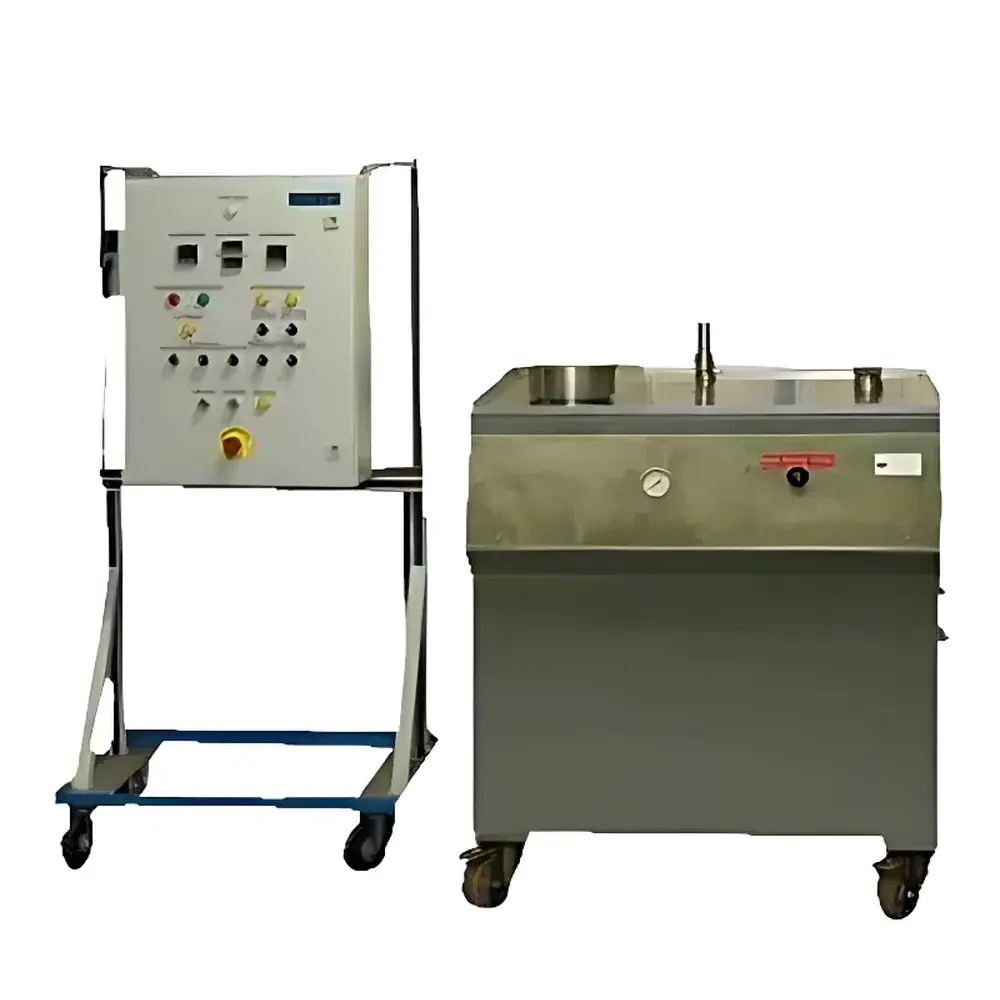
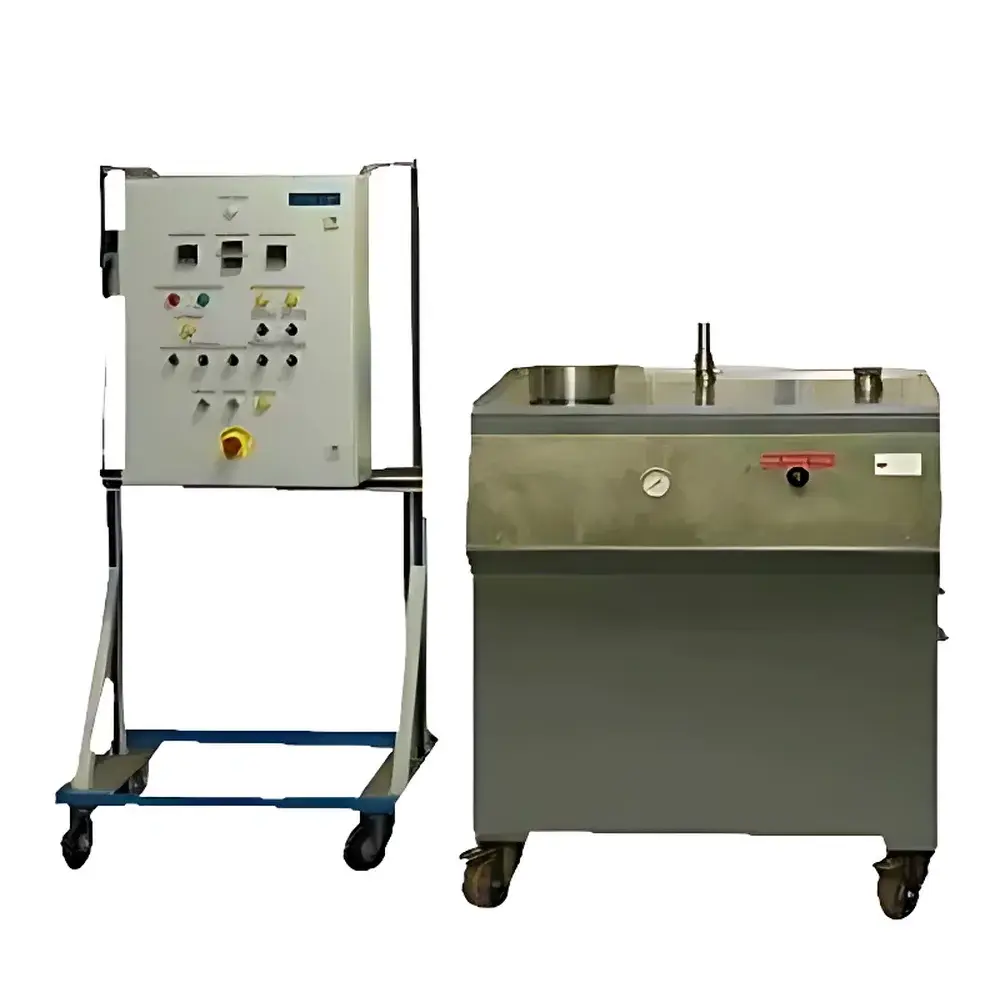
CO2 Solvent Core Cleaning System CSC 70
| Origin | France |
|---|---|
| Manufacturer Type | Authorized Distributor |
| Origin Category | Imported Instrument |
| Model | W-06-01 |
| Pricing | Available Upon Request |
Overview
The CO2 Solvent Core Cleaning System CSC 70 is a high-pressure, thermally controlled laboratory instrument engineered for the quantitative removal of hydrocarbon residues—including crude oil, drilling mud filtrate, and formation water—from reservoir rock core samples. It operates on the principle of supercritical and near-critical CO₂-assisted solvent extraction, leveraging the tunable solvating power of CO₂-dissolved organic solvents (e.g., toluene or benzene) under elevated pressure and temperature. At operating pressures up to 35 MPa and temperatures up to 120 °C, CO₂ enhances solvent diffusivity and reduces interfacial tension, enabling deep penetration into microporous and low-permeability formations (e.g., shale, tight sandstone, or carbonate cores). Following extraction, controlled depressurization induces phase separation, volatilizing CO₂ and carrying residual hydrocarbons out of the core matrix while retaining the solvent for recovery. This method preserves core mineralogy and pore structure integrity far more effectively than conventional Soxhlet or hot solvent reflux techniques—making it essential for accurate porosity, permeability, and saturation analysis in reservoir characterization workflows.
Key Features
- Stainless-steel high-pressure cleaning vessel rated to 40 MPa working pressure, equipped with explosion-proof jacketed heating (2 kW, 220 V AC) and PID-controlled thermal regulation (±1 °C stability over 30–120 °C range)
- Integrated high-pressure diaphragm pump capable of delivering solvent-CO₂ mixtures at flow rates from 0.1 to 5 mL/min with pressure modulation accuracy ±0.2 MPa
- Cyclonic separator with water-cooled secondary condenser, fabricated from ASTM A276 Type 316 stainless steel, designed for continuous gas–liquid phase separation at discharge conditions
- Explosion-proof electric distillation unit (ATEX-certified Zone 1) for closed-loop solvent regeneration; fully automated batch operation with programmable boil-up rate, reflux ratio, and endpoint detection via conductivity monitoring
- External intrinsically safe control panel (IEC 60079-0 compliant) housing push-button interface, pressure/temperature digital indicators, emergency shutdown circuit, and status LEDs for pump, heater, and distillation phases
Sample Compatibility & Compliance
The CSC 70 accommodates standard cylindrical core plugs (up to 38 mm diameter × 100 mm length) and irregular fragments secured in custom sintered-metal holders. It supports both brine-saturated and dry core configurations, with compatibility verified for siliciclastic, carbonate, and unconventional shale lithologies. All wetted components comply with NACE MR0175/ISO 15156 for sour service environments. The system meets mechanical design requirements per ASME BPVC Section VIII Div. 1 and pressure equipment directive 2014/68/EU. Process documentation supports GLP-compliant data traceability when integrated with external audit-ready logging systems.
Software & Data Management
While the base CSC 70 operates via hardwired logic controls, optional digital upgrade kits provide RS-485 Modbus RTU or Ethernet/IP interfaces for integration into centralized lab automation platforms (e.g., LabVantage, STARLIMS). Real-time acquisition of pressure, temperature, flow rate, and distillation cycle timestamps enables alignment with core analysis metadata in LIMS. Audit trails—including operator ID, parameter setpoints, and deviation alerts—are exportable as CSV or PDF for FDA 21 CFR Part 11–aligned review. Calibration certificates for transducers are traceable to NIST standards and include as-found/as-left data.
Applications
- Preparation of clean core samples for routine petrophysical measurements (porosity by helium pycnometry, absolute permeability by Darcy flow, capillary pressure by mercury injection)
- Residual oil saturation (Sor) determination in enhanced oil recovery (EOR) screening studies using CO₂ huff-and-puff or miscible flooding protocols
- Assessment of formation damage mechanisms caused by drilling fluid invasion and subsequent cleanup efficiency
- Validation of surfactant–CO₂ synergistic effects in low-interfacial-tension (LIFT) core flood experiments
- Geochemical preservation of clay-bound water and bitumen distribution prior to SEM-EDS or XRD analysis
FAQ
What solvents are compatible with the CSC 70 system?
Toluene and benzene are validated primary solvents; chlorinated solvents (e.g., chloroform) may be used subject to corrosion compatibility assessment and local regulatory approval.
Can the system operate without CO₂ injection?
Yes—solvent-only mode is supported at lower pressures (<10 MPa), though hydrocarbon removal efficiency decreases significantly for heavy ends and asphaltenes.
Is the distillation unit suitable for aqueous solvent mixtures?
No—the distillation subsystem is optimized for anhydrous organic solvents; water contamination requires pre-drying or alternative separation methods.
What maintenance intervals are recommended for high-throughput labs?
Pressure transducer recalibration every 6 months; O-ring replacement in all high-pressure seals every 200 cycles or annually, whichever occurs first.
Does the system meet ISO 14040 requirements for life cycle assessment of core cleaning methods?
Yes—integrated solvent recovery achieves >92% mass balance closure, enabling robust cradle-to-gate LCA modeling per ISO 14040/14044 frameworks.





