
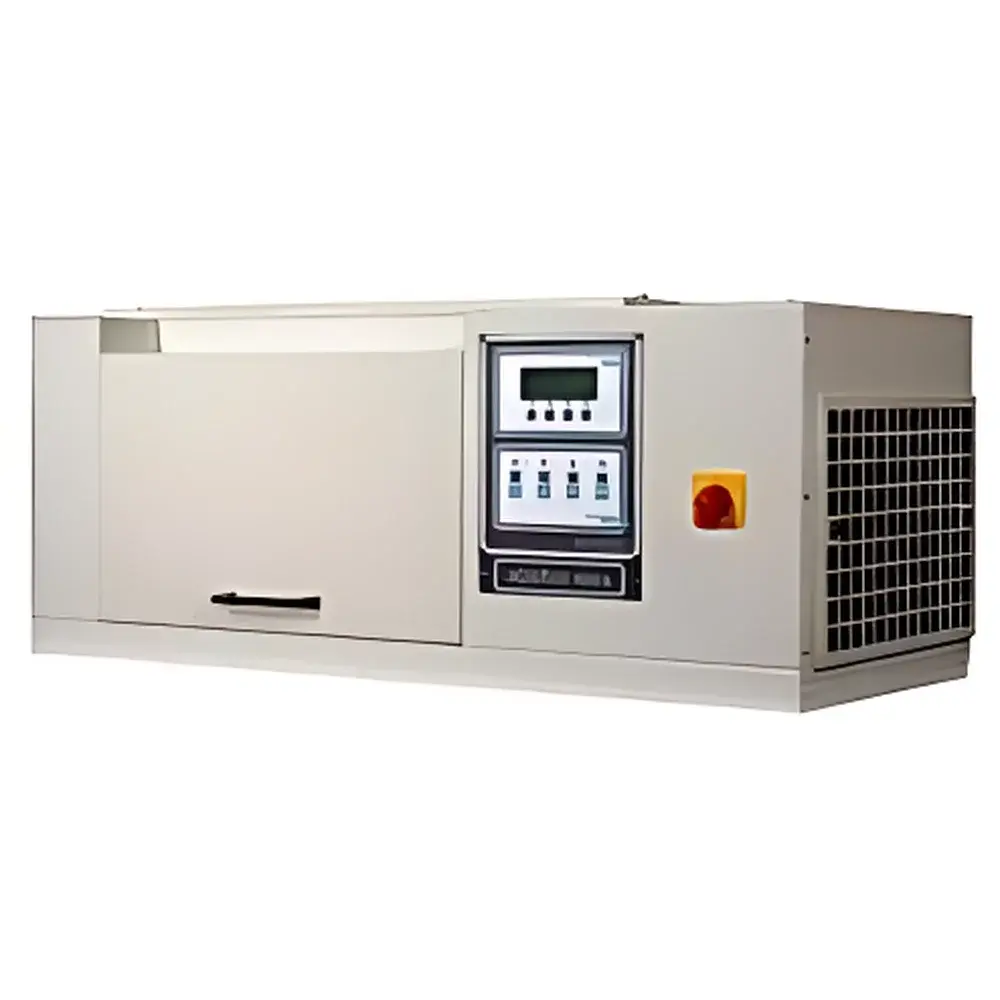
Cofomegra SOLARBOX 3000e Xenon Arc Weathering Test Chamber
| Brand | Cofomegra |
|---|---|
| Country of Origin | Italy |
| Model | SOLARBOX 3000e |
| Xenon Lamp Power | 3 kW |
| Irradiance Control Range | 300–1000 W/m² (300–800 nm) |
| Black Standard Temperature (BST) Range | 35–100 °C |
| Relative Humidity Control | Yes (RH series variant) |
| Water Spray System | Adjustable interval (1–999 min), demineralized water (≤2 μS/cm), 50 L reservoir |
| Internal Chamber Dimensions | 950 × 550 × 1600 mm (W×D×H) |
| Exposure Area | 420 × 200 mm |
| UV Filtering Options | Soda-lime glass (outdoor/indoor), IR-reflective coated variants |
| Sensor Compatibility | 295–400 nm broadband UV, 340 nm narrowband, 420 nm narrowband, illuminance, BST |
Overview
The Cofomegra SOLARBOX 3000e is a precision-engineered xenon arc weathering test chamber designed for accelerated simulation of full-spectrum solar radiation, thermal stress, humidity, and moisture exposure under controlled laboratory conditions. It operates on the principle of air-cooled xenon arc lamp irradiation—capable of reproducing the spectral power distribution (SPD) of natural sunlight across UV, visible, and near-infrared regions (290–2500 nm), with optical filtering enabling accurate emulation of outdoor, indoor, or IR-modified exposure environments. Unlike UV fluorescent or metal halide systems, the SOLARBOX 3000e delivers photometrically traceable irradiance control within the critical 300–800 nm band, supporting compliance-driven testing per ISO 4892-2, ASTM G155, IEC 60068-2-9, and AATCC TM16. Its parabolic reflector geometry positions the 3 kW xenon lamp at the focal point to ensure uniform irradiance distribution (±10% across the 420 × 200 mm exposure area), minimizing spatial gradient effects that compromise reproducibility in material degradation studies.
Key Features
- Air-cooled 3 kW xenon arc lamp with ≥1500 h service life and integrated broadband irradiance monitoring (295–400 nm) and narrowband sensors (340 nm, 420 nm)
- Microprocessor-based control system with 4-line backlit LCD interface and real-time display of irradiance (W/m²), BST temperature (°C), relative humidity (%RH), and elapsed test time
- Black Standard Thermometer (BST) feedback loop enabling precise thermal control from 35 °C to 100 °C—mimicking surface heating induced by solar infrared absorption
- Programmable humidity control (RH series models) via ultrasonic humidifier with demineralized water supply (conductivity ≤2 μS/cm), 50 L integrated reservoir, and closed-loop recirculation
- Configurable water spray system with adjustable cycle timing (1–999 min), independent lamp-on/off operation during wet phases, and temperature-regulated spray water (30–50 °C)
- Modular UV filtration architecture: interchangeable soda-lime glass filters for outdoor (direct sunlight), indoor (through-glass), and IR-reflective variants—calibrated to meet ISO 4892-2 spectral requirements
- RS232 serial interface supporting bidirectional data logging, remote parameter adjustment, and automated report generation; stores up to 15 user-defined test protocols
Sample Compatibility & Compliance
The SOLARBOX 3000e accommodates three-dimensional industrial components, textiles, automotive trim, coatings, polymers, and architectural façade materials on its 420 × 200 mm exposure plane. Its large internal cavity (950 × 550 × 1600 mm) eliminates sample proximity artifacts common in compact chambers. All operational parameters—including irradiance setpoint, BST, RH, and spray timing—are continuously logged with timestamped audit trails, satisfying GLP and GMP documentation requirements per FDA 21 CFR Part 11 when paired with validated software (e.g., XEN 32 Maintenance Suite). The system supports method validation against reference standards such as NIST-traceable radiometers and calibrated BST sensors, ensuring interlaboratory comparability for ISO/IEC 17025-accredited facilities.
Software & Data Management
Embedded firmware enables full-cycle test automation, including ramp-soak-dwell sequences, multi-step irradiance modulation, and synchronized humidity/spray events. Raw sensor data (irradiance, BST, RH, spray status) is streamed via RS232 to host PCs running Cofomegra’s XEN 32 software—providing real-time graphing, statistical trend analysis (e.g., ΔE* color shift vs. radiant exposure), and export to CSV/PDF formats compliant with internal QA workflows. Calibration routines include sensor zero-offset verification, lamp output drift compensation, and filter transmission profiling—documented in machine-readable calibration certificates aligned with ISO/IEC 17025 clause 6.5.
Applications
This chamber serves R&D and QC laboratories conducting predictive lifetime assessment of organic materials subject to photooxidation, hydrolysis, and thermomechanical fatigue. Key use cases include: evaluating pigment stability in automotive clearcoats per SAE J2527; validating UV resistance of medical device packaging under ISO 11607-1; assessing colorfastness of textile dyes per ISO 105-B02; qualifying aerospace polymer composites per ASTM D4329; and screening building envelope materials for solar reflectance degradation under ASHRAE 182. Its ability to decouple and independently modulate irradiance, thermal load, and moisture ingress enables mechanistic study of synergistic aging pathways—not merely empirical acceleration.
FAQ
What spectral ranges does the SOLARBOX 3000e replicate?
It delivers continuous output from 290 nm to >2000 nm; UV filtering options restrict transmission to match outdoor (290–800 nm), indoor (320–800 nm), or IR-filtered profiles per ISO 4892-2 Annex B.
Is humidity control standard or optional?
Relative humidity regulation is exclusive to the RH-series variants (e.g., SOLARBOX 3000e RH); non-RH models support only BST-controlled thermal cycling and spray functionality.
How is irradiance uniformity verified?
Uniformity is ensured by parabolic reflector optics and validated per ISO 4892-2 Section 6.3.1 using a calibrated scanning radiometer across the full exposure plane.
Can the system operate unattended for extended durations?
Yes—microprocessor logic includes watchdog timers, lamp arc-failure detection, water-level monitoring, and automatic shutdown on thermal or electrical fault conditions.
What maintenance intervals are recommended for the xenon lamp and filters?
Lamp replacement is advised after 1500 h of operation; UV filters require annual transmission verification using a spectroradiometer, with replacement based on measured degradation exceeding ±5% of initial transmittance.



