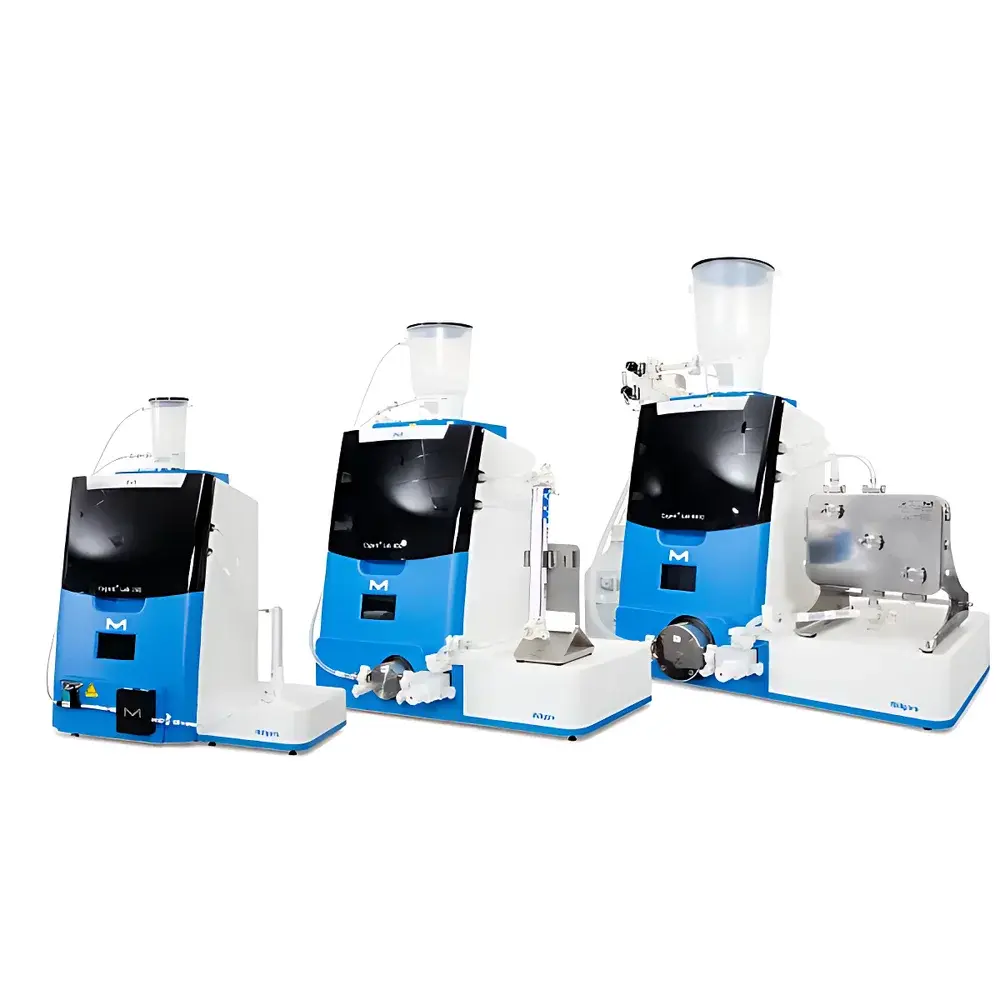
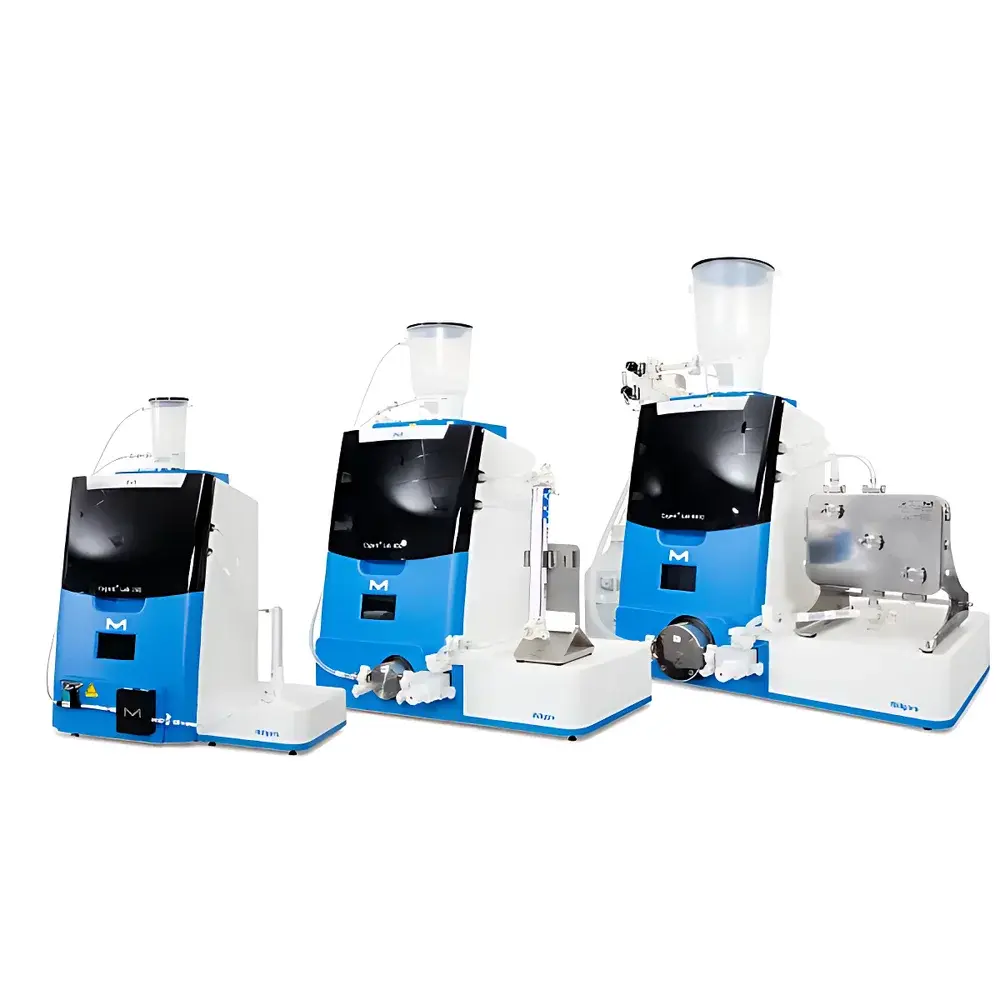
Cogent® Lab Tangential Flow Filtration System
| Brand | Merck |
|---|---|
| Origin | Germany |
| Model | Cogent® Lab |
| Application | Laboratory-scale TFF Process Development |
| Compatible Membranes | Pellicon Cassette and Plate-and-Frame Ultrafiltration Modules |
| Operating Modes | Standard TFF and Single-Pass TFF (SPTFF) |
| Software | Integrated User-Friendly Control Interface with Predefined Protocols |
Overview
The Cogent® Lab Tangential Flow Filtration (TFF) System is a compact, benchtop-scale platform engineered by Merck for robust and reproducible process development in biopharmaceutical downstream operations. Designed specifically for ultrafiltration (UF) and diafiltration (DF) of biological macromolecules—including monoclonal antibodies, viral vectors, plasmid DNA, and recombinant proteins—the system implements well-established hydrodynamic principles of crossflow filtration to minimize concentration polarization and membrane fouling. Its consistent geometric scaling and linear performance characteristics enable direct correlation between lab-scale data and pilot- or manufacturing-scale TFF operations, significantly de-risking technology transfer and regulatory filing submissions. The system operates under fully controllable fluidic parameters—transmembrane pressure (TMP), retentate flow rate, permeate flux, and temperature—ensuring adherence to Good Manufacturing Practice (GMP)-aligned experimental rigor.
Key Features
- Engineered scalability: Consistent internal dimensions, flow path geometry, and shear profile across Cogent® Lab, Cogent® Pilot, and Cogent® Production platforms support seamless linear scale-up without re-optimization.
- Dual-mode operation: Switch between conventional recirculating TFF and single-pass TFF (SPTFF) configurations via intuitive hardware reconfiguration—enabling rapid evaluation of process economics, buffer consumption, and product quality attributes.
- Integrated digital control: Touchscreen interface with embedded software supports real-time monitoring and logging of critical process parameters—including TMP, inlet pressure, retentate pressure, permeate pressure, flow rates, and temperature—with 1 Hz sampling resolution.
- Precision fluid handling: Dual peristaltic pumps (retentate and permeate circuits) deliver stable, pulse-free flow across the full operational range (0.1–500 mL/min), calibrated to ±2% accuracy per ISO 8573-1 standards.
- Modular membrane compatibility: Optimized for Merck’s Pellicon® 3 cassettes (0.1–0.5 m² active area) and Pellicon® XL plate-and-frame modules; also supports third-party TFF membranes with standardized housing interfaces.
Sample Compatibility & Compliance
The Cogent® Lab system accommodates sample volumes from 50 mL to 5 L and handles feed streams with viscosities up to 20 cP and suspended solids content ≤0.5% w/v. It is validated for use with mammalian cell culture harvests, clarified lysates, and chromatography pool fractions. All wetted parts are constructed from USP Class VI-certified materials (e.g., silicone-free Santoprene™ tubing, 316L stainless steel fittings, and pharmaceutical-grade polycarbonate housings). The system meets applicable sections of ISO 13485:2016 for medical device quality management systems and supports compliance with FDA 21 CFR Part 11 through optional electronic signature and audit trail functionality. Documentation packages include IQ/OQ protocols aligned with ASTM E2500-13 and ICH Q5A(R2) guidance for biotechnological product characterization.
Software & Data Management
The Cogent® Lab Control Software provides a secure, role-based user interface compliant with ALCOA+ data integrity principles. Predefined SOP-driven protocols—including “Concentration,” “Diafiltration,” “Buffer Exchange,” and “Membrane Integrity Test”—can be loaded, edited, and executed with configurable hold points and interlock logic. All process data are stored in encrypted SQLite databases with automatic timestamping and user attribution. Export options include CSV, PDF reports, and XML files compatible with LIMS and MES integration. Audit trails record all parameter changes, method modifications, and user logins, supporting GLP/GMP audits and regulatory inspections.
Applications
- Early-stage purification process development for mAbs, bispecifics, and Fc-fusion proteins
- Process characterization studies evaluating membrane fouling kinetics, flux decline behavior, and product aggregation propensity under varying TMP and shear conditions
- Comparative screening of TFF membranes and module configurations for optimal yield, purity, and aggregate clearance
- Single-pass TFF optimization for continuous bioprocessing workflows and integrated continuous manufacturing (ICM) platforms
- Supporting Quality-by-Design (QbD) initiatives through Design of Experiments (DoE)-driven parameter space mapping
FAQ
What membrane formats are natively supported?
Pellicon® 3 cassettes (0.1, 0.25, and 0.5 m²) and Pellicon® XL plate-and-frame modules (up to 1.0 m²) are fully characterized and validated for use with the Cogent® Lab system.
Can the system operate under sterile conditions?
Yes—when equipped with steam-in-place (SIP)-compatible components and validated sterilization cycles, the system meets ASME BPE-2022 requirements for aseptic processing equipment.
Is remote monitoring supported?
The system includes Ethernet connectivity and OPC UA server capability, enabling secure integration into plant-wide SCADA or IIoT architectures for real-time remote oversight.
Does the software support electronic signatures per 21 CFR Part 11?
Electronic signature and audit trail features are available as an optional licensed module, fully configured to meet predicate rule requirements for regulated environments.
What validation documentation is provided?
Merck supplies comprehensive IQ/OQ documentation kits, including calibration certificates, material traceability records, and test protocols aligned with ISO/IEC 17025 and ASTM E2500-13.