
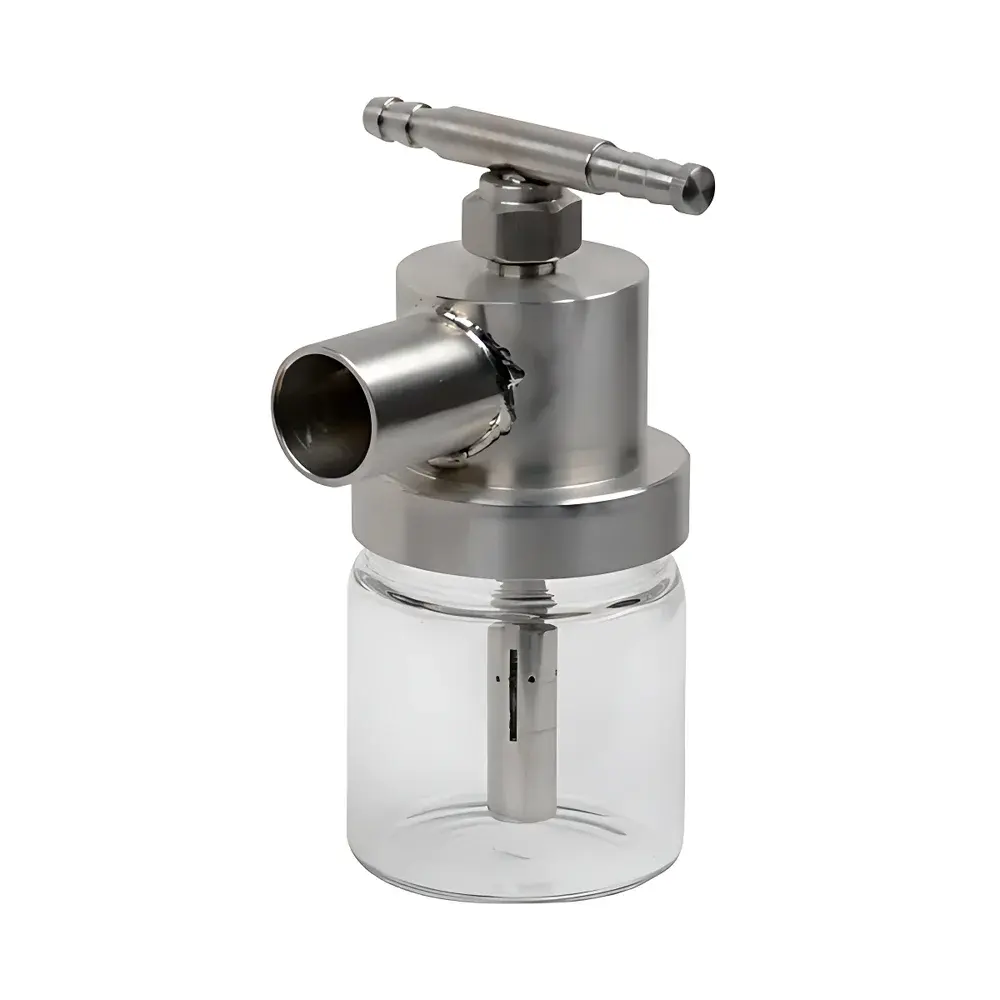
Collison Aerosol Generator ZR-C04 by Junray
| Brand | Junray |
|---|---|
| Model | ZR-C04 |
| Construction Material | 316 Stainless Steel |
| Air Inlet & Pressure Gauge Interface | Integrated T-shaped Rod |
| Compliance | NSF/ANSI 49-2002, YY 0569-2005 (Biological Safety Cabinets) |
| Application Domain | Biosafety Testing, Aerosol Microbiology, Airborne Pathogen Research |
| Origin | Shandong, China |
| Manufacturer Type | Direct Manufacturer |
| Regional Classification | Domestic (China) |
Overview
The Junray ZR-C04 Collison Aerosol Generator is an engineered pneumatic nebulizer designed for the reproducible generation of monodisperse or polydisperse liquid-based aerosols in controlled laboratory and biosafety environments. Operating on the principle of collison-type jet impaction—where pressurized gas accelerates liquid through concentric capillary nozzles and forces it to impact a polished stainless-steel surface—the device produces stable, respirable-range aerosols with mass median aerodynamic diameters (MMAD) typically between 0.5 µm and 3.0 µm, depending on fluid properties and operating pressure. It is explicitly validated for use in performance verification of biological safety cabinets (BSCs), HEPA filter integrity testing, inhalation toxicology studies, and experimental airborne pathogen challenge protocols. Its design adheres to the physical aerosol generation requirements specified in NSF/ANSI 49-2002 and YY 0569-2005, ensuring traceable alignment with international biosafety infrastructure validation frameworks.
Key Features
- Robust 316 stainless-steel construction throughout all wetted and structural components, providing corrosion resistance against saline solutions, microbial suspensions, and organic solvents commonly used in aerosol microbiology.
- Integrated T-shaped rod assembly serving dual functions: precise air inlet geometry for laminar flow conditioning and a standardized port for analog or digital pressure gauge attachment—enabling real-time monitoring and documentation of operating pressure (typically 10–60 psi).
- Optimized nozzle configuration delivering high aerosol output rates (up to 0.5 mL/min nominal with phosphate-buffered saline), supporting extended-duration exposure studies without frequent refilling.
- No external heating or ultrasonic elements—ensuring thermal stability of heat-sensitive biological agents (e.g., live viruses, spores, attenuated bacteria) during aerosolization.
- Modular mounting interface compatible with standard aerosol test chambers, glove boxes, and ISO Class 3–5 cleanroom ducting systems.
Sample Compatibility & Compliance
The ZR-C04 accommodates aqueous suspensions, glycerol-diluted microbial cultures, fluorescent microspheres (e.g., polystyrene latex, PSL), and pharmaceutical formulations within viscosity limits of ≤15 cP. It has been verified for compatibility with Bacillus atrophaeus (formerly B. subtilis) spores, MS2 bacteriophage, and Pseudomonas aeruginosa suspensions under GLP-aligned test conditions. Regulatory alignment includes full conformance with aerosol generation provisions in NSF/ANSI 49-2002 Section 7.3.2 and YY 0569-2005 Clause 6.3.1. While not intrinsically certified to ISO 14644 or EU GMP Annex 1, its output characteristics support qualification activities required for ISO 14644-3:2019 particulate airborne contamination testing when paired with calibrated optical particle sizers (OPS) or cascade impactors.
Software & Data Management
The ZR-C04 operates as a hardware-only, manually regulated instrument; no embedded firmware or proprietary software is included. However, its pressure-dependent aerosol output enables seamless integration into automated test platforms via external pressure controllers (e.g., Parker IQ+ series) and data acquisition systems compliant with FDA 21 CFR Part 11. Users may log pressure, duration, and environmental parameters (temperature, RH) using third-party LIMS or ELN systems. Audit trails, electronic signatures, and version-controlled SOP execution are supported when deployed within validated laboratory informatics environments meeting GLP/GMP documentation standards.
Applications
- Performance qualification and routine challenge testing of Class II and Class III biological safety cabinets per NSF/ANSI 49.
- Aerosolized pathogen delivery in inhalation toxicology and vaccine efficacy models (e.g., murine TB, influenza challenge).
- HEPA and ULPA filter penetration assessment using tracer particles traceable to NIST SRM 1930.
- Development and calibration of air sampling devices—including Andersen impactors, gelatin membrane filters, and liquid impingers.
- Environmental simulation of airborne transmission dynamics in architectural airflow studies and HVAC system validation.
FAQ
What types of liquids can be aerosolized with the ZR-C04?
Aqueous buffers, microbial suspensions (bacteria, fungi, viruses), fluorescent microspheres, and low-viscosity pharmaceutical formulations (<15 cP) are suitable. Avoid highly viscous, volatile, or corrosive solvents not compatible with 316 stainless steel.
Is the ZR-C04 compliant with ISO 21501-4 for particle size calibration?
No—the ZR-C04 is a generator, not a sizing instrument. Particle size distribution must be characterized separately using ISO 21501-4-compliant equipment (e.g., laser diffraction analyzers or cascade impactors).
Can this unit be used in cleanroom classified environments?
Yes—when installed with appropriate upstream filtration and operated within ISO Class 5 (Class 100) or better environments, provided all maintenance follows ISO 14644-3 cleaning protocols.
Does Junray provide validation documentation (DQ/IQ/OQ)?
Factory test reports and material certifications (e.g., 316 SS mill certificates) are supplied. Full DQ/IQ/OQ protocol development and execution require site-specific risk assessment and are available as a consultancy service.
Related Products







