
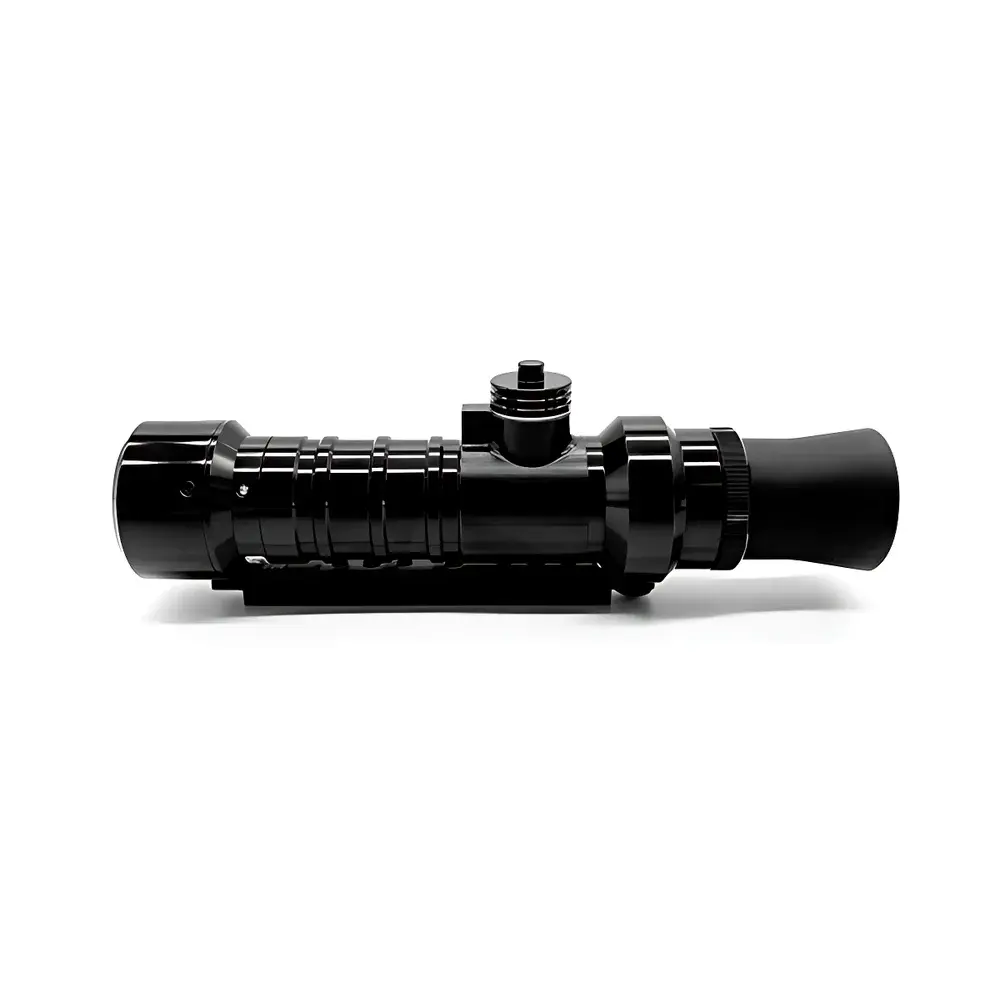
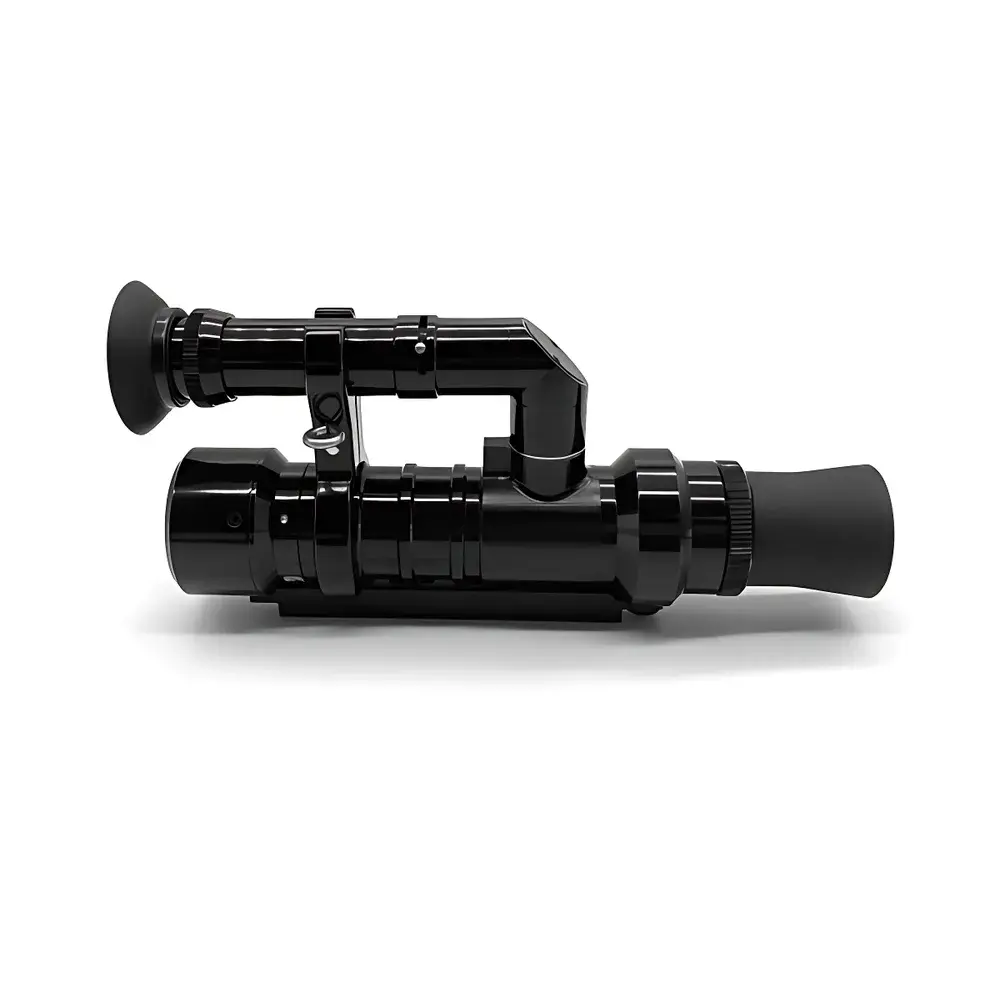
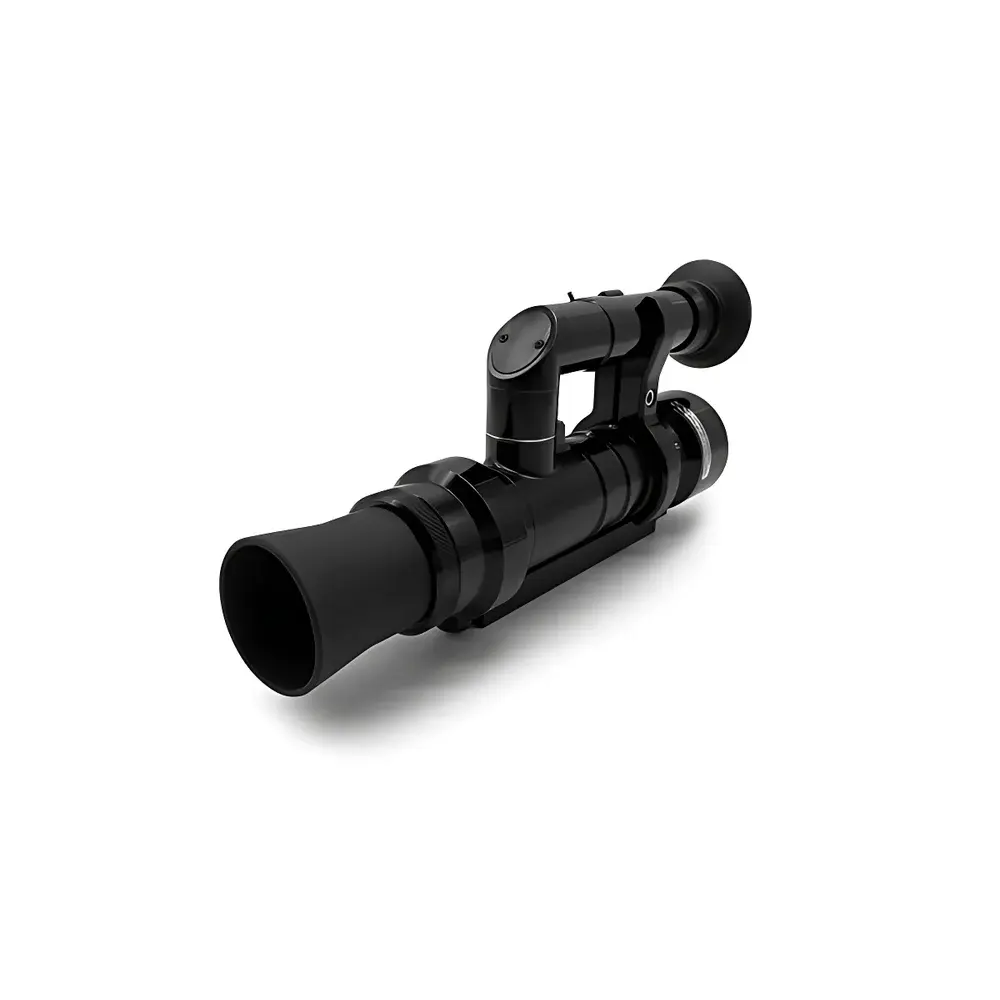
Colorimetry Research CR280 Portable Spectroradiometer
| Brand | Colorimetry Research (CRI) |
|---|---|
| Origin | USA |
| Model | CR280 |
| Spectral Range | 380–1080 nm |
| Detector | CMOS image sensor, 512 pixels |
| Spectral Bandwidth | 8 nm |
| Wavelength Accuracy | ±0.3 nm |
| Spectral Resolution | 1.6 nm/pixel |
| Luminance Range | 0.3–60,000 cd/m² (nits) |
| Luminance Accuracy | ±2% |
| Luminance Repeatability | ≤1% |
| Chromaticity Accuracy | ±0.0015 in CIE 1931 x,y |
| Chromaticity Repeatability | ±0.0005 in CIE 1931 x,y |
| Polarization Error | ≤0.5% |
| Digital Resolution | 16-bit |
| Field of View | 10° |
| Aperture Options | Fixed FOV (selectable at order: 3°, 2°, 1°, 0.5°, 0.25°, 0.125°) |
| Focus Range | 200 mm to infinity |
| Viewfinder | Patent-pending removable and rotatable optical viewfinder with integrated camera monitoring |
| Synchronization Frequency | 10–10,000 Hz |
| Exposure Time | 0.04–30 s |
| Power Supply | 5 V, 120 mA (600 mW) via USB 2.0 |
| Communication Interfaces | USB 2.0, Ethernet, RS-232 |
| Weight | 0.54 kg (base unit) |
| Optional Feature | Low-temperature auto-heating module for operation down to –30 °C |
Overview
The Colorimetry Research CR280 Portable Spectroradiometer is a field-deployable, high-fidelity instrument engineered for absolute spectral radiometric and photometric measurements across visible and near-infrared wavelengths (380–1080 nm). Unlike conventional tristimulus colorimeters, the CR280 employs a calibrated CMOS linear array detector with 512 pixels and a diffraction-grating monochromator to acquire full spectral irradiance or radiance data—enabling traceable computation of luminance, chromaticity coordinates (CIE 1931 x,y), correlated color temperature (CCT), color rendering index (CRI), spectral power distribution (SPD), transmittance, reflectance, and optical density. Its optical architecture follows the principle of “what you see is what you measure”: a coaxial, telecentric optical path ensures spatial correspondence between the operator’s visual aim and the actual measurement spot, validated by an integrated camera-assisted viewfinder system. Designed for metrological rigor in variable environments, the CR280 meets the functional requirements of ISO/CIE standard-compliant photometry and supports calibration traceability to NIST via factory-applied spectral responsivity corrections.
Key Features
- Patent-pending rotatable and removable optical viewfinder (VO-201) with real-time camera feed for precise targeting—critical for non-contact measurements on curved, elevated, or hazardous surfaces.
- Interchangeable fixed-angle apertures (0.125° to 3°) enabling flexible spatial resolution selection without recalibration; each aperture is factory-aligned and spectrally characterized.
- High dynamic range luminance measurement (0.3–60,000 cd/m²) with ±2% absolute accuracy and ≤1% repeatability—validated per CIE Publication 127 and IEC 62368-1 Annex H test conditions.
- 16-bit digitization and low-noise analog front-end deliver high signal-to-noise ratio even at sub-millisecond exposure times (0.04 s minimum), supporting pulsed LED and OLED flicker analysis.
- Low-temperature operational capability (–30 °C to +50 °C) with optional auto-heating module—engineered for outdoor lighting audits, roadway luminaire validation, and cold-climate display testing.
- Multi-interface connectivity (USB 2.0, 10/100 Ethernet, RS-232) enables integration into automated QA stations, remote monitoring networks, and GLP-compliant lab workflows.
Sample Compatibility & Compliance
The CR280 accommodates emissive, reflective, and transmissive samples without hardware modification. Its modular design supports direct surface measurement (e.g., OLED panels, automotive displays), fiber-coupled configurations for confined or thermally sensitive targets (e.g., LED packages, micro-LED arrays), and integrating sphere attachments for total flux characterization. All optical components are UV-stabilized and free of organic adhesives to prevent spectral drift. The instrument complies with electromagnetic compatibility standards IEC 61326-1 (industrial environment) and safety standard IEC 61010-1. Measurement algorithms adhere to CIE S 014-2/E:2022 (colorimetry), CIE 15:2018 (colorimetry fundamentals), and ISO 11664-1 through -6 (colorimetric standards). Calibration certificates include uncertainty budgets per ISO/IEC 17025:2017 requirements.
Software & Data Management
CR280 operates with CRI’s SpectraWin v4.x software suite—compatible with Windows 10/11 and MATLAB® via COM/ActiveX API. The software provides real-time spectral visualization, batch processing of time-series datasets, automated report generation (PDF/CSV/XLSX), and customizable pass/fail thresholds aligned with industry specifications (e.g., VESA DisplayHDR, ENERGY STAR SSL, IES LM-79). Audit trails record user actions, calibration events, and environmental metadata (ambient temperature, humidity if logged externally). For regulated environments, optional 21 CFR Part 11 compliance mode enforces electronic signature, role-based access control, and immutable data archiving—fully compatible with FDA-regulated QC labs and ISO 13485 medical display validation protocols.
Applications
- Display manufacturing: Factory-line verification of chromaticity uniformity, white point stability, and temporal response of LCD, OLED, and Mini-LED backlit modules.
- LED lighting R&D: CCT binning, R9 evaluation, spectral fidelity analysis (TM-30-20), and thermal derating studies under pulsed DC drive conditions.
- Outdoor lighting assessment: In-situ roadway and tunnel luminaire photometry per IES RP-8-18 and CIE 115:2010—including vertical illuminance mapping and glare evaluation (UGR).
- Automotive HUD and instrument cluster certification: High-angular-resolution luminance profiling at viewing angles up to ±45°, supporting ISO 15008 compliance testing.
- Academic and standards laboratories: Reference-grade validation of integrating spheres, reference lamps, and secondary transfer standards.
FAQ
Is the CR280 suitable for measuring flicker and temporal light modulation (TLM)?
Yes—the CR280 supports exposure times as short as 0.04 seconds and synchronization frequencies up to 10 kHz, enabling capture of high-speed temporal waveforms. When paired with SpectraWin’s TLM analysis module, it computes SVM, percent flicker, and frequency spectra per IEEE 1789-2015 and IEC TR 61547-1.
Can the CR280 be calibrated onsite?
No—calibration requires NIST-traceable reference sources and controlled environmental conditions. CRI recommends annual factory recalibration; field verification using CR280-STD reference tiles is supported via built-in self-check routines.
Does the CR280 support spectral irradiance measurements?
Yes—when used with a cosine corrector (optional CR-CC-100) or calibrated diffuser, the CR280 measures spectral irradiance (W·m⁻²·nm⁻¹) traceable to NIST SRM 2252a, compliant with IES LM-79-19 Section 9.1.
What is the typical calibration uncertainty for chromaticity?
At 2856 K (CIE Illuminant A), the expanded uncertainty (k=2) for CIE 1931 x,y is ±0.0012, derived from spectral responsivity, stray light, and temperature-induced wavelength shift contributions.
Is firmware upgrade available remotely?
Yes—firmware updates are distributed via secure HTTPS download and applied through SpectraWin; all versions are digitally signed and version-locked to prevent unauthorized modification.





