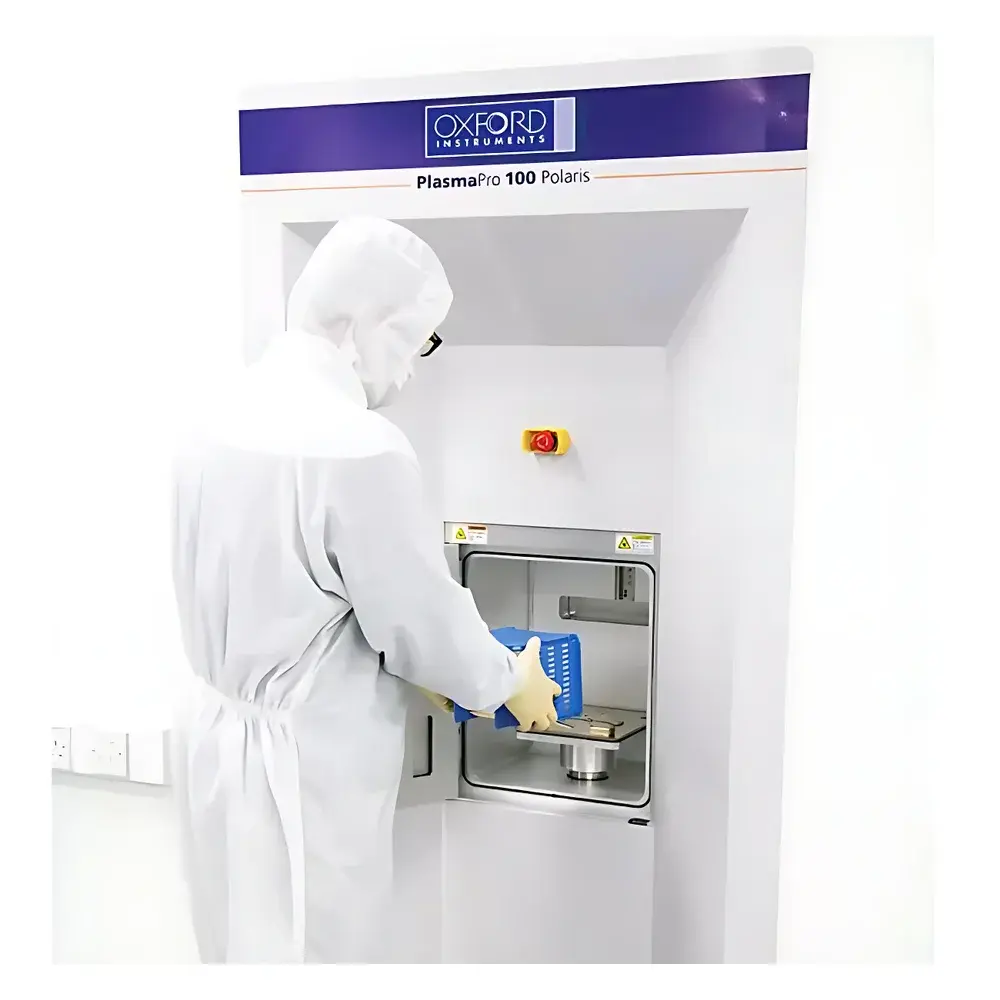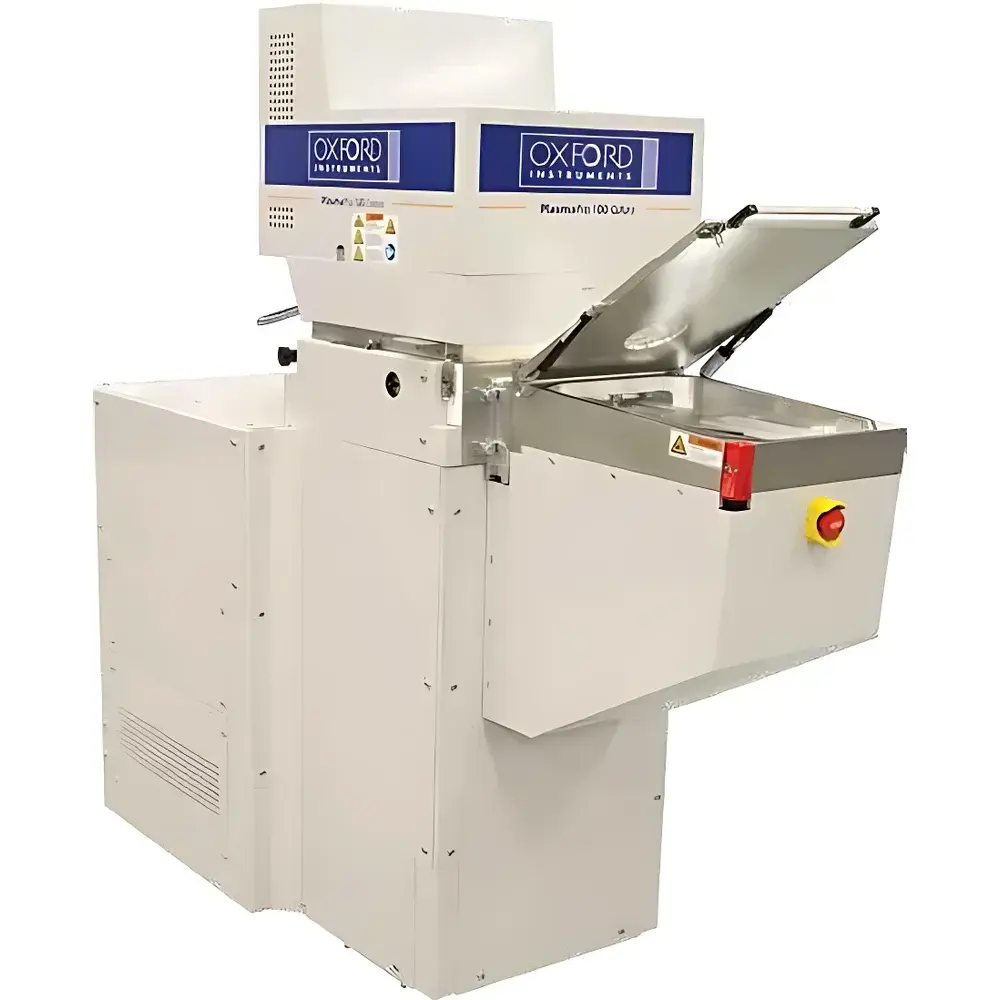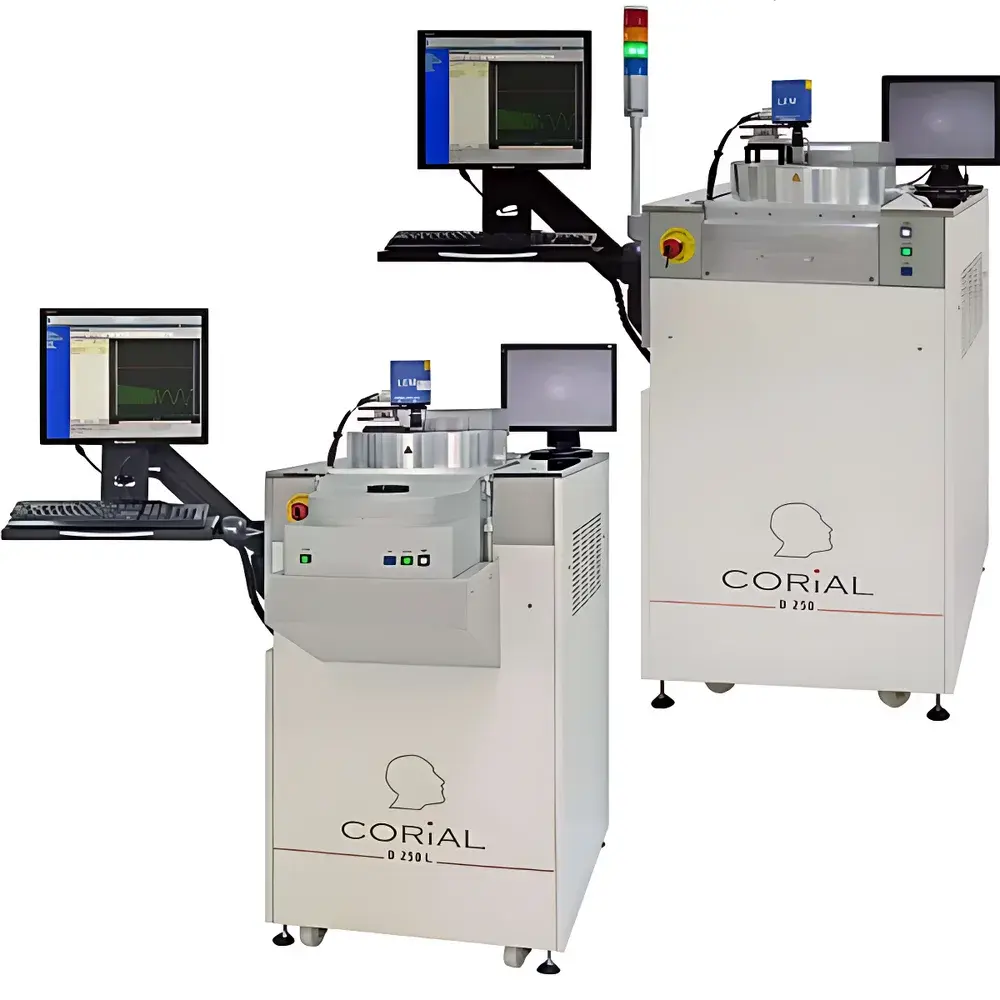
Corial D250L Plasma-Enhanced Chemical Vapor Deposition System
| Brand | Corial |
|---|---|
| Origin | France |
| Model | D250L |
| Heating Method | Hot-Wall |
| Deposition Rate | 520 nm/min |
| Process Gases | SiH₄, NH₃, N₂ |
| Deposited Films | SiO₂, Si₃N₄, SiOF, SiOCH, SiC |
| Base Vacuum | −300 to 50 mTorr |
| Operating Pressure | 0.2–2 Torr |
| Maximum Substrate Size | 200 mm (8-inch) wafers |
| Configuration | Load-Lock with Turbo-Molecular Pump (350 L/s) and Dry Scroll Pump (110 m³/h) |
| RF Power Supply | 300 W, 13.56 MHz |
| Integrated Controllers | TMP, Heater, HV/LV, Plasma Process Controller |
Overview
The Corial D250L is a fully integrated, load-lock configured plasma-enhanced chemical vapor deposition (PECVD) system engineered for high-precision thin-film synthesis in semiconductor fabrication and advanced R&D environments. Unlike thermal CVD systems, the D250L utilizes radiofrequency (13.56 MHz) plasma excitation to dissociate precursor gases—such as silane (SiH₄), ammonia (NH₃), and nitrogen (N₂)—at significantly lower substrate temperatures, enabling conformal, low-defect dielectric and passivation layers on temperature-sensitive substrates. Its hot-wall heating architecture ensures uniform thermal distribution across the reaction chamber, critical for reproducible stoichiometry and film stress control in SiO₂, Si₃N₄, SiOF, SiOCH, and SiC films. Designed and manufactured in France, the D250L complies with CE directives and integrates vacuum, gas delivery, RF power, and process control subsystems into a single, space-efficient platform suitable for Class 100 cleanroom integration.
Key Features
- Load-lock configuration with automated wafer transfer, minimizing exposure to ambient conditions and preserving base vacuum integrity between runs
- Dual-stage vacuum system: 350 L/s turbo-molecular pump backed by a 110 m³/h dry scroll pump, achieving base pressures from −300 to +50 mTorr (absolute)
- Precise pressure regulation across 0.2–2 Torr operating range via feedback-controlled throttle valve and capacitance manometer
- 300 W RF generator with impedance matching network optimized for stable plasma ignition and sustained discharge in low-pressure regimes
- Hot-wall heated chamber with independent temperature control (up to 400 °C typical), ensuring minimal thermal gradient across 200 mm wafers
- Modular gas manifold supporting up to three independently mass-flow-controlled precursors (MFCs calibrated for SiH₄, NH₃, N₂)
- Integrated process controller with real-time logging of RF forward/reflected power, chamber pressure, heater setpoint/actual, and pump status
Sample Compatibility & Compliance
The D250L accommodates substrates up to 200 mm (8-inch) diameter, including silicon, SOI, GaAs, and quartz wafers, with optional electrostatic or mechanical clamping. Chamber geometry and electrode design are optimized for uniform plasma density distribution, verified via Langmuir probe characterization during factory acceptance testing. The system meets ISO 14644-1 Class 5 (ISO Class 5) cleanroom compatibility requirements when installed with appropriate exhaust scrubbing and particle filtration. All electrical subsystems comply with IEC 61000-6-2 (EMC immunity) and IEC 61000-6-4 (EMC emission) standards. Software architecture supports audit trail generation and user access levels aligned with GLP and GMP documentation practices.
Software & Data Management
The Corial Process Control Software (v4.x) provides a Windows-based HMI with recipe-driven operation, real-time parameter visualization, and configurable alarm thresholds. Each process run generates a timestamped log file containing RF power history, pressure transients, gas flow profiles, and heater response curves—exportable in CSV or XML format for traceability. The software supports 21 CFR Part 11-compliant electronic signatures when deployed with domain-authenticated Windows accounts and encrypted database storage. Remote monitoring via Ethernet (TCP/IP) enables integration into Fab-wide MES platforms using standard SECS/GEM protocol extensions.
Applications
- Deposition of silicon nitride (Si₃N₄) etch-stop layers and gate spacers in CMOS backend-of-line (BEOL) processing
- Growth of low-k SiOCH and SiOF interlayer dielectrics for RC delay reduction in advanced nodes
- Passivation of III-V photonic devices using stoichiometrically tuned SiNₓ:H films
- Multi-layer stack fabrication for MEMS encapsulation, where compressive/tensile stress balance is controlled via RF power and NH₃/SiH₄ ratio
- R&D of carbon-doped oxide films for EUV lithography mask blanks requiring ultra-low absorption and high etch selectivity
FAQ
What is the typical film uniformity achievable on 200 mm wafers?
Film thickness uniformity (1σ) is typically ≤±3.5% across 200 mm wafers for SiO₂ and Si₃N₄ under optimized process conditions.
Does the system support remote diagnostics and predictive maintenance?
Yes—the embedded controller logs operational health metrics (pump speed, RF match stability, MFC drift) and supports secure remote access via VPN-configured VNC sessions for qualified service engineers.
Can the D250L be upgraded to accommodate 300 mm wafers?
No—the D250L chamber and load-lock are mechanically fixed for 200 mm substrates; Corial offers the D300 series for 300 mm compatibility.
Is ozone (O₃) or oxygen plasma capability available as an option?
O₂ plasma operation is supported with optional quartz showerhead modification and O₂-compatible MFC calibration; ozone generation is not implemented due to material compatibility constraints in the hot-wall chamber.
How is process repeatability validated during installation qualification?
IQ/OQ protocols include deposition of reference SiO₂ films on monitor wafers, followed by ellipsometry and FTIR analysis to verify refractive index (n = 1.46 ± 0.01), extinction coefficient (k < 0.001), and Si–O bond density per ASTM F1597.