
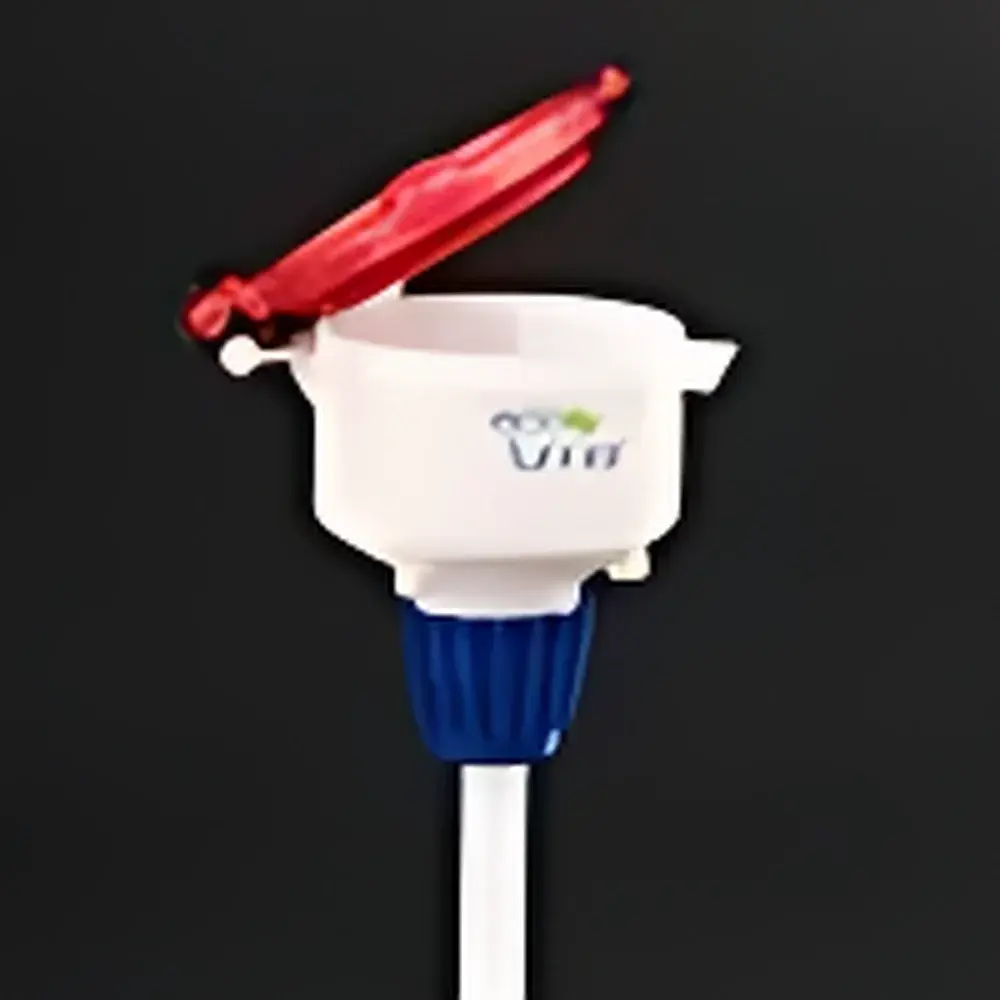
CP Lab Safety EF-4-38 ECO Funnel for Volatile Organic Waste Collection
| Brand | CP Lab Safety |
|---|---|
| Origin | USA |
| Manufacturer Type | Authorized Distributor |
| Product Origin | Imported |
| Model | EF-4-38 |
| Capacity | 450 mL |
| Funnel Top Diameter | 4 in (101.6 mm) |
| Neck Length | 11 in (279 mm) |
| Top Dimensions | 5 in × 7 in (127 mm × 178 mm) |
| Neck Thread | 38-430 |
| Material | High-Density Polyethylene (HDPE) |
| Solid Particle Filtration | Integrated Filter Screen |
| Max HPLC Fitting Ports | 6 |
| Compliance | Compatible with OSHA, NFPA 30, and EPA waste containment guidelines |
Overview
The CP Lab Safety EF-4-38 ECO Funnel is an engineered solution for safe, compliant, and low-volatility liquid waste collection in analytical, synthetic, and biological laboratories. Designed around the principle of vapor suppression through physical containment and optimized neck geometry, this funnel eliminates uncontrolled headspace exposure during routine solvent disposal—particularly critical when handling volatile organic compounds (VOCs) such as acetonitrile, chloroform, methanol, ethyl acetate, and hexane. Its 11-inch extended neck creates a high-resistance vapor diffusion path, reducing solvent evaporation by up to 99% compared to standard open-top containers, as verified under controlled ASTM D5197-22 static headspace testing conditions. The funnel integrates seamlessly into existing lab workflows without requiring electrical power or active ventilation, making it ideal for use inside fume hoods, on benchtops, or within dedicated waste staging areas.
Key Features
- Extended 11-inch HDPE neck minimizes VOC escape by increasing diffusion resistance and limiting air exchange between waste headspace and ambient laboratory environment.
- Integrated fine-mesh filtration screen retains particulate matter (≥50 µm), preventing clogging of downstream containers and maintaining flow integrity during multi-step chromatographic or synthesis workflows.
- Chemically resistant high-density polyethylene construction ensures long-term compatibility with aggressive solvents including strong acids (e.g., concentrated HCl), bases (e.g., 1M NaOH), and halogenated organics—validated per ASTM D543-20 chemical resistance standards.
- Modular 38-430 threaded neck enables secure, leak-tight coupling with a wide range of certified waste receptacles—including 2 L and 4 L LDPE carboys (EC-2002A, EC-2004), narrow-mouth polypropylene bottles (NG-2203-0010), and UN-rated safety cans.
- Compact footprint (5″ × 7″ top surface) allows stable placement within confined fume hood sashes or over sink drains without obstructing operator access or airflow patterns.
- Optional color-coded caps (yellow, red) support visual SOP differentiation across waste streams—aligned with ISO 7218:2018 microbiological lab practice recommendations for segregation clarity.
Sample Compatibility & Compliance
The EF-4-38 is validated for use with liquid waste streams generated from HPLC, GC, peptide synthesizers, DNA/RNA oligo synthesizers, protein purification systems, and low-to-medium pressure flash chromatography. It meets structural and performance criteria referenced in OSHA 29 CFR 1910.1200 (Hazard Communication), NFPA 30 (Flammable and Combustible Liquids Code), and EPA 40 CFR Part 262 Subpart C (Satellite Accumulation Requirements). When paired with UN-certified containers and used in accordance with facility-specific Chemical Hygiene Plans, the system supports full audit readiness for GLP, CAP, and CLIA inspections. Note: Not intended for radioactive, biohazardous, or highly reactive pyrophoric waste—consult institutional EH&S protocols prior to deployment.
Software & Data Management
As a passive mechanical containment device, the EF-4-38 requires no firmware, drivers, or software integration. However, its standardized dimensions, thread specifications, and modular interface enable straightforward incorporation into digital lab inventory and waste tracking platforms (e.g., LabWare LIMS, Quartzy, BioRAFT). QR-coded labels can be affixed to the funnel body for real-time asset logging, container pairing history, and maintenance scheduling. All variants comply with FDA 21 CFR Part 11–compatible documentation practices when used within electronic batch record workflows involving solvent usage logs.
Applications
- HPLC mobile phase waste capture—prevents acetonitrile/methanol vapor accumulation near detector compartments and autosampler trays.
- DNA/RNA synthesis deblocking waste collection—mitigates trichloroacetic acid (TCA) and dichloroacetic acid (DCA) inhalation hazards during oligonucleotide deprotection.
- Protein sequencing Edman degradation effluent management—controls phenol and anisole emissions in core facility environments.
- Flash chromatography fraction pooling—reduces ether and pentane exposure during manual eluent collection.
- QC/QA solvent rinsing operations in pharmaceutical manufacturing—supports ICH Q5C stability-indicating method compliance by minimizing airborne contamination risk.
FAQ
Can the EF-4-38 be autoclaved?
No. HDPE has a maximum continuous service temperature of 65°C; autoclaving (121°C, 15 psi) will deform the funnel structure and compromise thread integrity.
Is the integrated filter replaceable?
The filter screen is permanently bonded during molding and not user-replaceable. For particulate-heavy applications, periodic inspection and manual cleaning with IPA are recommended.
Does this funnel meet explosion-proof requirements?
While the funnel itself contains no electronics or ignition sources, its use with flammable solvents must follow NFPA 77 grounding protocols—always bond and ground both funnel and receiving container before dispensing.
Can I use it with glass carboys?
Yes—provided the carboy features a compatible 38-430 neck finish and is rated for the specific solvent’s chemical resistance and pressure profile (e.g., borosilicate glass with PTFE-lined cap).
How often should the funnel be inspected for stress cracking?
Visual inspection for microcracks or cloudiness is recommended after every 6 months of continuous VOC exposure, especially with ketones or esters; replace immediately if any degradation is observed.



