
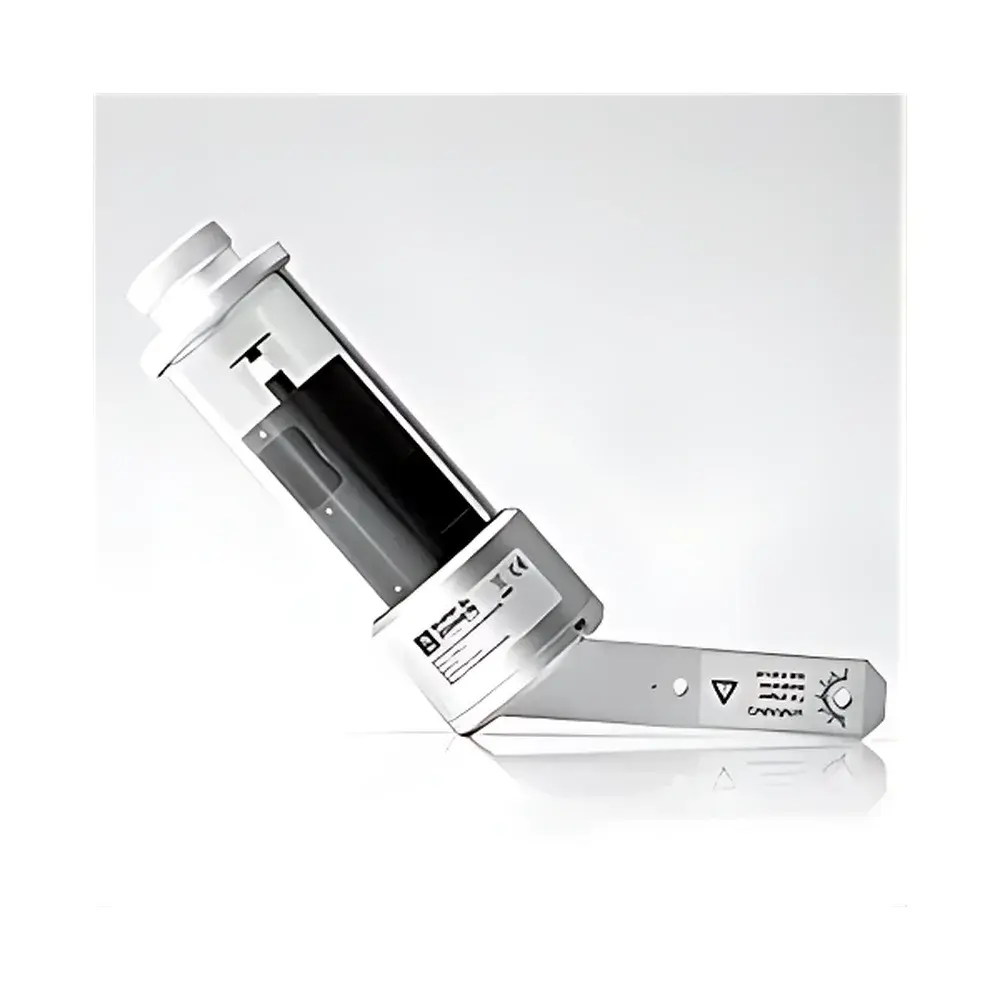
CSD3 Sunshine Duration Sensor by Kipp & Zonen
| Brand | Kipp & Zonen |
|---|---|
| Origin | Netherlands |
| Model | CSD3 |
| Spectral Range | 400–1100 nm |
| Operating Temperature | −40 to +70 °C |
| Sunshine Signal Output | 1 ± 0.1 V (for direct irradiance > 120 W/m²) |
| Accuracy | >90% (monthly sunshine hours) |
| Accuracy | >90% (clear-sky direct signal) |
| Analog Output | 1 mV/(W/m²) |
| Long-term Drift | <2 %/year |
| Temperature Response | <0.1 °C |
| Response Time | <1 ms |
| Power Supply | 12 VDC |
| Built-in Heater | Yes |
| Desiccant Indicator | Integrated humidity indicator |
| Cable Connector | Waterproof IP68-rated mating connector |
Overview
The CSD3 Sunshine Duration Sensor, engineered by Kipp & Zonen in the Netherlands, is a solid-state, maintenance-optimized instrument designed for continuous, high-reliability measurement of sunshine duration in meteorological and climatological monitoring networks. It operates on the World Meteorological Organization (WMO) definition: sunshine duration is recorded when direct solar irradiance exceeds a threshold of 120 W/m². Unlike traditional Campbell-Stokes recorders or rotating-shadow-band instruments, the CSD3 employs a passive optical architecture—featuring three spectrally matched silicon photodiodes coupled with precision-engineered diffusers—to generate a stable analog signal proportional to direct normal irradiance (DNI). Its absence of moving parts eliminates mechanical wear, ensuring long-term stability and minimal calibration drift. The sensor’s core functionality is binary state detection (sunshine/no-sunshine), but its calibrated analog output enables post-hoc reconstruction of DNI time series, supporting secondary analyses such as solar resource assessment and PV performance modeling.
Key Features
- Solid-state design with no moving parts—ensures high operational uptime and low lifecycle maintenance cost
- Triple photodiode configuration with custom scattering diffusers for uniform angular response and minimized cosine error
- Integrated 12 VDC-powered heating element to prevent precipitation accumulation (rain, snow, frost) on the optical surface
- Optional internal thermostat for heater control—enables temperature-regulated operation in extreme cold climates
- Visual desiccant humidity indicator on the drying cartridge—provides immediate field-readiness feedback without disassembly
- IP68-rated waterproof cable connector system—facilitates rapid installation, field replacement, and service under all weather conditions
- Larger-thread desiccant housing screws—extend desiccant service intervals and simplify routine maintenance in remote stations
Sample Compatibility & Compliance
The CSD3 is compatible with standard meteorological data loggers supporting analog voltage input (0–5 V or 0–10 V ranges) and digital TTL-level switching inputs. Its spectral response (400–1100 nm) aligns with the photopic and near-infrared region relevant to solar energy applications and WMO-compliant sunshine recording. The sensor meets IEC 61724-1:2021 requirements for solar irradiance instrumentation used in PV system performance monitoring. While not certified to ISO/IEC 17025 as a standalone calibration laboratory, it is supplied with factory calibration traceable to NIST-traceable reference cells and validated against WMO sunshine duration protocols. Its design supports compliance with national meteorological service specifications—including those of DWD (Germany), Met Office (UK), and NOAA/NWS (USA)—and integrates seamlessly into networks requiring GLP-aligned data provenance for climate trend analysis.
Software & Data Management
The CSD3 delivers two independent output channels: a TTL-compatible digital switch (high/low) representing real-time sunshine status, and a high-fidelity analog voltage output (1 mV per W/m²) representing instantaneous DNI. When interfaced with modern data acquisition systems—such as Campbell Scientific CR6, Delta-T DL6, or HOBO RX3000—the analog signal can be logged at sub-second resolution, enabling post-processing algorithms to derive sunshine thresholds, calculate daily totals, and cross-validate against pyrheliometer-derived DNI. Firmware-level integration supports automated heater enable/disable logic based on ambient temperature or RH thresholds. All raw outputs are compatible with common environmental data management platforms (e.g., ELOG, MetVIEW, PVsyst) and support audit-ready metadata tagging for traceability in regulatory or research-grade datasets.
Applications
- Long-term climate monitoring networks (GCOS, GSN, BSRN)
- Solar energy resource assessment for utility-scale PV and CSP site selection
- Validation of satellite-derived solar irradiance products (e.g., CAMS, NSRDB)
- Agricultural meteorology—evapotranspiration modeling and phenological studies
- Aviation weather services requiring precise sunshine duration for visibility and fog forecasting
- Educational and research installations where robustness, low power consumption, and calibration transparency are critical
FAQ
How does the CSD3 differ from a pyrheliometer?
The CSD3 is not a radiometric instrument—it does not measure absolute irradiance with SI-traceable uncertainty. Instead, it provides a highly stable, threshold-based sunshine classifier and a relative DNI proxy. A pyrheliometer (e.g., Kipp & Zonen CHP1) measures absolute DNI with 90% agreement in monthly sunshine hour totals against such references.
Is the heater always active?
No—the heater operates only when powered and may be controlled externally via a digital output or internally via an optional thermostat module set to activate below user-defined temperatures (e.g., <−5 °C).
What maintenance is required beyond desiccant replacement?
Annual visual inspection of the diffuser surface for dust or biological growth is recommended. Cleaning should be performed using lens-grade tissue and isopropyl alcohol—no abrasives or solvents. No recalibration is typically needed within the first two years if operated within specification limits.
Can the CSD3 be used indoors or under glass?
No. Its optical design assumes unobstructed hemispherical exposure. Installation under glazing introduces spectral filtering, reflection losses, and thermal offset—invalidating both the 120 W/m² threshold and analog output linearity.
Does the CSD3 comply with FDA 21 CFR Part 11 or similar regulatory requirements?
It is not a regulated medical or pharmaceutical device. However, its deterministic analog/digital outputs, timestamped logging capability, and hardware-level heater control logic support ALCOA+ principles (Attributable, Legible, Contemporaneous, Original, Accurate) when integrated into validated environmental monitoring systems.
Related Products







