
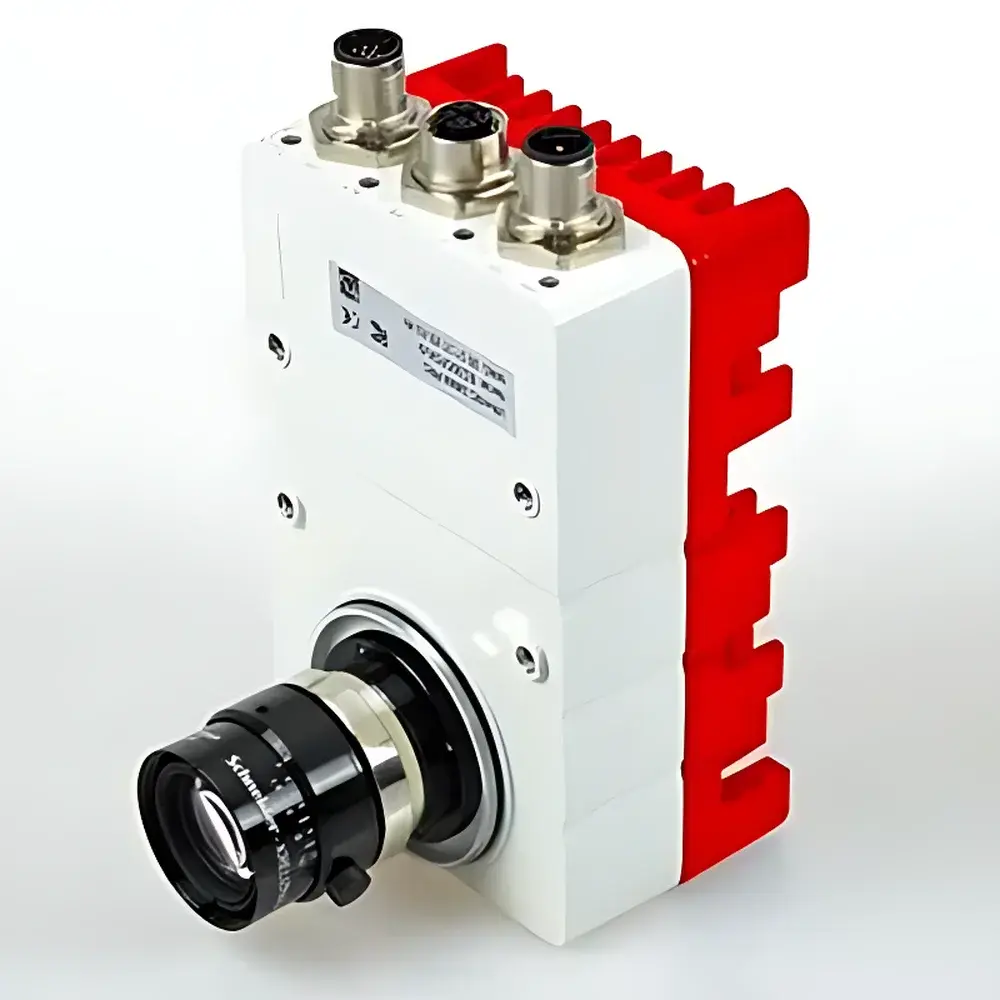
Cubert Q128/Q137 Industrial-Grade Real-Time Hyperspectral Imaging Spectrometer
| Brand | Cubert |
|---|---|
| Origin | Germany |
| Model | Q128/Q137 |
| Operating Principle | Filter-based (Micro-Optical Filter Array) |
| Imaging Modality | Snapshot (Single-Lens, Multi-Channel Simultaneous Acquisition) |
| Application Platform | Ground-Based & Airborne Deployment |
| Spectral Range | Q128: 450–625 nm |
| Q137 | 600–875 nm |
| Spectral Resolution | >20 nm (FWHM) |
| Spatial Resolution | 2 MP (1920 × 1080 pixels) |
| Field of View (TFOV) | Interchangeable C-mount lenses (10 mm / 23 mm / 35 mm options) |
| Instantaneous Field of View (IFOV) | Lens-dependent, configurable |
| Frame Rate | 20 Hyperspectral Cubes/s |
| Detector | Si CMOS, 10-bit digitization |
| Integration Time | 100 µs minimum |
| Interface | USB 3.0, Gigabit Ethernet, Hardware Trigger |
| Power Supply | DC 24 V, 15 W |
| Operating Temperature | 0–40 °C (non-condensing) |
| Weight | 600 g |
| Enclosure | IP-rated industrial housing |
Overview
The Cubert Q128 and Q137 are industrial-grade, snapshot hyperspectral imaging spectrometers engineered for real-time, spatially resolved spectral analysis in demanding operational environments. Unlike scanning or push-broom systems, these instruments employ a monolithic micro-optical filter array integrated directly onto a high-speed Si CMOS sensor—enabling true frame-synchronous acquisition of 16 (Q128) or 25 (Q137) discrete spectral bands within a single exposure. This filter-based, single-lens architecture eliminates parallax-induced misregistration common in multi-lens multispectral designs and ensures pixel-level spectral-spatial correspondence across all bands. The system operates on the principle of spatial-spectral multiplexing: each pixel records intensity at a predefined central wavelength, with spectral bandwidths exceeding 20 nm (FWHM), delivering calibrated radiometric data cubes (x, y, λ) at up to 20 full cubes per second. Designed for embedded integration, the Q-series requires no external computer for basic acquisition—data is stored internally on removable SD cards—and supports deterministic triggering, low-latency streaming via GigE, and deterministic synchronization with motion platforms or process lines.
Key Features
- Snapshot acquisition architecture: All spectral channels captured simultaneously in a single exposure—no motion artifacts or temporal drift between bands.
- Industrial ruggedization: Sealed aluminum housing rated for non-condensing ambient operation from 0 °C to 40 °C; shock- and vibration-resistant construction compliant with IEC 60068-2 environmental test standards.
- Modular optical interface: Standard C-mount lens compatibility enables field-of-view customization using 10 mm (wide-angle), 23 mm (standard), or 35 mm (telephoto) optics—supporting variable ground sampling distances and airborne standoff configurations.
- Onboard intelligence: Integrated FPGA and ARM processor enable real-time cube generation, metadata embedding (GPS, IMU, timestamp), lossless compression (Huffman-coded), and autonomous storage to industrial-grade microSD cards (up to 512 GB).
- Dual-mode operation: Standalone mode for embedded OEM integration; host-connected mode with Cubert Utils software for advanced calibration, spectral unmixing, and batch processing.
- Deterministic I/O: Hardware trigger input/output, TTL-sync capability, and programmable GPIO pins for precise coordination with conveyors, UAV gimbals, or PLC-controlled production systems.
Sample Compatibility & Compliance
The Q128/Q137 is optimized for reflective and emissive surface characterization across solid, granular, and semi-fluid substrates—including agricultural biomass, pharmaceutical tablets, recycled plastics, mineral ores, and painted or coated industrial components. Its spectral coverage bridges key diagnostic regions: Q128 (450–625 nm) targets chlorophyll-a absorption, anthocyanin response, and pigment degradation signatures; Q137 (600–875 nm) resolves cellulose/lignin ratios, moisture content indicators (e.g., water absorption at ~970 nm), and NIR-based material identification. The instrument complies with CE marking requirements for electromagnetic compatibility (EN 61326-1) and safety (EN 61010-1). Data integrity workflows support GLP-aligned documentation: Cubert Utils software provides audit-trail logging, user access controls, and export formats compatible with ASTM E131-22 (Standard Terminology Relating to Molecular Spectroscopy) and ISO/IEC 17025 traceability frameworks.
Software & Data Management
Cubert Utils is a cross-platform (Windows/Linux/macOS) application providing end-to-end spectral data lifecycle management. It delivers factory-calibrated radiometric correction (dark current subtraction, flat-field normalization, spectral responsivity mapping), geometric correction (lens distortion compensation), and export to industry-standard formats including ENVI .hdr/.dat, HDF5, and TIFF stacks with embedded spectral metadata. Advanced modules support spectral angle mapper (SAM), constrained energy minimization (CEM), and k-means clustering for unsupervised classification. For regulated environments, optional FDA 21 CFR Part 11 compliance packages include electronic signatures, role-based permissions, and immutable audit logs. Raw cube streams are accessible via GigE Vision protocol (GenICam-compliant), enabling direct ingestion into machine vision pipelines (e.g., HALCON, OpenCV) or MES/SCADA systems via OPC UA gateways.
Applications
- Real-time quality control in food processing: Detection of foreign material, bruising in fruit, mold contamination in grains, and fat/moisture distribution in meat products.
- Pharmaceutical manufacturing: Verification of blend uniformity, coating thickness consistency, and API concentration gradients in tablet cores using NIR spectral fingerprints.
- Recycling automation: High-speed sorting of polymer types (PET, HDPE, PP) and composite materials based on characteristic absorption features in the 600–875 nm range.
- Precision agriculture: UAV-mounted crop health assessment via NDVI, PRI, and MCARI indices derived from synchronized visible-NIR bands.
- Defect detection in additive manufacturing: In-process monitoring of layer adhesion anomalies, porosity, and thermal history effects through spectral reflectance variance mapping.
- Environmental remote sensing: Ground-based validation of satellite-derived vegetation indices and soil organic carbon estimation models.
FAQ
Does the Q128/Q137 require external cooling or temperature stabilization?
No—the system operates passively within its specified 0–40 °C ambient range and incorporates on-sensor dark frame compensation to maintain radiometric stability without thermoelectric coolers.
Can spectral calibration be performed in-field?
Yes—Cubert Utils includes a guided workflow for reference panel-based reflectance calibration using NIST-traceable Spectralon® targets, supporting recalibration before or after deployment.
Is raw sensor data accessible for custom algorithm development?
Yes—binary cube files (.qcube) contain uncorrected sensor counts, embedded calibration coefficients, and full metadata; SDKs for Python, C++, and MATLAB are available under NDA.
What is the maximum sustained acquisition duration in standalone mode?
Limited only by SD card capacity and thermal management—tested continuous recording exceeds 4 hours at full frame rate with 128 GB UHS-I cards.
How is geometric accuracy ensured across different lenses?
Each C-mount lens option is characterized during factory calibration; lens-specific distortion maps and IFOV lookup tables are embedded in firmware and applied automatically during cube reconstruction.






