
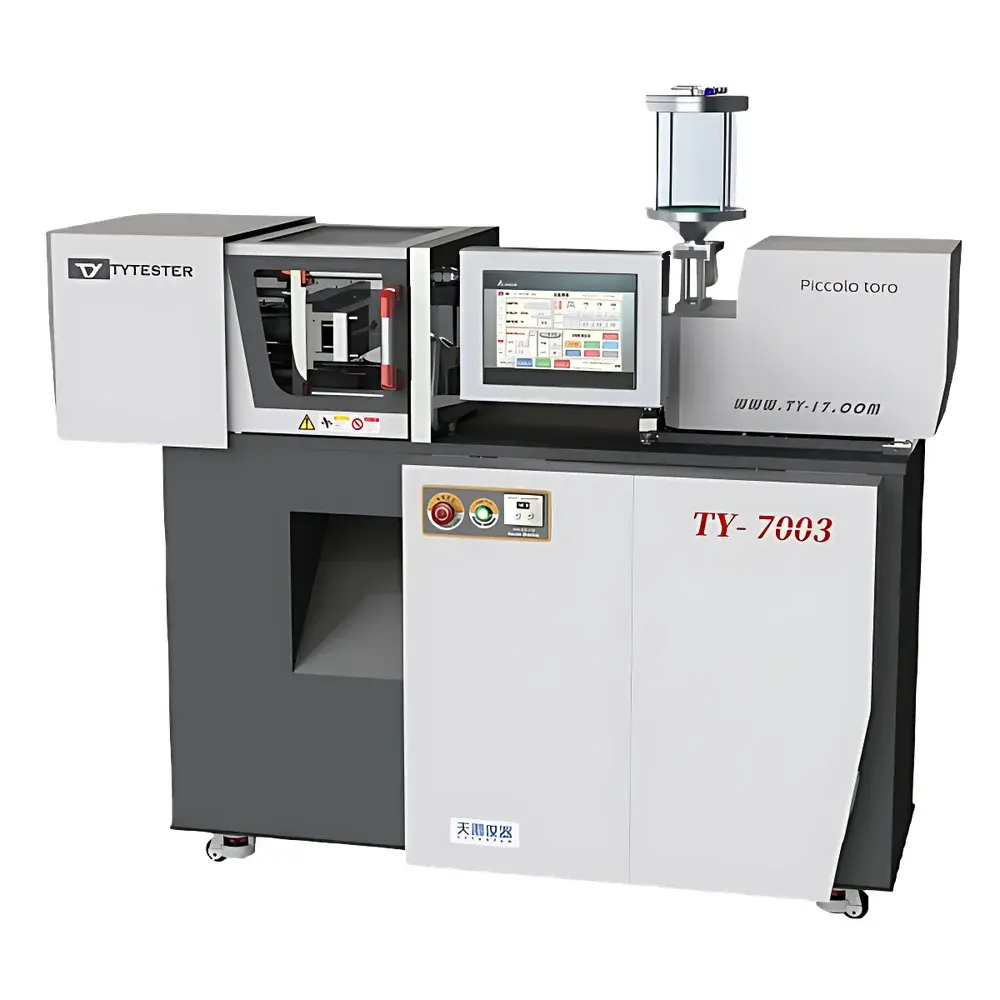
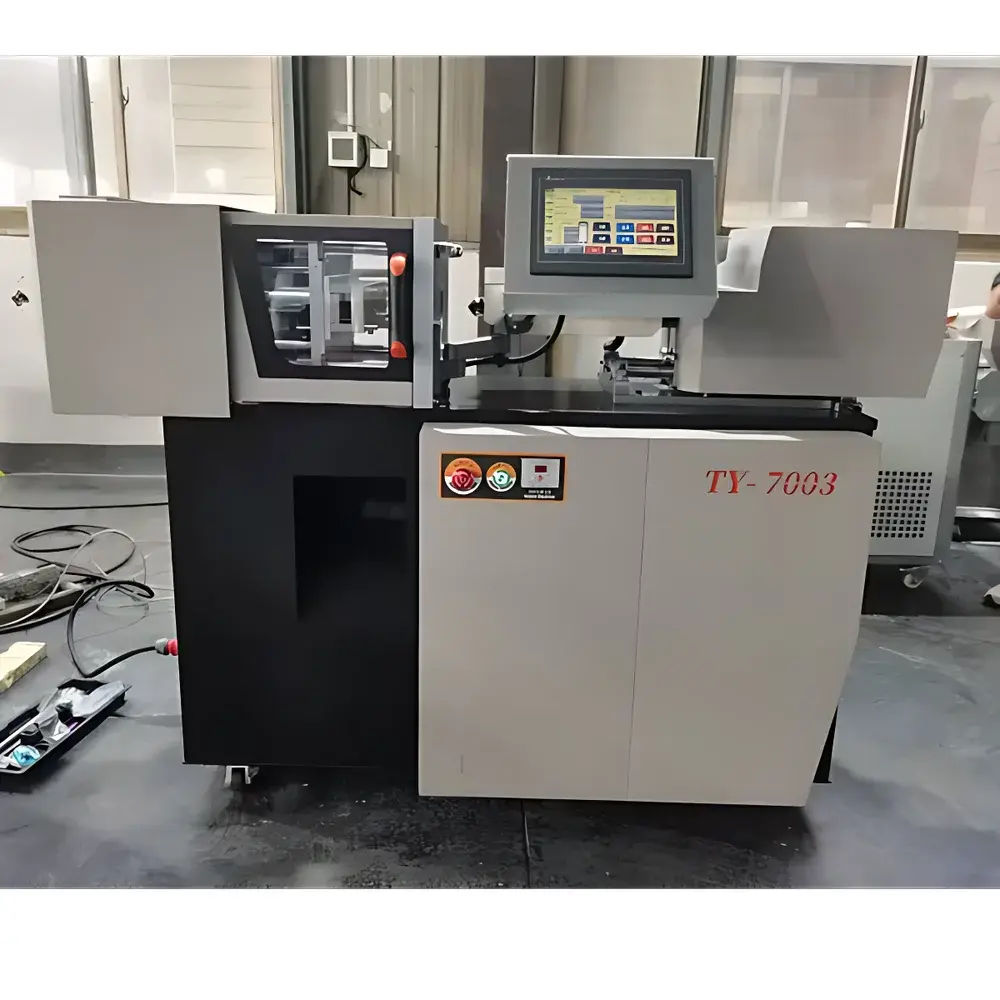
Lishumei TY-7003H4 PEEK-Specific Laboratory Injection Molding Machine
| Brand | Lishumei |
|---|---|
| Origin | Jiangsu, China |
| Manufacturer Type | Authorized Distributor |
| Country of Origin | China |
| Model | TY-7003H4 |
| Screw Diameter | 20 mm |
| Length-to-Diameter Ratio | 20:1 |
| Clamping Force | 150 kN (15 t) |
| Maximum Shot Volume | 28 cm³ |
| Overall Dimensions | 1766 × 600 × 1226 mm |
| Barrel Temperature Range | RT to 450 °C |
| Mold Temperature Control (Optional) | RT+10 °C to 200 °C, ±0.5 °C stability |
| Power Supply | 3-phase 5-wire AC 380 V ±10%, 50/60 Hz, 6.5 kW |
Overview
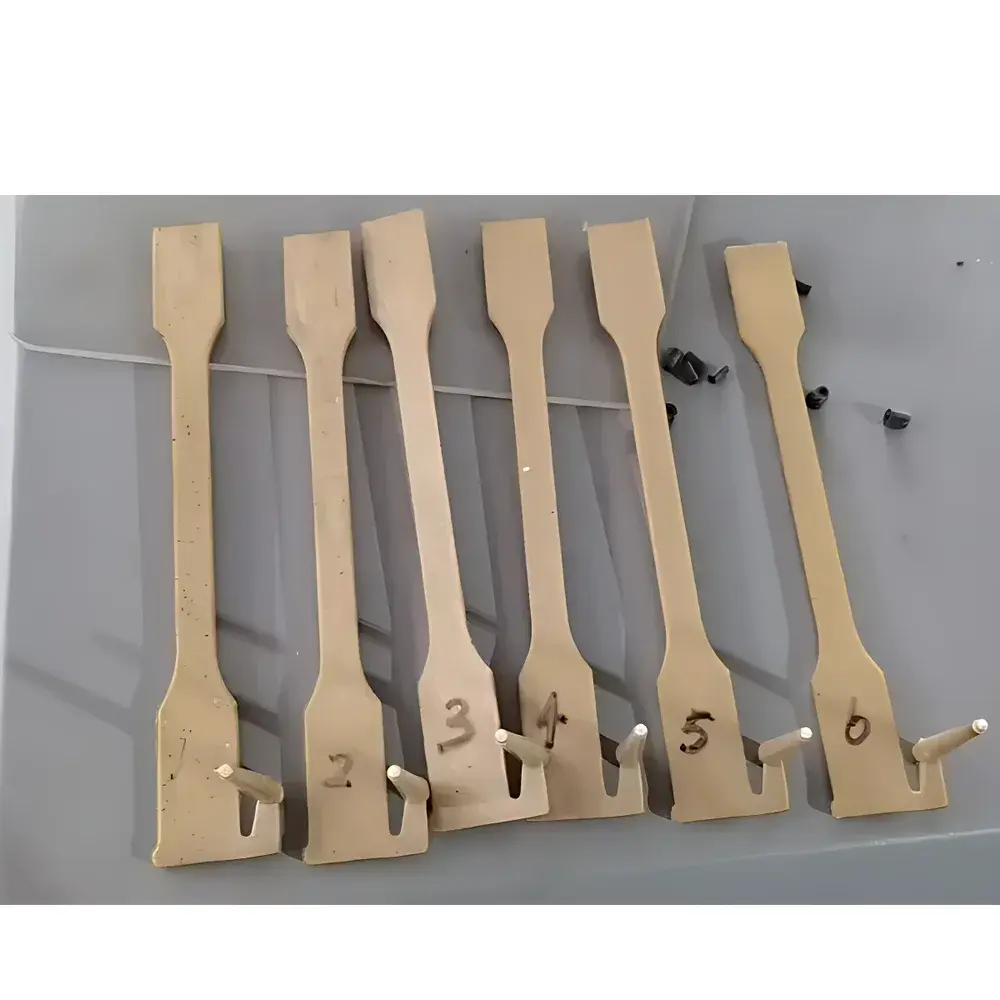
The Lishumei TY-7003H4 is a precision-engineered laboratory-scale injection molding machine specifically optimized for processing high-performance thermoplastics—most notably polyetheretherketone (PEEK)—under controlled, repeatable conditions. Unlike industrial production machines, the TY-7003H4 implements a scaled-down yet functionally complete architecture grounded in reciprocating screw injection principles: plasticization occurs via a rotating 20 mm diameter screw with a 20:1 L/D ratio inside a three-zone heated barrel, followed by precise metering and hydraulic-assisted injection into temperature-controlled molds. Its design prioritizes thermal stability up to 450 °C, critical for achieving full crystallinity and mechanical integrity in PEEK specimens. The system supports ASTM D638 (tensile bars), ASTM D790 (flexural bars), ISO 178, ISO 180 (impact notched/unnotched), and other standardized test specimen geometries—including dumbbell, three-point bending, and Charpy/Izod configurations—enabling direct correlation between lab-scale processing parameters and end-use material performance.
Key Features
- High-temperature barrel system with independent three-zone PID control (RT–450 °C), calibrated to ±1 °C accuracy under steady-state operation
- Reciprocating screw plasticization with adjustable back pressure (0.5–6 MPa) and segmented injection profiling (up to 3 stages), supporting precise melt homogenization and shear history control
- Hydraulic clamping unit delivering programmable force from 0–150 kN (0–15 t), with real-time pressure feedback and overload protection
- PLC-based HMI with 7-inch color touchscreen interface, enabling one-touch cycle initiation, parameter logging, and recall of up to 12 user-defined process recipes
- Quick-change mold core system compatible with standard ISO 294-4 and ASTM D638 mold inserts; accommodates mold plates up to 360 × 90 × 72 mm (L×W×H)
- Dual-safety architecture integrating mechanical limit switches and electronic emergency stop circuits compliant with IEC 60204-1
- Integrated shot volume control (0–28 cm³) with 0.1 mm plunger position resolution and pressure–position–time (PVT) closed-loop regulation
Sample Compatibility & Compliance
The TY-7003H4 is validated for consistent molding of engineering thermoplastics requiring elevated processing temperatures, including PEEK, PEK, PES, PSU, and high-heat nylons. Its thermal uniformity and low thermal mass enable rapid stabilization at 380–420 °C—the optimal range for PEEK semi-crystalline development. All critical temperature zones meet ASTM E220 calibration traceability requirements when operated with certified reference thermocouples. Optional mold heating modules (R.T.+10 °C to 200 °C, ±0.5 °C stability) support controlled cooling rates essential for crystallinity modulation per ISO 10350-2. The machine’s electrical safety, noise emission (<72 dB(A)), and exhaust compatibility align with CE machinery directive 2006/42/EC and ISO 14122-3 for laboratory equipment integration.
Software & Data Management
Process data—including barrel zone temperatures, injection pressure profiles, clamp force traces, and cycle timing—is timestamped and logged internally at 10 Hz sampling rate. Export is supported via USB 2.0 to CSV or Excel-compatible formats for post-processing in statistical analysis tools (e.g., JMP, Minitab). The embedded firmware supports audit trail functionality for GLP-compliant environments: all parameter changes, recipe loads, and operator logins are recorded with user ID and timestamp. While not FDA 21 CFR Part 11 certified out-of-the-box, the system architecture permits third-party validation packages for regulated QC laboratories performing material qualification per USP or ISO 10993-12.
Applications
- R&D of PEEK-based formulations (e.g., carbon-fiber-reinforced, fluoropolymer-blended, or radiopaque composites) where batch-to-batch consistency is governed by melt temperature, shear rate, and cooling profile
- Pre-certification testing of medical-grade PEEK components per ISO 5832-11 and ASTM F2026 prior to full-scale tooling investment
- Academic polymer processing education: visualization of viscosity–temperature–shear relationships, crystallization kinetics, and weld line formation mechanisms
- QC labs producing reference specimens for tensile, flexural, impact, and creep testing in accordance with ISO 527, ISO 178, ISO 180, and ASTM D2990
- Validation of gate design, packing pressure, and hold time effects on dimensional stability and internal void content using micro-CT or DSC cross-correlation
FAQ
What materials can be processed beyond PEEK?
The TY-7003H4 supports any thermoplastic with a melting point ≤450 °C, including PEI, PPS, LCP, and high-temperature nylons. Amorphous grades require lower barrel setpoints and shorter residence times to prevent degradation.
Is mold temperature control included as standard?
Mold heating is optional; standard configuration includes only barrel heating. The electric cartridge heater module (R.T.+10 °C to 200 °C) must be specified at order entry.
Can the machine integrate with external data acquisition systems?
Yes—RS-485 Modbus RTU and analog 4–20 mA outputs are provided for external PLC or SCADA connectivity, enabling synchronized monitoring of pressure, temperature, and position signals.
What maintenance intervals are recommended?
Screw/barrel inspection every 500 operating hours; hydraulic oil replacement every 2,000 hours or biannually; thermocouple calibration annually or per ISO/IEC 17025 internal procedure.
Does the system support ISO/ASTM-compliant specimen geometry verification?
While the machine produces nominal dimensions per standard mold cavities, final specimen verification requires post-molding metrology (e.g., CMM or optical profilometry) per ISO 294-4 Annex A tolerances.







