
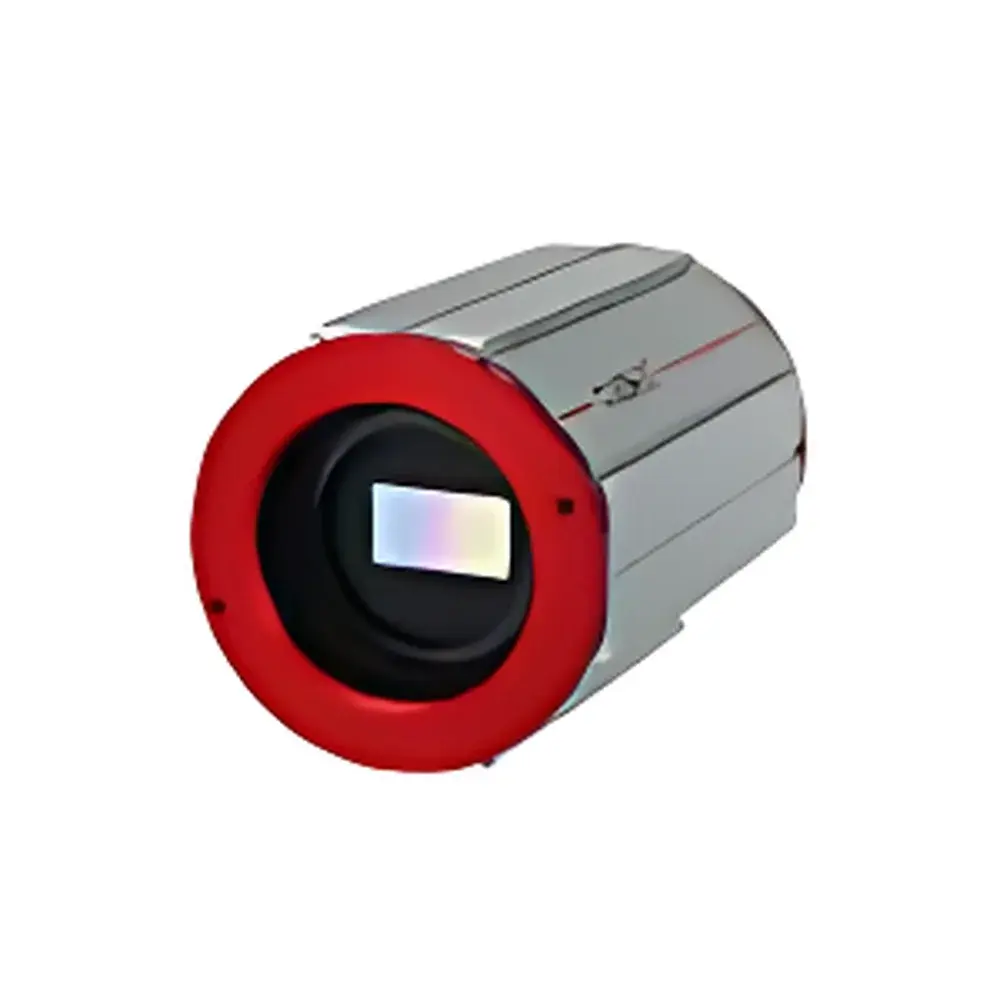
Cubert Q20 Hyperspectral Imaging Instrument
| Brand | Cubert |
|---|---|
| Origin | Germany |
| Model | Q20 |
| Spectral Range | 450–850 nm |
| Spectral Resolution | 4 nm |
| Frame Rate | 6 cubes/s |
| Spatial Resolution (IFOV) | 0.5 mrad |
| Imaging Modality | Snapshot Dispersion-Based |
| Operating Environment | Ground-based / Laboratory-Mounted |
| Enclosure Rating | IP65 |
| Weight | 1500 g |
| Sensor | 20 MP CMOS |
| Number of Spectral Bands | 125 |
| Principle | Snapshot Light-Field Hyperspectral Imaging |
Overview
The Cubert Q20 is a snapshot hyperspectral imaging instrument engineered for high-fidelity, real-time spectral-spatial data acquisition in ground-based and laboratory environments. Unlike scanning or tunable-filter systems, the Q20 leverages patented light-field imaging architecture—integrating micro-lens array optics with a high-resolution 20 MP CMOS sensor—to capture full hyperspectral datacubes (x, y, λ) in a single exposure. This eliminates motion-induced artifacts and enables frame-synchronous acquisition across 125 discrete spectral bands spanning the visible to near-infrared range (450–850 nm) at 4 nm spectral resolution. Designed for industrial robustness and scientific repeatability, the Q20 operates without mechanical scanning components, delivering intrinsic stability and long-term calibration integrity. Its optical design conforms to fundamental principles of dispersion-based spectral encoding, where spatially resolved spectral information is optically multiplexed onto the sensor plane and computationally demultiplexed using validated reconstruction algorithms.
Key Features
- Snapshot acquisition: Captures complete hyperspectral datacubes (125 bands × 20 MP spatial grid) in a single exposure—no push-broom scanning or filter wheel movement required.
- Light-field optical architecture: Combines micro-optic lenslet array with dispersion optics to encode spectral and spatial dimensions simultaneously on a monolithic CMOS sensor.
- IP65-rated ruggedized enclosure: Sealed against dust and low-pressure water jets; suitable for factory floor deployment, field-portable operation, and vibration-prone environments.
- Compact form factor: 1500 g mass and modular mounting interface support integration into robotic arms, UAV gimbals (with appropriate stabilization), or benchtop optical tables.
- Real-time throughput: Sustained acquisition rate of 6 calibrated datacubes per second—enabling dynamic process monitoring and inline quality control applications.
- Factory-calibrated radiometric response: NIST-traceable spectral sensitivity curves provided per unit; supports quantitative reflectance and radiance measurements under controlled illumination.
Sample Compatibility & Compliance
The Q20 is optimized for reflective and transmissive measurements of solid, granular, and semi-solid samples under ambient or controlled lighting (e.g., halogen, LED, or pulsed xenon sources). It supports macro-scale imaging of objects ranging from 1 cm² to >1 m² (dependent on working distance and lens configuration). The system complies with CE marking requirements for electromagnetic compatibility (EMC Directive 2014/30/EU) and low-voltage safety (LVD Directive 2014/35/EU). While not certified for medical device use, its radiometric performance meets ASTM E275 and ISO 13406-2 standards for imaging sensor characterization. Data acquisition workflows are compatible with GLP-compliant documentation when paired with validated third-party software platforms supporting audit trails and electronic signatures.
Software & Data Management
The Q20 ships with Cubert’s proprietary HyperSpectral Studio (HSS) v4.x, a Windows-based application providing real-time preview, onboard calibration (dark current, flat-field, spectral alignment), and export in ENVI-compatible BIL/BIP formats. HSS supports batch processing, region-of-interest (ROI) spectral averaging, and basic chemometric tools (PCA, endmember extraction). For regulatory environments, the instrument integrates with enterprise-grade platforms such as MATLAB R2023a+ (via Image Acquisition Toolbox), Python (using hyperspy and scikit-image libraries), and LabVIEW 2022 SP1 via SDK. All raw and processed datasets retain embedded metadata—including GPS timestamp (when synchronized), exposure parameters, and temperature-stabilized detector status—for traceability in FDA 21 CFR Part 11–aligned workflows.
Applications
- Industrial sorting: Real-time identification of material composition, moisture content, or contamination in food, pharmaceutical, and recycling streams.
- Agricultural phenotyping: Canopy-level assessment of chlorophyll content, nitrogen status, and water stress indices (e.g., NDVI, PRI) without scanning artifacts.
- Forensic document analysis: Non-destructive detection of ink differentiation, erased annotations, and substrate aging through spectral unmixing.
- Lab-based material science: Characterization of thin-film interference, pigment dispersion homogeneity, and oxidation state mapping in battery cathode materials.
- Environmental monitoring: Surface reflectance profiling of soil organic matter, algal bloom species discrimination in shallow water bodies, and mineralogical mapping of exposed geological strata.
FAQ
Does the Q20 require external calibration sources during routine operation?
No—factory-applied radiometric and spectral calibrations remain stable over time due to thermal management and absence of moving parts. However, periodic verification using NIST-traceable reflectance standards (e.g., Spectralon®) is recommended every 6 months for quantitative applications.
Can the Q20 be integrated into automated production lines?
Yes—the device features GigE Vision-compliant output, hardware trigger I/O (TTL), and GenICam XML support, enabling synchronization with PLCs, conveyor encoders, and industrial cameras in machine vision frameworks.
What is the minimum resolvable spectral feature size in practice?
At 4 nm nominal resolution and Gaussian line spread function (LSF), the effective full-width-at-half-maximum (FWHM) is ~3.2 nm—sufficient to resolve adjacent absorption features such as chlorophyll-a (675 nm) and chlorophyll-b (650 nm) peaks.
Is the 0.5 mrad IFOV value dependent on focal length or working distance?
Yes—IFOV is an angular metric; actual ground sampling distance (GSD) scales linearly with working distance and inversely with focal length. GSD = IFOV × WD (e.g., 0.5 mrad × 1 m = 0.5 mm).
Does Cubert provide SDK access for custom algorithm development?
Yes—a documented C++/Python SDK with API reference, sample code, and spectral reconstruction libraries is included under commercial license agreement.





