
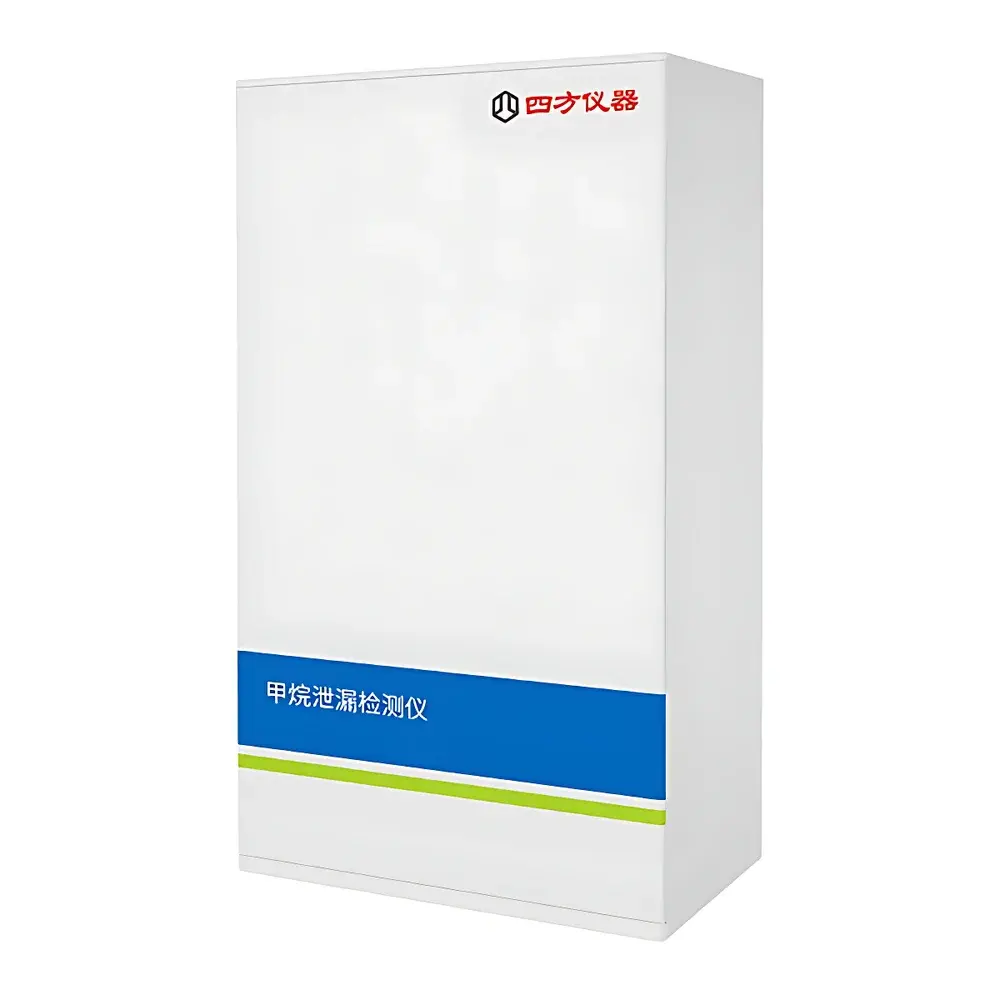
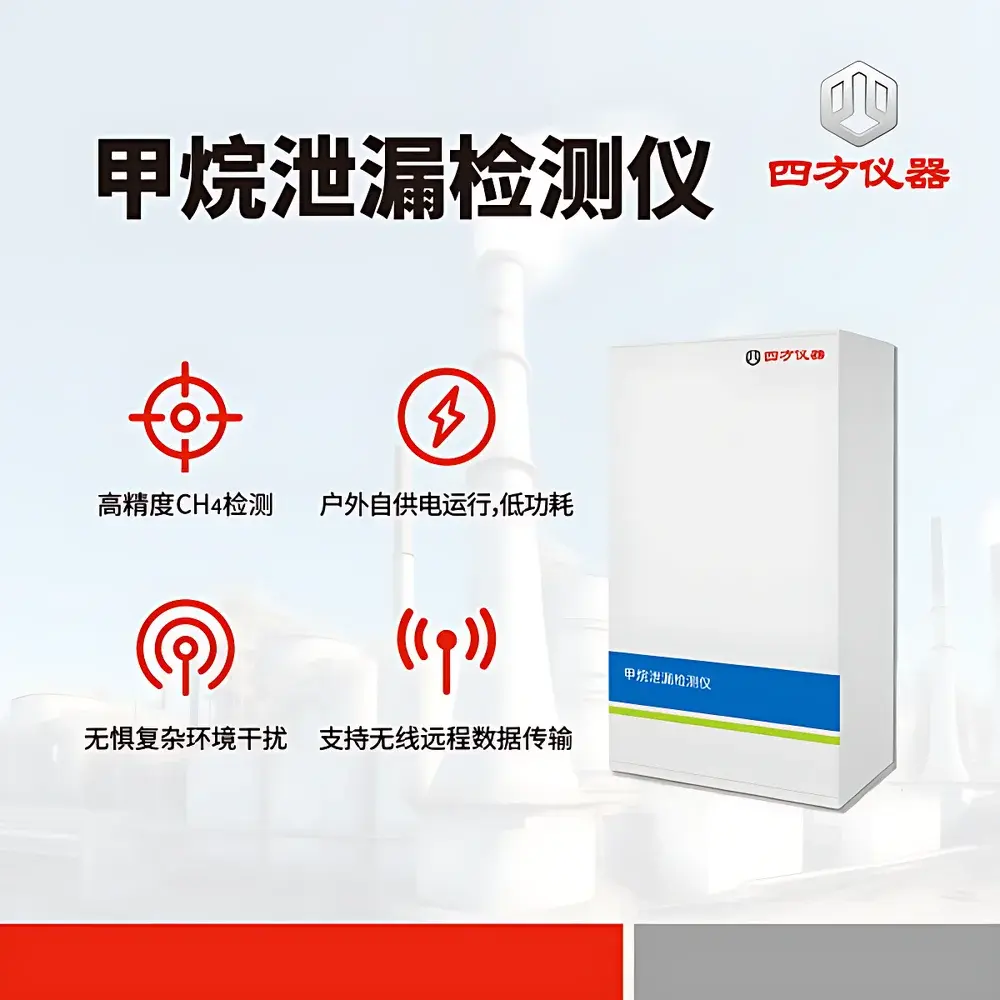
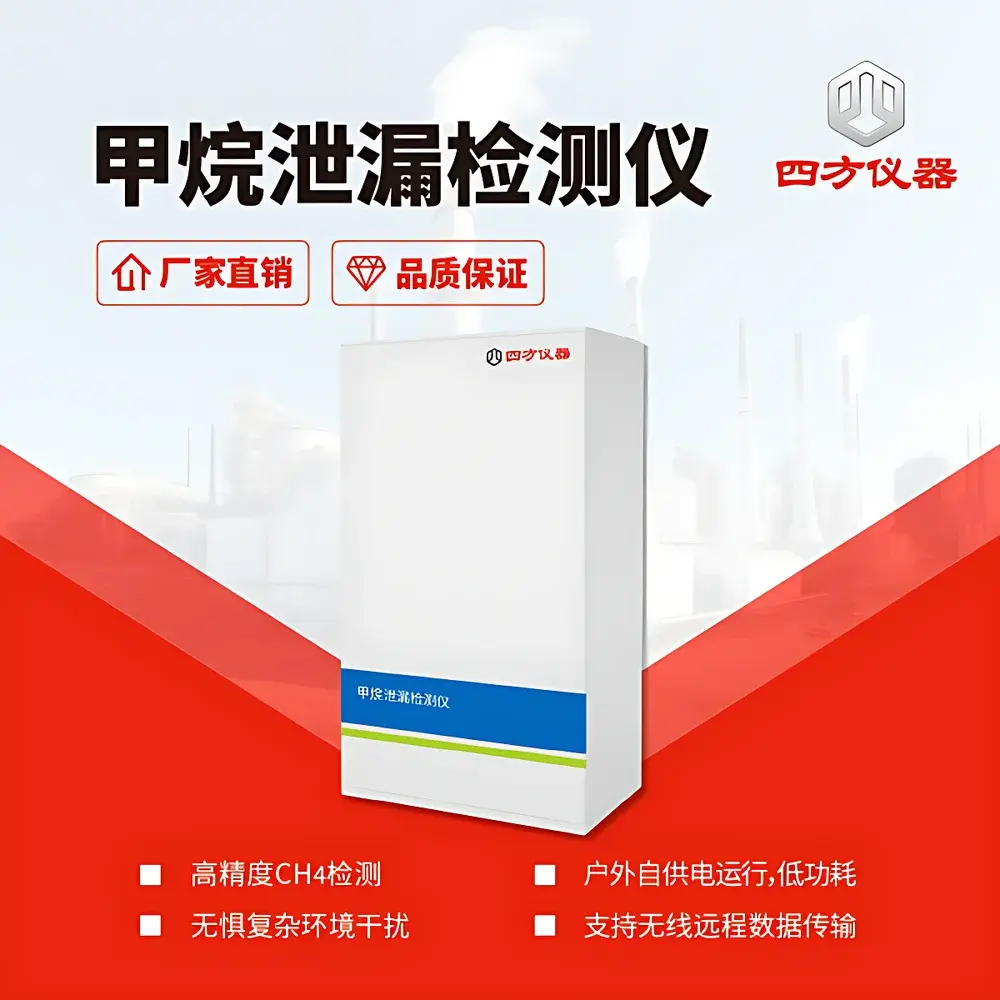
CUBIC INSTRUMENTS AM5302-EK Portable Methane (CH₄) Analyzer with TDLAS Technology
| Brand | CUBIC INSTRUMENTS |
|---|---|
| Origin | Hubei, China |
| Instrument Type | Portable |
| Detection Principle | Tunable Diode Laser Absorption Spectroscopy (TDLAS) |
| Measured Gas | CH₄ |
| Measurement Range | 0–1000 ppm |
| Detection Limit | 1 ppm |
| Alarm Accuracy | ±(5 ppm + 2% of reading) |
| Resolution | 1 ppm |
| Response Time (T90) | <10 s |
| Measurement Cycle | 30 s |
| Data Upload Interval | 2 min |
| Communication | LoRaWAN / NB-IoT |
| IP Rating | IP66 |
| Operating Temperature | −20 °C to +60 °C |
| Operating Humidity | 0–95% RH (non-condensing) |
| Operating Pressure | 86–106 kPa |
| Power Supply | Rechargeable Li-ion battery + optional solar panel |
| Max. Power Consumption | 2 W |
| Dimensions (L×W×H) | 186 mm × 144 mm × 417 mm |
| Weight | 6.5 kg |
| Service Life | ≥10 years |
Overview
The CUBIC INSTRUMENTS AM5302-EK is a field-deployable, optical methane (CH₄) analyzer engineered for continuous, real-time monitoring in demanding environmental and industrial settings. It employs Tunable Diode Laser Absorption Spectroscopy (TDLAS), a quantitative, physics-based gas detection method that exploits the unique near-infrared absorption line of methane at ~1653 nm. Unlike electrochemical or catalytic bead sensors, TDLAS delivers inherent selectivity—rejecting cross-interference from water vapor, CO₂, H₂S, volatile organic compounds (VOCs), particulates, and other non-target hydrocarbons—enabling reliable operation in unconditioned ambient air, flare stack effluents, landfill boundary zones, and upstream oil & gas infrastructure. Its optical path design incorporates a thermally stabilized, corrosion-resistant multi-pass gas cell with proprietary surface treatment, ensuring long-term baseline stability and minimal drift under thermal cycling and mechanical vibration.
Key Features
- True-selective CH₄ detection via narrow-linewidth TDLAS—no calibration drift induced by humidity, pressure, or background gas matrix effects
- Sub-10-second response time (T90) and 1 ppm detection limit compliant with EPA Method 21 sensitivity requirements for fugitive emission screening
- Dual-mode power architecture: integrated rechargeable lithium-ion battery (≥72 h runtime) with optional photovoltaic charging interface for extended off-grid deployment
- Robust mechanical design certified to IP66 ingress protection—fully sealed against dust ingress and high-pressure water jets
- Modular signal processing unit enabling seamless integration into SCADA, cloud-based IoT platforms (e.g., AWS IoT Core, Azure IoT Hub), or local edge gateways
- Embedded firmware supports over-the-air (OTA) updates, configurable alarm thresholds, and dual-channel analog output (4–20 mA) for PLC interfacing
Sample Compatibility & Compliance
The AM5302-EK is validated for direct sampling of ambient air, vented process streams, and low-flow soil gas extractions without sample conditioning (e.g., drying or filtration). It meets IEC 61000-6-2 (immunity) and IEC 61000-6-3 (emissions) for industrial electromagnetic compatibility. While not intrinsically safe (ATEX/IECEx-certified variants require separate model designation), its low-power architecture (<2 W) and non-sparking electronics render it suitable for Zone 2/Class I, Division 2 environments per NEC Article 500. The instrument’s measurement traceability aligns with ISO 14064-3 verification protocols for GHG monitoring systems and supports audit-ready data logging required under EPA Subpart W and EU MRV reporting frameworks.
Software & Data Management
Firmware v3.2+ includes embedded GLP-compliant data handling: timestamped raw absorbance spectra, calibrated concentration values, diagnostic flags (laser temperature, detector SNR, cell pressure), and system health metrics are stored locally on microSD (up to 32 GB). LoRaWAN/NB-IoT transmission follows Semtech LR1121 PHY layer specifications with AES-128 encryption. Cloud integration utilizes MQTT over TLS 1.2; payloads conform to SenML (RFC 7228) for interoperability with third-party environmental data lakes. Audit logs retain user actions, configuration changes, and calibration events for ≥12 months—meeting FDA 21 CFR Part 11 electronic record requirements when deployed in regulated compliance monitoring roles.
Applications
- Fugitive emission detection along natural gas transmission pipelines and distribution networks
- Continuous monitoring at abandoned wellheads, active oil & gas production sites, and compressor stations
- Boundary monitoring at landfills, wastewater treatment plants, and anaerobic digesters
- Mobile surveys using vehicle-mounted or drone-integrated configurations (with optional shock-mounting kit)
- Baseline ambient CH₄ mapping for environmental impact assessments and regulatory reporting (e.g., U.S. OOOOa, UK Environmental Permitting Regulations)
FAQ
Does the AM5302-EK require zero/span calibration in the field?
No routine zero/span calibration is needed due to TDLAS’s absolute spectroscopic quantification; however, annual verification using NIST-traceable CH₄ standard gas (at 100 ppm and 500 ppm) is recommended per ISO 17025 quality assurance protocols.
Can the device operate continuously for >30 days without maintenance?
Yes—under typical ambient conditions (25 °C, 50% RH) with solar recharging, the system sustains uninterrupted operation for ≥45 days; battery state-of-health monitoring alerts users at ≤20% capacity.
Is spectral interference from ethane or propane a concern?
No—the laser’s linewidth (10⁴ selectivity ratio against C₂H₆ and C₃H₈, as verified by NPL gas mixture testing reports.
What data security measures are implemented for wireless transmission?
LoRaWAN JoinEUI/AppEUI authentication, frame counter validation, and end-to-end AES-128 encryption prevent spoofing, replay, or man-in-the-middle attacks.
How is temperature compensation handled during rapid ambient fluctuations?
Dual-temperature sensing (laser diode junction + gas cell wall) feeds real-time corrections into the Beer-Lambert inversion algorithm, maintaining ±1.5% full-scale accuracy across the −20 °C to +60 °C operating range.
Related Products







