
CUBIC INSTRUMENTS High-Precision UAV-Based Methane Emission Detection System
| Brand | CUBIC INSTRUMENTS |
|---|---|
| Origin | Hubei, China |
| Instrument Type | Portable UAV-Mounted Gas Analyzer |
| Detection Principle | Mid-Infrared Tunable Diode Laser Absorption Spectroscopy (TDLAS) |
| Target Analyte | CH₄ |
| Measurement Range | Not specified (CH₄-specific) |
| Detection Limit | <100 ppb (CH₄), <15 ppb (C₂H₆) |
| Optical Path | Open-Path |
| Data Acquisition Rate | 10–20 Hz |
| Sensitivity | <100 ppb (CH₄) |
| Weight | <3 kg |
| Software Features | Leak event identification & quantification, deep learning–enabled pattern recognition |
| Enclosure Material | Corrosion-Resistant Alloy |
Overview
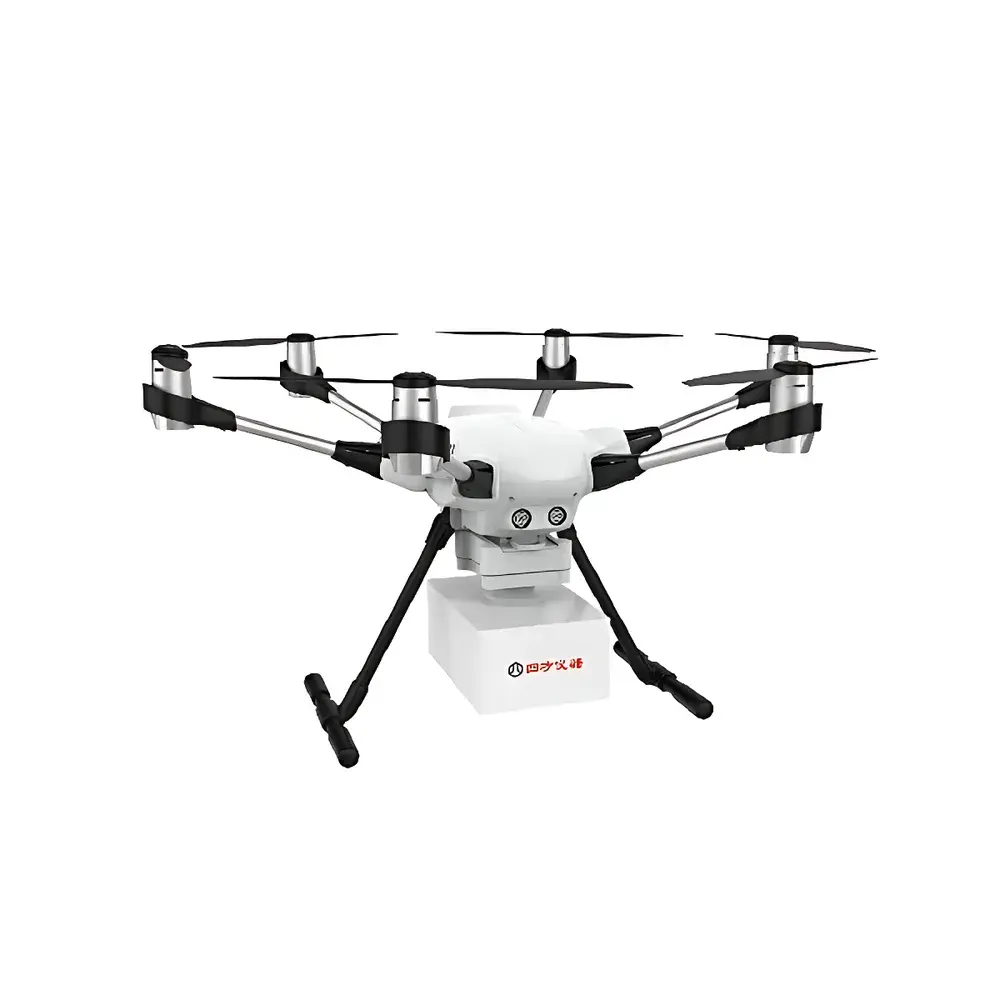
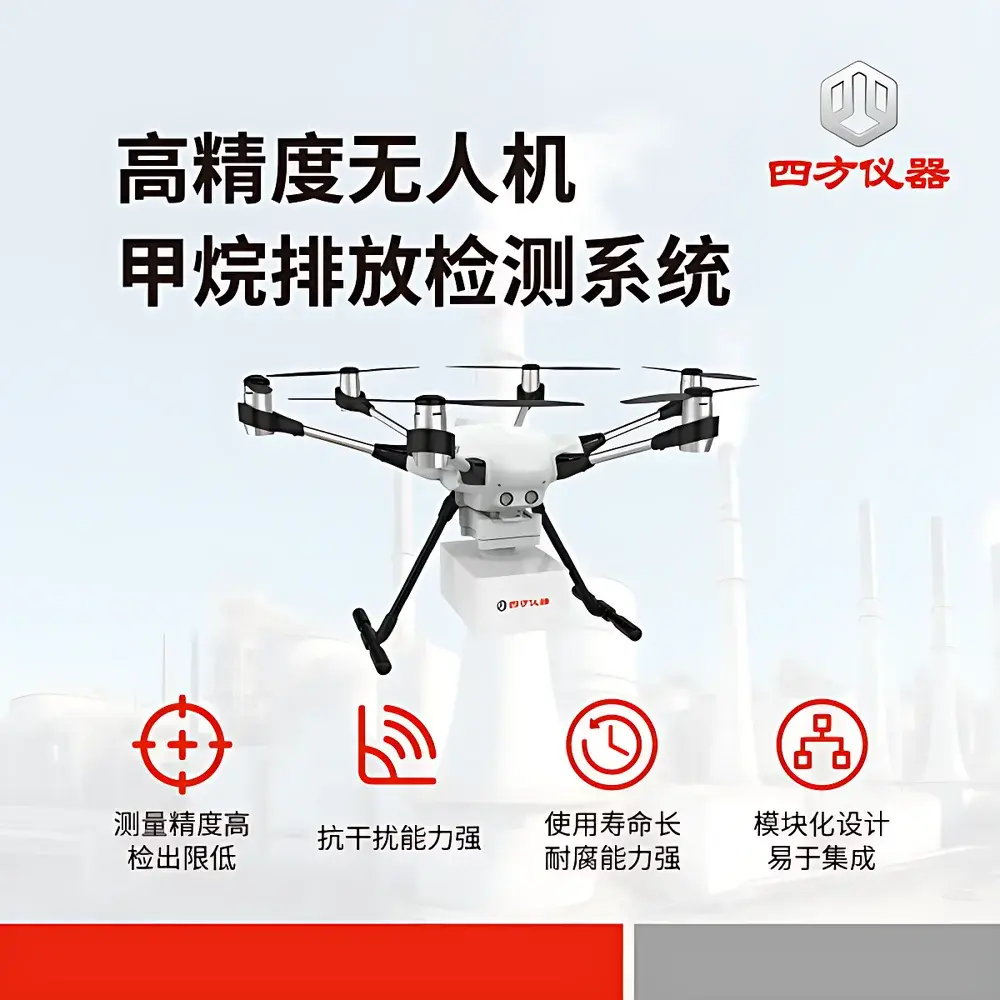
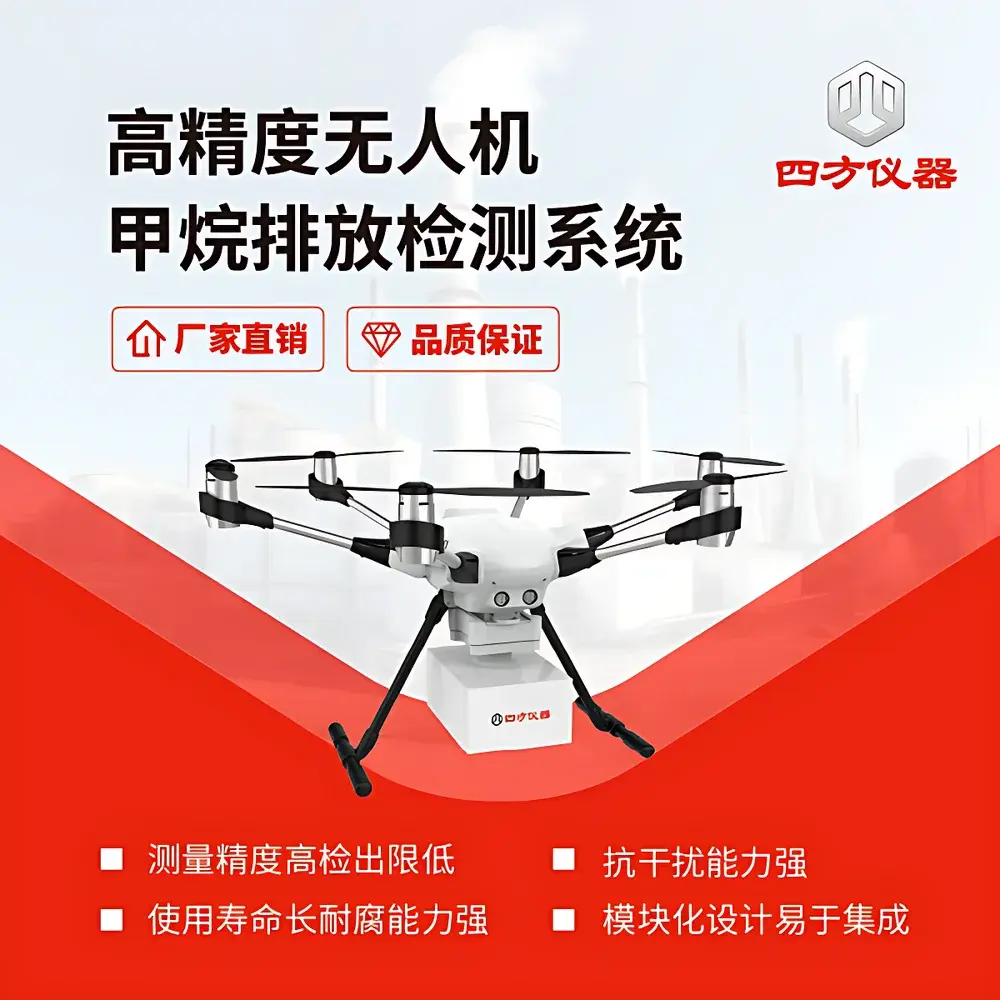
The CUBIC INSTRUMENTS High-Precision UAV-Based Methane Emission Detection System is an integrated airborne environmental monitoring platform engineered for quantitative, real-time detection of methane (CH₄) emissions from point and diffuse sources. Built around mid-infrared tunable diode laser absorption spectroscopy (TDLAS), the system leverages fundamental molecular absorption features near 3.3 µm to achieve selective, interference-free quantification of CH₄ in ambient air. Unlike extractive or closed-path systems, its open-path optical configuration enables direct line-of-sight measurement across variable distances without sample conditioning or inlet artifacts—critical for rapid plume mapping and fugitive emission localization. The system is deployed on a lightweight, six-rotor electric VTOL (vertical take-off and landing) UAV with a total payload mass under 3 kg, ensuring extended flight endurance, low acoustic signature, and operational flexibility across topographically constrained environments including mountainous terrain, forested zones, urban infrastructure corridors, and subterranean utility networks.
Key Features
- Mid-infrared TDLAS engine optimized for CH₄ detection at 3.3 µm, delivering high spectral selectivity and immunity to common interferents (e.g., H₂O, CO₂, VOCs)
- Open-path optical architecture eliminating sampling delays, pressure/temperature bias, and filter clogging risks associated with pumped systems
- Real-time data acquisition at configurable rates between 10–20 Hz, enabling high-resolution spatial mapping of concentration gradients
- Corrosion-resistant enclosure rated for IP65 operation, validated for continuous use in humid, saline, and particulate-laden atmospheres
- Modular mechanical and electrical interfaces compliant with standard UAV payload mounting protocols (e.g., DJI SkyPort, custom CAN bus)
- Onboard edge processing unit supporting real-time leak classification, plume centroid tracking, and flux estimation via Gaussian dispersion modeling
Sample Compatibility & Compliance
The system is designed for ambient air analysis only; no sample preparation, dilution, or pre-concentration is required. It operates within ambient temperature ranges of −20 °C to +50 °C and relative humidity up to 95% non-condensing. While not certified to ISO 14064-3 or EPA Method 21 by default, its measurement methodology aligns with principles outlined in ASTM D6522 (standard test method for determination of methane by gas chromatography) and supports traceability to NIST-traceable calibration gases. Data logging complies with GLP-aligned metadata tagging (GPS coordinates, timestamp, altitude, wind vector, instrument status flags). For regulated reporting, raw spectral data and processed concentration time series are exportable in CSV and NetCDF formats suitable for third-party validation workflows.
Software & Data Management
The embedded firmware and companion ground station software provide end-to-end workflow support—from mission planning and autonomous waypoint navigation to post-flight plume quantification. Key capabilities include automated background subtraction, spectral baseline correction using reference channel normalization, and adaptive thresholding for leak event detection. A supervised deep learning module (trained on >50,000 field-collected plume signatures) classifies emission types (e.g., venting vs. leaking flange vs. biogenic seep) and estimates mass flow rates using inverse dispersion modeling coupled with concurrent meteorological inputs. All analytical operations generate immutable audit trails compliant with FDA 21 CFR Part 11 requirements when configured with user authentication and electronic signature modules.
Applications
- Oil & gas infrastructure monitoring: well pads, compressor stations, LNG terminals, and pipeline right-of-way surveys
- Municipal landfill and wastewater treatment plant fugitive emission audits
- Agricultural methane source attribution (manure lagoons, rice paddies, enteric fermentation zones)
- Carbon accounting verification for Scope 1 emissions reporting under GHG Protocol standards
- Regulatory compliance screening per EU Methane Strategy and U.S. EPA OOOOa/OOOOb subpart requirements
- Research-grade atmospheric boundary layer studies requiring high-temporal-resolution vertical profiling
FAQ
Does the system measure ethane (C₂H₆) simultaneously with methane?
Yes—the same mid-IR TDLAS platform includes a secondary wavelength channel calibrated for C₂H₆ detection with a stated sensitivity of <15 ppb, enabling CH₄/C₂H₆ ratio analysis for source fingerprinting.
Is the open-path design susceptible to rain or fog attenuation?
Signal degradation occurs under heavy precipitation or dense fog; however, the system incorporates real-time optical power monitoring and automatic data flagging for periods where path-integrated transmittance falls below 60%, ensuring data integrity.
Can the system be integrated with third-party GIS or asset management platforms?
Yes—via RESTful API and MQTT protocol support, georeferenced concentration grids and leak reports can be streamed directly into Esri ArcGIS, Palantir Foundry, or SAP S/4HANA EAM environments.
What calibration protocol is recommended for field deployment?
A two-point calibration using certified zero air and 10 ppm CH₄ in N₂ is performed pre-flight; drift correction is applied automatically using periodic ambient air measurements during flight.
Is the UAV platform included in the base system configuration?
The detection payload is supplied as a standalone module; integration with commercially available VTOL UAVs (e.g., DJI Matrice 300 RTK, Quantum Systems Trinity F90+) is supported through documented mechanical, power, and data interface specifications.







