
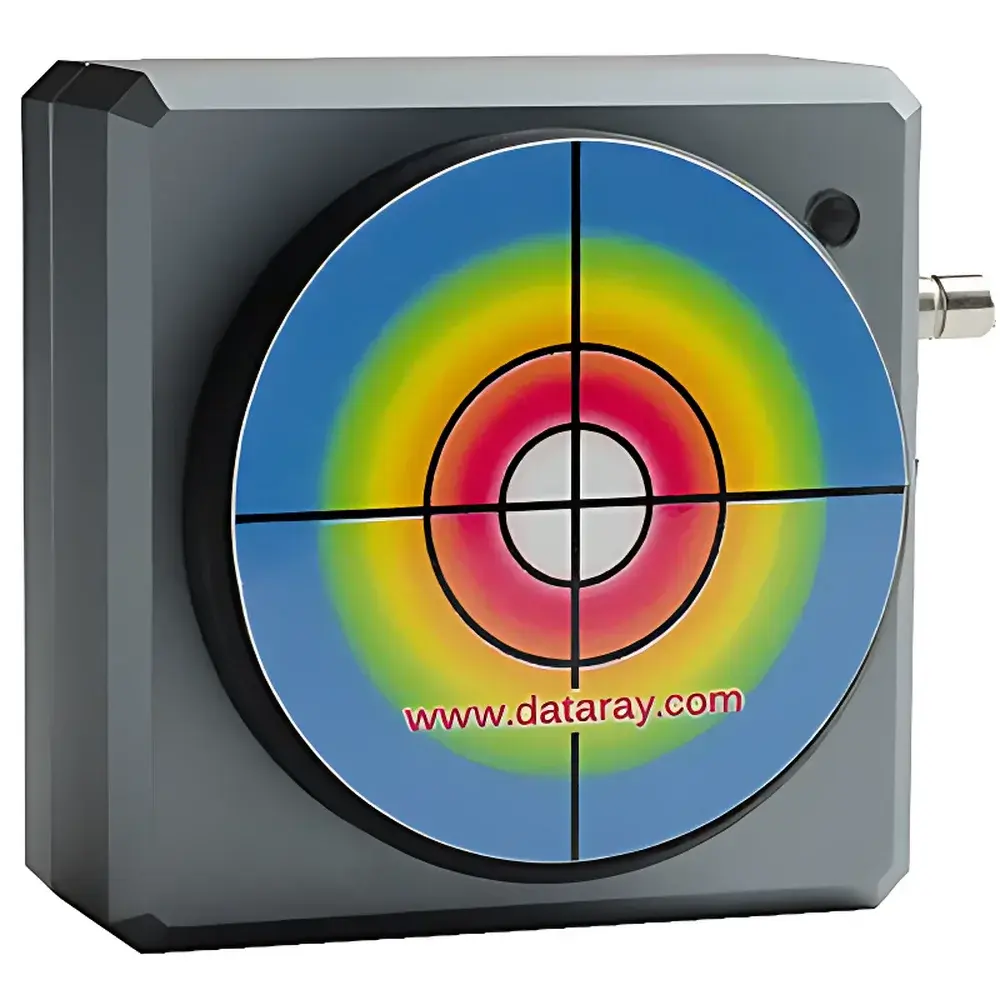
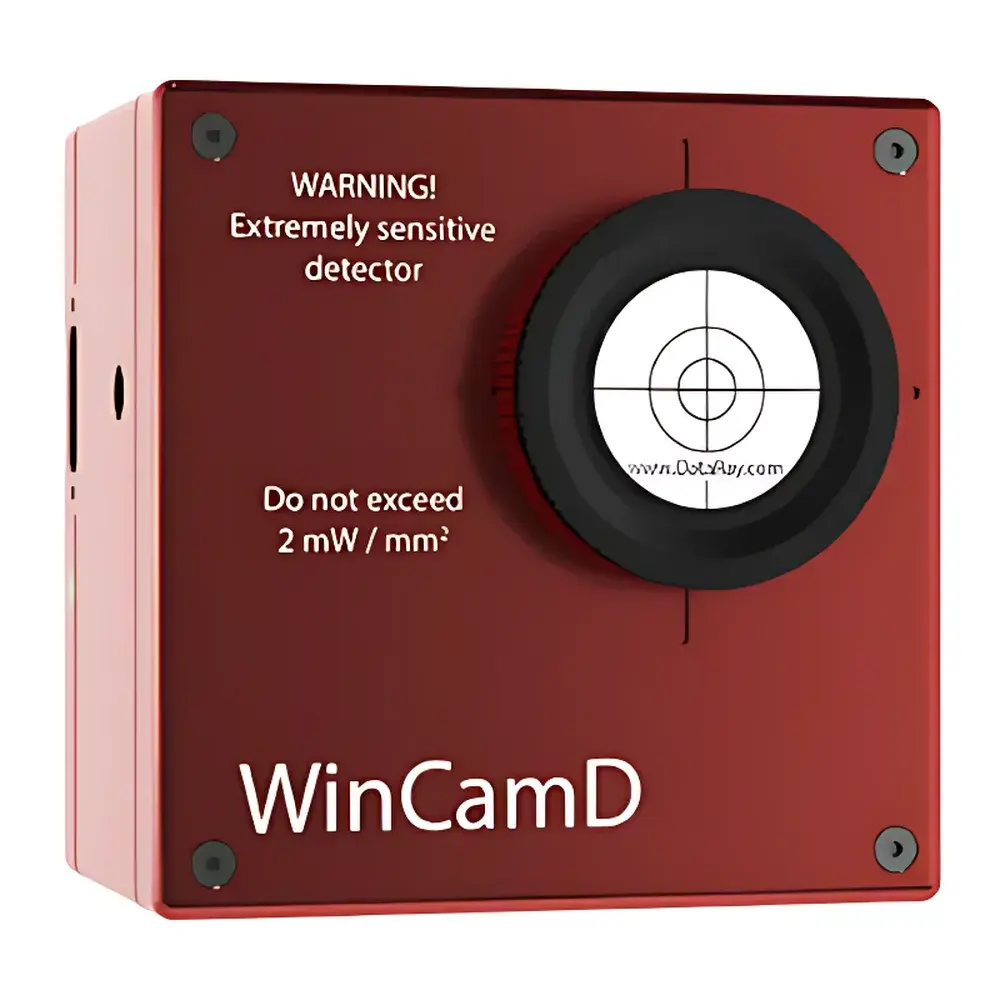
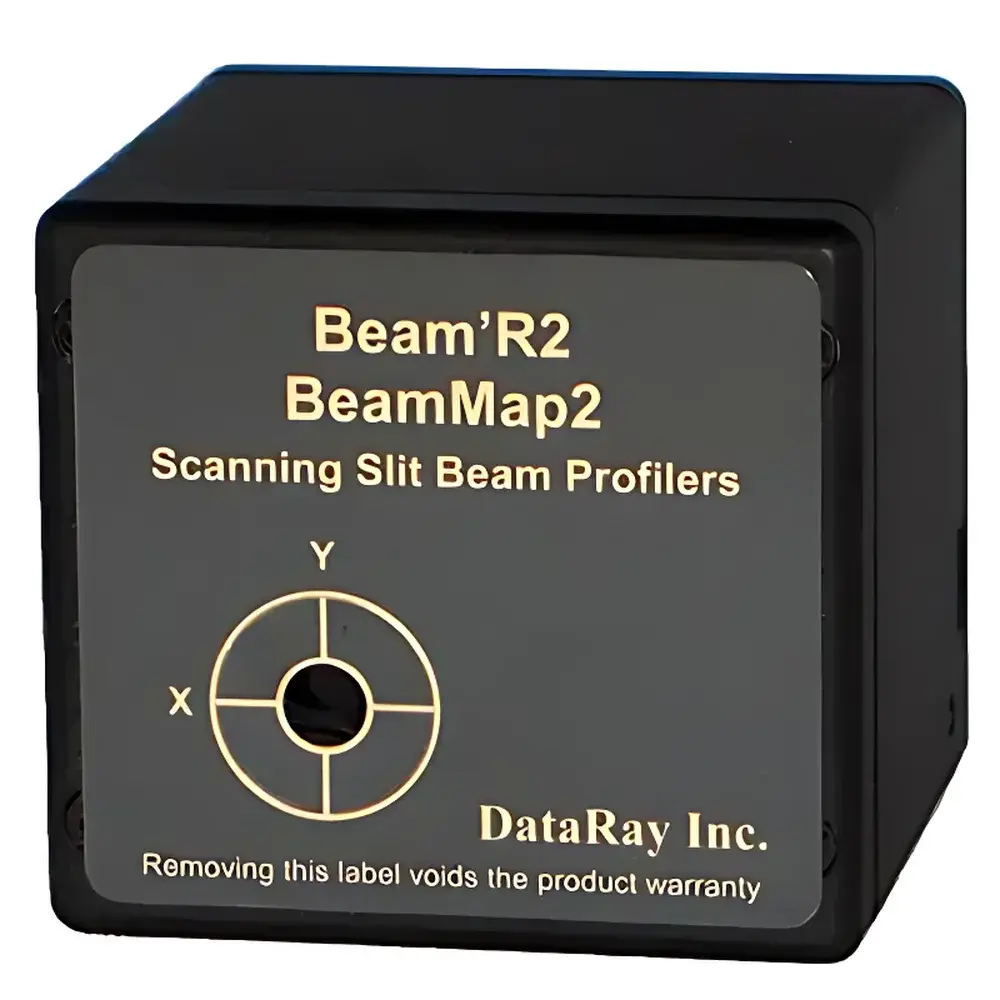
DataRay WinCamD-LCM / WinCamD-IR-BB / WinCamD-QD / TaperCamD-LCM Camera-Based Laser Beam Profilers with M² Measurement Capability
| Brand | DataRay |
|---|---|
| Origin | USA |
| Model Series | WinCamD-LCM, WinCamD-IR-BB, WinCamD-QD, TaperCamD-LCM |
| Detector Types | CMOS, VOx microbolometer, quantum dot |
| Wavelength Ranges | 190–1150 nm (UV-VIS-NIR), 355–1350 nm, 1480–1605 nm, 350–2000 nm, 2–16 µm |
| Pixel Sizes | 3.2–17 µm |
| Active Areas | 6.5 × 4.9 mm to 25 × 25 mm |
| Interface | USB 3.0 or GigE |
| Bit Depth | 12–14 bit |
| Frame Rates | 7.5–25 fps (model-dependent) |
| Shutter | Global shutter, electronic auto-shutter (79 µs – 2 s) |
| SNR | ≥2100:1 (QD), 2500:1 (LCM) |
| M² Measurement | Fully automated, compliant with ISO 11146-1:2005 & ISO 11146-2:2005 |
Overview
The DataRay WinCamD series comprises a family of high-performance, camera-based laser beam profilers engineered for quantitative characterization of spatial intensity distributions, beam propagation parameters, and M² factor in accordance with ISO 11146-1:2005 and ISO 11146-2:2005 standards. These instruments operate on the principle of direct imaging—capturing the two-dimensional irradiance profile of a laser beam incident upon a photosensitive detector array—and computing derived metrics including beam width (D4σ, knife-edge, 1/e²), centroid position, ellipticity, divergence, and M² via automated multi-plane scanning. Unlike scanning-slit systems, camera-based profilers preserve full spatial information without mechanical scanning artifacts, making them ideal for non-Gaussian, multimode, pulsed (≥1 kHz PRF), and low-repetition-rate beams where temporal synchronization and morphological fidelity are critical. The modular architecture supports interchangeable detectors—including silicon CMOS (WinCamD-LCM, TaperCamD-LCM), vanadium oxide microbolometers (WinCamD-IR-BB), and quantum dot sensors (WinCamD-QD)—enabling coverage from deep UV (190 nm) through visible, NIR, SWIR, MWIR, and into the far-IR (up to 16 µm). All models integrate USB 3.0 or GigE interfaces, on-board FPGA processing, and real-time firmware-based corrections for non-uniformity, dead pixels, and thermal drift.
Key Features
- Multi-spectral detector options: CMOS (190–1150 nm), VOx microbolometer (2–16 µm), quantum dot (350–2000 nm), each optimized for specific wavelength bands and dynamic range requirements
- High-resolution imaging: Up to 2048 × 2048 pixels (TaperCamD-LCM), 640 × 480 (WinCamD-IR-BB), or 1920 × 1080 (WinCamD-QD-XL), with pixel pitches ranging from 3.2 µm to 17 µm
- Large active areas: From 6.6 × 5.3 mm (BC2-HR) to 25 × 25 mm (TaperCamD-LCM), enabling single-shot profiling of expanded or collimated beams without relay optics
- Global shutter operation with TTL/optical triggering support, ensuring precise synchronization for nanosecond- to millisecond-duration pulses
- Electronic auto-shutter (79 µs – 2 s) and 12–14-bit analog-to-digital conversion for >60 dB dynamic range and robust signal-to-noise performance (SNR ≥ 2100:1)
- Integrated M² measurement module (M2DU-WCD): Fully motorized Z-stage with sub-micron repeatability, automatic beam waist localization, and compliance with ISO 11146 beam propagation analysis protocols
- C/F-mount optical interface standard across all models, facilitating seamless integration of ND filters, UV/IR converters, beam expanders, telecentric lenses, and polarization-preserving beam samplers (PPBS)
Sample Compatibility & Compliance
The WinCamD platform accommodates continuous-wave (CW) and pulsed lasers across industrial, scientific, and medical domains—including fiber, diode, solid-state, CO₂, quantum cascade, and ultrafast oscillators. It is validated for use with beams up to 50 W average power when paired with DataRay’s polarization-maintaining beam sampler (PPBS), which delivers stable ~0.1% sampling ratio while preserving input polarization state and eliminating ghost reflections. All systems comply with IEC 61000-6-3 (EMC emission limits) and IEC 61000-6-2 (immunity). Software output reports include timestamped metadata, audit trail logs, and exportable CSV/HDF5 datasets suitable for GLP/GMP-regulated environments. Optional FDA 21 CFR Part 11-compliant software modules provide electronic signatures, user access control, and immutable record retention for pharmaceutical and clinical laser validation workflows.
Software & Data Management
DataRay BeamGage® Professional software—supplied at no additional cost—is a feature-complete, Windows-native application supporting real-time beam visualization (1D cross-sections, 2D heatmaps, 3D surface plots), statistical trending, pass/fail thresholding, and automated report generation (PDF, PNG, Excel). It implements ISO-standard beam width definitions (D4σ, knife-edge, 1/e²), centroid stability tracking (µm RMS over time), divergence calculation from Rayleigh range fits, and full M² computation with uncertainty estimation per ISO 11146 Annex B. The SDK enables C++, Python, MATLAB, and LabVIEW integration for custom automation, inline QC monitoring, and OEM system embedding. All data files store raw frame buffers, calibration coefficients, and acquisition parameters—ensuring full traceability and reproducibility. Batch processing tools allow retrospective analysis of thousands of frames, while live histogram equalization and logarithmic scaling enhance contrast for low-intensity wings and hotspots.
Applications
- Laser manufacturing & QC: Real-time alignment verification during fiber splicing, welding, and cutting; M² certification of industrial fiber lasers (1–10 kW)
- Telecom & photonics R&D: Mode-field diameter and near-field/far-field profiling of single-mode/multimode fibers at 850/1310/1550 nm
- Biomedical instrumentation: Beam homogeneity assessment for ophthalmic lasers (e.g., femtosecond LASIK), photodynamic therapy arrays, and OCT light sources
- Defense & LIDAR: Pulse-to-pulse stability monitoring of eye-safe 1550 nm systems; beam wander quantification under thermal/mechanical stress
- Astronomy & adaptive optics: Wavefront sensor calibration, telescope focus optimization, and laser guide star characterization
- Materials processing: Spatial uniformity mapping of line beams (via LLPS-200 add-on), thermal lensing detection in high-power pump cavities
- Spectroscopy & metrology: Quantitative validation of beam shaping optics (e.g., diffractive optical elements, axicons) and spatial filter performance
FAQ
What ISO standards does this system comply with for M² measurement?
It fully implements ISO 11146-1:2005 (determination of beam widths) and ISO 11146-2:2005 (determination of M²), including prescribed scan ranges, minimum plane count (10+), and second-moment (D4σ) calculation methodology.
Can the system measure ultrashort pulses (e.g., <100 fs)?
Yes—when operated in single-shot triggered mode with appropriate attenuation and pulse energy management, provided the peak irradiance remains below detector damage thresholds (specified per model in datasheets).
Is FDA 21 CFR Part 11 compliance available?
Optional validated software modules with electronic signatures, role-based permissions, and audit-trail logging are available for regulated environments requiring ALCOA+ data integrity principles.
How is calibration traceability maintained?
Each camera includes NIST-traceable flat-field and pixel-response calibration data embedded in firmware; optional annual recalibration services include certificate of conformance with uncertainty budgets.
Does the system support third-party hardware synchronization?
Yes—TTL trigger input/output ports enable precise coordination with laser Q-switches, Pockels cells, motion controllers, and DAQ systems via standard 5 V logic levels.




