
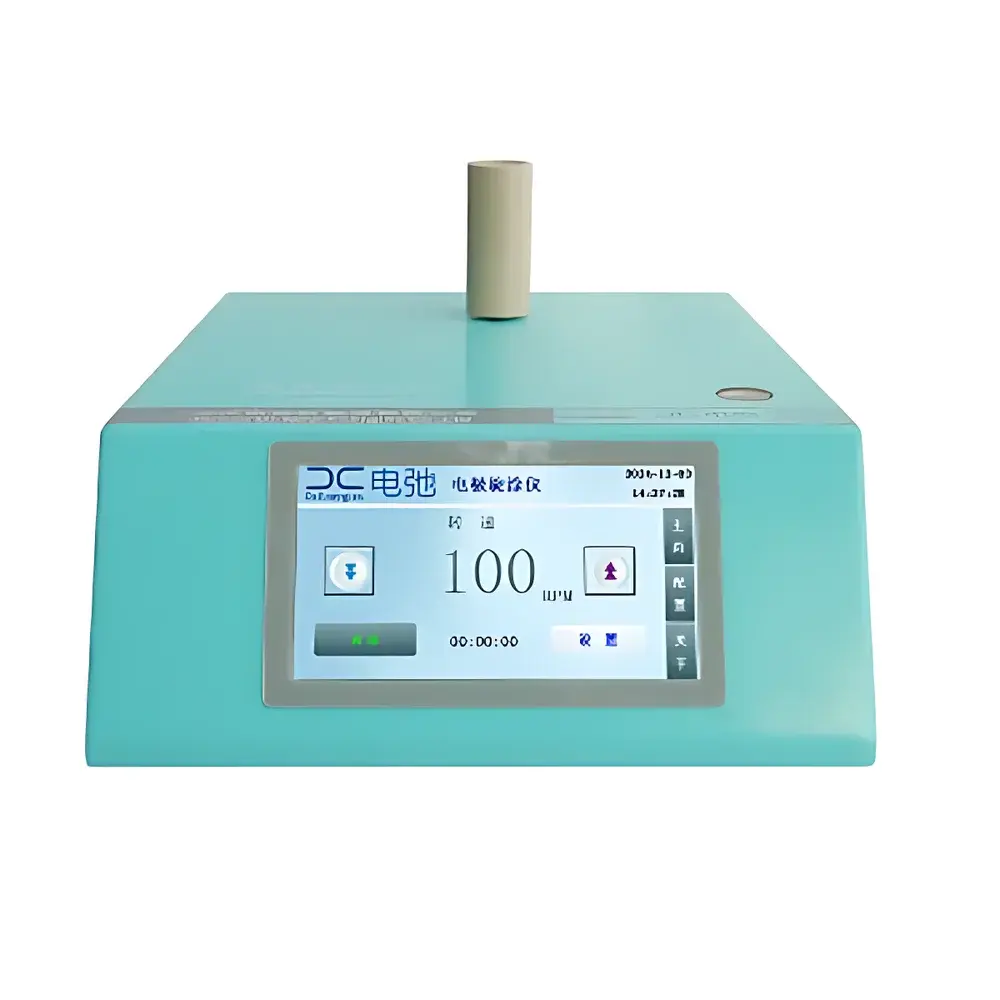
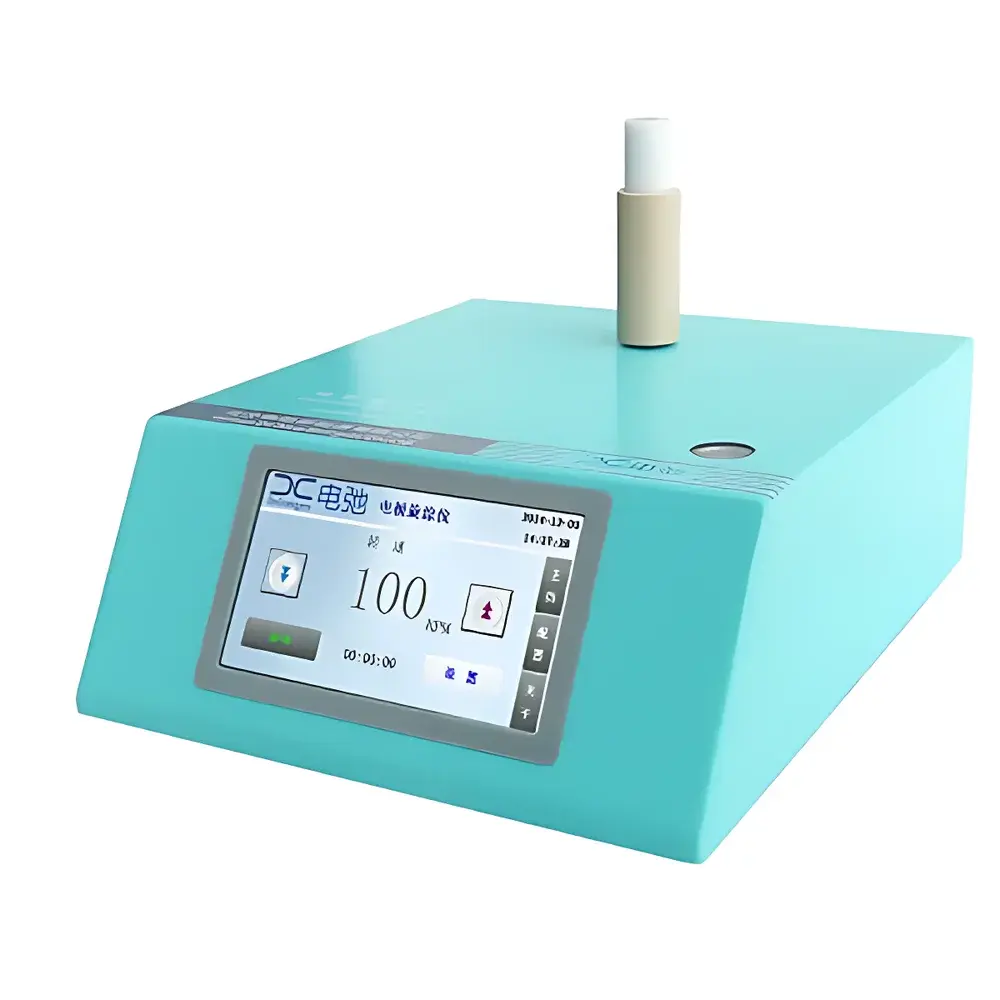
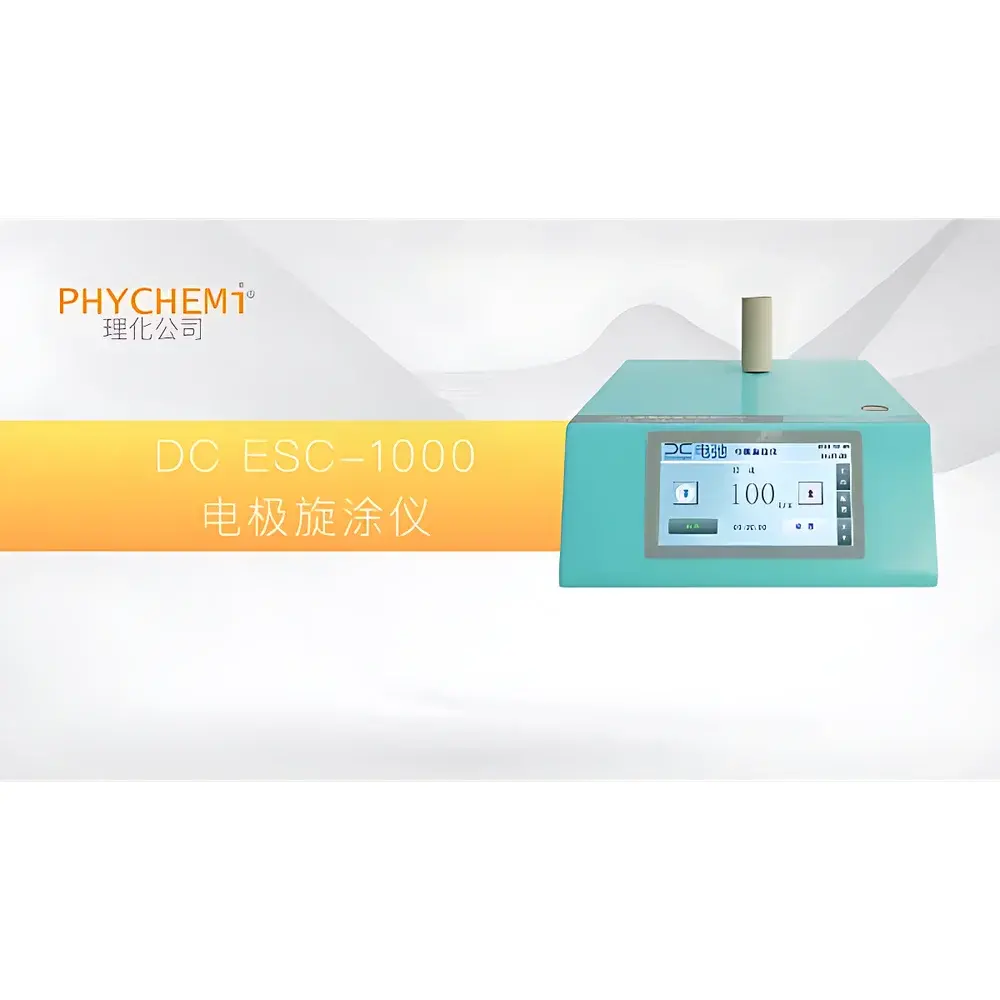
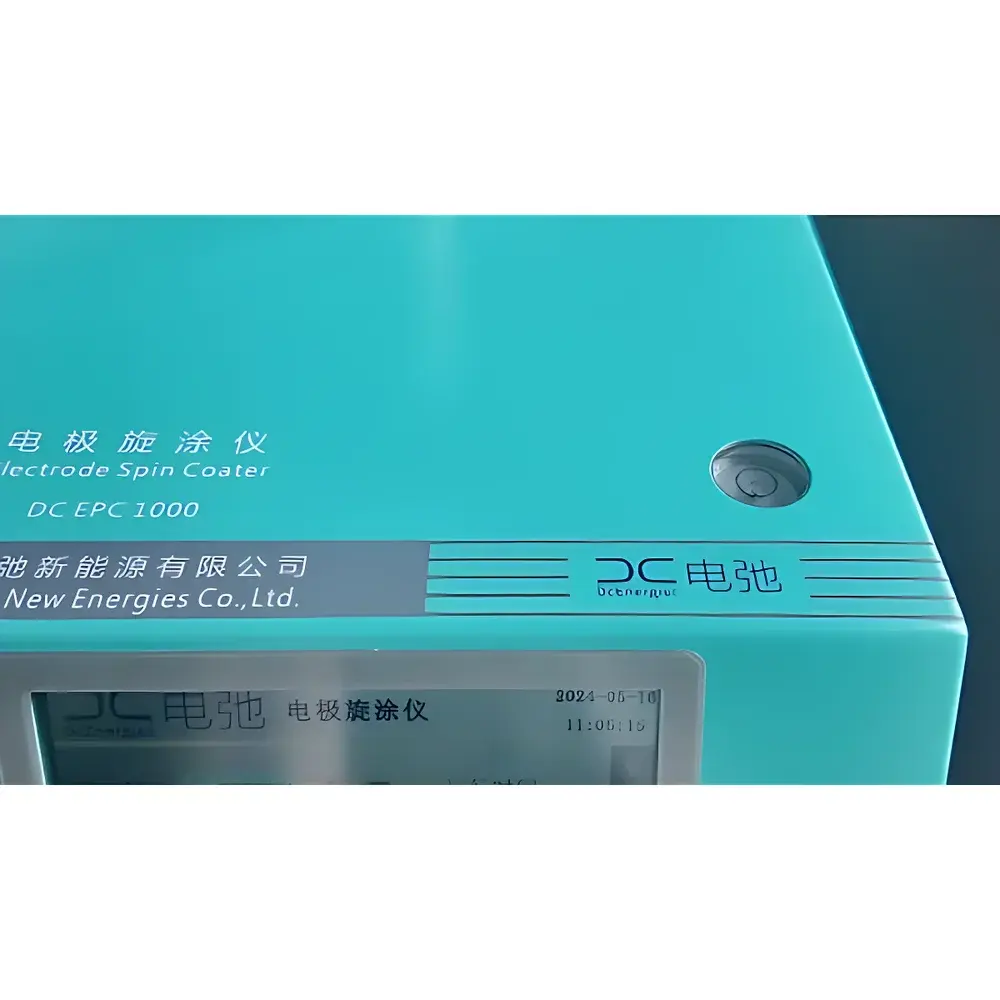
DCESC-1000 RDE/RRDE Rotating Electrode Spin Coater
| Brand | DC-Energies |
|---|---|
| Origin | Hubei, China |
| Model | DCESC-1000 |
| Rotation Speed | 0–800 rpm |
| Timer Function | Yes |
| Display | 4.3-inch capacitive touchscreen |
| Mounting | Single-station horizontal platform with integrated bubble level |
| Dimensions (W×D×H) | 185 × 225 × 135 mm |
| Power Supply | AC 220 V |
| Electrode Compatibility | Standard RDE/RRDE shafts (e.g., Pine Research, BASi, ALS, Metrohm-compatible 6 mm OD shafts) |
| Mechanical Coupling | Precision threaded collet interface |
Overview
The DCESC-1000 RDE/RRDE Rotating Electrode Spin Coater is an engineered benchtop instrument designed specifically for the reproducible, quantitative deposition of electrocatalyst inks onto rotating disk electrode (RDE) and rotating ring-disk electrode (RRDE) substrates. Unlike static drop-casting methods—prone to coffee-ring effects, thickness nonuniformity, and poor inter-experimental repeatability—the DCESC-1000 employs controlled rotational shear during solvent evaporation to achieve radially symmetric, homogeneous catalyst films. Its operation is grounded in fluid dynamics principles governing thin-film formation under centrifugal force, where ink rheology, rotation rate, and solvent volatility jointly determine final catalyst loading and morphology. The device is not a standalone electrochemical analyzer but a precision sample preparation tool intended for integration into standardized electrocatalysis workflows—including ORR, OER, HER, and CO₂RR studies—where consistent electrode fabrication is a prerequisite for valid kinetic analysis and comparative benchmarking.
Key Features
- Precision speed control from 0 to 800 rpm with ±2 rpm stability, enabling optimization across viscous ink formulations (e.g., Nafion-containing Pt/C, IrO₂, or NiFe-LDH inks).
- Integrated digital timer (0–999 s, 1 s resolution) for repeatable spin duration, critical for achieving target catalyst loadings (e.g., 0.05–0.2 mgcat/cm²) without manual intervention.
- 4.3-inch capacitive touchscreen interface with intuitive menu navigation, real-time parameter feedback, and non-volatile memory for saving up to 10 user-defined protocols.
- Horizontal alignment verified via built-in bubble level and adjustable silicone feet—ensuring perpendicular rotation axis orientation to minimize film eccentricity and edge accumulation.
- Mechanically robust threaded collet coupling (6 mm OD standard) compatible with commercially available RDE/RRDE shafts from Pine Research, BASi, ALS, and Metrohm—eliminating adapter dependency.
- Compact footprint (185 × 225 × 135 mm) optimized for fume hood or glovebox integration, with EMI-shielded motor drive and thermal cutoff protection.
Sample Compatibility & Compliance
The DCESC-1000 accommodates standard RDE/RRDE geometries with 3–6 mm shaft diameters and disk diameters ranging from 3 mm to 6 mm. It supports common electrode substrates including glassy carbon (GC), platinum, gold, and boron-doped diamond (BDD). Catalyst inks formulated in water, isopropanol, ethanol, or NMP-based solvents are compatible, provided viscosity remains below ~20 mPa·s at shear rates >100 s⁻¹. While the instrument itself carries no CE/UL certification as a Class I laboratory accessory, its electrical design complies with IEC 61010-1 safety requirements for laboratory equipment. All operational parameters—including speed setpoint, timer value, and protocol ID—are logged locally for GLP-aligned recordkeeping. When used in conjunction with validated electrode preparation SOPs, the system supports adherence to ASTM D7232 (standard practice for electrocatalyst ink deposition) and ISO 13485-aligned quality documentation frameworks.
Software & Data Management
The DCESC-1000 operates autonomously via embedded firmware; no PC connection or proprietary software is required. However, all executed protocols—including timestamp, speed, duration, and selected profile ID—are stored in internal flash memory and exportable via USB-C port as CSV files for traceability. Audit trail functionality meets basic FDA 21 CFR Part 11 expectations for electronic records in non-GMP research environments: each entry includes operator ID (manually entered), date/time stamp, and checksum-verified parameter integrity. Exported logs integrate natively with LIMS platforms or Excel-based QC dashboards for longitudinal analysis of coating consistency across batches or users.
Applications
- Preparation of uniform catalyst layers for rotating disk electrode (RDE) kinetic analysis of oxygen reduction reaction (ORR) activity (e.g., mass activity, specific activity, electron transfer number n).
- Reproducible fabrication of bifunctional RRDE electrodes for simultaneous detection of reaction intermediates (e.g., H₂O₂ yield during ORR) and faradaic efficiency quantification.
- High-throughput screening of catalyst libraries—enabling parallel preparation of ≥10 electrodes per hour with <5% RSD in geometric loading.
- Standardization of electrode fabrication across multi-lab collaborations (e.g., DOE Hydrogen Program, EU FCH JU projects), reducing inter-laboratory variability in reported metrics.
- Supporting ASTM E2913-22-compliant catalyst ink qualification by enabling controlled variation of spin parameters to isolate solvent evaporation effects on film porosity and ionomer distribution.
FAQ
Is the DCESC-1000 compatible with RRDE assemblies that include both disk and ring electrodes?
Yes—the instrument rotates only the shaft; full RRDE assemblies (disk + ring) mount directly onto the collet without modification. Ensure mechanical balance and avoid excessive speed (>600 rpm) when using asymmetric ring-disk configurations.
Can I use it inside an argon-filled glovebox?
Yes—the unit draws only 220 V AC and generates negligible heat or outgassing; its compact size and lack of ventilation fans allow safe operation in inert-atmosphere gloveboxes.
Does it support variable acceleration/deceleration profiles?
No—it features fixed ramp-up (≤1.5 s to target speed) and coast-down deceleration. For applications requiring programmable ramps (e.g., shear-thinning ink conditioning), external motor controllers are recommended.
What maintenance is required?
Annual inspection of collet thread integrity and touchscreen calibration; no lubrication or consumables are needed. Wipe housing with IPA-dampened lint-free cloth after solvent exposure.
How is catalyst loading quantified post-spin-coating?
Loading is determined gravimetrically using micro-balance (±0.1 µg resolution) before and after ink deposition, cross-validated against optical density or SEM-based thickness measurement where applicable.




