
DENSsolutions Stream In Situ Liquid Heating & Electrical Biasing TEM Holder
| Brand | DENSsolutions |
|---|---|
| Origin | Netherlands |
| Model | Stream |
| Temperature Range | RT–1300 °C |
| Displacement Resolution | < 200 nm |
| Tensile Rate | ≤ 0.5 nm/min |
| Application Field | Materials Science |
| Instrument Category | In Situ Liquid TEM Holder |
Overview
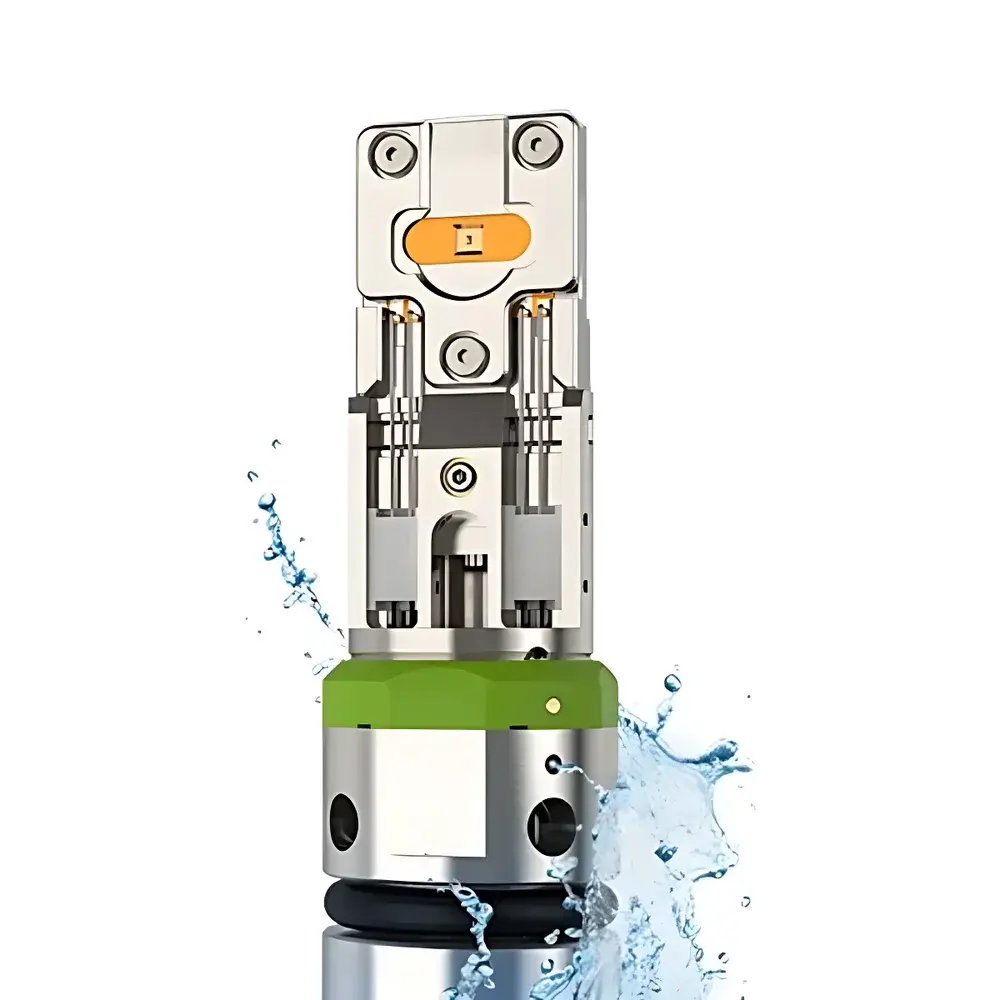
The DENSsolutions Stream In Situ Liquid Heating & Electrical Biasing TEM Holder is an engineered platform for atomic-resolution dynamic observation of materials under controlled liquid-phase, thermal, and electrical stimuli inside transmission electron microscopes (TEM). Built upon monolithic silicon nitride Nano-Cell chips fabricated using advanced MEMS technology, the Stream system enables simultaneous liquid flow control, precise thermal regulation (up to 1300 °C), and nanoscale electrical biasing—all within a single, vacuum-compatible sample holder architecture. Unlike conventional liquid cells that rely on static encapsulation, the Stream integrates a fully sealed, inert-gas-purged Liquid Supply System (LSS) to actively manage hydrodynamic conditions in real time. This allows researchers to dynamically modulate liquid thickness via pressure-driven flow control, eliminate imaging-disturbing gas bubbles through rapid inert-gas blow-down, and maintain stable electrochemical interfaces during biasing experiments. The system operates under standard high-vacuum TEM conditions while enabling true operando characterization—bridging the gap between static structural analysis and functional material behavior under realistic operating environments.
Key Features
- Active Liquid Flow Control: Integrated LSS enables real-time, quantitative monitoring of liquid volumetric flow rate (via calibrated pressure sensors), facilitating reproducible experimental conditions and immediate detection of microchannel clogging.
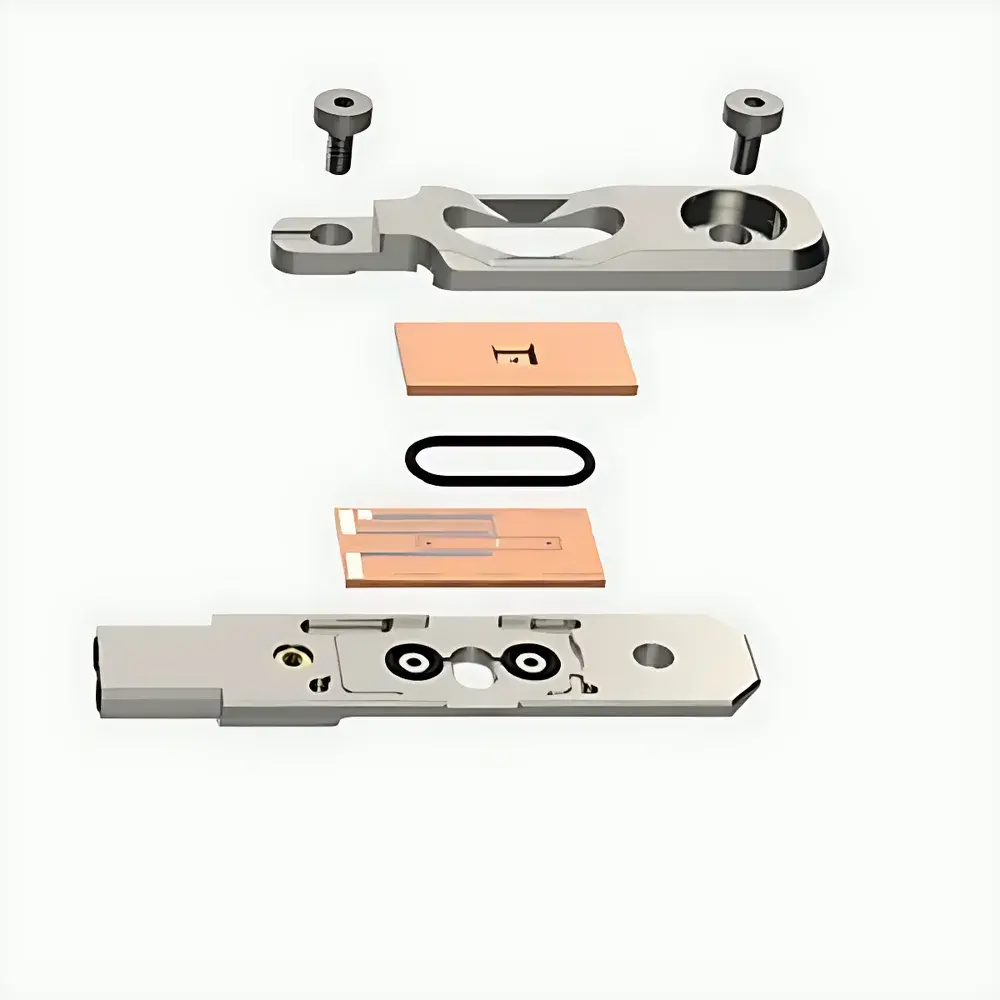
- Nano-Cell Chip Architecture: Dual-chip design with electron-transparent SiN membranes (≤ 50 nm thick) ensures optimal electron transmission while supporting independent control of liquid layer thickness (10–500 nm range) via differential pressure tuning.
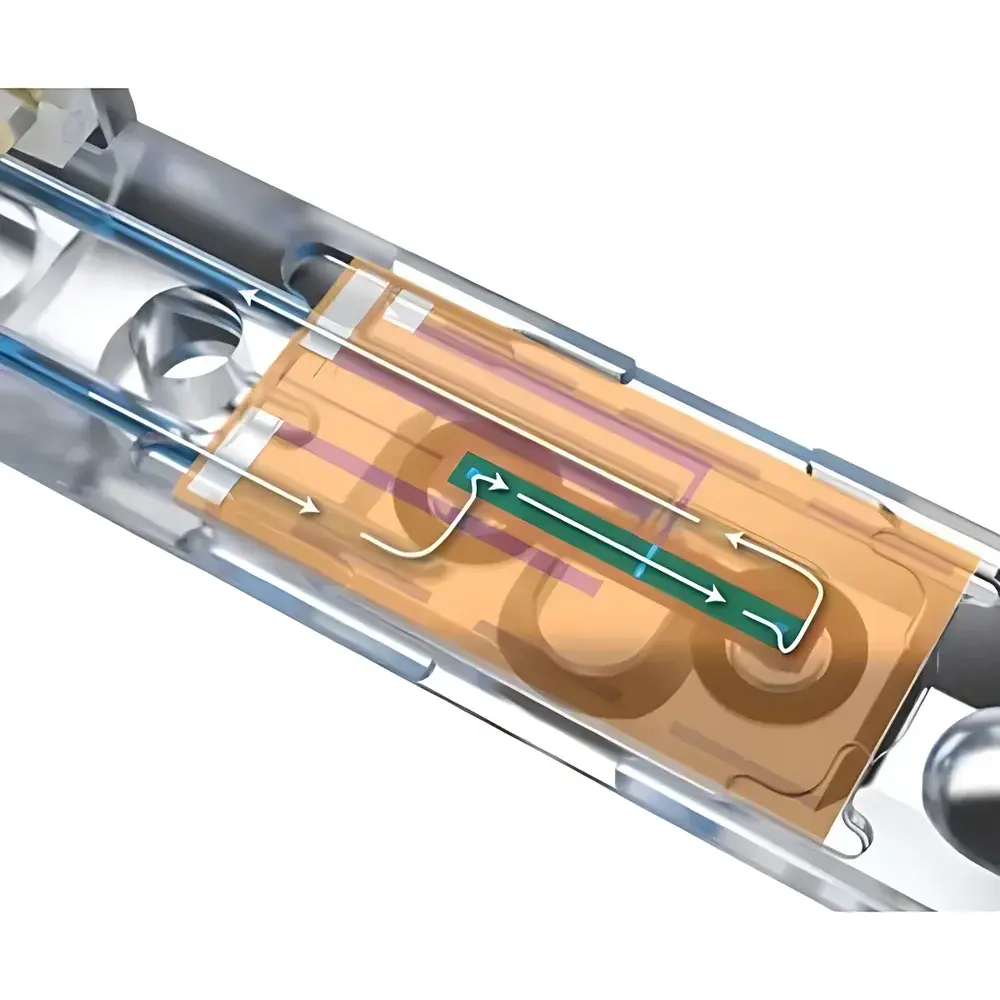
- Simultaneous Multimodal Stimuli: Seamless integration of resistive heating (RT–1300 °C), DC/AC electrical biasing (±10 V, sub-nA current resolution), and laminar liquid transport within one mechanical interface compatible with JEOL, Thermo Fisher, and Hitachi TEM columns.
- Bubble Mitigation Protocol: Inert-gas (N₂ or Ar) purge capability clears nucleated bubbles from the observation window in < 0.3 s—verified by high-speed TEM video capture—ensuring uninterrupted high-resolution imaging and spectroscopic acquisition.
- Modular & Cleanable Design: All wetted components—including fluidic tubing, pressure regulators, and chip carriers—are field-replaceable without breaking TEM vacuum; no disassembly of the TEM column is required for routine maintenance.
Sample Compatibility & Compliance
The Stream holder supports aqueous and non-aqueous electrolytes (e.g., LiPF₆ in EC/DMC, HAuCl₄ in water, colloidal nanoparticle dispersions), catalytic nanoparticles (Pt, Pd, Ni), battery electrode materials (LiCoO₂, Si anodes), and biological macromolecular assemblies. Its chip-based geometry accommodates samples up to 10 µm in lateral dimension and ≤ 200 nm in thickness. All materials contacting liquids comply with ISO 10993-5 (cytotoxicity) and USP Class VI standards. The system meets TEM column safety requirements per IEC 61000-4-2 (ESD immunity) and is designed for GLP-compliant workflows, including full audit trails for pressure/temperature/bias parameter logging when interfaced with DENSsolutions’ TEMSync software.
Software & Data Management
TEM-Sync v4.x provides synchronized hardware control across all stimulus domains: liquid flow (pressure setpoints), thermal ramping (1–50 °C/min), and electrical biasing (voltage sweep, chronoamperometry). Time-stamped metadata—including flow rate, cell temperature, applied bias, and vacuum status—is embedded directly into DM3/EMI image headers and EDS/EELS spectrum files. Exported datasets conform to HDF5 format with NeXus-compatible metadata schemas, ensuring compatibility with open-source analysis tools (HyperSpy, PyXEM) and commercial platforms (EDAX TEAM, Gatan DigitalMicrograph). Full 21 CFR Part 11 compliance is supported via optional electronic signature modules and role-based user access controls.
Applications
- In situ observation of nucleation, growth, and coalescence of metallic nanoparticles in liquid electrolytes under electrochemical bias.
- Atomic-scale tracking of solid-electrolyte interphase (SEI) formation dynamics on battery anode surfaces at elevated temperatures.
- Real-time correlation of lattice strain evolution (via geometric phase analysis) with concurrent EELS oxygen-K edge shifts during oxide reduction in aqueous media.
- Quantitative measurement of liquid-layer-dependent contrast transfer function (CTF) modulation for aberration-corrected HRTEM phase retrieval.
- Dynamic studies of protein conformational changes under thermal gradients combined with redox-active buffer flow.
FAQ
Is the Stream holder compatible with Cs-corrected TEMs operating at 80–300 kV?
Yes—the Nano-Cell chips are optimized for high-coherence illumination and exhibit minimal chromatic aberration contribution; full compatibility has been validated on Thermo Fisher Titan Krios, JEOL ARM300F, and Hitachi HT7800 systems.
Can the same Nano-Cell chip be reused after liquid exposure?
Yes—chips are chemically resistant to common solvents and can undergo O₂ plasma cleaning; reuse is permitted provided membrane integrity is verified via pre-insertion low-dose TEM inspection.
What level of temperature stability is achievable during simultaneous liquid flow and biasing?
Temperature uniformity across the 10 µm observation window remains within ±2 °C at 800 °C under continuous 100 nL/min flow, as confirmed by in situ nano-thermocouple calibration.
Does the system support closed-loop feedback control for electrochemical experiments?
Yes—integrated potentiostat mode enables real-time current monitoring with 10 fA resolution; voltage sweeps can be triggered conditionally based on EDS intensity thresholds or image-derived feature metrics.
How is vacuum integrity maintained during extended liquid-flow experiments?
The LSS employs hermetically sealed Viton O-rings and metal-gasketed flange interfaces; leak rates are < 1×10⁻⁹ mbar·L/s, verified per ASTM E493-18 helium leak testing protocols.





