
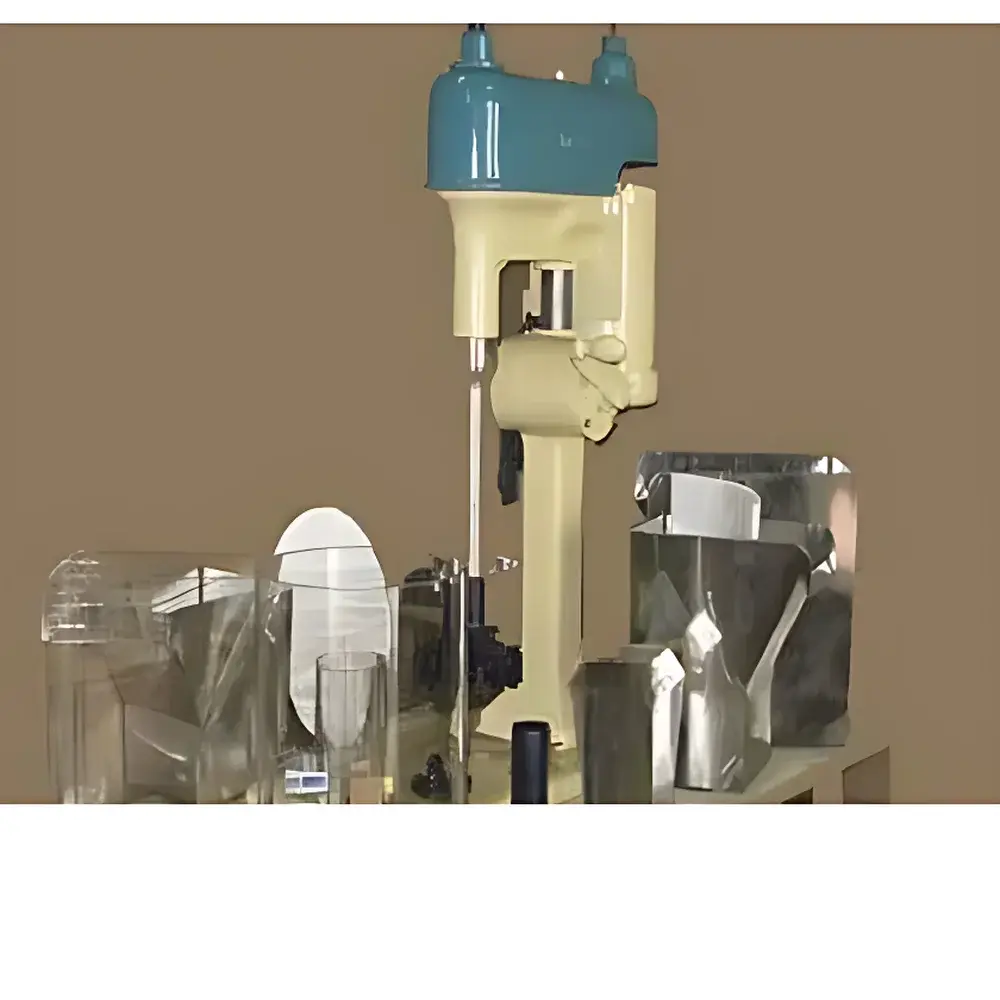
Denver D-12 Laboratory Flotation Machine
| Origin | USA |
|---|---|
| Manufacturer Type | Authorized Distributor |
| Origin Category | Imported |
| Model | Denver D-12 |
| Pricing | Available Upon Request |
Overview
The Denver D-12 Laboratory Flotation Machine is a precision-engineered bench-scale flotation system designed for controlled mineral separation, froth flotation process development, and comparative wear testing in metallurgical research laboratories. Based on the classical Denver mechanical agitation flotation principle—employing impeller-driven air dispersion and pulp circulation within a mechanically agitated cell—the D-12 replicates industrial-scale hydrodynamic conditions at a reproducible, scalable laboratory level. Its robust cast-iron frame, spring-balanced adjustable arm mechanism, and sealed anti-friction main shaft bearing assembly ensure long-term mechanical stability and operational repeatability across hundreds of test cycles. The unit operates under standard single-phase AC power (115–220 V, 50/60 Hz) and integrates a thermally protected ½ HP TEFC (Totally Enclosed Fan-Cooled) induction motor with variable-speed V-belt drive, enabling precise control over impeller tip speed—a critical parameter influencing bubble-particle collision efficiency, froth stability, and recovery kinetics.
Key Features
- Spring-balanced, rack-and-pinion height-adjustable support arm with manual crank operation—enables rapid, repeatable positioning of the flotation cell relative to the impeller shaft and allows locking at any vertical position for consistent pulp level control.
- Hermetically sealed, low-friction main shaft bearing housed in a fully enclosed housing—minimizes maintenance intervals and prevents slurry ingress during abrasive mineral testing.
- Stainless steel shaft, riser tube with integrated air flow control valve, and corrosion-resistant wetted components—ensures compatibility with acidic, alkaline, or saline slurries commonly encountered in base metal and oxide ore processing.
- Variable-speed drive system with tachometer-mounted pulley assembly—delivers continuous speed adjustment between 1500–1800 RPM (motor-synchronous range), permitting systematic evaluation of shear rate effects on bubble size distribution and particle detachment.
- Dual-configuration impeller/diffuser system—including both open and closed small-diameter impellers, small and large diffuser hoods, and recirculation collars—supports method development per ASTM D4079 (Standard Test Method for Froth Flotation of Coal) and ISO 8859-1 (Laboratory Flotation Testing of Ores).
Sample Compatibility & Compliance
The D-12 accommodates batch samples ranging from 250 g to 2000 g (via interchangeable stainless steel and acrylic cells), supporting both fine (<75 µm) and coarse (up to 1 mm) particulate systems typical of comminution product streams. All wetted parts meet ASTM A240/A240M Grade 304 stainless steel specifications. The unit complies with UL 508A (Industrial Control Panels) and CE conformity requirements for electrical safety. When operated under documented SOPs, it supports GLP-compliant data generation for pre-feasibility studies and regulatory submissions related to mineral processing optimization under ISO/IEC 17025-accredited laboratory environments.
Software & Data Management
While the D-12 is a manually operated analog system, its mechanical design facilitates seamless integration with third-party digital instrumentation: tachometer outputs can be logged via USB data acquisition modules; air flow rates are measurable using calibrated rotameters (sold separately); and pulp level, pH (via included indicator), and froth height may be recorded in structured electronic lab notebooks (ELNs) compliant with 21 CFR Part 11 audit trail requirements. Optional accessories—including digital pH meters, conductivity probes, and high-speed video capture rigs—are routinely deployed alongside the D-12 in modern metallurgical R&D labs to quantify dynamic froth phase behavior and interfacial kinetics.
Applications
- Optimization of collector/frother reagent dosage and selectivity in sulfide (e.g., chalcopyrite, galena) and oxide (e.g., hematite, cassiterite) ore systems.
- Evaluation of grinding circuit product size distribution effects on flotation kinetics and grade-recovery trade-offs.
- Comparative wear resistance testing of impeller materials (e.g., rubber-lined vs. ceramic-coated) under simulated plant conditions.
- Development and validation of novel flotation reagents—including green surfactants and bio-based collectors—per ASTM E2915 and OECD TG 301 guidelines.
- Training platform for undergraduate and graduate metallurgy programs, aligned with SME (Society for Mining, Metallurgy & Exploration) curriculum standards.
FAQ
Is the D-12 suitable for continuous flotation testing?
No—the D-12 is strictly a batch-mode apparatus. Continuous operation requires retrofitting with external feed/surge tanks, overflow launders, and automated level control, which falls outside its certified configuration.
Can the D-12 be used for coal flotation studies?
Yes—its cell geometry, air dispersion characteristics, and speed range align with ASTM D4079 methodology for fine coal cleaning research.
What electrical certifications does the unit carry?
Units shipped to North America are UL 508A listed; EU-bound configurations include CE marking and RoHS compliance documentation.
Are spare parts and technical support available globally?
Yes—authorized distributors maintain inventory of critical wear components (impellers, diffusers, shaft seals), and Denver’s engineering team provides remote commissioning support and application troubleshooting.
Does the machine include calibration documentation?
Factory calibration certificates for motor speed output and air flow valve linearity are provided with each shipment; traceable NIST-calibrated reference instruments must be sourced separately for metrological validation.




