
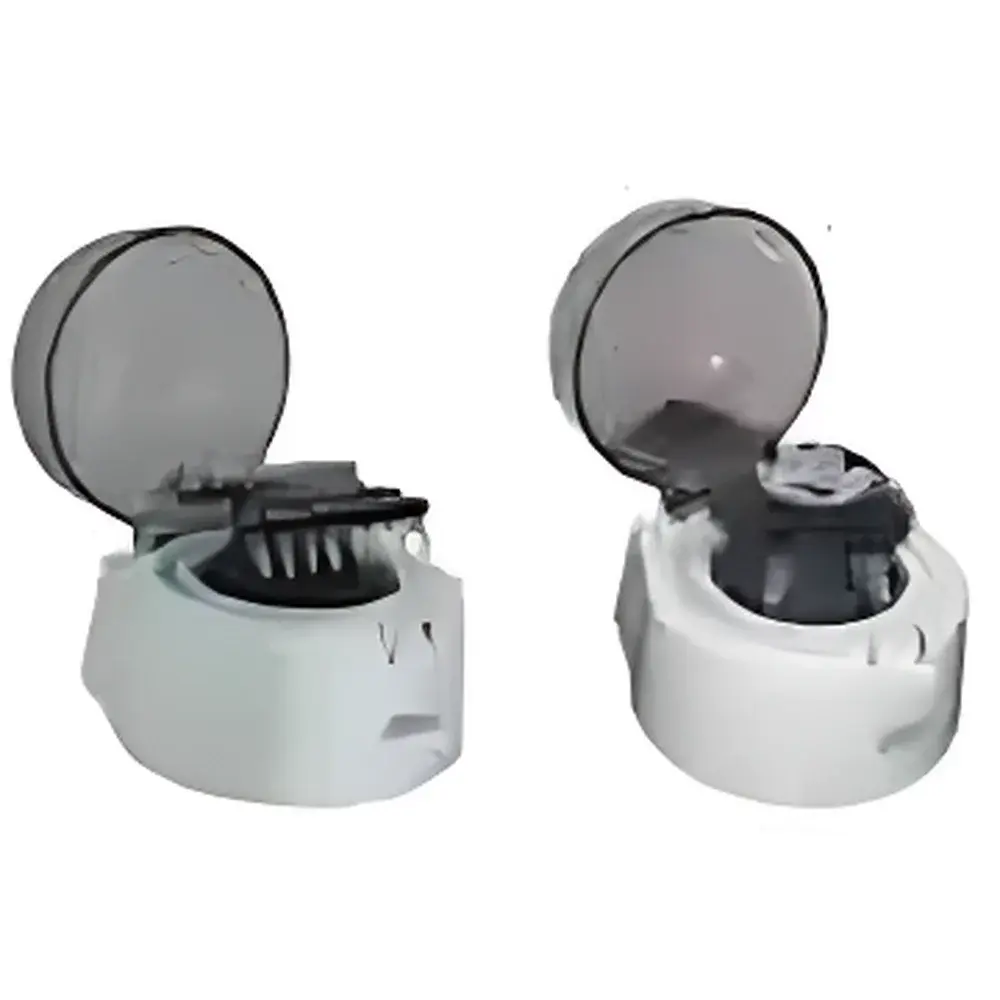
DHS MiniSmart Portable Centrifuge
| Brand | DHS |
|---|---|
| Origin | Tianjin, China |
| Model | MiniSmart |
| Instrument Type | Benchtop Portable Centrifuge |
| Maximum Speed | 6500 rpm |
| Maximum RCF | 2000 × g |
| Capacity | 6 × 1.5/2 mL tubes or 2 × 8 × 0.2 mL PCR strips |
| Dimensions | 120 × 130 × 140 mm |
| Weight | 0.5 kg |
| Rotor Configuration | Fixed-angle rotors (interchangeable) |
| Intended Use | Routine separation of biological macromolecules (e.g., DNA, RNA, proteins, cell lysates) in low-speed applications |
Overview
The DHS MiniSmart Portable Centrifuge is an engineered solution for rapid, reliable, and space-efficient sample sedimentation in resource-constrained or high-throughput laboratory environments. Designed around a brushless DC motor and precision-machined fixed-angle rotor architecture, the MiniSmart operates on the principle of centrifugal force generation to separate suspended particles—such as cellular debris, precipitated nucleic acids, or protein aggregates—based on density differentials within viscous or aqueous matrices. Its 6500 rpm maximum rotational speed delivers up to 2000 × g relative centrifugal force (RCF), placing it within the low-speed centrifugation range suitable for pelleting bacteria, collecting mammalian cells post-harvest, clarifying crude lysates, and preparing PCR-ready supernatants. Unlike floor-standing or refrigerated models, the MiniSmart prioritizes portability and operational immediacy without compromising mechanical stability or reproducibility—making it especially valuable in biosafety cabinets, laminar flow hoods, field-deployable labs, and teaching laboratories where footprint and power efficiency are critical constraints.
Key Features
- Ultra-compact form factor (120 × 130 × 140 mm) and lightweight construction (0.5 kg), enabling placement directly on benchtops, inside biosafety cabinets, or transport between workstations.
- Dual interchangeable rotor configurations: one accommodating six 1.5/2.0 mL microcentrifuge tubes; another supporting two 8-position 0.2 mL PCR strip holders—both optimized for balanced loading and minimal vibration.
- Independent lid interlock and power switch design ensures operator safety by preventing accidental activation and enforcing mandatory lid closure before rotation initiation—compliant with IEC 61010-1 electrical safety requirements for laboratory equipment.
- Anti-slip silicone base and dynamically balanced rotor assembly minimize lateral displacement during operation, contributing to stable performance even on non-level surfaces.
- Brushless DC motor delivers consistent torque across the full speed range (0–6500 rpm), with no carbon brush wear, reduced electromagnetic interference, and extended service life under continuous intermittent use.
- Acoustically damped housing maintains sound pressure levels below 55 dB(A) at 1 m distance—supporting quiet operation in shared lab spaces or clinical prep areas.
Sample Compatibility & Compliance
The MiniSmart is validated for routine processing of standard polypropylene and polycarbonate microtubes (1.5 mL and 2.0 mL) and thin-walled 0.2 mL PCR strips used in molecular biology workflows. It supports common buffer systems including Tris-HCl, PBS, TE, and guanidinium-based lysis reagents. While not rated for sterile or vacuum-sealed operation, its sealed rotor chamber prevents aerosol escape during spin-down of biohazardous samples when used with capped tubes. The device conforms to ISO 9001 quality management standards in manufacturing and meets CE marking requirements under the EU Machinery Directive 2006/42/EC and Low Voltage Directive 2014/35/EU. No refrigeration or vacuum capability is integrated; users requiring temperature-sensitive separations must pre-chill samples prior to centrifugation.
Software & Data Management
As a manually operated, non-programmable instrument, the MiniSmart does not incorporate onboard software, touchscreen interface, or digital data logging. Speed selection is performed via a single rotary dial with tactile feedback and LED indicator. This analog control paradigm eliminates firmware dependencies, reduces validation overhead in regulated environments (e.g., GLP-compliant QC labs), and ensures deterministic behavior under electromagnetic stress or power fluctuation. For laboratories maintaining electronic records per FDA 21 CFR Part 11, manual entry of run parameters—including date, time, speed, duration, and rotor type—into LIMS or ELN systems remains the recommended practice. Calibration verification can be performed using certified tachometers traceable to NIST standards.
Applications
- Routine pelleting of bacterial cultures (E. coli, Bacillus spp.) after centrifugation at 3000–6000 rpm for 1–5 minutes.
- Clarification of cell lysates prior to column-based purification of plasmid DNA or recombinant proteins.
- Spin-down of enzymatic reaction mixtures (e.g., restriction digests, ligations) to remove insoluble aggregates before electrophoresis.
- Preparation of supernatants from blood serum or saliva samples in point-of-care diagnostics development.
- Micro-volume concentration of diluted antibody solutions or synthetic oligonucleotides in assay optimization workflows.
- Student training in fundamental centrifugation principles, rotor balance concepts, and biosafety practices in undergraduate life science laboratories.
FAQ
Is the MiniSmart suitable for clinical diagnostic use?
Yes, provided samples are contained in certified, leak-proof tubes and processed within validated speed/time parameters for specific analytes (e.g., serum separation at 2000 × g for 5 min). It is not intended for direct integration into IVD platforms.
Can I use this centrifuge with 0.5 mL tubes?
No—rotor geometry is designed exclusively for 1.5/2.0 mL conical tubes and 0.2 mL PCR strips. Adapters for smaller volumes are not supplied or validated.
Does the MiniSmart require routine calibration?
While no scheduled recalibration is mandated, periodic verification of rotational speed using a handheld tachometer is recommended every 6 months or after 500 operating hours.
What maintenance is required?
Wipe exterior with 70% ethanol; inspect rotor for cracks or corrosion before each use; avoid immersion or high-pressure cleaning. No lubrication or internal servicing is user-accessible.
Is rotor imbalance protection built-in?
No active imbalance detection is implemented; however, the mechanical design enforces strict symmetry in tube loading (e.g., always pair tubes opposite each other), and the anti-slip base mitigates walk-off under mild imbalance conditions.



