
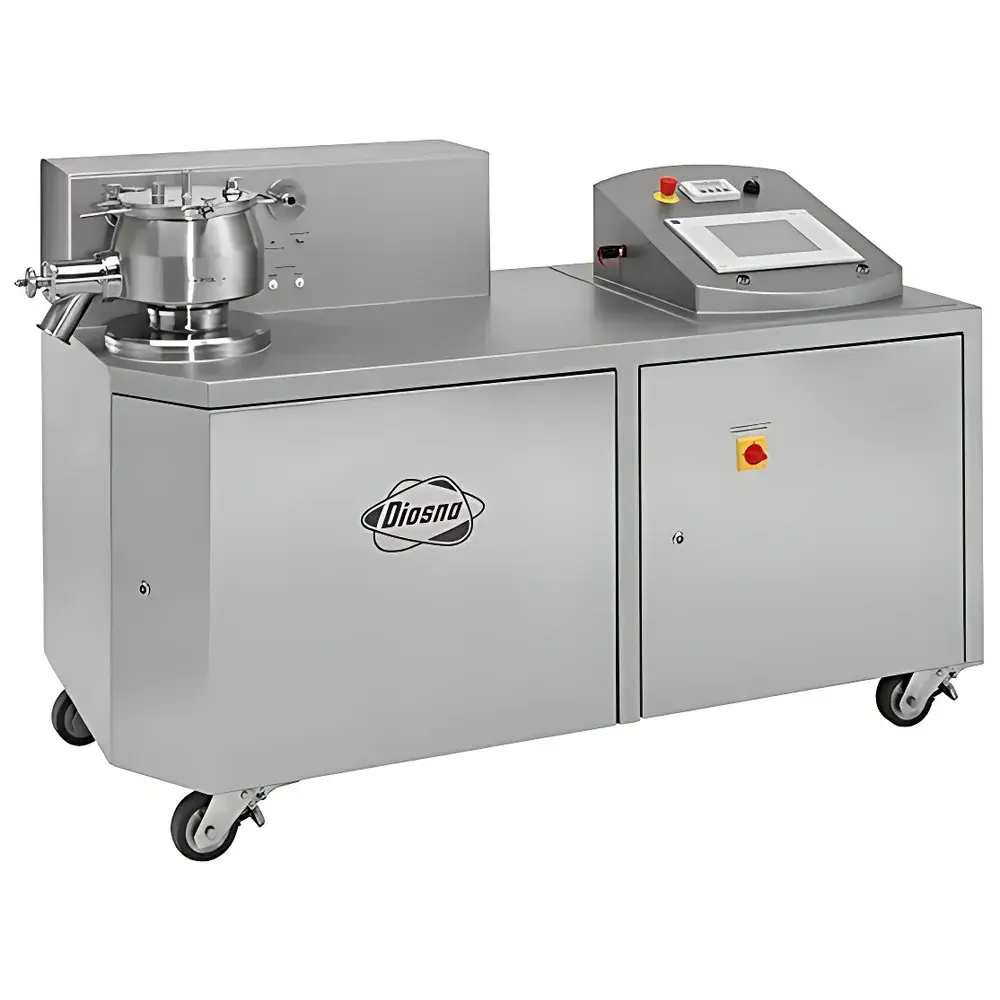
Diosna P/VAC-10 Laboratory Wet Granulator
| Brand | Diosna |
|---|---|
| Origin | Germany |
| Model | P/VAC-10 |
| Batch Volume Range | 0.25–10 L (wet granulation), 2–10 L (vacuum drying) |
| Main Agitator Power | 1.5 kW |
| Main Agitator Tip Speed | 0.7–7 m/s |
| Chopper Power | 0.75 kW |
| Chopper Speed | 220–2200 rpm |
| Dimensions (W×D×H) | 185 × 88 × 124 cm |
| Weight | 700 kg |
| Construction | Stainless Steel 316L (contact parts), PTFE shaft seals, polycarbonate transparent lid |
| Control System | Integrated PLC with touch-panel HMI, optional explosion-proof rating and industrial PC |
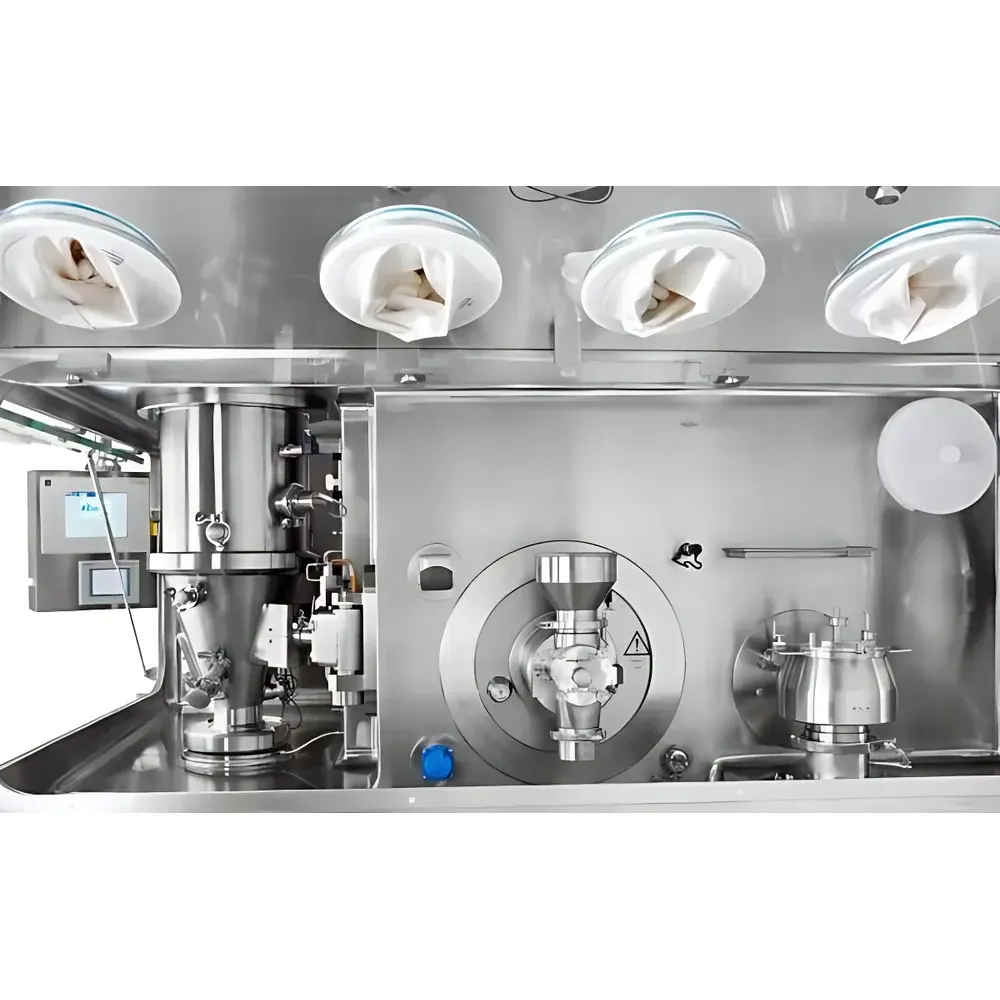
| Optional Features | Torque/current monitoring for endpoint detection, lateral discharge port, split-frame design for isolator integration, butterfly valve & soft-wall isolator interfaces, vacuum or jacketed temperature control |
Overview
The Diosna P/VAC-10 is a modular, laboratory-scale wet granulator engineered for high-fidelity process development and formulation screening in pharmaceutical, biotechnology, and fine chemical R&D environments. It operates on the principle of high-shear wet granulation—utilizing a planetary agitator and a high-speed chopper to induce controlled nucleation, consolidation, and densification of powder blends under precisely regulated liquid binder addition. Unlike fixed-volume systems, the P/VAC-10 supports eight interchangeable granulation bowls (0.25 L to 10 L), enabling direct scale-down correlation from clinical batch trials to early-stage feasibility studies. Its integrated vacuum drying capability (in 2 L, 6 L, and 10 L configurations) allows sequential wet massing and solvent removal within a single vessel—minimizing cross-contamination risk and eliminating intermediate transfer steps. The system is explicitly designed for handling potent compounds, low-dose actives, and solvent-based binders (e.g., ethanol, isopropanol), with engineering controls compliant with ISO 14644-1 Class 5 cleanroom integration and OEB 4–5 containment requirements.
Key Features
- Modular bowl architecture supporting eight standardized volumes (0.25, 0.5, 1, 2, 4, 6, 8, and 10 L) — all validated for GMP-relevant repeatability and cleaning-in-place (CIP) compatibility.
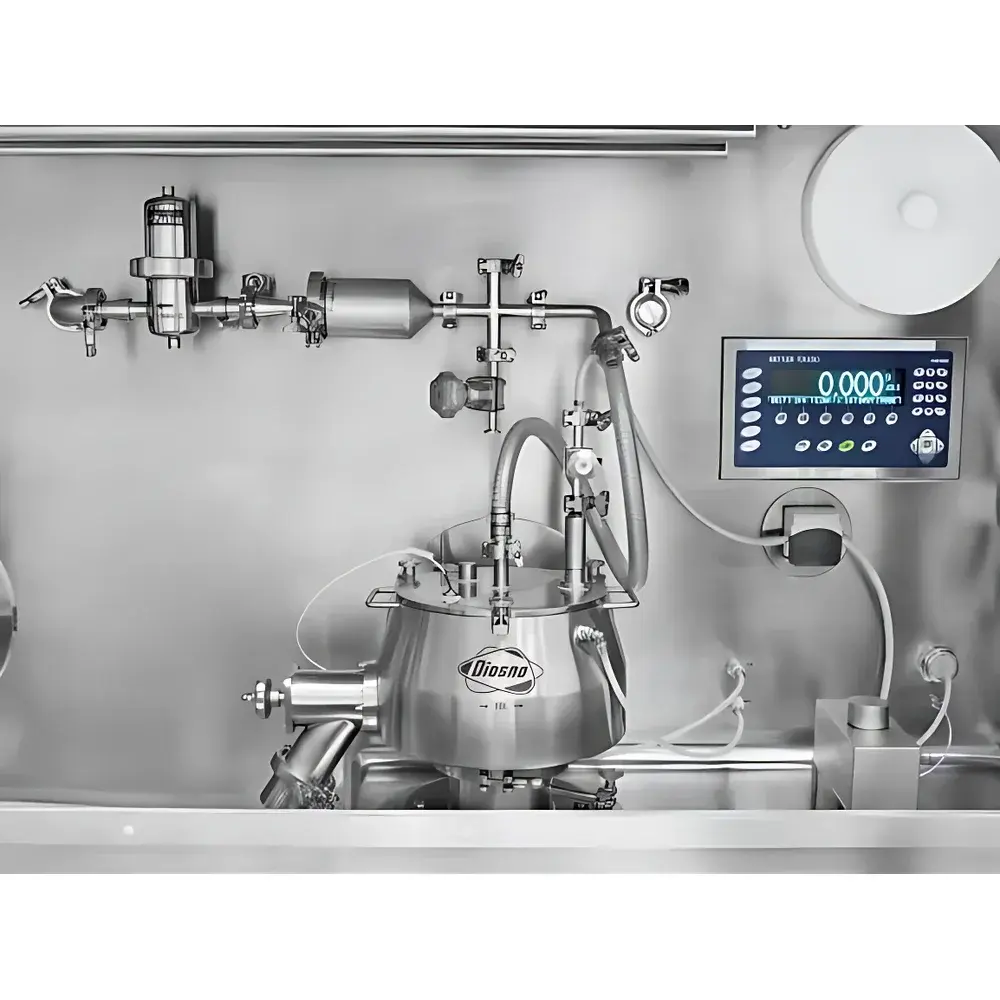
- Integrated vacuum drying function with pressure control down to 10 mbar absolute, coupled with optional jacketed temperature regulation (−20 °C to +80 °C) for thermally sensitive APIs.
- Dual-drive system: 1.5 kW main agitator delivering tip speeds from 0.7 to 7 m/s; 0.75 kW chopper operating at 220–2200 rpm — both independently variable and programmable via PLC.
- Explosion-proof configuration available per ATEX Directive 2014/34/EU (Category 2G/2D), including intrinsically safe sensors, purge-controlled enclosures, and static-dissipative components.
- Tool-free PTFE shaft seal replacement and quick-release polycarbonate lid with integrated sight window — facilitating visual endpoint assessment and routine maintenance without disassembly tools.
- Lateral discharge port and split-frame mechanical design enable seamless integration into restricted-access isolators or gloveboxes (ISO 14644-7 compliant), with standardized interfaces for soft-wall isolators and butterfly valves.
- Real-time process analytics: Optional torque, current, and power consumption monitoring provides objective granulation endpoint detection aligned with USP and ICH Q5C guidance on process consistency.
Sample Compatibility & Compliance
The P/VAC-10 accommodates a broad spectrum of powder characteristics—including low-density excipients (e.g., microcrystalline cellulose), cohesive APIs, and hygroscopic or electrostatically charged materials. Its sealed architecture supports organic solvent-based granulation (e.g., acetone, dichloromethane) with vapor recovery integration points. All wetted surfaces are electropolished stainless steel 316L (Ra ≤ 0.4 µm), compliant with ASME BPE-2022 surface finish standards. The system meets EU GMP Annex 11 requirements for electronic records and signatures when equipped with the optional industrial PC and audit-trail-enabled firmware. Full documentation packages—including FAT/SAT protocols, IQ/OQ templates, and material traceability records—are provided to support FDA 21 CFR Part 11 and EMA Annex 11 validation activities.
Software & Data Management
Control logic resides in a CE-certified PLC with a 10-inch capacitive touchscreen HMI, supporting recipe-driven operation, parameter logging at 100 ms intervals, and CSV export via USB or Ethernet. Optional software modules include Diosna ProcessSuite™, which enables multivariate trend analysis (e.g., power vs. time, torque ramp rate), deviation alerting, and PDF report generation with digital signature fields. All data streams are timestamped and stored with immutable audit trails—meeting ALCOA+ principles (Attributable, Legible, Contemporaneous, Original, Accurate, Complete, Consistent, Enduring, Available). Remote diagnostics and firmware updates are supported via secure VPN tunneling, with role-based access control (RBAC) configurable for QA, operations, and engineering users.
Applications
- Formulation development of immediate- and modified-release solid dosage forms (tablets, capsules).
- Process characterization for QbD implementation—identifying critical process parameters (CPPs) such as binder addition rate, chopper speed, and wet massing time.
- Stability-indicating granule studies involving moisture-sensitive or oxidation-prone APIs under inert gas or vacuum environments.
- High-potency manufacturing support: integration with containment systems for OEL ≤ 10 ng/m³ handling (e.g., cytotoxics, hormones, oligonucleotides).
- Continuous-to-batch bridging studies using discrete granulation cycles that emulate residence time distribution profiles observed in twin-screw granulators.
- Regulatory filing support: generation of representative granule batches for dissolution testing, content uniformity, and stability protocols per ICH Q1–Q5 guidelines.
FAQ
Can the P/VAC-10 be validated for GMP production use?
Yes—the system is supplied with full validation documentation support, including DQ/IQ/OQ templates, calibration certificates for all transducers, and material compliance statements. It is routinely qualified for clinical trial material (CTM) manufacture under EU GMP and FDA expectations.
Is solvent recovery compatible with the vacuum drying function?
The vacuum chamber includes dedicated vapor condensation ports and cold trap interfaces; third-party condensers can be integrated via ISO-KF 25 or 40 flanges for closed-loop solvent recovery.
What level of containment does the split-frame design achieve?
When installed in a certified soft-wall isolator with negative pressure cascade and HEPA filtration, the system achieves OEB 5 containment (≤ 1 ng/m³), verified by SMAC (Surface Monitoring and Air Classification) testing per ISO 14644-1.
Does the torque monitoring option satisfy PAT requirements for real-time release?
Torque and power profiles correlate strongly with granule growth and density per ASTM E2983-15; while not standalone release criteria, they serve as validated CPP indicators within a broader PAT framework approved under FDA’s Guidance for Industry on Process Validation.
Are CIP/SIP capabilities built-in?
CIP is supported via integrated spray ball manifolds and drain valves meeting ASME BPE sanitary standards; SIP requires external steam supply and is implemented via custom jacketed vessel upgrades—not standard on base models.



