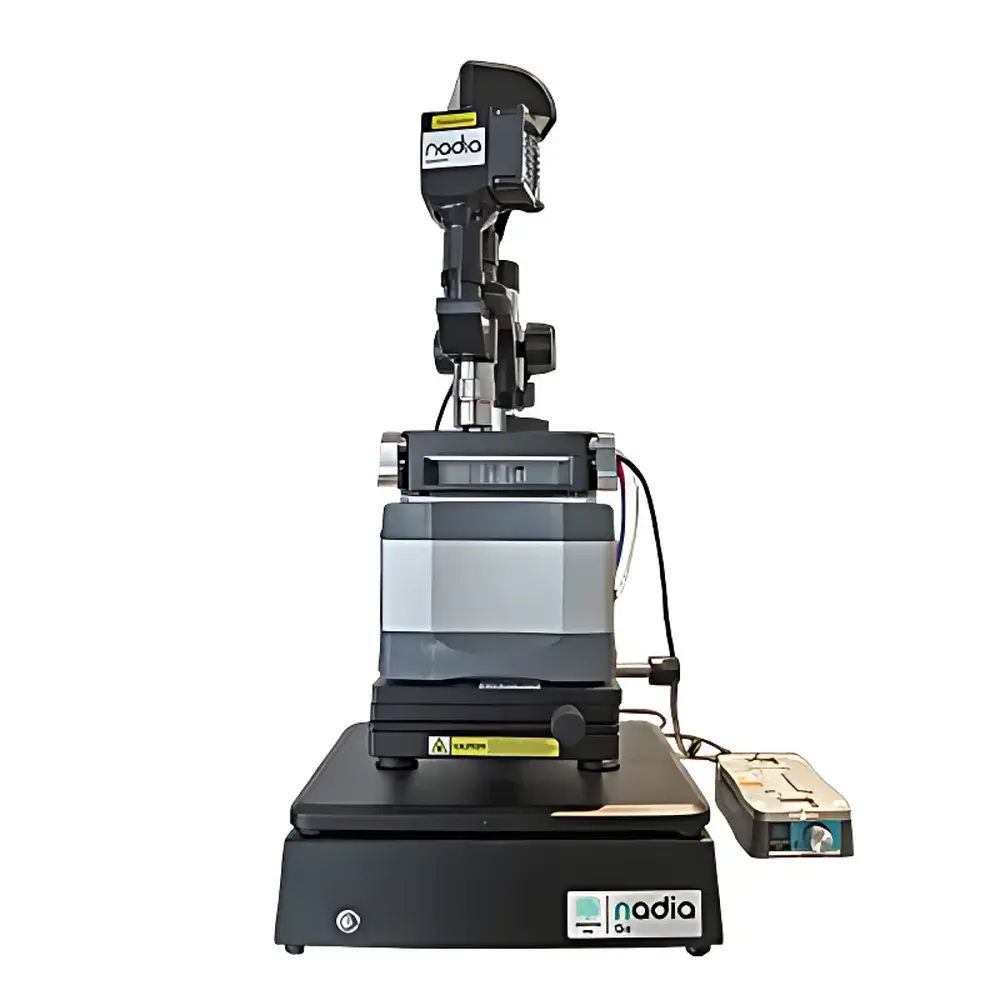
Dolomite Bio Nadia Go Microfluidic Single-Cell Preparation System
| Brand | Dolomite Bio |
|---|---|
| Origin | United Kingdom |
| Manufacturer Type | Authorized Distributor |
| Origin Category | Imported |
| Model | Nadia Go |
| Automation Level | Dedicated Fully Automated |
| Sample Throughput | Up to 1,000,000 cells per run |
| Batch Processing Time | User-Configurable |
Overview
The Dolomite Bio Nadia Go Microfluidic Single-Cell Preparation System is an engineered platform for high-fidelity, reproducible encapsulation of individual cells into monodisperse aqueous droplets within an immiscible carrier oil phase. Based on proven microfluidic co-flow and flow-focusing principles, the Nadia Go leverages precise pressure-driven fluid control to generate picoliter-to-nanoliter volume droplets—each serving as an isolated microreactor for downstream molecular analysis. Designed specifically for single-cell transcriptomics library preparation, the system supports both whole-cell and nuclear RNA capture workflows (e.g., scRNA-seq and sNuc-seq), while maintaining cell viability and transcriptional integrity throughout encapsulation. Its compact benchtop footprint and modular architecture enable seamless integration into core genomics facilities, academic laboratories, and translational research units operating under GLP-aligned protocols.
Key Features
- Pressure-controlled microfluidic chip interface with real-time feedback for stable droplet generation across variable cell densities and viscosities
- Integrated high-speed imaging module (up to 2,000 fps) enabling in-line visualization and optimization of droplet formation dynamics—including size distribution, frequency, and monodispersity
- User-adjustable operational parameters: temperature (4–40 °C), pneumatic pressure (0–3.5 bar), agitation speed (0–1,200 rpm), and run duration—supporting method development for non-standard cell types or hydrogel matrices
- Dedicated microfluidic cartridge design compatible with standard 10x Genomics, Parse Biosciences, and custom barcoding chemistries
- Automated chip priming, waste management, and reagent routing—minimizing manual intervention and inter-run variability
- CE-marked instrumentation compliant with IEC 61010-1 safety standards for laboratory use
Sample Compatibility & Compliance
The Nadia Go accommodates a broad spectrum of primary and cultured cells—including fragile suspension lines (e.g., PBMCs, hematopoietic progenitors), adherent-derived dissociates (e.g., tumor organoids, iPSC-derived neurons), and nuclei isolates—with no requirement for pre-enrichment or size-based filtration. It supports hydrogel-based droplet formulations (e.g., alginate, PEGDA) for 3D co-culture and intercellular interaction studies. All fluidic pathways are constructed from biocompatible, low-binding materials certified per USP Class VI and ISO 10993-5. The system’s operational logs and parameter traceability align with audit requirements for ISO/IEC 17025-accredited labs and support data integrity frameworks consistent with FDA 21 CFR Part 11 when paired with validated LIMS integration.
Software & Data Management
Controlled via Nadia Instrument Software (v4.2+), the platform provides intuitive graphical workflow configuration, protocol versioning, and exportable metadata in MIAME-compliant JSON format. Each run generates timestamped, encrypted log files containing pressure traces, thermal profiles, camera timestamps, and chip usage history—enabling full experimental reproducibility. Raw imaging data is stored in TIFF sequence format; processed droplet metrics (diameter, frequency, coefficient of variation) are exportable as CSV or integrated directly into Python/R analysis pipelines via REST API. Audit trail functionality records all user actions, parameter changes, and system alerts—supporting GxP-aligned documentation practices.
Applications
- Single-cell RNA sequencing (scRNA-seq) library construction for tumor heterogeneity mapping, immune repertoire profiling, and developmental trajectory inference
- Single-nucleus RNA sequencing (sNuc-seq) from frozen or fixed tissues, including post-mortem brain and FFPE-adjacent samples
- 3D microtissue engineering: encapsulation of multiple cell types in tunable hydrogel droplets to model stromal-tumor crosstalk or neurovascular units
- Host-pathogen interaction assays: dual-species droplet co-encapsulation for time-resolved infection kinetics at single-cell resolution
- CRISPR screening readout: parallelized delivery of sgRNA libraries with phenotypic reporters under controlled microenvironmental conditions
FAQ
Is the Nadia Go compatible with 10x Genomics Chromium Next GEM chemistry?
Yes—the Nadia Go supports all standard 10x Genomics Single Cell 3′ and 5′ gene expression, Feature Barcode, and ATAC-seq workflows using vendor-certified chips and reagents.
Can I use my own microfluidic chip design with the Nadia Go?
No—the system operates exclusively with Dolomite Bio–validated Nadia cartridges to ensure pressure calibration integrity, droplet uniformity, and compatibility with onboard imaging optics.
What maintenance is required between runs?
Post-run cleaning consists of automated oil flush and aqueous buffer purge cycles; chip replacement is required for each new experiment to prevent carryover and ensure batch-to-batch consistency.
Does the system support multi-sample multiplexing in a single run?
Yes—via sample indexing with hashtag oligos (HTOs) or feature barcodes, enabling pooled loading without physical separation of input samples.
Is remote monitoring supported during acquisition?
Live camera feed and pressure/temperature telemetry are accessible via secure HTTPS connection through institutional networks, with optional integration into centralized lab monitoring dashboards.