
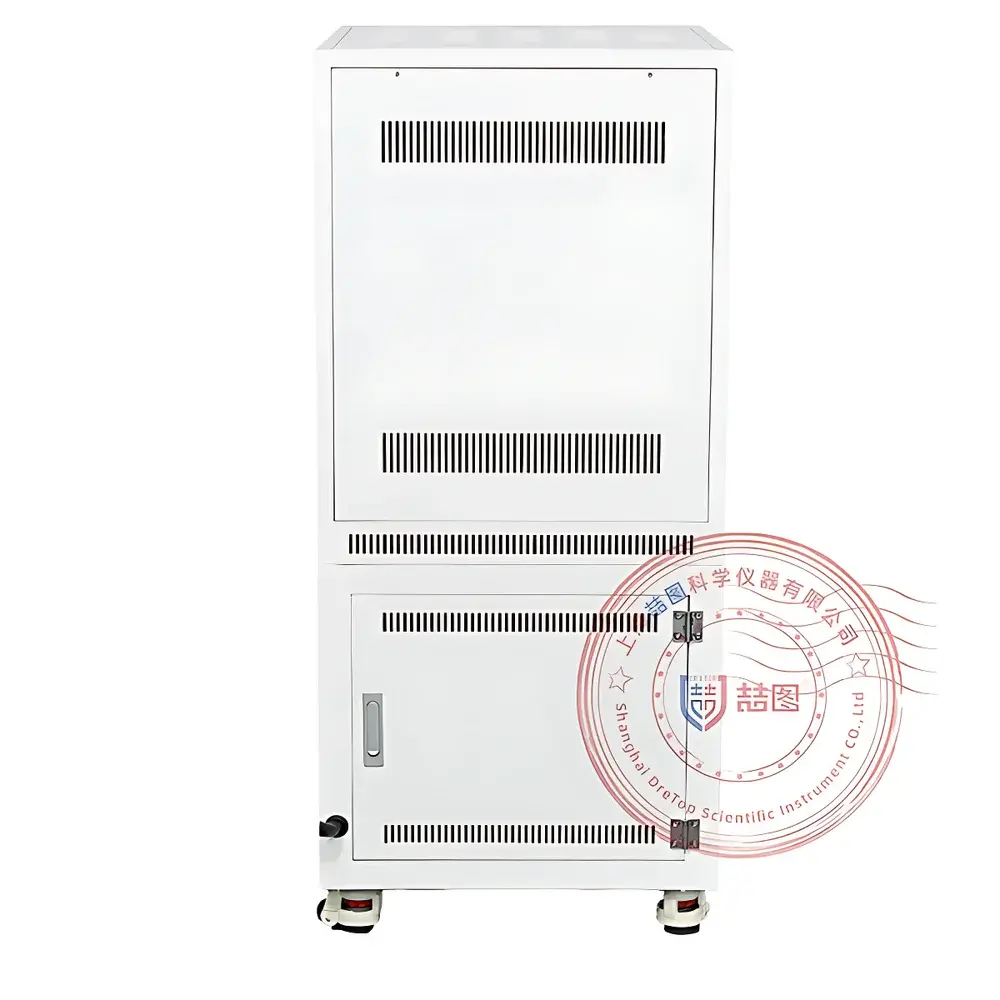
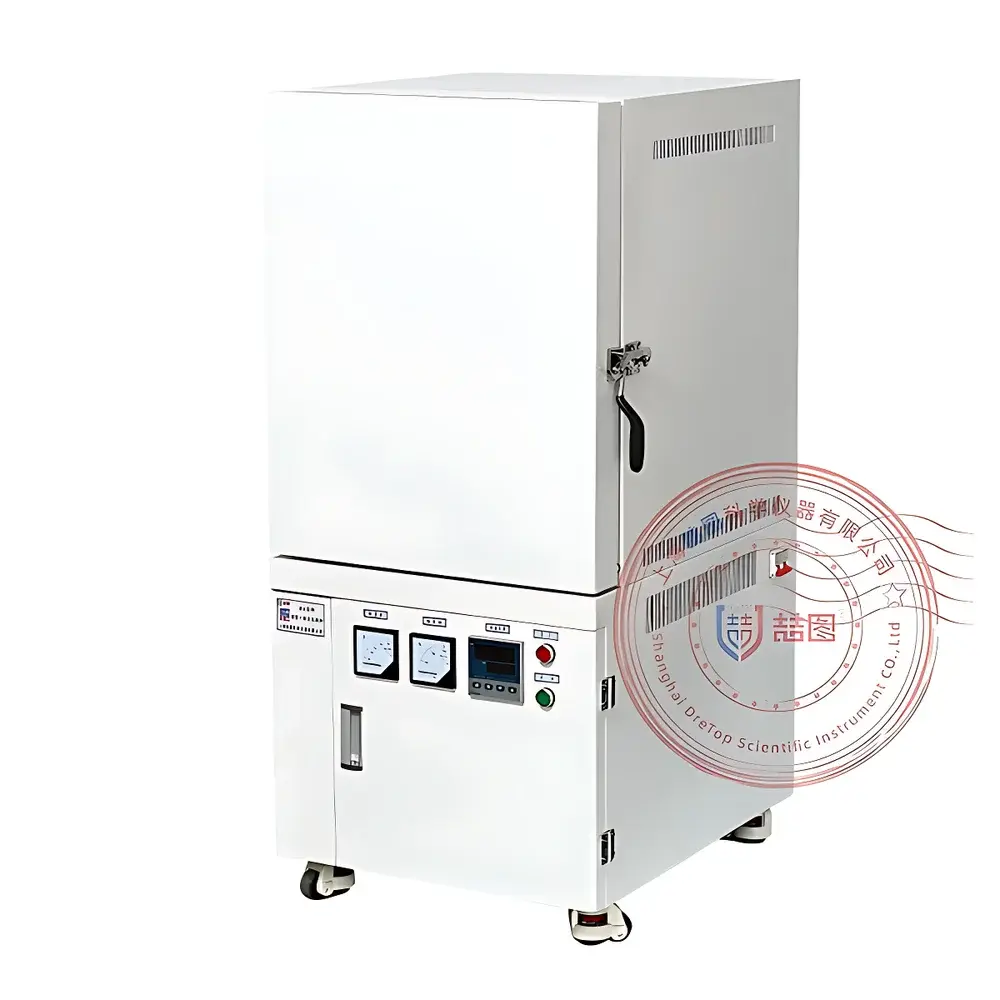
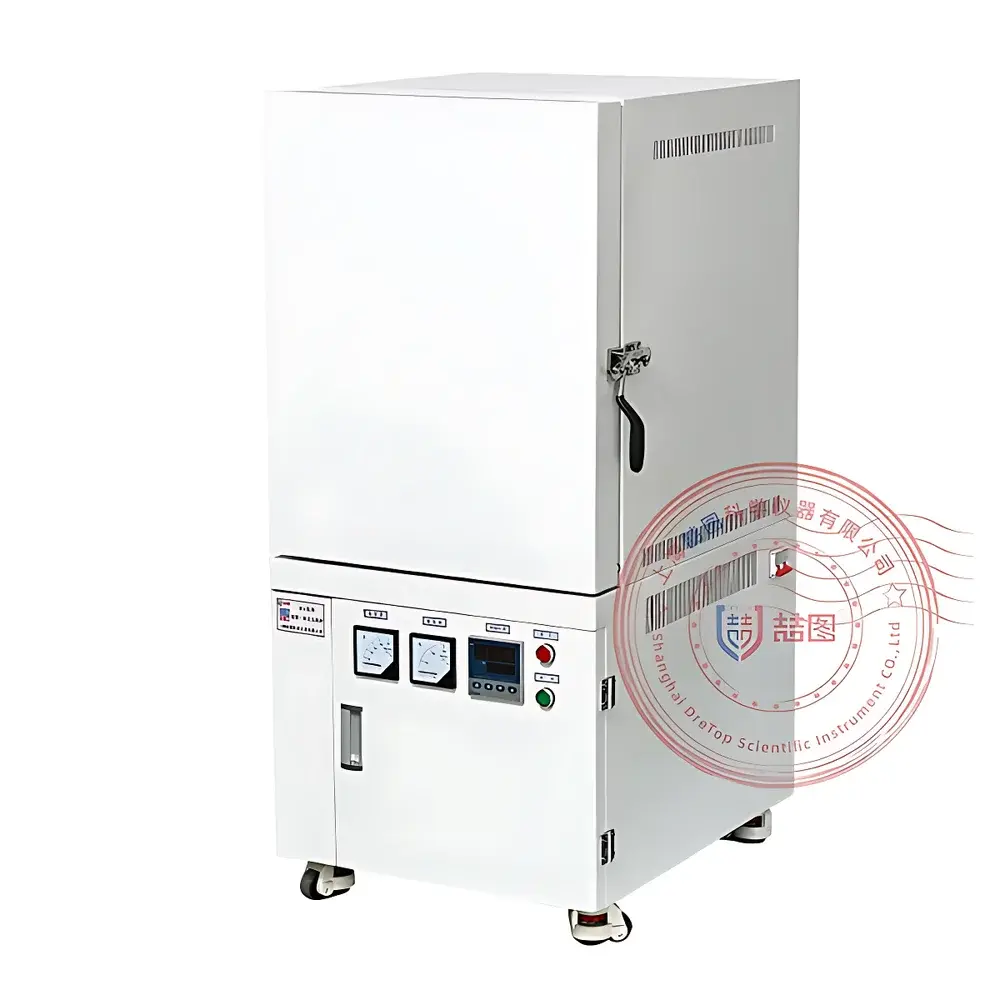
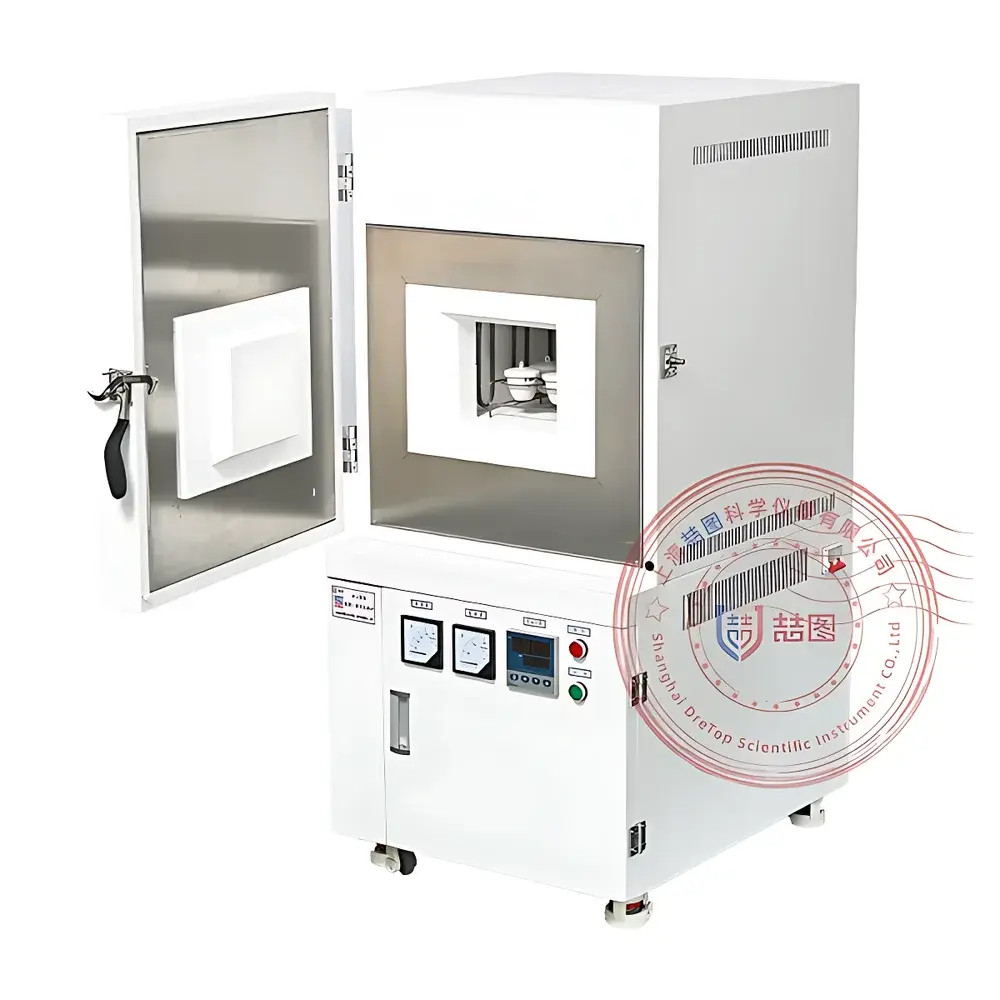
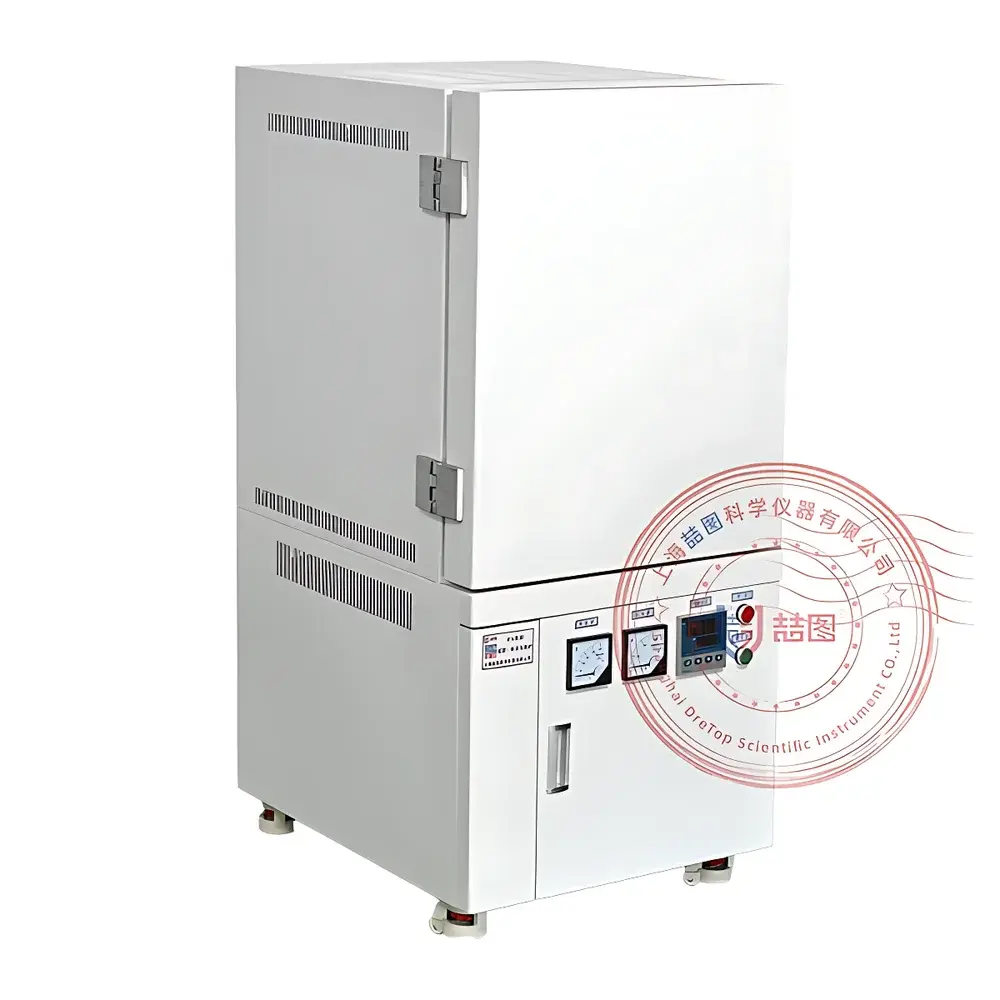
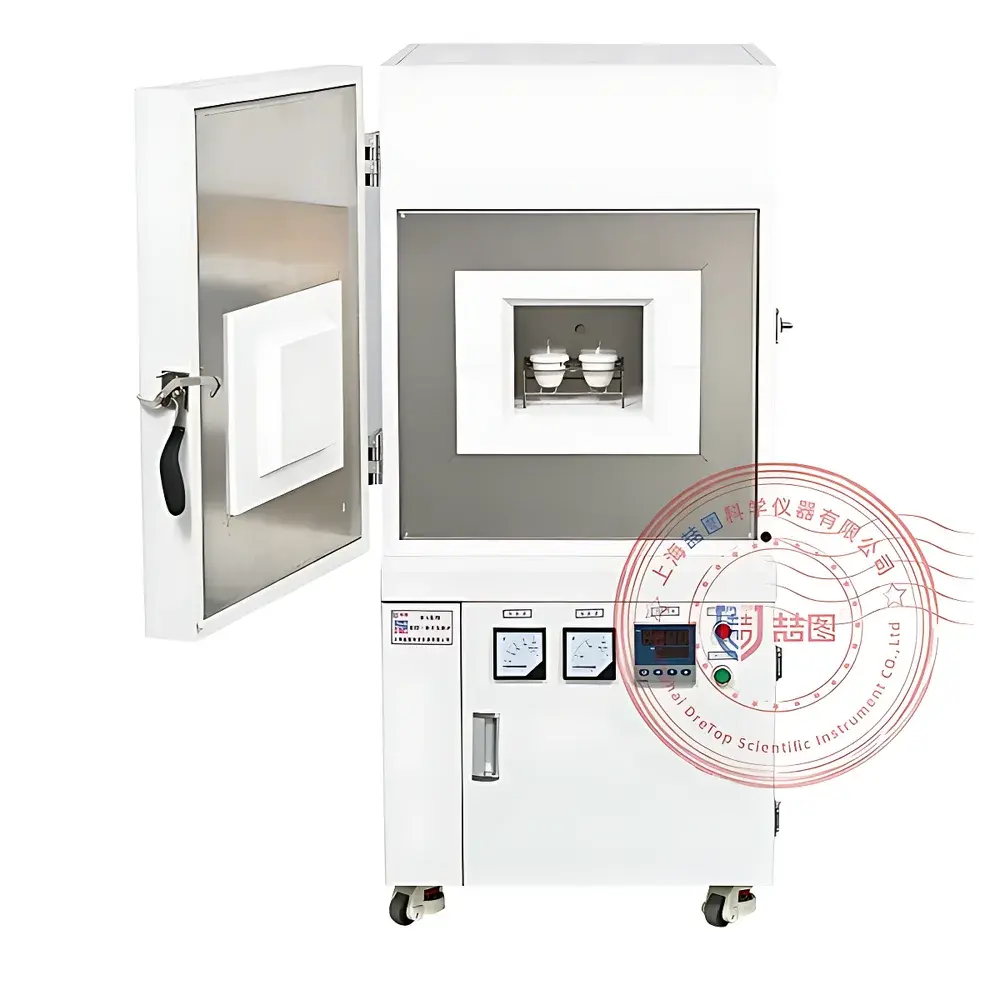
DRETOP B16-5AI Programmable High-Temperature Muffle Furnace
| Brand | DRETOP |
|---|---|
| Origin | Shanghai, China |
| Model | B16-5AI |
| Type | Box-Type Muffle Furnace |
| Max Temperature | 1600 °C |
| Temperature Control Accuracy | ±1 °C |
| Rated Power | 8000 W |
| Heating Rate | 25–35 °C/min (reaches 1600 °C in ~40 min) |
| Heating Element | Silicon Molybdenum (MoSi₂) Rods |
| Internal Chamber Dimensions | 150 × 300 × 120 mm |
| Nominal Volume | 5 L |
| Control Interface | 7-inch Color Touchscreen |
| Transformer | Integrated Three-Phase Dry-Type Isolation Transformer |
| Compliance | Designed for GLP-compliant thermal processing environments |
Overview
The DRETOP B16-5AI Programmable High-Temperature Muffle Furnace is a precision-engineered box-type resistive furnace designed for reproducible, stable thermal processing across demanding laboratory and industrial applications. It operates on Joule heating principles—electric current passed through high-purity silicon molybdenum (MoSi₂) rods generates radiant heat within a thermally insulated chamber. The furnace achieves a maximum operating temperature of 1600 °C, with a control range extending from ambient +50 °C to 1600 °C. Its triple-wall heating configuration—elements embedded in the left, right, and rear chamber walls—ensures uniform radial and axial thermal distribution. This architecture minimizes axial temperature gradients (<±3 °C at 1600 °C across the working zone), critical for consistent sintering, ashing, calcination, and heat-treatment protocols where material phase homogeneity directly impacts analytical validity.
Key Features
- Integrated 7-inch color touchscreen controller with AI-based auto-tuning algorithm—enables precise ramp/soak programming, multi-segment thermal profiles (up to 30 steps), and real-time graphical trend display of setpoint vs. measured temperature.
- Three-phase dry-type isolation transformer built into the base chassis—suppresses electromagnetic interference, ensures voltage stability under load fluctuations, and eliminates coupling of line noise into sensitive instrumentation circuits.
- Triple-sided MoSi₂ heating element layout—optimized for rapid thermal response (25–35 °C/min) and exceptional temperature uniformity; elements maintain stable resistance over extended service life, independent of aging or thermal cycling.
- Multi-layer insulation system: vacuum-formed polycrystalline alumina fiber board (density ≥180 kg/m³) combined with stainless steel inner lining (2 mm thick, AISI 310S)—reduces standby power loss by >40% versus conventional ceramic brick furnaces.
- Dual-stage safety architecture: primary overtemperature cutoff (independent thermocouple + relay), secondary fail-safe circuit monitoring phase loss, thermocouple breakage, and door interlock status; all events trigger audible/visual alarms and immediate power cutoff.
- Intelligent power segmentation logic—dynamically limits heater output during low-temperature ramps to prevent thermal shock to samples and extend element longevity.
Sample Compatibility & Compliance
The B16-5AI accommodates standard crucibles (alumina, zirconia, platinum, graphite) up to Ø80 mm × 90 mm height within its 5 L chamber. Its inert, oxygen-rich internal environment supports oxidation-sensitive processes—including metal oxide synthesis, catalyst activation, and ASTM E1672 ash content determination. The furnace meets structural and operational requirements referenced in ISO 8573-1 (compressed air purity for auxiliary gas systems), ASTM E220 (thermocouple calibration), and USP heavy metals testing protocols. Optional inert gas inlet (N₂/Ar) enables controlled-atmosphere operation compliant with ASTM F1372 for semiconductor-grade sintering. All firmware logs—including setpoints, actual temperatures, alarm timestamps, and operator actions—are time-stamped and stored with audit-trail capability, satisfying FDA 21 CFR Part 11 data integrity expectations when paired with validated software export workflows.
Software & Data Management
The embedded controller supports CSV export of time-stamped temperature data via USB flash drive. Real-time curves are displayed as dual-axis plots (temperature vs. time), with overlay capability for comparative analysis of multiple runs. Historical data retention spans ≥10,000 cycles without degradation. Optional RS485 Modbus RTU interface permits integration into centralized LabVantage or Siemens Desigo CCMS platforms for automated batch reporting and electronic lab notebook (ELN) synchronization. Password-protected administrator access (three-tier permission levels) governs profile editing, calibration offset adjustment, and event log deletion—enabling alignment with GLP documentation standards.
Applications
- High-temperature ashing of biological, pharmaceutical, and environmental samples per EPA Method 3050B and ISO 11885.
- Sintering of advanced ceramics (e.g., Al₂O₃, SiC, ZrO₂) and powder metallurgy compacts under controlled ramp rates.
- Heat treatment of small-scale ferrous/non-ferrous alloys—including annealing, normalizing, and stress-relief cycles per ASTM A108 and AMS 2750E.
- Thermal decomposition studies for catalyst characterization and TGA method development.
- Preparation of reference materials for XRF and ICP-OES calibration requiring matrix homogenization at >1400 °C.
FAQ
What thermocouple type is used for temperature sensing?
Type S (Platinum/Rhodium 10%) thermocouples are factory-installed and calibrated traceable to NIST standards.
Is the furnace suitable for continuous operation at 1600 °C?
Yes—rated for uninterrupted operation up to 1600 °C for ≤8 hours per cycle; recommended duty cycle is 70% to maximize MoSi₂ rod service life.
Can the unit be integrated into a building management system (BMS)?
Via optional RS485 Modbus RTU interface with configurable polling intervals and register mapping.
Does the door interlock meet EN 61000-6-2 immunity requirements?
Yes—the microswitch-based mechanical interlock complies with IEC 60204-1 Annex G for Category 3 safety-related control functions.
What maintenance intervals are recommended for the heating elements?
Visual inspection every 200 operating hours; resistance measurement baseline established at commissioning; replacement advised when resistance deviates >15% from initial value.
Related Products



