
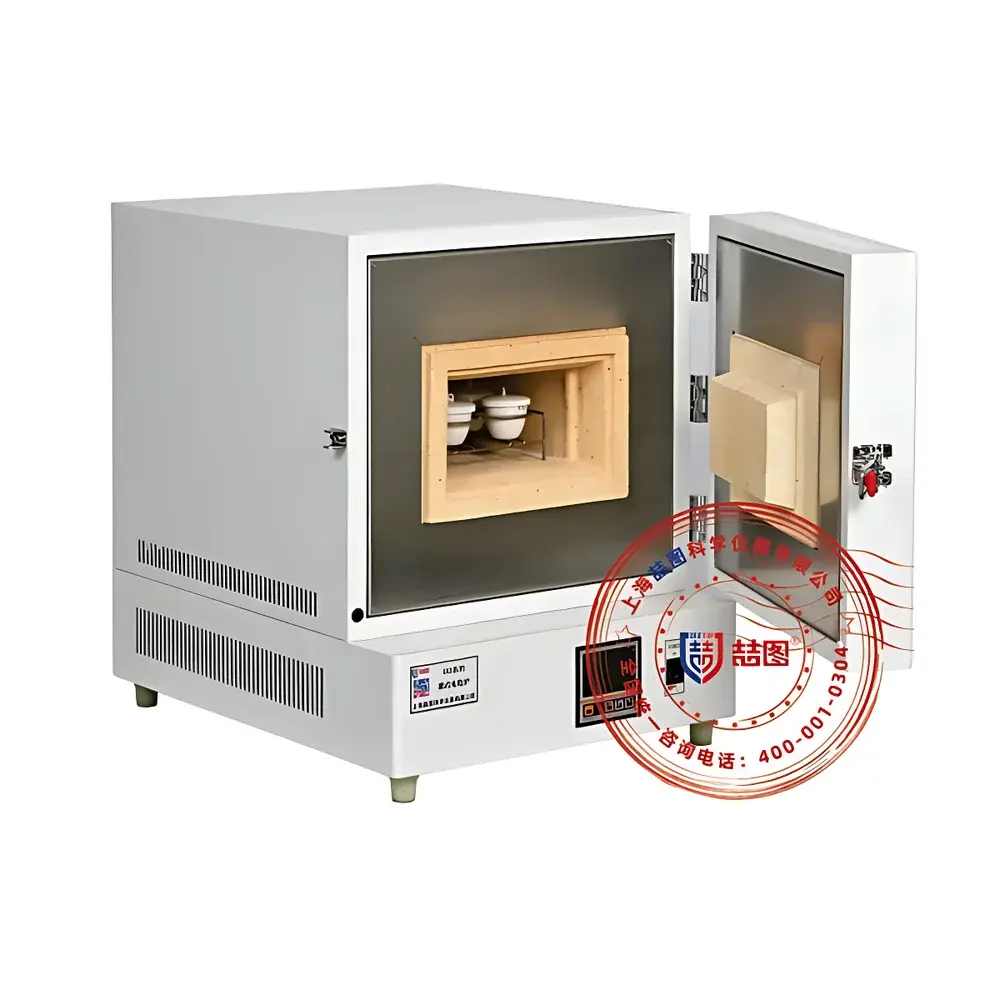
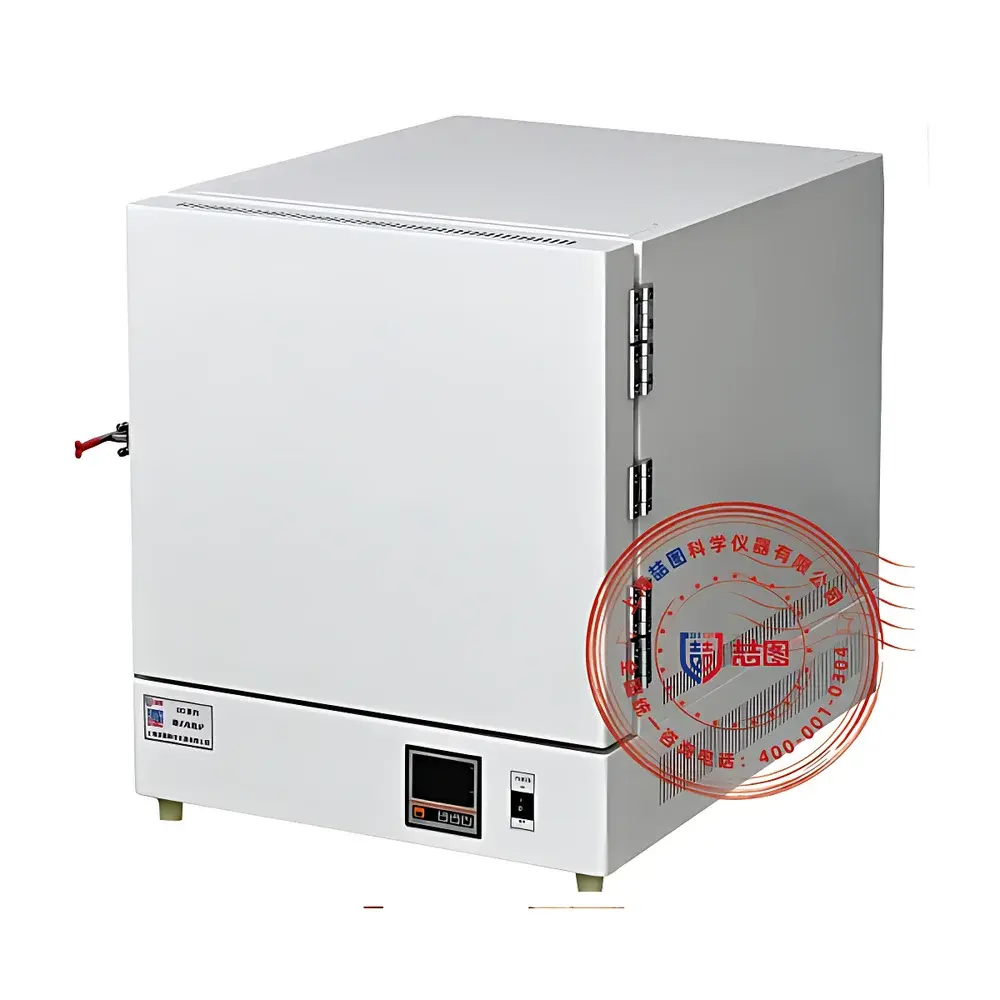
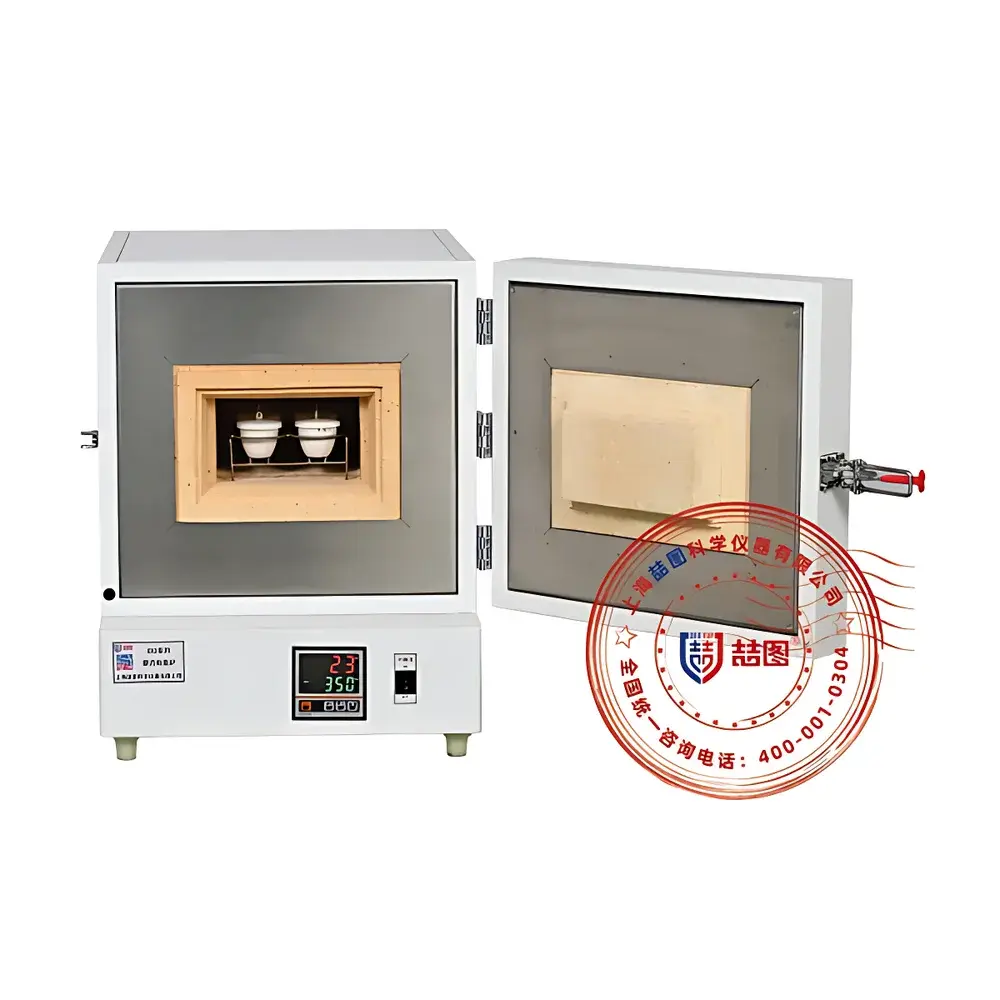
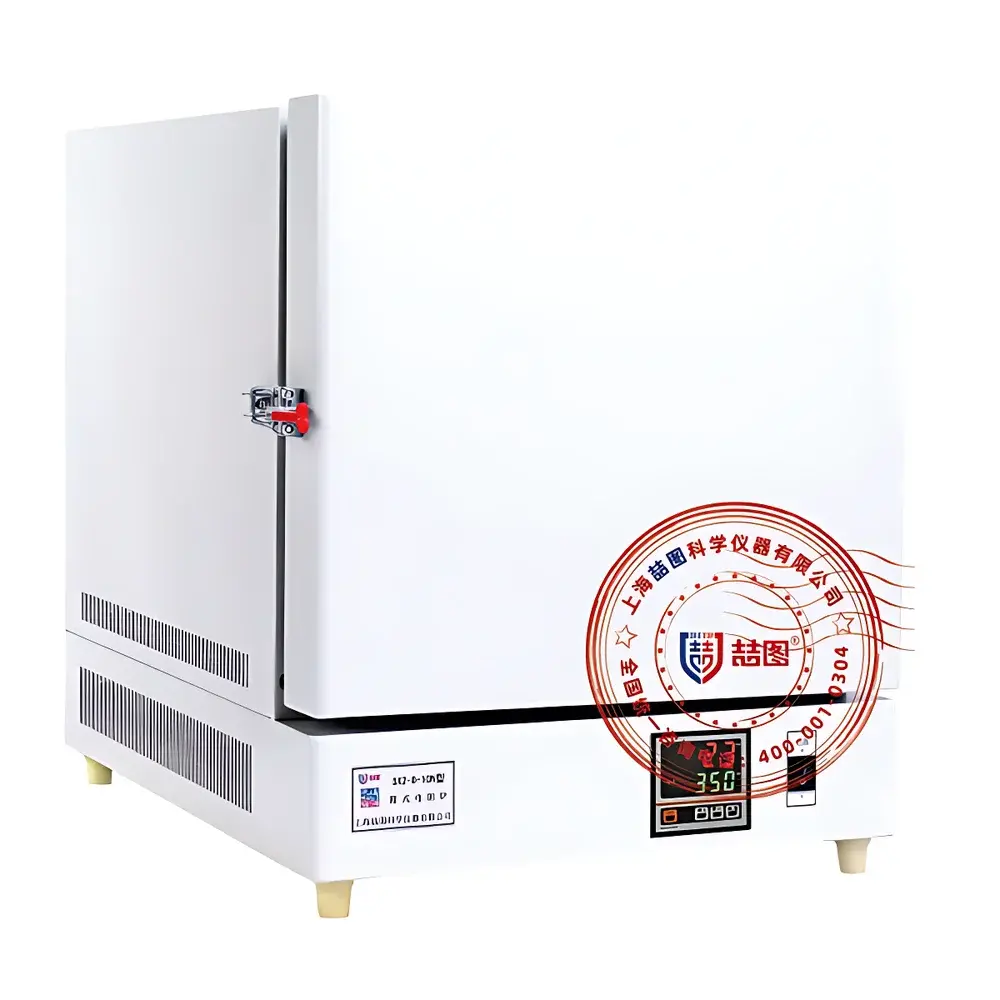
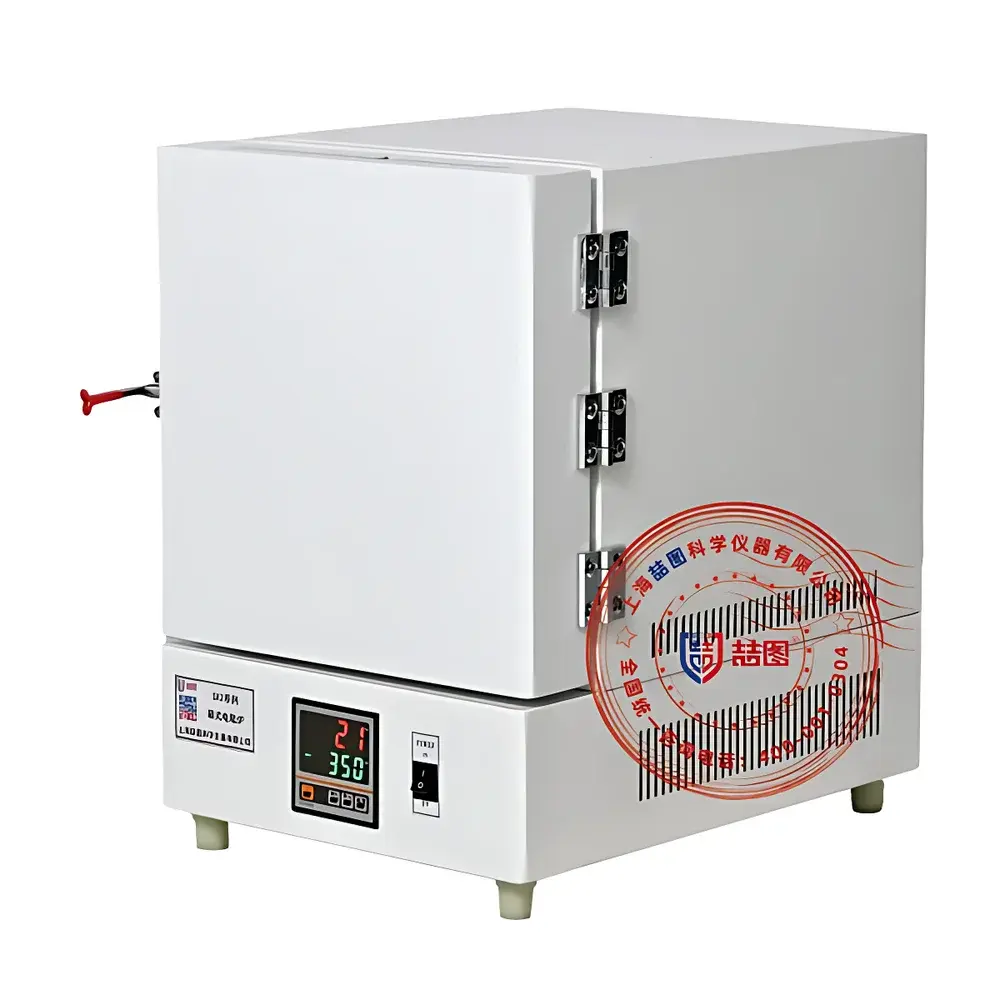
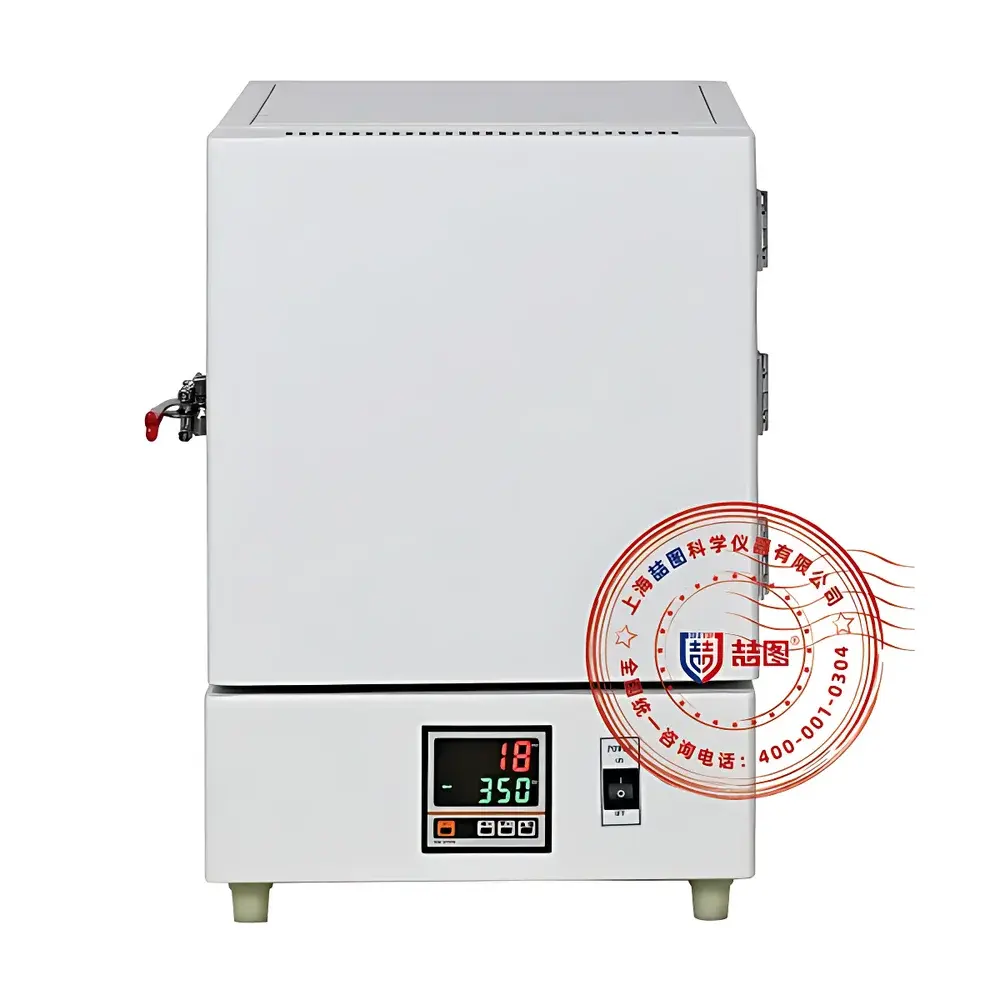
DRETOP NF12-60C Box-Type Muffle Furnace
| Brand | DRETOP |
|---|---|
| Origin | Shanghai, China |
| Model | NF12-60C |
| Instrument Type | Box-Type Muffle Furnace |
| Maximum Temperature | 1200 °C |
| Temperature Control Accuracy | ±1 °C |
| Heating Rate to Max Temp | ≤60 min |
| Heating Element | Nickel-Chromium Alloy Wire |
| Internal Chamber Dimensions (W×D×H) | 400 × 500 × 300 mm |
| Nominal Volume | 60 L |
| Control System | Programmable PID Controller (30-Stage Ramp/Soak) |
| Power Supply | AC 220 V / 380 V, 50 Hz |
| Safety Features | Dual-Stage Over-Temperature Protection, Door-Interlocked Power Cut-off, Real-Time Voltage/Current Monitoring,断电记忆功能 (Power-Failure Memory) |
Overview
The DRETOP NF12-60C is a precision-engineered box-type muffle furnace designed for laboratory and industrial thermal processing applications requiring stable, uniform, and programmable high-temperature environments. Operating on resistive heating principles, it utilizes embedded nickel-chromium alloy wire elements distributed across all four chamber walls to generate controlled radiant heat—ensuring minimal thermal gradients and high spatial temperature uniformity within the insulated ceramic fiber-lined chamber. With a maximum operating temperature of 1200 °C and a nominal internal volume of 60 L, the NF12-60C supports batch thermal treatments including ashing, calcination, sintering, heat treatment, and thermal decomposition of inorganic and organic samples. Its robust construction, integrated safety architecture, and compliance-ready control system make it suitable for routine use in QA/QC laboratories, research institutions, and production support facilities adhering to GLP, ISO/IEC 17025, and ASTM E1142 standards for thermal analysis instrumentation.
Key Features
- Four-wall heating configuration with spiral-wound NiCr resistance wire ensures rapid, uniform heat distribution and minimizes axial/radial temperature deviation (<±3 °C at 1200 °C, per ASTM E220 calibration protocol)
- 30-segment programmable PID controller enables precise ramp-soak profiles—including multi-step heating, cooling, and hold sequences—with automatic termination and memory retention after power interruption
- Door-interlocked safety circuit cuts power immediately upon door opening and resumes pre-interruption profile upon reclosure—critical for safe sample handling during intermediate inspection or quenching
- Dual-stage over-temperature protection: primary controller-based limit + independent mechanical backup thermostat; both trigger audible/visual alarms and hardwired power cutoff
- High-density refractory brick chamber (rated >1300 °C) with 2 cm stainless steel inner flange seal reduces thermal leakage at the door interface and facilitates post-process cleaning
- Integrated digital voltmeter and ammeter provide real-time electrical diagnostics—enabling predictive maintenance and verification of heater integrity under load
- Phosphate conversion coating + high-temp epoxy powder finish on structural steel housing delivers corrosion resistance and long-term dimensional stability under repeated thermal cycling
Sample Compatibility & Compliance
The NF12-60C accommodates standard crucibles (alumina, quartz, silicon carbide), ceramic boats, and metal trays up to 380 mm wide × 480 mm deep × 280 mm tall. It is routinely deployed in coal analysis (ASTM D3174, D3175), cement clinker testing (ASTM C114), pharmaceutical residual solvent validation (USP ), and catalyst thermal stability assessment. The furnace meets IEC 61000-6-3 (EMC emission limits) and IEC 61000-6-2 (immunity to electrostatic discharge and fast transients). Optional RS485 Modbus RTU interface supports integration into LIMS or SCADA systems compliant with FDA 21 CFR Part 11 for electronic record audit trails. All firmware logs—including setpoint changes, alarm events, and door-open durations—are timestamped and non-erasable.
Software & Data Management
While the base model features a front-panel LCD with tactile keypad navigation, optional C-series color touchscreen upgrade provides graphical real-time temperature curve display, user-level access control (engineer/operator/viewer tiers), and USB data export in CSV format. Logged parameters include chamber temperature (°C), setpoint (°C), elapsed time (hh:mm:ss), heater voltage (V), current (A), and status flags (heating/soaking/cooling/alarm). Audit trail functionality records operator ID, timestamp, and action for every parameter modification—fully traceable for ISO 17025 internal audits. Firmware supports firmware-over-the-air (FOTA) updates via secure HTTPS endpoint when connected to institutional networks.
Applications
- Coal and coke proximate analysis (moisture, volatile matter, fixed carbon, ash content per ASTM D3172–D3176)
- Mineralogical phase transformation studies in geoscience and metallurgy
- Thermal gravimetric pre-treatment of environmental soil/sediment samples prior to ICP-MS analysis
- Pre-firing of ceramic green bodies and glass frits in materials development labs
- Residue-on-ignition testing of pharmaceutical excipients and APIs (EP 2.2.34)
- Calibration verification of thermocouples and reference materials using fixed-point cells (e.g., Cu, Ag, Au)
- Controlled oxidative aging of polymer composites per ASTM D5510
FAQ
What is the typical temperature uniformity across the working zone at 1000 °C?
At 1000 °C, measured per ASTM E220 Annex A3 using a 9-point thermocouple array, the radial and axial uniformity is ≤±2.5 °C within the central 70% of the chamber volume.
Can the furnace operate continuously at 1200 °C?
Yes—rated for continuous operation at 1200 °C with recommended maximum dwell time of 8 hours per cycle to preserve heating element longevity and insulation integrity.
Is the controller compatible with external data acquisition systems?
Standard RS485 Modbus RTU port is available as factory option; custom OPC UA or Ethernet/IP gateways can be integrated via third-party protocol converters.
Does the unit include calibration documentation?
Each unit ships with a NIST-traceable temperature calibration certificate (at 600 °C, 900 °C, and 1200 °C) performed using Class 1 platinum resistance thermometers per ISO/IEC 17025-accredited procedures.
What maintenance intervals are recommended?
Visual inspection of door gasket integrity and heating element continuity every 200 operational hours; full refractory inspection and thermocouple recalibration annually or after 1000 cumulative heating cycles.



