
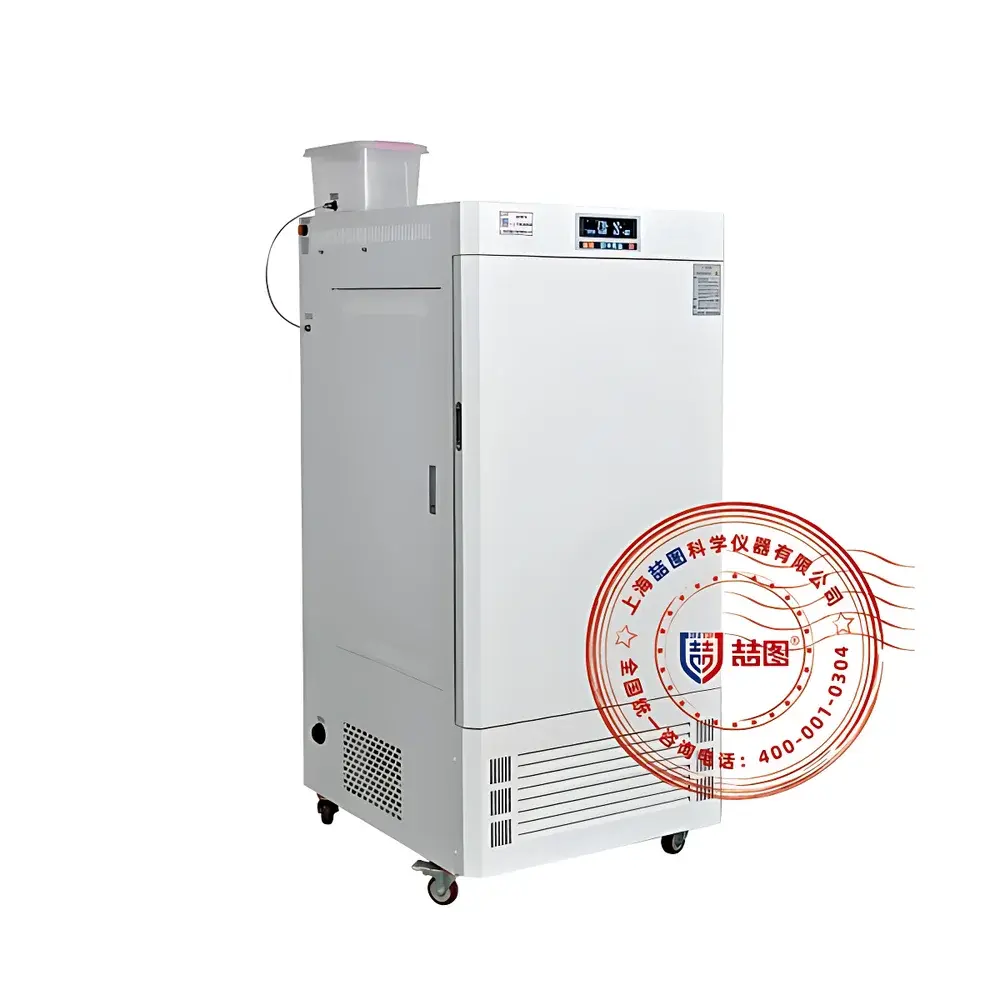
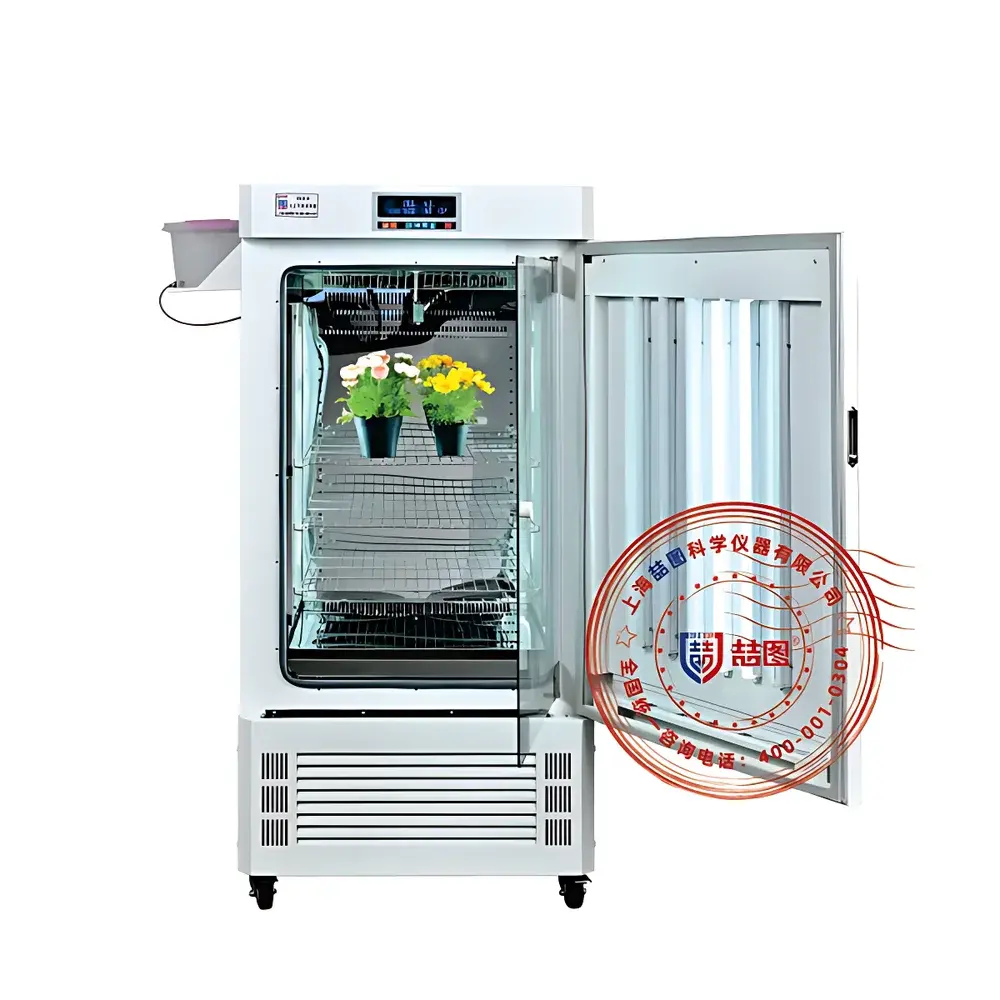
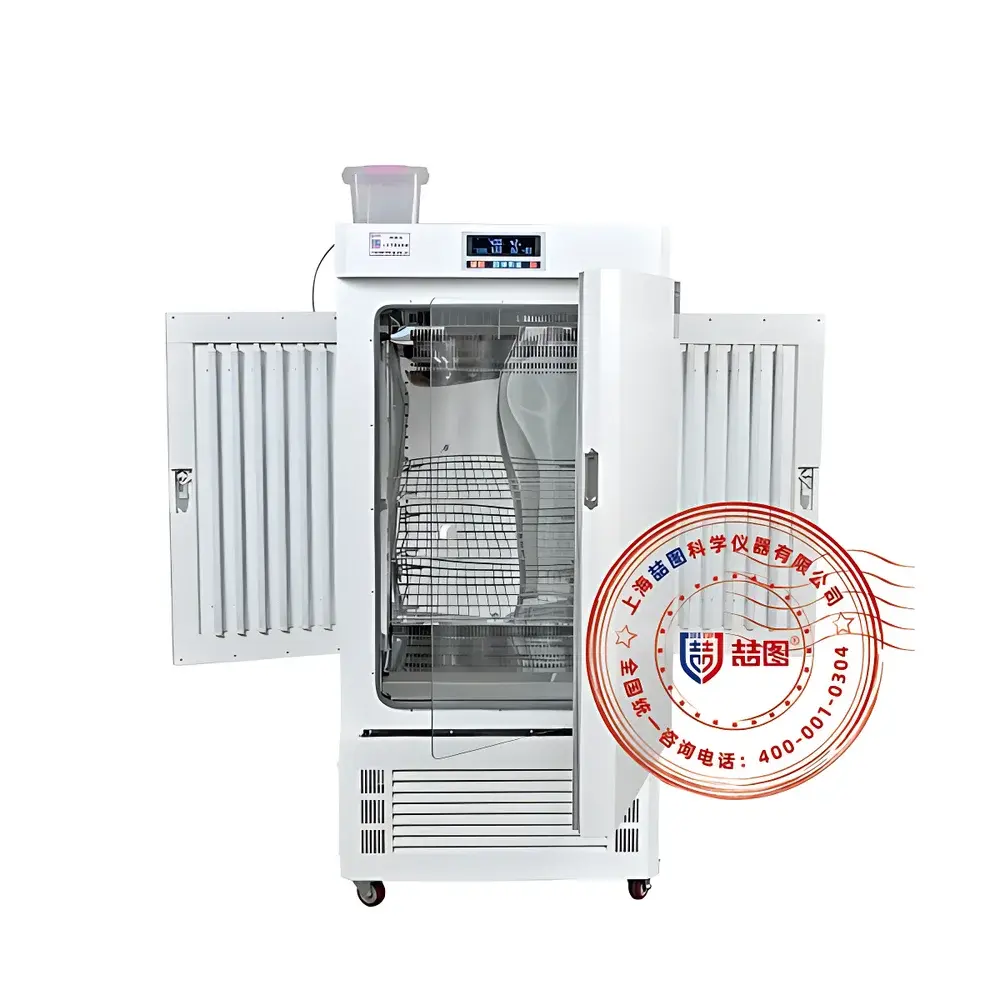
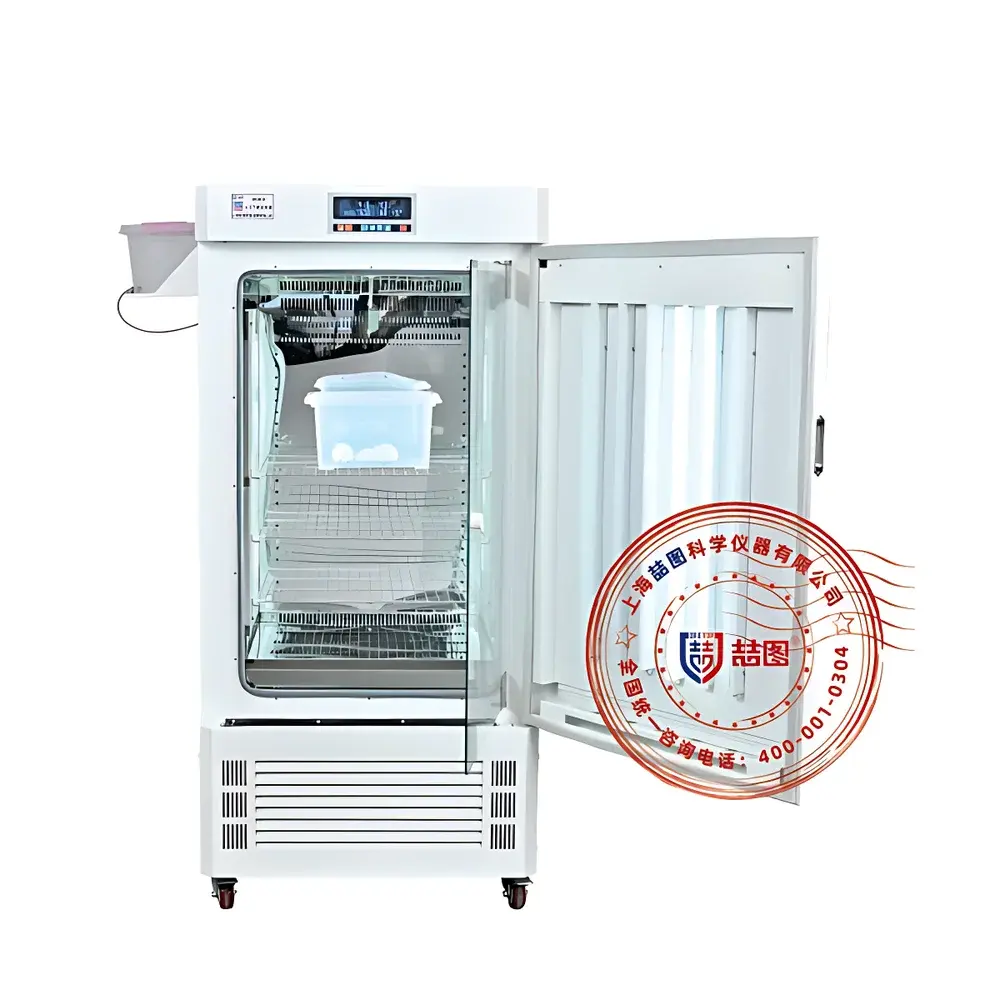
DRETOP QRQ-250-D3G4 Advanced Programmable Artificial Climate Incubator with Triple-Sided LED Illumination
| Brand | DRETOP |
|---|---|
| Origin | Shanghai, China |
| Manufacturer Type | Authorized Distributor |
| Country of Origin | China |
| Model | QRQ-250-D3G4 |
| Instrument Type | Fully Automated (Programmable) |
| Capacity | 250 L |
| Temperature Range | 0–65 °C |
| Temperature Uniformity | ±0.5 °C |
| Humidity Range | 30–95 %RH |
| Humidity Uniformity | ±3 %RH |
| Illuminance Range | 0–40,000 lx |
| Illumination Configuration | Triple-sided, independently controllable RGBWV LED panels (D3G4 = Dual-layer adjustable shelves + 3-color + Green + 4-channel control) |
| External Dimensions (W×D×H) | 780 × 770 × 1560 mm |
| Refrigerant | Eco-friendly non-CFC |
| Power Supply | AC 220 V, 50 Hz |
Overview
The DRETOP QRQ-250-D3G4 is a high-precision, fully programmable artificial climate incubator engineered for rigorous life science research requiring tightly controlled, multi-parameter environmental simulation. Designed around a closed-loop microclimate architecture, it integrates independent regulation of temperature, relative humidity, and spectrally tunable illumination—enabling reproducible simulation of diurnal cycles, seasonal light regimes, and controlled photobiological conditions. Unlike basic incubators or growth chambers, the QRQ-250-D3G4 employs a balanced P.I.D. algorithm with dynamic compensation for load variation, door opening events, and ambient drift—ensuring stability under continuous operation. Its triple-sided LED illumination system (D3G4 configuration) delivers uniform, low-heat, full-spectrum irradiance across the entire working chamber, eliminating shadow zones and enabling quantitative photomorphogenic studies. The unit complies with core design principles referenced in ISO 17025 for environmental test equipment validation and supports GLP-compliant workflows through audit-trail-capable data logging.
Key Features
- Fully programmable 30-segment controller supporting three operational modes: constant setpoint, day/night cycling, and complex time-temperature-humidity-illumination profiles
- Dual-layer stainless-steel adjustable shelving with vertical micro-adjustment (±5 mm increments), optimized for flexible sample layout and airflow distribution
- Triple-sided LED illumination module (front + left + right walls) with independent channel control for red (R, 620–780 nm), green (G, 490–570 nm), blue (B, 420–490 nm), white (W, 400–830 nm), and violet (V, 380–450 nm) spectra—enabling precise spectral ratio tuning (e.g., R:B = 4:1 to 9:1)
- High-fidelity environmental control: ±0.5 °C temperature uniformity (measured per ASTM E2738), ±3 %RH humidity uniformity, and ≤±5 % illuminance deviation across chamber volume
- Energy-efficient refrigeration system using non-CFC refrigerant, coupled with intelligent defrost cycling and compressor runtime optimization (start delay, stop interval, thermal overload protection)
- Touchscreen HMI with multilingual UI (English/Chinese), real-time trend visualization (last 60 min), and configurable alarm thresholds for temperature, humidity, illuminance, door status, and water level
- Robust mechanical construction: cold-rolled steel outer shell, 304 stainless steel interior, tempered glass inner door with nano-composite magnetic seal, and dual-wheel mobility system (swivel + locking casters)
- Comprehensive data integrity: 1-minute interval logging of all parameters (T, RH, lux, alarm states); local storage retention ≥30 days; password-protected access tiers with time-limited session enforcement
Sample Compatibility & Compliance
The QRQ-250-D3G4 accommodates standard microbiological containers (Petri dishes, multi-well plates), plant tissue culture vessels (Magenta boxes, jars), small animal enclosures (up to 250 g rodent models), and BOD bottles—without compromising environmental fidelity. Its stainless-steel interior and removable shelves support autoclaving, hydrogen peroxide vapor (HPV) decontamination, and routine EPA Method 1682-compliant cleaning protocols. The system meets essential safety and performance benchmarks including IEC 61000-6-3 (EMC emissions), IEC 61000-6-2 (immunity), and UL 61010-1 (electrical safety). While not certified for ISO Class 5 cleanroom use, its sealed airflow path and HEPA-filtered recirculation option (optional add-on) align with ISO 14644-1 Annex B for non-sterile biological incubation environments. For regulated applications, the data logging system supports 21 CFR Part 11 compliance when paired with validated third-party software (e.g., LabArchives, DeltaTrak Validator).
Software & Data Management
The embedded controller provides native CSV export via USB port and supports Modbus RTU over RS-485 for integration into facility-wide SCADA or LIMS platforms. All logged data—including timestamps, parameter values, alarm triggers, and user actions—are cryptographically signed and stored with immutable metadata (device ID, firmware version, calibration certificate expiry). The system records “event-driven” logs for critical operations: door open/close duration, program start/abort, setpoint changes, and illuminance recalibration. Audit trail functionality includes operator ID tagging (via login), session timeout enforcement, and automatic lockout upon password expiration—facilitating traceability during FDA or ISO 17025 audits. Optional cloud-based remote monitoring (DRETOP CloudLink™) enables secure TLS 1.3–encrypted access to live metrics and historical trends from any web-enabled device.
Applications
- Plant phenotyping and photomorphogenesis studies under defined spectral ratios (e.g., R:G:B tuning for Arabidopsis thaliana rosette development or lettuce biomass optimization)
- Microbial growth kinetics under simulated diurnal stress (e.g., alternating UV-A exposure + humidity cycling for fungal spore germination assays)
- BOD5 testing per APHA Standard Methods 5210B, with integrated temperature/humidity stabilization minimizing evaporation artifacts
- Tissue culture maintenance of light-sensitive lines (e.g., cyanobacteria, phototrophic algae, or optogenetically modified mammalian cells)
- Insect rearing (Drosophila, Tribolium) with programmable circadian entrainment and thermal ramping for developmental staging
- Seed germination screening across climate scenarios (IPCC AR6 Representative Concentration Pathways emulation)
- Material degradation testing under combined thermal-hygrometric-photonic stress (ASTM G154 Cycle 1)
FAQ
What spectral bands are independently controllable in the D3G4 configuration?
Red (620–780 nm), green (490–570 nm), blue (420–490 nm), white (400–830 nm), and violet (380–450 nm) channels operate independently, allowing custom spectral power distribution (SPD) profiles.
Is humidity control active below 10 °C?
Yes—the humidification system remains functional down to 0 °C, though condensation management requires periodic manual drain maintenance below 5 °C.
Can the incubator maintain setpoints during extended power outages?
It retains all program parameters and logged data in non-volatile memory; upon power restoration, it resumes operation from the last valid state with configurable restart behavior (cold start vs. resume from interruption point).
Does the system support external CO₂ or O₂ modulation?
No—gas composition control is not integrated; however, optional third-party gas mixing modules (e.g., Qubit Systems GasBox) can be interfaced via analog 0–10 V or digital Modbus inputs.
How is illuminance calibrated and verified?
Each unit ships with NIST-traceable lux calibration certificate (per ISO/IEC 17025 accredited lab); field verification uses integrated reference sensor with auto-zero function and user-accessible recalibration routine.




