
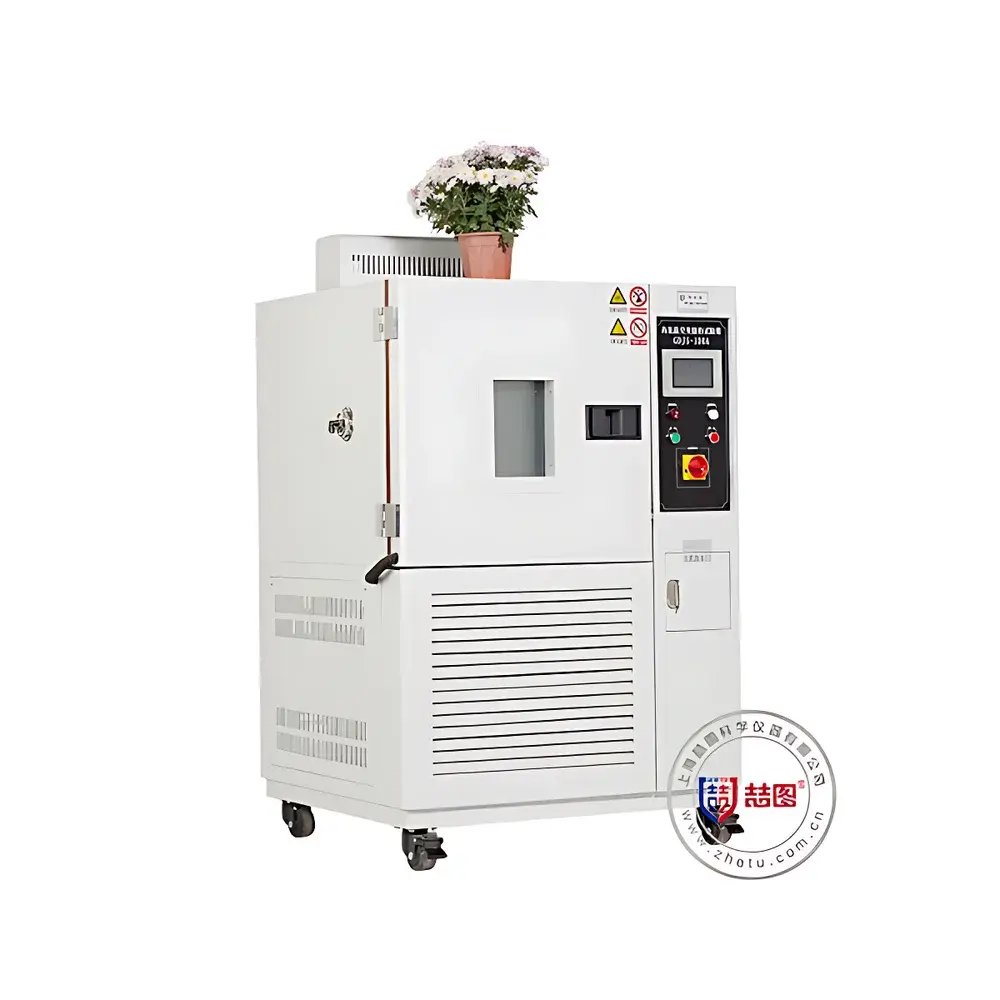
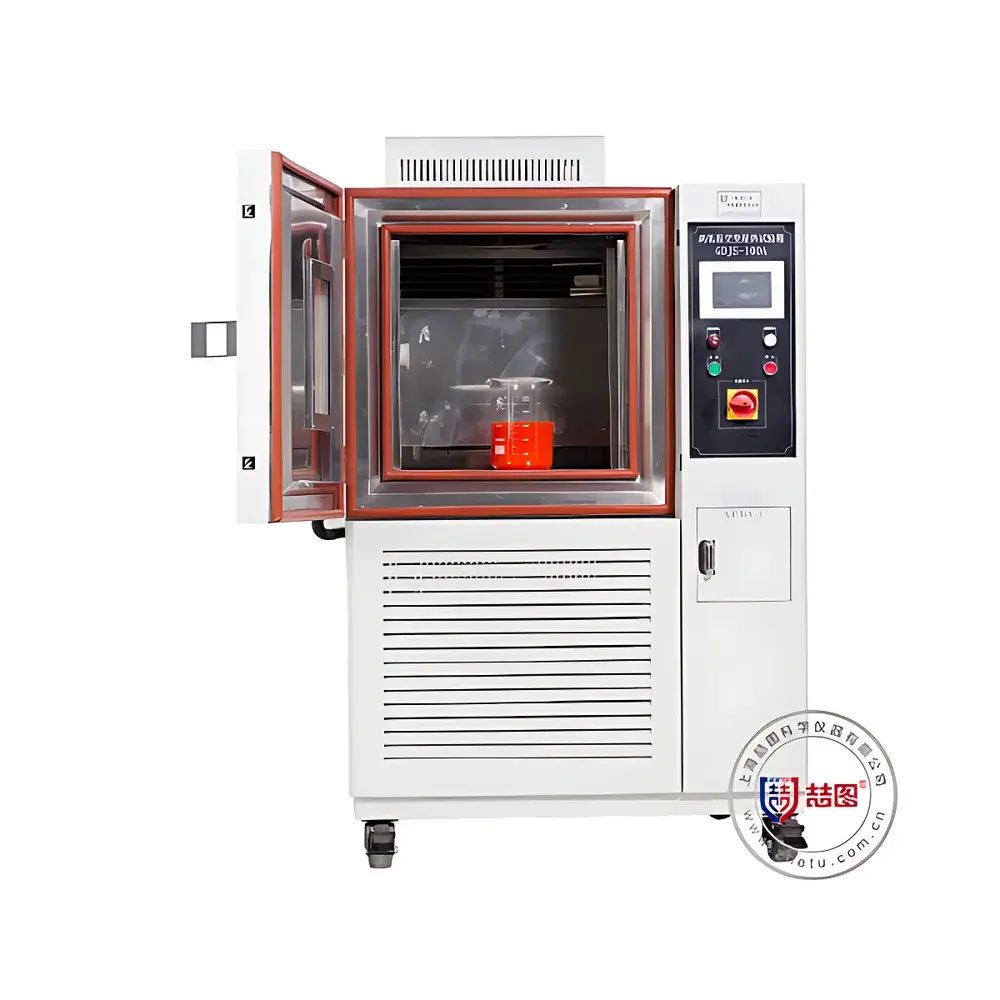
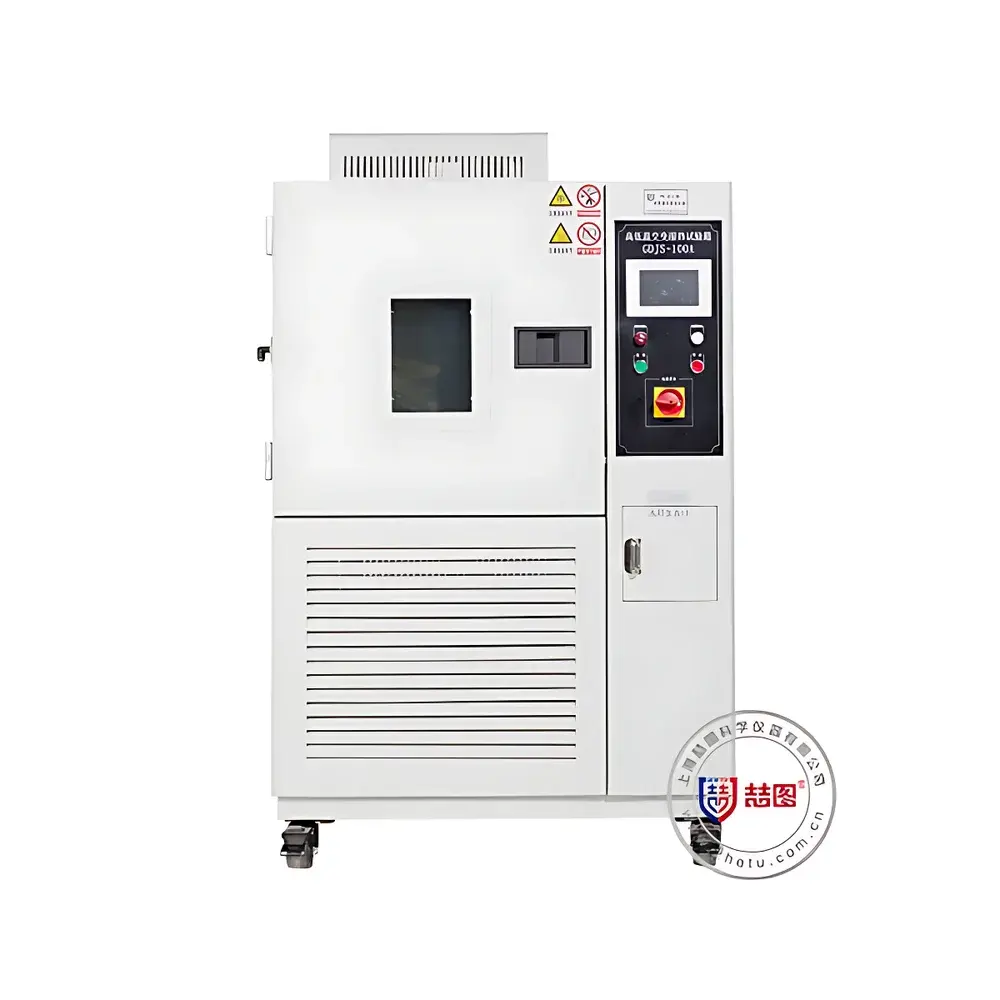
DRETOP THS-C150-I High-Low Temperature Environmental Test Chamber
| Brand | DRETOP |
|---|---|
| Origin | Shanghai, China |
| Manufacturer Type | Direct Manufacturer |
| Model | THS-C150-I |
| Temperature Range | −60 °C to +120 °C (dual-compressor system) |
| Refrigeration Method | Compressor-based cooling |
| Explosion-Proof Design | Standard (non-explosion-proof) |
| Temperature Fluctuation | ±0.5 °C |
| Temperature Uniformity | ≤2 °C |
| Heating Rate | 1–3 °C/min (adjustable) |
| Cooling Rate | 0.7–1 °C/min (adjustable) |
| Internal Chamber Dimensions | 500 × 500 × 600 mm (W × D × H) |
| Power Supply | AC 220 V / 50 Hz or AC 380 V / 50 Hz |
| Control System | Full-color capacitive touchscreen with programmable logic |
| Programmability | Up to 1000 user-defined test programs |
| Compliance | Designed for ASTM D4329, ISO 4892-2, IEC 60068-2-1, IEC 60068-2-2, MIL-STD-810H environmental simulation protocols |
Overview
The DRETOP THS-C150-I High-Low Temperature Environmental Test Chamber is an engineered solution for accelerated environmental stress testing of industrial components and finished products under precisely controlled thermal conditions. Based on forced-air convection and dual-compressor refrigeration architecture, the chamber delivers stable, repeatable temperature profiles across a wide operational range from −60 °C to +120 °C. Its design adheres to fundamental principles of thermodynamic equilibrium and convective heat transfer, enabling accurate simulation of real-world thermal cycling, storage, and operational environments. The chamber is widely deployed in R&D laboratories, quality assurance departments, and production validation facilities where compliance with international environmental testing standards—including IEC 60068-2 series, ASTM D4329 (plastics), and MIL-STD-810H (Method 501.7 & 502.7)—is mandatory. Unlike ambient-only chambers, the THS-C150-I integrates independent heating, cooling, and airflow control subsystems to minimize cross-interference and ensure high fidelity in transient thermal profiling.
Key Features
- Full-color 7-inch capacitive touchscreen interface with multilingual support (English/Chinese) and hierarchical password-protected access—enabling role-based operation (administrator, engineer, technician) per GLP/GMP audit requirements.
- Dual-compressor refrigeration system with eco-friendly R404A/R23 cascade configuration, delivering rapid cooldown capability and sustained low-temperature stability at −60 °C without compressor overload.
- Optimized air circulation architecture featuring centrifugal forced-draft fans and baffle-guided wind tunnels—ensuring ≤2 °C temperature uniformity across the 150 L working volume (500 × 500 × 600 mm).
- Double-layer heated anti-fog tempered glass observation window with integrated defrosting circuitry—preventing condensation and maintaining optical clarity during high-humidity or thermal shock tests.
- Nichrome alloy heating elements and stainless-steel internal chamber with radius-rounded corners—resisting corrosion, facilitating cleaning, and minimizing thermal lag during ramp-and-soak cycles.
- Comprehensive safety architecture: over-temperature cutoff, compressor/fan overload protection, leakage current detection, and automatic power recovery after grid interruption.
- Standard 50 mm diameter test port with silicone gasket—supporting powered, signal-carrying, or pneumatic feedthroughs for in-situ functional testing under thermal stress.
Sample Compatibility & Compliance
The THS-C150-I accommodates diverse sample geometries up to 450 × 450 × 550 mm (clearance permitting two adjustable stainless-steel shelves). It supports non-hazardous solid, semi-rigid, and encapsulated electronic assemblies—including PCBs, LED modules, automotive ECUs, medical device housings, and polymer-based consumer electronics. While classified as a standard (non-explosion-proof) chamber, its sealed construction, inert internal materials, and absence of internal ignition sources make it suitable for Class 1, Division 2 environments per NEC guidelines when operated within specified thermal limits. The system is configured to meet traceability requirements of ISO/IEC 17025 accredited labs: all temperature setpoints, dwell times, and ramp rates are digitally logged with timestamped audit trails. Optional RS485/USB interfaces enable integration into LabVantage or TrackWise LIMS platforms for 21 CFR Part 11–compliant electronic records.
Software & Data Management
The embedded controller runs proprietary firmware supporting up to 1000 multi-segment programs, each configurable with slope-controlled ramps, dwell periods, and conditional branching (e.g., “jump to step X on alarm”). Real-time data—including chamber temperature, setpoint deviation, compressor duty cycle, and fan status—is continuously recorded at 1-second intervals and exportable in CSV or Excel format via USB or network interface. Remote monitoring and control are enabled through a responsive HTML5 web interface compatible with Chrome, Edge, Safari, and Firefox—accessible via desktop, tablet, or mobile devices without plugin dependencies. For enterprise deployment, optional cloud connectivity provides TLS-encrypted data streaming to private or hybrid cloud infrastructure, supporting concurrent access by up to five authenticated users with individually assignable permissions (view-only, edit-program, full-admin). All firmware updates are delivered over-the-air with SHA-256 signature verification.
Applications
This chamber serves critical functions across multiple industry verticals: thermal cycling validation of solder joint reliability in automotive electronics per AEC-Q200; shelf-life acceleration studies of pharmaceutical packaging under ICH Q1A(R3) guidelines; qualification testing of aerospace avionics per DO-160 Section 4.2; and material property assessment—including coefficient of thermal expansion (CTE), dimensional stability, and seal integrity—of elastomers, composites, and adhesives. In QC labs, it performs incoming inspection screening for cold-chain logistics equipment, validates thermal shutdown thresholds of battery management systems, and verifies thermal endurance of IP67-rated enclosures. Its programmable humidity capability (optional upgrade) extends utility to combined temperature-humidity stress testing aligned with JEDEC JESD22-A108F and IPC-9701.
FAQ
What is the maximum sample weight the THS-C150-I can accommodate without compromising thermal uniformity?
The chamber supports static loads up to 30 kg distributed across two shelves. Exceeding this may impede airflow and degrade uniformity beyond the specified ≤2 °C tolerance.
Does the system comply with FDA 21 CFR Part 11 for electronic records and signatures?
Yes—when configured with audit trail logging, user authentication, and electronic signature capture (via optional software module), it satisfies Part 11 requirements for regulated pharmaceutical and medical device testing.
Can the THS-C150-I be integrated into a central building management system (BMS)?
Yes—via Modbus RTU (RS485) or BACnet/IP (with gateway), enabling real-time status reporting and alarm forwarding to facility SCADA platforms.
Is calibration certification included with shipment?
A factory-as-built NIST-traceable calibration report (covering temperature sensors at three spatial points) is provided. UKAS or ISO/IEC 17025 accredited field calibration is available as a service option.
What maintenance intervals are recommended for optimal long-term performance?
Compressor oil and refrigerant levels should be verified annually; air intake filters require cleaning every 90 days; and door gasket integrity should be inspected quarterly per preventive maintenance schedule.



